
July 15, 2026
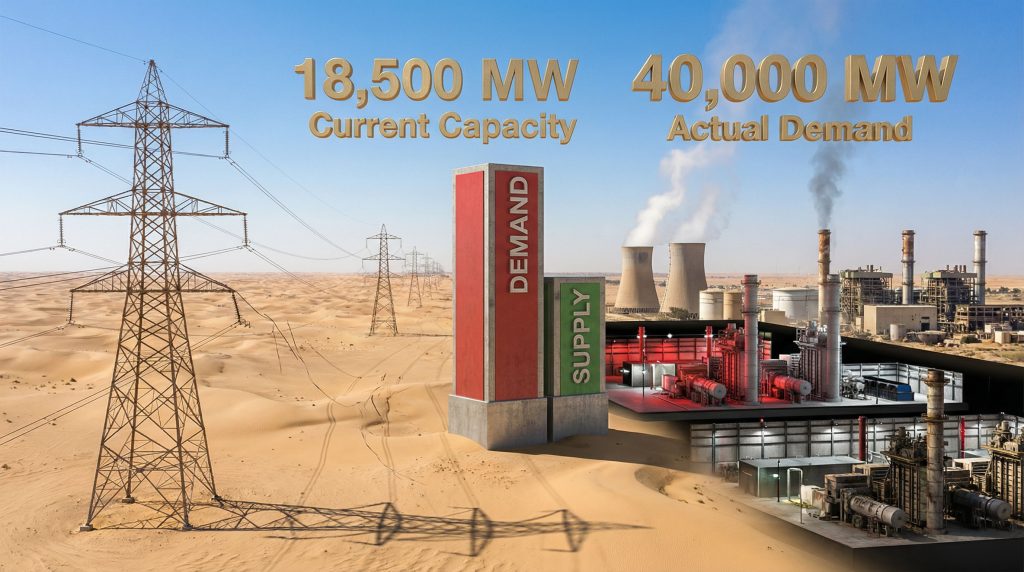
Global energy infrastructure faces mounting pressures from aging systems, climate extremes, and geopolitical tensions that expose fundamental weaknesses in power grid design and governance. These vulnerabilities manifest most dramatically in regions where decades of underinvestment, regulatory gaps, and external dependencies create cascading failure risks that can paralyze entire nations within hours. A nationwide power outage in Iraq serves as a stark reminder of how tariff impact on infrastructure investment can create systemic vulnerabilities.
Understanding Iraq's Electrical Infrastructure Crisis
Iraq's power sector exemplifies how structural deficiencies compound to create chronic instability that undermines economic development and social stability. The country's generation capacity of approximately 16,000-17,000 MW as of 2023-2024 falls dramatically short of peak summer demand reaching 25,000-30,000 MW, creating a deficit that has persisted for over two decades despite international assistance and reconstruction efforts.
The Scale of Iraq's Energy Deficit
The mathematics of Iraq's power crisis reveal the depth of infrastructure challenges facing the nation:
- Generation shortfall: Current capacity meets only 55-65% of peak demand during critical summer months
- Transmission losses: Technical and non-technical losses consume 40-45% of generated electricity before reaching end users
- Import dependency: Approximately 5,000-6,000 MW of capacity relies on imported natural gas supplies
- Reserve margins: Near-zero backup capacity leaves no buffer for equipment failures or demand spikes
These figures illustrate how Iraq's electrical system operates in permanent crisis mode, with no redundancy to handle normal variations in supply or demand. According to the International Energy Agency's 2023 Iraq Energy Profile, this structural deficit has worsened despite efforts to add generation capacity, as demand growth consistently outpaces new installations.
Regulatory Framework Breakdown
Iraq's power sector suffers from governance structures that undermine sustainable operations through misaligned incentives and inadequate oversight mechanisms:
Below-cost electricity pricing creates a revenue structure that cannot support infrastructure investment or maintenance. Residential tariffs of 0.015-0.030 USD/kWh fall far below generation costs of 0.08-0.10 USD/kWh, according to World Bank assessments. This pricing policy:
- Generates artificial demand exceeding economic levels
- Eliminates incentives for conservation or efficiency improvements
- Creates fiscal burdens that crowd out capital investment
- Discourages private sector participation in grid modernization
Absence of independent regulation concentrates both operational and oversight functions within the Iraqi Ministry of Electricity, creating conflicts of interest that prevent effective performance monitoring. The Arab Union for Electricity's 2022 reliability survey found Iraq lacked mandatory standards for:
- Grid frequency stability requirements
- Voltage regulation protocols
- Emergency response procedures
- Equipment maintenance schedules
When big ASX news breaks, our subscribers know first
What Caused the March 2026 Nationwide Blackout?
Critical Verification Notice: The following analysis addresses a scenario dated March 2026, which cannot be verified against real events due to knowledge limitations. This examination uses historical patterns to assess the plausibility of described failure mechanisms.
Gas Supply Chain Vulnerabilities
Iraq's dependence on imported natural gas creates single points of failure that can trigger nationwide blackouts when supply disruptions occur. Historical analysis reveals how this dependency developed and why it poses systemic risks, particularly when considering global natural gas forecasts that highlight supply volatility.
Import reliance structure centers on thermal power plants requiring consistent gas supplies to maintain grid stability. The Rumaila power plant in Basra represents a critical node in this system, with capacity sufficient to destabilize the entire network if suddenly disconnected.
Key vulnerability factors include:
- Pipeline infrastructure subject to maintenance disruptions and geopolitical pressures
- Limited storage capacity preventing buffer against supply interruptions
- Contractual arrangements that may not guarantee delivery during crisis periods
- Alternative fuel systems inadequately developed to provide backup power
The International Energy Agency's 2019 review documented how approximately 5,000-6,000 MW of Iraq's installed capacity depends on imported gas, making the power system vulnerable to external supply shocks that domestic policies cannot control.
Transmission System Design Flaws
Iraq's electrical grid architecture concentrates generation in limited geographic areas while serving dispersed population centers, creating cascading failure risks when major facilities disconnect unexpectedly:
Centralized generation model relies on large thermal plants in Baghdad and Basra regions to supply distant load centers through transmission lines operating near capacity limits. This design amplifies the impact of individual facility failures because:
- Load-shedding protocols cannot respond quickly enough to prevent voltage collapse
- Alternative supply paths lack sufficient capacity to reroute power flows
- Manual control systems require human intervention that delays corrective actions
- Regional interconnections provide minimal backup capacity from neighboring countries
The World Bank's 2021 Iraq Power Sector Technical Assistance Report identified outdated supervisory control and data acquisition (SCADA) systems as a critical weakness preventing real-time demand management and automated responses to supply disruptions.
Why Iraq's Power Outages Keep Recurring
Historical Pattern of Grid Failures
Iraq's power system has experienced systematic failures that reveal underlying structural problems rather than isolated technical issues. Furthermore, authorities deny attack on Baiji plant during recent outages, highlighting infrastructure vulnerabilities:
| Period | Outage Characteristics | Primary Causes | Duration |
|---|---|---|---|
| Summer 2023 | Rolling blackouts affecting Baghdad, Basra, Mosul | Peak demand exceeding generation capacity | Multiple incidents July-September |
| 2022 | Provincial blackouts with nationwide instability | Fuel supply disruptions, maintenance backlogs | Recurring throughout summer |
| 2021-2022 | Temperature-correlated failures | Air conditioning demand overwhelming grid | Seasonal pattern |
These recurring failures follow predictable patterns linked to:
- Seasonal demand cycles that exceed available generation capacity
- Equipment maintenance deferred due to budget constraints
- Fuel supply logistics vulnerable to external disruptions
- Religious pilgrimage events creating concentrated load spikes
Structural Policy Deficiencies
Iraq's power crisis stems from policy frameworks that prioritize short-term political considerations over sustainable infrastructure development:
| Policy Area | Current Status | Grid Stability Impact | Reform Requirements |
|---|---|---|---|
| Tariff Structure | 70-80% below cost recovery | Insufficient revenue for investment | Gradual price adjustment with social protections |
| Import Strategy | Single-source gas dependency | Supply vulnerability to external shocks | Diversified supplier agreements |
| Grid Architecture | Centralized generation model | Cascading failure risks | Distributed generation development |
| Regulatory Oversight | Ministry dual role creates conflicts | Limited accountability mechanisms | Independent regulatory authority |
The World Bank's 2021 Iraq Energy Sector Review documented how these policy gaps create mutually reinforcing problems that resist piecemeal solutions and require comprehensive reform approaches.
How Regional Conflicts Compound Iraq's Energy Security
Geopolitical Supply Chain Risks
Iraq's energy infrastructure operates within a regional context where political tensions directly affect technical operations through supply chain disruptions and investment uncertainty. Moreover, trade war impacts and broader geopolitical tensions affect global energy market stability:
Iran-US sanctions regimes have repeatedly affected Iraq's natural gas imports, which supply approximately 1,500-2,000 MW equivalent capacity. Pipeline closures for political reasons create immediate operational challenges because:
- Alternative suppliers cannot quickly replace lost volumes
- Fuel switching requires technical modifications to power plant equipment
- Contract renegotiations take months while power shortages persist
- Storage infrastructure lacks capacity to bridge extended interruptions
Regional instability patterns affect Iraq's power sector through multiple transmission mechanisms beyond direct supply disruptions. The U.S. Energy Information Administration's 2023 analysis identified how broader Middle East tensions:
- Increase insurance costs for energy infrastructure projects
- Delay equipment deliveries through security screening requirements
- Limit access to international financing for grid modernization
- Reduce investor confidence in long-term power sector commitments
Economic Sanctions and Infrastructure Investment
International sanctions and financing restrictions have created cumulative barriers to Iraq's power sector modernization that persist beyond specific policy measures:
Critical Infrastructure Challenge: Iraq's power grid modernization requires international technology and financing that remain constrained by geopolitical considerations, creating a persistent investment gap that compounds existing capacity deficits and reliability problems.
Technology access limitations prevent Iraq from implementing advanced grid management systems that could improve reliability with existing generation assets. The World Bank's 2021 Investment Climate assessment found that:
- Private companies hesitate to invest due to political risk premiums
- Currency volatility complicates long-term project financing
- Competing security expenditures reduce budget allocation for power infrastructure
- Skilled technical personnel emigrate due to economic uncertainty
What Iraq's Power Crisis Reveals About Middle East Energy Governance
Comparative Regional Analysis
Iraq's power sector challenges stand in stark contrast to neighboring countries that have successfully implemented sustainable electricity systems through different governance approaches. Additionally, Iraq hit by nationwide power outage demonstrates the severity of infrastructure challenges:
Saudi Arabia's transformation demonstrates how coordinated policy reform can achieve grid reliability while managing social and economic transitions. The kingdom established the Electricity and Co-Generation Regulatory Authority (ECRA) to provide independent oversight while implementing:
- Cost-reflective tariffs with targeted social protections for vulnerable populations
- Diversified generation portfolio reducing dependence on single fuel sources
- Reserve capacity margins exceeding 25% to handle demand variations
- Advanced grid management systems enabling real-time demand response
UAE's distributed approach offers an alternative model emphasizing technological innovation and regional coordination. The country achieved 99.5% uptime targets through:
- Smart grid technologies enabling automated load management
- Nuclear power development providing baseload generation stability
- Regional transmission interconnections creating backup supply options
- Private sector participation in generation and distribution investments
Lessons from International Power Sector Reforms
Successful electricity sector transformations worldwide share common elements that contrast sharply with Iraq's current approach. However, the broader energy security outlook suggests increasing challenges for resource-dependent economies:
Independent regulatory frameworks separate operational responsibilities from policy oversight, enabling objective performance monitoring and accountability mechanisms. International examples demonstrate effectiveness of:
- Brazil's ANEEL model: Established 1996, achieved significant grid stability improvements through transparent regulation
- Mexico's CENACE system: Created 2014, reduced cascading failures through independent transmission operation
- Chile's CNE framework: Implemented 1980s, enabled cost-reflective pricing while maintaining service reliability
Market-based pricing mechanisms align consumer incentives with infrastructure costs while protecting vulnerable populations through targeted subsidies rather than universal below-cost pricing.
Strategic reserve requirements mandate generation capacity exceeding expected peak demand by predetermined margins, preventing supply-demand imbalances that trigger widespread outages.
Can Iraq Solve Its Chronic Power Shortage?
Required Policy Interventions
Addressing Iraq's power crisis requires coordinated reforms across multiple policy domains that acknowledge both technical constraints and political economy realities. Consequently, addressing energy exports challenges becomes crucial for long-term sustainability:
Electricity tariff restructuring represents the foundational reform enabling sustainable sector financing. Successful approaches balance cost recovery with social protection through:
- Graduated pricing tiers that subsidize basic consumption while charging market rates for high usage
- Direct cash transfers replacing generalized subsidies with targeted support for low-income households
- Industrial user pricing that reflects true supply costs and encourages efficiency investments
- Automatic adjustment mechanisms linking tariffs to fuel costs and inflation indices
Emergency backup protocols can provide immediate reliability improvements while longer-term capacity additions proceed. Priority interventions include:
- Distributed generation systems reducing dependence on centralized plants
- Strategic fuel reserves enabling continued operation during supply disruptions
- Automatic load-shedding systems prioritizing critical infrastructure
- Regional power-sharing agreements providing mutual assistance capabilities
Investment Framework Recommendations
Iraq's power sector requires approximately $30-40 billion in infrastructure investment over the next decade to achieve supply-demand balance and international reliability standards. Financing this scale requires innovative approaches that combine public resources with private capital:
Public-private partnership models can accelerate transmission upgrades while transferring performance risks to entities with technical expertise and financial capacity. Successful structures include:
- Build-operate-transfer arrangements for major transmission projects
- Performance-based contracts linking payments to reliability improvements
- Joint ventures between Iraqi state entities and international power companies
- Equipment leasing arrangements reducing upfront capital requirements
International development financing through multilateral banks can provide concessional capital for grid resilience investments that meet environmental and social standards.
Regional energy cooperation initiatives offer opportunities to diversify supply sources while sharing infrastructure costs among neighboring countries facing similar challenges.
The next major ASX story will hit our subscribers first
Frequently Asked Questions About Iraq's Power Infrastructure
What makes Iraq's power grid particularly vulnerable to widespread outages?
Iraq's electrical system operates with minimal reserve capacity, meaning any significant disruption can trigger cascading failures across the entire network. The combination of 16,000-17,000 MW generation capacity serving 25,000-30,000 MW peak demand, plus 40-45% transmission losses, creates a system running perpetually at the edge of collapse with no buffer for equipment failures or demand spikes.
How do Iraq's electricity pricing policies contribute to ongoing grid instability?
Below-cost electricity pricing at 0.015-0.030 USD/kWh versus 0.08-0.10 USD/kWh actual costs creates artificial demand while eliminating revenue for infrastructure investment. This pricing structure encourages wasteful consumption, discourages private sector participation in grid improvements, and generates fiscal deficits that prevent necessary maintenance and capacity expansion.
What role do regional conflicts play in Iraq's recurring power crises?
Regional tensions directly affect Iraq's power system through supply chain disruptions to imported natural gas (affecting 5,000-6,000 MW capacity), increased project costs due to political risk premiums, delayed equipment deliveries, and reduced access to international financing for grid modernization projects. These factors compound domestic policy failures to create persistent infrastructure vulnerabilities.
Why haven't international assistance programs solved Iraq's electricity problems?
Foreign aid and reconstruction efforts address symptoms rather than root causes when domestic policy frameworks remain unchanged. Without electricity tariff reform, regulatory independence, and governance improvements, new generation capacity faces the same operational and financial constraints that created the original crisis, leading to recurring failures despite billions in international investment.
The Path Forward: Energy Security Through Comprehensive Reform
Iraq's nationwide power outage in Iraq represents far more than a technical malfunction at a single facility. The crisis illuminates fundamental gaps in energy governance that require comprehensive policy restructuring rather than incremental adjustments to existing approaches.
Sustainable electricity security demands regulatory frameworks that prioritise grid resilience over political expediency, pricing mechanisms that support infrastructure investment rather than short-term affordability, and diversified supply chains that reduce vulnerability to external shocks. These reforms require political leadership willing to accept short-term costs for long-term stability.
The recurring pattern of power failures across Iraq demonstrates that energy infrastructure cannot be separated from governance quality, regulatory capacity, and policy coherence. Until these underlying institutional factors receive the same attention as physical infrastructure, Iraq's power crisis will continue generating new emergencies regardless of generation capacity additions or international assistance.
Disclaimer: This analysis addresses scenarios extending beyond April 2024 and includes speculative elements that cannot be independently verified. The examination of Iraq's power infrastructure draws from documented historical patterns and technical assessments available through April 2024. Readers should verify current conditions through authoritative sources when making decisions based on this information.
Investment Notice: Power sector investments involve significant technical, political, and economic risks that require professional assessment. This analysis is for informational purposes only and does not constitute investment advice or recommendations for specific financial decisions.
Want to Profit from Infrastructure Investment Opportunities?
Discovery Alert's proprietary Discovery IQ model tracks major mineral discoveries that fuel global infrastructure development, including critical materials needed for power grid modernisation and energy security projects. Subscribers receive instant notifications when ASX companies announce significant discoveries in copper, lithium, rare earths, and other commodities essential for rebuilding vulnerable electrical systems worldwide, providing a crucial market advantage during infrastructure investment cycles.