July 22, 2026
Japan's industrial manufacturing systems continue evolving through technological integration, yet few transformations match the depth and sophistication found within Japan's approach to pipe manufacturing excellence. Where conventional production models emphasise throughput maximisation and cost optimisation, Japanese manufacturers have systematically developed artificial intelligence frameworks that prioritise microscopic quality control and precision engineering over volume-driven metrics. These developments align with broader industry evolution insights occurring across manufacturing sectors.
This strategic positioning represents more than technological preference; it reflects a fundamental philosophical divergence from Western manufacturing paradigms. Rather than pursuing the scale-driven efficiencies that characterise global competitors, Japan precision AI in pipe industry applications focuses on creating manufacturing ecosystems where machine learning algorithms, advanced sensor networks, and predictive analytics converge to achieve unprecedented levels of dimensional accuracy and material consistency.
The Architecture of Japan's Smart Manufacturing Philosophy
Japanese pipe manufacturers have constructed integrated production environments where artificial intelligence serves as the foundation for quality assurance rather than an efficiency enhancement tool. This approach transforms traditional manufacturing sequences into data-rich ecosystems where thousands of variables receive continuous monitoring and real-time adjustment.
The philosophical distinction becomes evident when examining how Japanese systems process manufacturing data. Instead of optimising for maximum units per hour, these AI frameworks analyse material properties at molecular levels, adjust welding parameters based on ambient atmospheric conditions, and calculate optimal cooling rates for individual production batches. Furthermore, these methodologies create manufacturing environments where each pipe receives customised production protocols determined by algorithmic analysis of material specifications and intended applications.
Core System Components:
- Multi-layer sensor integration capturing dimensional, thermal, and chemical data simultaneously
- Predictive maintenance algorithms preventing equipment degradation before performance impacts occur
- Material traceability systems ensuring consistent alloy composition throughout production cycles
- Environmental compensation protocols adjusting for temperature, humidity, and atmospheric pressure variations
Advanced manufacturing facilities utilise digital twin technologies that create comprehensive virtual replicas of production lines, enabling continuous optimisation without disrupting active manufacturing processes. These virtual environments allow engineers to test parameter adjustments, simulate material behaviour, and predict quality outcomes before implementing changes in physical production systems. Such data-driven operations represent the future of precision manufacturing.
When big ASX news breaks, our subscribers know first
Technological Differentiation from Global Manufacturing Approaches
Japan precision AI in pipe industry applications distinguishes itself through fundamental architectural differences compared to international competitors. Where Western manufacturers typically implement AI as productivity enhancement overlays on existing systems, Japanese companies have rebuilt entire production workflows around artificial intelligence capabilities.
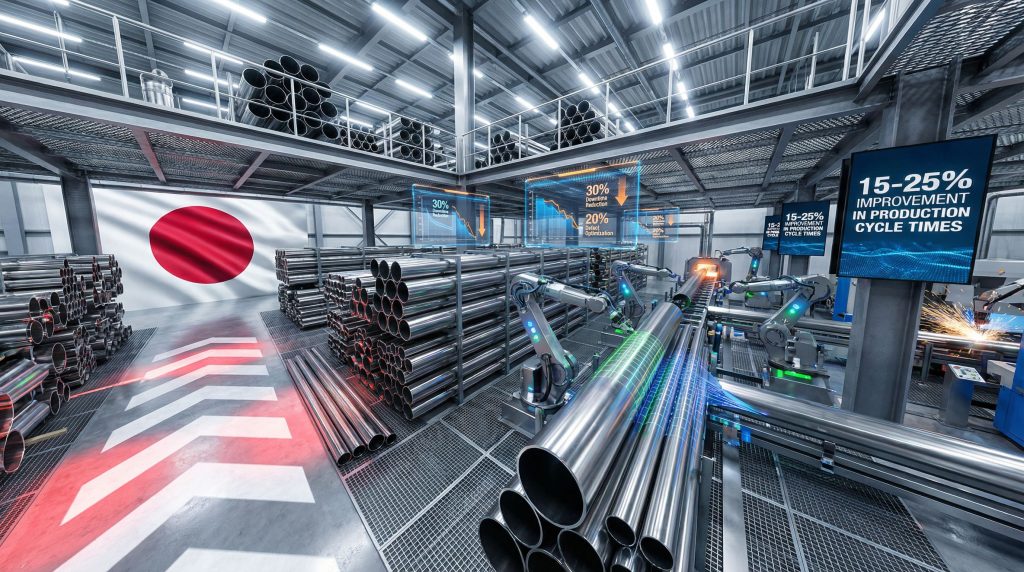
The technological sophistication becomes apparent in equipment recovery protocols, where systems achieve 30% reduction in downtime through predictive maintenance algorithms that identify potential failures before they manifest. JFE Steel's J-mAIster system, operational since 2018, demonstrates this precision-focused methodology by analysing equipment performance patterns and automatically scheduling maintenance interventions during optimal production windows.
Performance Metrics Comparison:
| Manufacturing Aspect | Japanese AI Integration | Conventional Approaches |
|---|---|---|
| Equipment Recovery Time | 30% faster restoration | Standard reactive protocols |
| Defect Rate Reduction | 20% improvement in spiral welded pipes | Post-production quality inspection |
| Process Efficiency | 15-25% cycle time optimisation | Volume-focused throughput metrics |
| Material Waste | 12-18% reduction through predictive algorithms | Standard tolerance margins |
The sensor integration strategy employed by Japanese manufacturers creates unprecedented data collection capabilities. Production lines incorporate laser-guided measurement systems that monitor dimensional accuracy to micrometer precision, spectroscopic analysers that verify chemical composition in real-time, and thermal imaging networks that ensure consistent material properties throughout manufacturing processes.
Computer vision technologies enable surface quality assessment that surpasses human visual inspection capabilities. These systems identify microscopic surface irregularities, measure coating thickness variations, and detect internal structural anomalies that could compromise pipe performance in high-pressure applications. This level of technological advancement showcases an AI transformation case study in industrial manufacturing.
Revolutionary Applications Across Pipe Manufacturing Categories
Japan precision AI in pipe industry implementations demonstrate remarkable adaptability across diverse product categories, each requiring specialised optimisation protocols tailored to specific performance requirements and material characteristics.
High-Performance Steel Pipe Production
Advanced welding systems automatically adjust arc voltage, wire feed rates, and travel speeds based on real-time analysis of material thickness, joint configuration, and atmospheric conditions. These AI-driven protocols achieve welding consistency levels that eliminate human variability whilst accommodating the complex parameter adjustments required for different steel grades and pipe diameters.
The technology proves particularly valuable in oil country tubular goods (OCTG) manufacturing, where dimensional tolerances directly impact connection integrity and pressure ratings. Automated systems monitor wall thickness uniformity, measure thread profile accuracy, and verify metallurgical properties throughout production cycles.
Specialised Telescopic Pipe Systems
Telescopic pipe manufacturing requires extraordinary precision in dimensional control, where tolerances measured in hundredths of millimetres determine product functionality. AI algorithms calculate optimal forming pressures and cooling sequences for each production batch, accounting for material springback characteristics and thermal expansion coefficients.
Smart manufacturing protocols enable batch-specific optimisation rather than standardised production parameters. Each telescopic pipe assembly receives customised forming sequences determined by algorithmic analysis of material properties, dimensional requirements, and intended operating conditions.
Premium Alloy Pipe Applications
Chemical composition consistency represents a critical challenge in premium alloy pipe production, where minor variations in element concentrations can significantly impact corrosion resistance and mechanical properties. AI-driven monitoring systems track alloy composition throughout melting, forming, and heat treatment processes, ensuring consistent material properties across entire production runs.
Key Monitoring Parameters:
- Chromium content variations maintained within ±0.02% tolerance ranges
- Nickel distribution uniformity verified through continuous sampling protocols
- Carbon level stability monitored during heat treatment cycles
- Trace element consistency tracked from raw material input through finished products
Advanced systems compensate for raw material composition variations by automatically adjusting alloying additions during production, ensuring finished products meet precise metallurgical specifications regardless of input material variability.
Economic Framework and Investment Analysis
The financial implications of Japan's precision-focused AI strategy reveal a complex economic model where higher initial investments enable sustained premium market positioning. Unlike volume-driven manufacturers that compete primarily on cost, Japanese companies leverage technological superiority to command pricing premiums that offset elevated production expenses.
Investment Structure Analysis:
| Investment Category | Range | Implementation Timeline |
|---|---|---|
| AI System Development | $5-15 million per facility | 18-36 months |
| Workforce Training Programmes | $1-3 million annually | Ongoing |
| Advanced Sensor Networks | $2-8 million per line | 12-24 months |
| Digital Infrastructure | $3-12 million per site | 24-48 months |
Market positioning data demonstrates the economic viability of this approach. Japan's OCTG casing L80 with premium connections achieved $2,350 per tonne pricing in March 2025, representing a $50-per-tonne monthly increase driven by demand for precision-manufactured products. High-grade OCTG 13 Cr L80 maintained pricing between $5,125-$5,450 per tonne throughout 2025, demonstrating market recognition of quality premiums.
The operational benefits justify substantial capital investments through measurable cost reductions and efficiency improvements. Reduced material waste generates 12-18% cost savings, whilst predictive maintenance protocols achieve 20-30% reduction in unplanned downtime. Premium product pricing enables 15-25% higher margins compared to standard manufacturing approaches. These financial considerations form part of comprehensive investment strategy components for manufacturing modernisation.
"Japanese manufacturers have deliberately pursued premium market positioning enabled by AI-driven precision capabilities, allowing them to maintain profitability despite higher production costs compared to volume-focused competitors."
Trade Policy Impacts and Strategic Adaptations
International trade dynamics have fundamentally altered the competitive landscape for Japanese pipe manufacturers, creating both challenges and opportunities for precision-focused AI strategies. The escalation of U.S. tariff policies throughout 2025 demonstrates how external economic forces can reshape manufacturing strategies regardless of technological advantages.
Tariff Escalation Timeline:
- March 2025: United States reinstated 25% Section 232 tariff on all imported steel and aluminium
- June 2025: Tariff doubled to 50% for steel, aluminium, and derivative products
- September 2025: New US-Japan trade framework established 15% baseline tariff, but steel and aluminium remained at 50%
Export performance data reveals the immediate impact of these policy changes. Japanese seamless OCTG and linepipe exports to the United States declined 25-68% below 2024 levels during most months of 2025. However, selective months (February, May, June, and October) showed positive year-on-year growth, attributed to pre-policy stockpiling by American buyers anticipating further restrictions.
The trade barriers transformed market dynamics in unexpected ways. Whilst macro tariffs became the primary price-driving factor in 2025 rather than technological advantages, Japanese manufacturers demonstrated remarkable adaptability. Japan's digital transformation approach across industries has enabled flexibility in responding to market changes.
Strategic Market Repositioning:
- High-value partnership development through strategic investments like Nippon Steel's U.S. Steel acquisition
- Alternative market cultivation focusing on Middle Eastern and Southeast Asian customers
- Domestic infrastructure emphasis leveraging Japan's aging pipeline replacement needs
- Premium niche consolidation strengthening positions in specialised applications requiring exceptional quality
The Precision Paradox: Examining Systemic Limitations
Japan's pursuit of manufacturing excellence through AI integration creates a fundamental contradiction that industry analysts term the "Precision Paradox." The sophisticated systems that enable world-leading quality standards simultaneously create barriers that limit broader industry adoption and market accessibility.
The technical complexity required to operate these advanced manufacturing systems demands specialised expertise that extends beyond traditional manufacturing skills. Technicians must understand machine learning algorithms, interpret complex sensor data, maintain sophisticated equipment networks, and troubleshoot integrated AI systems across multiple production stages.
Workforce Development Requirements:
- Advanced technical education in AI systems, data analytics, and predictive maintenance
- Continuous training programmes for evolving technology platforms and software updates
- Cross-functional expertise combining metallurgy, electronics, and computer science knowledge
- Problem-solving capabilities for integrated systems where failures cascade across multiple processes
The investment barriers extend beyond financial considerations to encompass organisational transformation requirements. Successful AI implementation requires fundamental changes in production management, quality control protocols, maintenance scheduling, and decision-making processes. These systemic changes create adoption barriers for smaller manufacturers who cannot justify comprehensive organisational restructuring.
Market dynamics amplify this paradox through a self-reinforcing cycle. As Japanese manufacturers achieve greater precision and quality differentiation, they command higher margins that enable further AI investment, widening the technology gap between precision leaders and conventional producers.
The next major ASX story will hit our subscribers first
Future Technology Integration Pathways
Emerging artificial intelligence applications promise to expand Japan precision AI in pipe industry capabilities beyond current quality control and predictive maintenance functions. Next-generation systems integrate advanced analytics with broader manufacturing and lifecycle management objectives.
Advanced Technology Developments:
- Predictive lifecycle management systems that forecast installed pipe system performance over decades of service
- Automated quality certification using blockchain verification for traceability and compliance documentation
- Molecular-level materials optimisation through AI-driven analysis of alloy compositions and microstructures
- Integrated supply chain intelligence optimising raw material sourcing based on quality predictions and cost projections
Collaborative platform development represents a potential solution to the Precision Paradox. Shared AI technologies delivered through subscription-based services could enable smaller manufacturers to access advanced capabilities without massive capital investments. These platforms might provide standardised AI tools, predictive maintenance services, and quality optimisation algorithms as managed services.
Sustainability integration becomes increasingly important as environmental regulations tighten and customers demand lower-carbon manufacturing processes. AI systems are incorporating environmental optimisation algorithms that minimise energy consumption, reduce waste generation, and optimise material utilisation throughout production cycles. These developments contribute to the economic benefits of decarbonisation across industrial sectors.
Environmental Optimisation Metrics:
| Sustainability Factor | AI-Driven Improvement | Implementation Status |
|---|---|---|
| Energy Consumption | 15-20% reduction through process optimisation | Deployed in major facilities |
| Material Waste | 18-25% reduction via predictive algorithms | Expanding across production lines |
| Carbon Emissions | 12-15% decrease through efficiency gains | Pilot programmes underway |
| Water Usage | 20-30% optimisation in cooling systems | Early development stage |
Investment Landscape and Market Opportunities
Japan precision AI in pipe industry developments create multiple investment opportunities across technology development, strategic partnerships, and infrastructure modernisation sectors. The sophisticated manufacturing ecosystem requires specialised suppliers, service providers, and collaborative partners to maintain technological advancement.
Technology development companies specialising in industrial artificial intelligence applications, advanced sensor systems, and manufacturing automation platforms represent significant growth opportunities. Japanese manufacturers' continued expansion of AI capabilities creates sustained demand for specialised technologies, software platforms, and integration services.
Strategic partnership potential exists for international companies seeking access to Japanese precision manufacturing expertise through joint ventures, technology licensing agreements, or collaborative research programmes. These arrangements enable knowledge transfer whilst providing Japanese companies with expanded market access and complementary capabilities.
Infrastructure modernisation projects across Japan's industrial base create substantial opportunities for comprehensive facility upgrades incorporating advanced AI-driven manufacturing technologies. The country's aging industrial infrastructure requires systematic replacement and modernisation to maintain competitive positioning. Modern AI infrastructure solutions provide the foundation for these technological transformations.
Investment Opportunity Categories:
- AI software platform developers creating industrial-specific machine learning applications
- Sensor technology companies producing specialised monitoring and measurement equipment
- System integration specialists designing and implementing comprehensive manufacturing automation solutions
- Training and education providers developing programmes for advanced manufacturing workforce development
The precision manufacturing model's success in pipe production suggests potential applications across other manufacturing sectors where quality differentiation commands premium pricing. Aerospace components, medical devices, and precision instrumentation represent adjacent markets where similar AI-driven precision approaches could create competitive advantages.
Market Expansion Potential:
Understanding Japan precision AI in pipe industry evolution provides insights into broader manufacturing transformation trends. The country's systematic approach to technological integration, workforce development, and market positioning offers lessons applicable across diverse industrial sectors seeking competitive differentiation through artificial intelligence implementation.
The economic model demonstrates that higher initial investments in advanced manufacturing technologies can generate sustained competitive advantages when coupled with strategic market positioning and continuous innovation. Japan's experience suggests that precision-focused AI strategies may prove more sustainable than volume-driven approaches in markets where quality differentiation creates customer loyalty and pricing power.
Disclaimer: This analysis involves forecasts, projections, and speculative elements regarding technology adoption, market trends, and investment opportunities. Readers should conduct independent research and consult qualified professionals before making investment decisions based on this information.
Want to Capitalise on Advanced Manufacturing Technologies?
Discovery Alert's proprietary Discovery IQ model delivers instant notifications on significant ASX mineral discoveries across advanced materials sectors, including companies developing cutting-edge manufacturing technologies and precision materials. Begin your 14-day free trial today to position yourself ahead of the market and identify actionable opportunities in technology-driven manufacturing and materials companies.