June 20, 2026
Libya's Strategic Position in Mediterranean Energy Markets
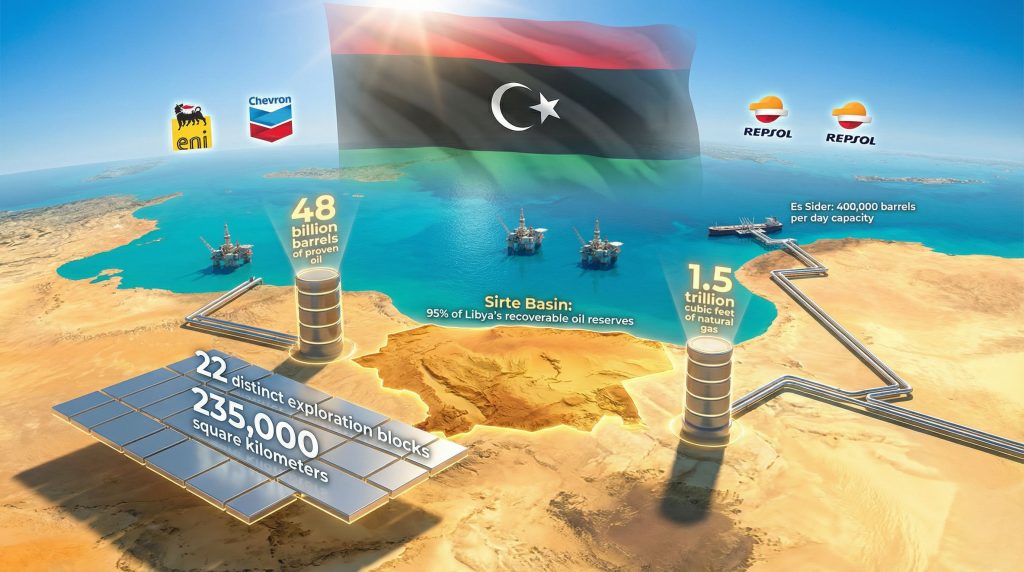
Libya maintains one of the world's most strategically positioned hydrocarbon endowments, with approximately 48.4 billion barrels of proven oil reserves representing Africa's largest documented petroleum resource base. The country's natural gas reserves, estimated between 1.5 to 1.7 trillion cubic meters, provide substantial potential for Mediterranean gas market integration, particularly as global oil price rally trends continue reshaping regional energy dynamics.
The nation's 1,600-kilometer Mediterranean coastline creates exceptional logistical advantages for European market access. Transportation distances to major European refineries range from 3,000 to 4,500 nautical miles, significantly shorter than alternative African suppliers. This geographic positioning enables competitive shipping costs and reduced delivery timeframes for European customers.
Libya's crude oil specifications offer premium market characteristics with typical API gravity ranging 35-40 degrees and sulfur content below 0.5%. These light, sweet crude qualities command price premiums of $2-4 per barrel above Brent crude benchmarks in European refining markets.
Current production capacity fluctuates between 600,000-1,000,000 barrels per day, though operational disruptions frequently constrain actual output below technical capacity. Export infrastructure includes major terminals at Es Sider (400,000 bpd capacity), Ras Lanuf (220,000 bpd), and Zueitina (200,000 bpd), providing substantial evacuation capabilities.
Geological Foundation and Basin Architecture
Libya's petroleum systems developed during Mesozoic and Cenozoic geological periods, with primary hydrocarbon generation occurring in Paleozoic and Mesozoic source rocks. The country's sedimentary basins benefit from proven charge systems, established migration pathways, and diverse trap geometries created through tectonic evolution over geological time.
Key Petroleum System Components:
• Source Rocks: Silurian-Devonian marine shales and Jurassic-Cretaceous mudstones
• Reservoir Systems: Paleocene sandstones and Cretaceous carbonates
• Seal Formations: Multiple stratigraphic levels providing hydrocarbon retention
• Trap Styles: Structural anticlines, fault closures, and combination traps
Thermal maturity modelling indicates peak oil window achievement in deeper basin areas exceeding 3,500 metres depth, with excellent migration efficiency supporting multiple reservoir charging events throughout geological history.
When big ASX news breaks, our subscribers know first
Understanding Libya's Historic 2026 Licensing Round
The National Oil Corporation's announcement on February 11, 2026 marked Libya's return to international petroleum licensing after an 18-19 year hiatus since the previous 2007 bidding round. This extended gap reflects the complex geopolitical environment that deterred foreign investment following the 2011 civil conflict and subsequent governance instability.
Libya oil and gas exploration blocks attracted significant international attention, with major energy companies recognising the substantial potential despite political risks. Furthermore, this licensing round represented a crucial step towards stabilising the country's energy sector.
Major International Winners Include:
• Chevron: Secured Sirte S4 onshore exploration licence
• Eni-QatarEnergy Partnership: Awarded Offshore Area 01
• Repsol-MOL-TPOC Consortium: Obtained Offshore Area 07
• Aiteo (Nigerian independent): Won M1 licence in Murzuq Basin
The diverse international participation demonstrates renewed confidence in Libya's regulatory framework and institutional stability. European majors, Middle Eastern strategic investors, and African independents constructed risk-sharing partnerships to distribute geopolitical exposure whilst leveraging complementary operational capabilities.
Modern Production Sharing Agreement Framework
Libya's updated PSA terms incorporate lessons learned from other African producers, featuring enhanced risk mitigation structures and international best practices:
Financial Terms:
• Graduated royalty structures based on production levels
• Cost recovery mechanisms with specified caps and timelines
• Profit oil splits adjusting to project economics
• Force majeure provisions addressing operational disruptions
Operational Requirements:
• 3D seismic data acquisition and interpretation mandates
• Environmental impact assessment compliance
• Local content requirements (typically 5-15% direct employment)
• Community consultation and engagement protocols
These frameworks represent significant evolution from previous licensing rounds, incorporating modern risk-sharing principles and environmental, social, and governance (ESG) standards aligned with international expectations.
Evaluating Libya's Primary Sedimentary Basins
Sirte Basin: Libya's Petroleum Heartland
The Sirte Basin accounts for approximately 95% of Libya's recoverable oil reserves, representing one of the world's most prolific hydrocarbon provinces. Geological formations primarily date to Cretaceous and Paleocene periods, with complex structural arrangements creating multiple reservoir systems at varying depths.
Production Statistics:
| Parameter | Range | Details |
|---|---|---|
| API Gravity | 35-40 degrees | Light, sweet crude characteristics |
| Sulfur Content | <0.5% | Premium refining specifications |
| Remaining Reserves | 25-30 billion barrels | Substantial resource base |
| Current Capacity | 600,000-800,000 bpd | Variable due to operational factors |
The basin's petroleum systems demonstrate exceptional source rock quality with moderate to good Type II-III organic matter achieving thermal maturity in deeper structural depocentres. Migration efficiency remains excellent due to multiple pathways connecting source formations to trap geometries.
Chevron makes long-awaited Libya return with its Sirte S4 award representing significant American energy sector re-engagement with Libya's most established petroleum province. This positioning provides access to proven geological systems with extensive production history and established infrastructure connectivity.
Murzuq Basin: Southwest Frontier Opportunities
Located in Libya's southwestern region, the Murzuq Basin exhibits geological similarities to Algeria's highly successful Hassi Messaoud field complex. Both basins share Paleozoic formations with proven hydrocarbon systems and significant undrilled acreage.
Exploration Advantages:
• Lower exploration density compared to mature Sirte Basin
• Proven petroleum systems with commercial discoveries
• Infrastructure development opportunities for regional integration
• Cross-border synergies with Algerian operations
Aiteo's M1 licence acquisition represents notable African company participation in Libya's upstream sector, suggesting growing regional energy cooperation and South-South investment trends. Nigerian independent producers bring specialised knowledge from similar geological environments across West Africa.
Development requirements include pipeline infrastructure extending approximately 800-1,000 kilometres to existing export terminals, representing significant capital investment opportunities for integrated development strategies.
What Makes the Ghadames Basin Unique?
The Ghadames Basin extends across Libya, Algeria, and Tunisia borders, creating unique opportunities for coordinated development strategies and shared infrastructure investments. Cross-border petroleum resources require bilateral agreements between petroleum ministries and regional coordination frameworks.
Development Considerations:
• Unitised field development potential across national boundaries
• Shared pipeline and processing infrastructure reducing per-barrel costs
• Regional supply chain integration opportunities
• Coordinated regulatory frameworks for cross-border operations
Libya maintains bilateral exploration agreements with both Algeria and Tunisia, facilitating potential joint development projects in shared geological formations. Regional bodies provide coordination mechanisms for transboundary resource management.
International Operator Risk Assessment Methodologies
Technical Risk Evaluation Parameters
International energy companies employ sophisticated financial modelling frameworks incorporating multiple risk dimensions when evaluating Libya oil and gas exploration blocks:
Geological Risk Factors:
• Success Probability: 15-25% for frontier exploration areas
• Reserve Size Modelling: Log-normal distribution analysis based on analogue fields
• Development Cost Estimates: Infrastructure constraints and local conditions
• Resource Quality: Fluid characteristics and recovery factors
Industry standard practice involves Monte Carlo simulation techniques for field size distributions, utilising analogue field databases from comparable geological settings. Proven basins typically demonstrate 40-60% success rates, whilst high-risk frontier areas range 10-30%.
Financial Return Calculations
Key Financial Metrics:
| Metric | Target Range | Application |
|---|---|---|
| Net Present Value | 8-15% discount rates | Company-specific hurdle rates |
| Internal Rate of Return | 15-25% frontier, 12-18% development | Risk-adjusted expectations |
| Payback Period | 5-8 years | Commercial development timeline |
| Break-even Oil Price | $35-70/barrel | Onshore to deepwater variance |
Break-even Analysis by Development Type:
• Onshore discoveries: $35-45 per barrel
• Shallow water offshore: $45-55 per barrel
• Deepwater offshore: $55-70 per barrel
Political Risk Premium Assessment
Libya's political risk premiums remain elevated compared to North African peers, reflecting ongoing governance challenges and operational uncertainties. Companies incorporate comprehensive political risk insurance and force majeure provisions to protect against potential disruptions.
Comparative Political Risk Assessment:
| Country | Political Risk Level | Insurance Premium Impact |
|---|---|---|
| Libya | High | 3-5% of project value |
| Algeria | Medium | 2-3% of project value |
| Egypt | Medium-Low | 1-2% of project value |
| Tunisia | Low | 0.5-1% of project value |
Risk mitigation strategies include consortium participation for exposure diversification, political risk insurance coverage, and staged investment approaches allowing flexibility based on evolving conditions.
Infrastructure Development Requirements and Opportunities
Export Terminal Capacity and Logistics
Libya's existing export infrastructure provides substantial capacity for increased production volumes:
Major Export Terminals:
• Es Sider: 400,000 barrels per day capacity
• Ras Lanuf: 220,000 barrels per day capacity
• Zueitina: 200,000 barrels per day capacity
• Marsa el Brega: 120,000 barrels per day capacity
• Zawiya: 300,000 barrels per day capacity
Combined terminal capacity exceeds 1.2 million barrels per day, providing substantial evacuation capability for expanded production from new Libya oil and gas exploration blocks. Strategic positioning along the Mediterranean coast enables direct access to European refining centres.
Pipeline Network Expansion Planning
New block developments will require significant pipeline investments connecting remote exploration areas with existing export infrastructure. Cost estimates for major pipeline projects range from $2-5 million per kilometre depending on terrain complexity and capacity requirements.
Infrastructure Investment Requirements:
• Murzuq Basin Development: 800-1,000 km pipeline to coast
• Offshore Gas Processing: Subsea infrastructure and onshore facilities
• Regional Integration: Cross-border pipeline connections
• Capacity Expansion: Existing system upgrades and optimisation
Natural Gas and LNG Development Potential
Libya's natural gas reserves present significant opportunities for liquefied natural gas (LNG) development, particularly for offshore discoveries in the Mediterranean. Preliminary feasibility studies suggest potential for 5-10 million tonnes per annum LNG capacity.
Mediterranean gas market dynamics create additional value streams for associated gas production from oil-focused developments. Regional gas pricing typically follows oil-indexed formulas with 6-9 month pricing lags, providing predictable revenue streams.
Moreover, these developments align with broader US natural gas forecasts indicating growing demand for cleaner hydrocarbon alternatives.
Gas Monetisation Options:
• Domestic power generation and industrial consumption
• Regional pipeline exports to European markets
• LNG development for global market access
• Gas-to-liquids processing for premium product yields
Strategic Partnerships and Investment Patterns
European Energy Security Integration
Recent Libya oil and gas exploration blocks awards reflect European Union priorities for energy supply diversification away from traditional suppliers. Italian and Spanish companies secured strategic positions aligned with their national energy security objectives.
However, these developments occur within a broader context of energy exports challenges facing traditional suppliers globally.
Eni-QatarEnergy Mediterranean Partnership:
The Offshore Area 01 award strengthens existing collaboration between Eni and QatarEnergy across Mediterranean operations. This partnership leverages:
• Combined technical expertise in deepwater exploration
• Integration opportunities with existing regional operations
• Potential for regional gas hub development strategies
• Risk sharing across multiple Mediterranean projects
Repsol-MOL-TPOC Consortium Approach:
The multi-national consortium structure for Offshore Area 07 demonstrates sophisticated risk-sharing approaches:
• Technology transfer opportunities for local capacity building
• Coordinated development planning across geographic regions
• Diversified operational experience from multiple markets
• Financial risk distribution among consortium members
North American Strategic Re-engagement
Chevron's successful bid for Sirte S4 represents significant American energy sector re-engagement with Libya after years of limited involvement due to political instability. This award positions Chevron for potential expansion across Libya's petroleum sector.
Strategic Implications:
• Access to Libya's most prolific onshore petroleum province
• Potential for additional block acquisitions in future licensing rounds
• Technology transfer opportunities for enhanced recovery techniques
• Integration with broader North African regional strategies
The next major ASX story will hit our subscribers first
Regulatory Framework Evolution and Compliance Requirements
Production Sharing Agreement Modernisation
Libya's updated PSA terms reflect international best practices developed through decades of global petroleum industry evolution:
Key Framework Elements:
• Cost Recovery: Specified limits and timeline provisions
• Profit Oil Splits: Performance-based adjustment mechanisms
• Royalty Structures: Graduated rates based on production levels
• Local Content: Employment and procurement requirements
Environmental and Social Governance Integration
New exploration licences mandate comprehensive ESG compliance frameworks addressing international standards:
Environmental Requirements:
• Detailed environmental impact assessments
• Baseline environmental condition documentation
• Emissions monitoring and reporting protocols
• Waste management and disposal standards
Social Engagement Protocols:
• Community consultation and engagement procedures
• Local employment and training programmes
• Transparency and reporting standards
• Grievance mechanisms and stakeholder feedback systems
Market Dynamics and Valuation Methodologies
Oil Price Sensitivity and Premium Pricing
Libyan crude oil commands premium pricing in European markets due to exceptional quality characteristics and strategic positioning. Typical price differentials range from $2-4 per barrel above Brent crude benchmarks.
Quality Premium Factors:
• Light crude specifications (35-40 API gravity)
• Low sulphur content (<0.5%)
• Optimal refining yields for European refineries
• Reduced transportation costs and delivery times
Comparative Basin Economics Analysis
Libya's exploration opportunities compete with alternatives across North Africa and the Eastern Mediterranean:
| Region | Finding Costs ($/BOE) | Development Costs ($/BOE) | Political Risk |
|---|---|---|---|
| Libya | $8-12 | $15-25 | High |
| Algeria | $6-10 | $12-20 | Medium |
| Egypt | $10-15 | $18-28 | Medium-Low |
| Tunisia | $12-18 | $20-30 | Low |
Despite elevated political risk premiums, Libya's geological endowment and infrastructure advantages support competitive project economics across multiple oil price scenarios. Consequently, international operators continue evaluating opportunities despite regional uncertainties.
Gas Market Integration Dynamics
Mediterranean gas markets provide substantial monetisation opportunities for associated gas production from Libya oil and gas exploration blocks. Regional supply-demand dynamics favour new gas supplies, particularly given European energy security priorities.
Additionally, these dynamics occur alongside global shifts in oil market influence, with developments in OPEC market influence affecting regional pricing structures.
Gas Market Characteristics:
• Oil-indexed pricing formulas with 6-9 month lags
• Seasonal demand variations supporting storage opportunities
• Regional pipeline infrastructure enabling market access
• LNG export potential for global market diversification
Technology Transfer and Capacity Building Initiatives
Local Workforce Development
Successful block development requires comprehensive technology transfer programmes and local capacity building initiatives. International operators typically allocate 3-5% of capital expenditure to training and workforce development programmes.
Capacity Building Components:
• Technical training programmes for local petroleum engineers
• Operational skills development for field workers
• Management and supervisory capability building
• Safety and environmental training protocols
Technology Integration Requirements
Modern exploration standards mandate advanced technology deployment across all phases of development:
Seismic Technology:
• High-resolution 3D seismic acquisition and processing
• Advanced subsurface modelling and interpretation
• Integrated geological and geophysical analysis
• Real-time drilling and completion optimisation
Digital Integration:
• Automated monitoring and control systems
• Data analytics and machine learning applications
• Remote operations and digital twin technologies
• Integrated asset management platforms
Future Outlook and Energy Transition Considerations
Carbon Capture and Storage Potential
Libya's geological formations offer significant potential for carbon capture and storage (CCS) projects, potentially creating additional revenue streams whilst supporting global decarbonisation objectives. Deep saline aquifers and depleted hydrocarbon reservoirs provide suitable storage capacity.
CCS Development Opportunities:
• Industrial carbon capture from petroleum operations
• Regional CCS hub development for Mediterranean industries
• Enhanced oil recovery applications using captured CO2
• International carbon credit revenue generation
Renewable Energy Integration
Future Libya oil and gas exploration blocks development may incorporate renewable energy components for operational power requirements, reducing carbon footprints and operational costs:
Integration Strategies:
• Solar power systems for remote field operations
• Wind energy integration for coastal facilities
• Hybrid power systems optimising renewable and conventional sources
• Energy storage solutions supporting grid stability
Long-term Strategic Positioning
Libya's petroleum industry evolution will likely emphasise several key areas. Furthermore, regional developments in markets like Saudi exploration licenses provide additional competitive context for African petroleum resources.
• Operational Excellence: Enhanced recovery techniques and digital optimisation
• Environmental Performance: ESG compliance and emissions reduction
• Regional Integration: Cross-border cooperation and infrastructure sharing
• Technology Leadership: Advanced exploration and production techniques
The successful development of Libya oil and gas exploration blocks depends on continued political stability, international cooperation, and technological advancement. As global energy markets transition toward lower-carbon futures, Libya's petroleum resources will play crucial roles in ensuring energy security whilst supporting sustainable development objectives.
Disclaimer: This analysis contains forward-looking statements and projections based on current market conditions and available data. Petroleum exploration involves significant geological, technical, and political risks that may impact project outcomes and financial returns. Readers should conduct independent due diligence and consult qualified professionals before making investment decisions.
Ready to Capitalise on Energy Sector Discoveries?
Discovery Alert's proprietary Discovery IQ model delivers real-time alerts on significant ASX mineral discoveries, including critical minerals essential for energy transition technologies. Understand why major mineral discoveries can lead to exceptional market returns by exploring Discovery Alert's dedicated discoveries page, and begin your 14-day free trial today to position yourself ahead of the market.