August 4, 2026
The Invisible Infrastructure That Determines Whether a Mine Profits or Bleeds
Every tonne of ore extracted from the earth passes through a critical verification process before it translates into revenue. Analytical results must be trusted, chain-of-custody records must be defensible, and grade data must reach decision-makers before the opportunity to act on it expires. For decades, mining laboratories attempted to manage this process through paper logs, spreadsheets, and disconnected analytical instruments. The consequences were predictable: transcription errors, delayed reporting, regulatory exposure, and ore misclassification events that carried direct financial penalties.
The adoption of LIMS in the mining industry represents a fundamental shift in how analytical data is governed, not as a compliance exercise, but as a strategic operational capability. Understanding what separates a mining-grade Laboratory Information Management System from generic alternatives, and why the distinction matters enormously, requires examining the technical and commercial demands that modern mining places on its laboratory infrastructure.
When big ASX news breaks, our subscribers know first
Understanding What a Mining LIMS Actually Does
A Laboratory Information Management System, in its mining-specific form, is purpose-engineered software that governs the complete lifecycle of ore samples. From the moment a drill core or blasthole sample is collected at the face, through preparation, digestion, and instrumental analysis, to the generation of a final Certificate of Analysis, every step is tracked, timestamped, and made auditable within a single system.
This is a materially different proposition from the LIMS platforms used in pharmaceutical quality control or food safety testing. Those environments, while demanding in their own right, operate within stable infrastructure, manageable sample volumes, and relatively contained regulatory frameworks. Mining laboratories contend with a far more complex operating environment.
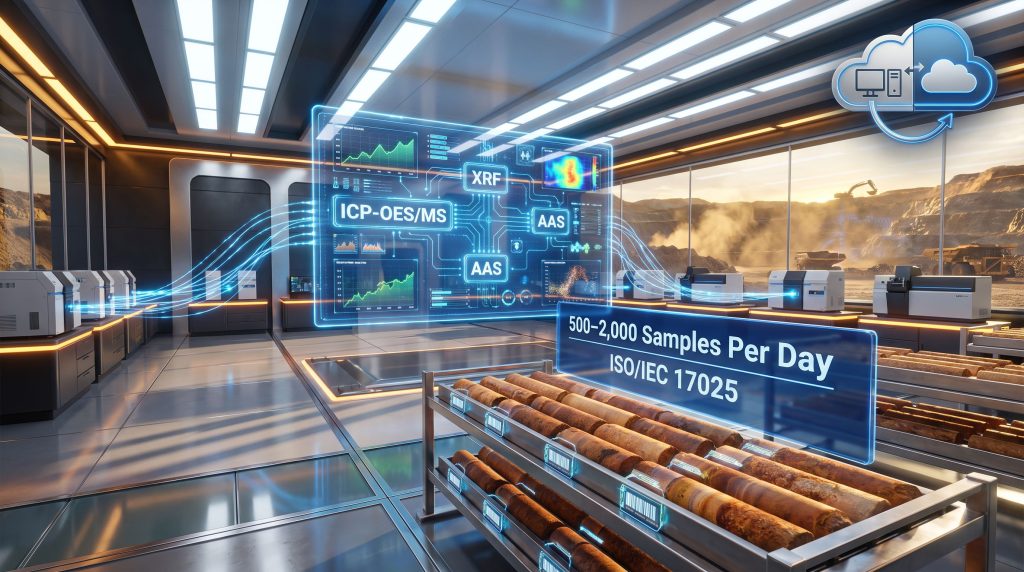
Consider the volume dimension alone. A mid-tier production operation conducting routine grade control may process between 500 and 2,000 samples per day. A system that performs adequately at 200 samples will not necessarily maintain data integrity or processing speed when volumes spike during an intensive drilling campaign. Mining-grade LIMS platforms are engineered for throughput at the upper end of these ranges without performance degradation.
Beyond volume, the geographic complexity of modern mining operations creates data management challenges that no general laboratory software is designed to address. A single company might simultaneously operate remote drill programs, core processing facilities, preparation laboratories, and production assay labs across multiple time zones and jurisdictions. Maintaining an unbroken, consistent chain of custody across this dispersed footprint requires architecture specifically built for multi-site coordination.
The Eight Capability Domains That Separate Mining-Grade Platforms
| Capability Domain | Operational Function |
|---|---|
| Sample Management | End-to-end chain of custody from drill site to archive |
| Instrument Integration | Automated data capture from ICP-OES/MS, XRF, and AAS |
| Regulatory Compliance | ISO/IEC 17025 documentation, audit trails, CoA generation |
| Data Security | Role-based access controls, encrypted storage, tamper-evident logs |
| Statistical Quality Control | SQC/SPC monitoring and process performance analytics |
| Workflow Automation | Task routing, bottleneck detection, real-time status tracking |
| Deployment Flexibility | Hybrid edge-cloud architecture for remote site environments |
| AI-Powered Analytics | Predictive modelling, anomaly detection, process optimisation |
Chain of Custody: The Foundation That Everything Else Depends On
Among all the functions a mining LIMS performs, chain-of-custody management carries the highest strategic weight. An unbroken, auditable record for every sample is not simply a regulatory requirement; it is the precondition for trusting any analytical result that flows from the laboratory into a mine plan or resource estimate.
When chain-of-custody integrity fails, the consequences cascade through the entire operation. Resource models built on compromised data produce flawed mine plans. Ore/waste misclassification decisions made from inaccurate grade information carry immediate revenue consequences. In the context of JORC Code or NI 43-101 resource reporting, data provenance failures can have material disclosure implications that extend well beyond the operational to the regulatory and legal.
A properly implemented mining LIMS assigns a unique identifier to each sample at the point of collection and tracks every physical and analytical custody transfer through a tamper-evident log. No result can be reported without a complete and validated custody record. In multi-site operations, this function becomes the connective tissue that allows management to trust data generated across geographically dispersed facilities. Furthermore, understanding geological logging codes is essential to ensuring the sample data feeding into a LIMS is consistently categorised and defensible from the outset.
Instrument Integration and the End of Manual Transcription
One of the most consequential, and often underappreciated, benefits of mining LIMS implementation is the elimination of manual data transcription between analytical instruments and reporting systems. In a laboratory still relying on manual processes, an analyst reads a result from an instrument display and enters it into a spreadsheet or paper log. This step, repeated thousands of times per day, is a systematic source of grade discrepancy.
Direct instrument integration removes this failure mode entirely. A mining LIMS with native connectivity to ICP-OES (Inductively Coupled Plasma Optical Emission Spectrometry), ICP-MS (Mass Spectrometry), XRF (X-Ray Fluorescence), and AAS (Atomic Absorption Spectrometry) captures results automatically the moment an analytical run completes. The data flows from instrument to system without human intermediaries, and any result that falls outside pre-defined acceptance windows is flagged automatically before it can influence a decision.
This matters particularly in high-throughput blasthole sampling programs, where grade data directly informs dig line placements in open-pit operations. A misclassified blasthole result that sends ore to the waste dump, or routes waste rock to the mill, represents a double financial loss. At the volume and pace of modern grade control programs, the cumulative impact of even a small transcription error rate is substantial. Investors and technical teams alike benefit from interpreting drill results within the context of a verified, instrument-integrated data chain.
QA/QC Automation: The Hidden Compliance Engine
Quality assurance and quality control protocols in mining laboratories follow a structured methodology that experienced geochemists will recognise as fundamental to defensible analytical data. Every batch submitted for analysis must include blanks to detect contamination, field and pulp duplicates to assess sampling and preparation precision, and certified reference materials (CRMs) to validate instrument calibration and accuracy.
Manually managing this insertion protocol across hundreds of batches per day, and then reviewing the resulting control data against acceptance limits, represents an enormous administrative burden. A mining LIMS automates the entire sequence:
-
Blank, duplicate, and CRM insertion is executed automatically according to pre-configured batch composition rules
-
Control chart monitoring flags any result that breaches defined tolerance limits in real time
-
Batch rejection and re-analysis workflows are triggered automatically without requiring manual intervention
-
Certificate of Analysis generation draws from the validated dataset and is produced within the system, maintaining a complete audit trail
The compounding regulatory benefit is significant. Mining operations subject to ISO/IEC 17025 laboratory accreditation requirements, environmental monitoring legislation, and commodity-specific reporting codes face a documentation burden that multiplies with operational scale. Automated QA/QC systems convert this complexity into a manageable, continuously updated compliance record rather than a periodic manual effort concentrated around audit cycles.
Metallurgical Testing and the Geometallurgical Opportunity
Beyond grade control, a mining LIMS plays a less commonly discussed but strategically significant role in metallurgical test programs. Flotation trials, leach tests, and gravity separation experiments generate complex datasets that must be linked to specific ore domains, sample preparation records, and instrumental analyses. Managing these relationships manually introduces both errors and delays that directly affect processing plant optimisation decisions.
What is less well understood outside specialist circles is the connection between LIMS data management capability and the emerging discipline of geometallurgy. Geometallurgy seeks to build spatially continuous models of ore processability, not just grade, by integrating geological, mineralogical, and metallurgical test data across an entire deposit. The quality of these models depends entirely on the integrity and completeness of the underlying laboratory data.
A LIMS that links drill sample records to mineralogical characterisation data (from instruments such as QEMSCAN or MLA automated mineralogy systems) and then connects those records to flotation or leach recovery results creates the data architecture that geometallurgical modelling requires. Moreover, 3D geological modelling becomes far more reliable when underpinned by the verified, spatially referenced laboratory datasets that a well-implemented LIMS produces. Operations that invest in this capability gain the ability to predict processing plant performance for different ore types before those ores reach the mill, allowing proactive blending and reagent optimisation strategies rather than reactive adjustments.
The next major ASX story will hit our subscribers first
Environmental Monitoring: The Regulatory Dimension That Cannot Be Overlooked
Modern mining operations carry environmental monitoring obligations that extend far beyond the production laboratory. Water quality at site boundaries, soil contamination across the disturbance footprint, and air quality measurements at specified receptor points all generate analytical data that must be systematically collected, validated, and reported to regulatory authorities on defined schedules.
A mining LIMS that extends its sample management architecture to environmental monitoring programs provides several critical advantages:
-
Automated reporting workflows aligned with permit conditions ensure submission deadlines are met without manual scheduling
-
Time-stamped, tamper-evident records create a defensible data history for regulatory audits and, when necessary, legal proceedings
-
Trend analysis across monitoring rounds allows environmental teams to identify deteriorating parameters before they breach compliance thresholds, enabling proactive intervention
-
Integration with operational data can reveal correlations between production activities and environmental monitoring results, supporting both compliance management and process improvement
In jurisdictions where environmental non-compliance carries operational suspension risk, the value of automated, reliable environmental data management extends directly to production continuity. Australian Mining notes that lab data is increasingly regarded as the key to unlocking the modern mine, a perspective that underscores just how central LIMS infrastructure has become to responsible operations.
The Connectivity Challenge: Why Remote Mining Demands a Different Architecture
The deployment context that most sharply distinguishes mining LIMS from laboratory software in other industries is the physical environment in which mining operations function. Pharmaceutical or food safety laboratories typically occupy purpose-built facilities with reliable power supply and stable network connectivity. A significant proportion of mining laboratories operate at the end of remote access roads, in desert environments, high-altitude locations, or offshore island settings, where internet connectivity is intermittent at best.
Generic cloud-based laboratory software cannot accommodate this reality. When connectivity drops, operations relying on continuous cloud access either halt or resort to manual fallback procedures that reintroduce exactly the data quality risks a LIMS is meant to eliminate.
The hybrid edge-cloud deployment architecture resolves this problem through a two-layer approach:
-
Local edge computing nodes at each remote site process and store all laboratory data in real time, entirely independently of network connectivity
-
Automated cloud synchronisation occurs whenever connectivity is available, reconciling local records against the centralised database without duplication or data loss
-
Single source of truth is maintained across all sites regardless of the network events that occur between synchronisation cycles
This architecture has become the de facto standard expectation for enterprise-grade mining LIMS deployments, particularly for operations in emerging mining jurisdictions across Africa, Latin America, and remote regions of Australia and Canada where infrastructure quality varies significantly.
Evaluating LIMS Platforms: A Structured Approach for Mining Operations
The selection of a LIMS platform represents a long-horizon technology commitment. Unlike software categories where switching costs are relatively low, a mining LIMS becomes deeply embedded in laboratory workflows, instrument configurations, regulatory documentation systems, and data reporting pipelines. The consequence of a poor selection compounds over time.
A rigorous evaluation should test candidate platforms against the following criteria:
-
Peak throughput capacity at the operation's projected maximum daily sample volume, not just average volumes
-
Native instrument integration with the specific analytical equipment in use, without dependency on third-party middleware that creates an additional failure point
-
Multi-site chain-of-custody architecture validated against the operation's geographic footprint
-
Regulatory coverage for all applicable frameworks: ISO/IEC 17025, national environmental legislation, and relevant commodity reporting codes
-
Edge-cloud deployment capability demonstrated in comparable remote site environments, not just described in product documentation
-
AI and statistical process control functionality, including the maturity of predictive analytics and anomaly detection capabilities
-
Vendor track record in comparable mining operations, assessed through direct reference conversations with operational teams rather than case study documents
-
Total cost of ownership across a five-to-ten-year horizon, including implementation, training, integration, and ongoing support
| Platform | Key Strength | Deployment Model |
|---|---|---|
| Thermo Scientific SampleManager | Deep instrument integration, enterprise-scale workflows | On-premise / Cloud |
| LabKey | Flexible data architecture, strong analytics layer | Cloud / Hybrid |
| OnLIMS | Purpose-built for high-volume mining sample workflows | Cloud / Hybrid |
Platform selection should always be validated through a structured proof-of-concept evaluated against site-specific operational requirements before contractual commitment.
The AI Frontier: From Passive Data Repository to Active Intelligence
The trajectory of LIMS in the mining industry is moving decisively beyond passive sample tracking and compliance documentation toward active analytical intelligence. The next generation of platforms is integrating machine learning capabilities that change the role of the system from a record-keeper to a decision-support engine. In addition, AI in mineral exploration is accelerating the pace at which predictive models can be applied to real-time laboratory datasets, making the integration between LIMS and AI-driven tools increasingly significant.
Emerging capabilities with practical operational applications include:
-
Predictive grade modelling that correlates historical sample datasets with geological variables to forecast ore quality ahead of extraction, allowing mine planners to anticipate grade variability rather than react to it
-
Automated anomaly detection that identifies statistically unusual analytical results before they propagate into resource models or processing parameters, with confidence-weighted flagging that distinguishes genuine geological variability from instrument drift or sampling error
-
Adaptive QA/QC thresholds driven by machine learning models that adjust control limits dynamically based on ore type characteristics and instrument performance history, reducing both false positives and missed failures compared to static control limits
As autonomous drilling systems, sensor-based ore characterisation technologies, and real-time process control platforms proliferate across the mining industry, the LIMS transitions from a laboratory management tool into the central data integration layer connecting geological intelligence with processing optimisation. Its strategic importance in the digitally transformed mine extends well beyond its origins in sample tracking.
Frequently Asked Questions: LIMS in the Mining Industry
What does LIMS stand for in mining?
LIMS stands for Laboratory Information Management System. In a mining context, it refers to a specialised software platform that manages the complete lifecycle of ore samples, automates analytical workflows, ensures regulatory compliance, and integrates directly with laboratory instruments to deliver accurate, real-time data across single or multi-site mining operations.
Why do mining laboratories need a specialised LIMS rather than a general platform?
Mining laboratories operate under conditions, including extreme sample volumes of up to 2,000 samples per day, remote site deployments with intermittent connectivity, multi-stage chain-of-custody requirements, and complex overlapping regulatory frameworks, that general laboratory software is not engineered to accommodate. Mining-specific LIMS platforms address these constraints directly through purpose-built architecture. Proper drill results interpretation also depends on the integrity of these specialised systems to ensure that reported grades reflect genuine geological conditions rather than data handling artefacts.
What analytical instruments does a mining LIMS typically integrate with?
Mining LIMS platforms are designed to interface directly with ICP-OES, ICP-MS, XRF, and AAS, the primary instruments used for elemental and mineralogical analysis in mining laboratories. Advanced platforms are also beginning to integrate with automated mineralogy systems such as QEMSCAN to support geometallurgical data workflows. Thermo Fisher's mining LIMS solutions offer a practical example of deep instrument integration at enterprise scale.
How does a mining LIMS support regulatory compliance?
By automating the creation, storage, and retrieval of documentation required under ISO/IEC 17025, environmental monitoring regulations, and commodity reporting codes including JORC and NI 43-101, a mining LIMS maintains continuous audit readiness. It generates Certificates of Analysis, enforces QA/QC protocols, and maintains tamper-evident data records that satisfy both internal governance and external regulatory requirements.
What is a hybrid edge-cloud LIMS deployment?
A hybrid edge-cloud deployment combines local data processing at remote mine sites through edge computing nodes with centralised cloud storage and management. This architecture ensures laboratory operations continue uninterrupted during connectivity outages, while maintaining a single synchronised data record across all operational sites once connectivity is restored.
Can a mining LIMS integrate with mine planning and ERP systems?
Modern mining LIMS platforms are designed with open API architectures enabling integration with mine planning software, process control historians, and enterprise resource planning systems. This connectivity ensures that laboratory intelligence flows directly into operational and financial decision-making processes rather than residing in an isolated data environment.
LIMS as Strategic Infrastructure, Not Software
The framing of a Laboratory Information Management System as a software purchase underestimates what it represents in operational terms. For a mining operation processing hundreds of thousands of samples annually, with resource estimates, mine plans, processing parameters, regulatory submissions, and commercial agreements all depending on the integrity of laboratory data, LIMS in the mining industry is the analytical infrastructure upon which the entire operation rests.
The decision to implement a mining-grade LIMS, and to select a platform that genuinely meets the technical demands of the operating environment, is consequently a strategic decision with consequences measured in ore recovery rates, regulatory standing, resource estimate credibility, and ultimately shareholder value. Operations that treat it as a compliance cost rather than a competitive capability will find that distinction reflected in their performance over time.
Key takeaways for mining operations evaluating LIMS solutions:
-
A mining LIMS governs eight distinct capability domains from chain of custody through AI-powered analytics
-
High-throughput operations require platforms validated for 500 to 2,000 samples per day without latency
-
Hybrid edge-cloud architecture is the non-negotiable solution for remote site data continuity
-
Direct instrument integration with ICP-OES/MS, XRF, and AAS eliminates manual transcription as a source of grade error
-
Regulatory compliance automation spanning ISO/IEC 17025, environmental frameworks, JORC, and NI 43-101 converts a complex documentation burden into a manageable automated workflow
-
The strategic direction of mining LIMS platforms is toward AI-augmented intelligence, positioning these systems as the central data layer of the digitally transformed mine
Further editorial coverage on digital transformation and laboratory management in the mining sector is published regularly by Mining and Minerals Today at m-mtoday.com.
Want to Identify the Next Major ASX Mineral Discovery Before the Market Moves?
Discovery Alert's proprietary Discovery IQ model delivers real-time alerts the moment significant mineral discoveries are announced on the ASX, transforming complex geological and analytical data into actionable investment insights for both short-term traders and long-term investors. Explore Discovery Alert's discoveries page to understand the historic returns major mineral discoveries have generated, then start your 14-day free trial to position yourself ahead of the broader market.