May 15, 2026
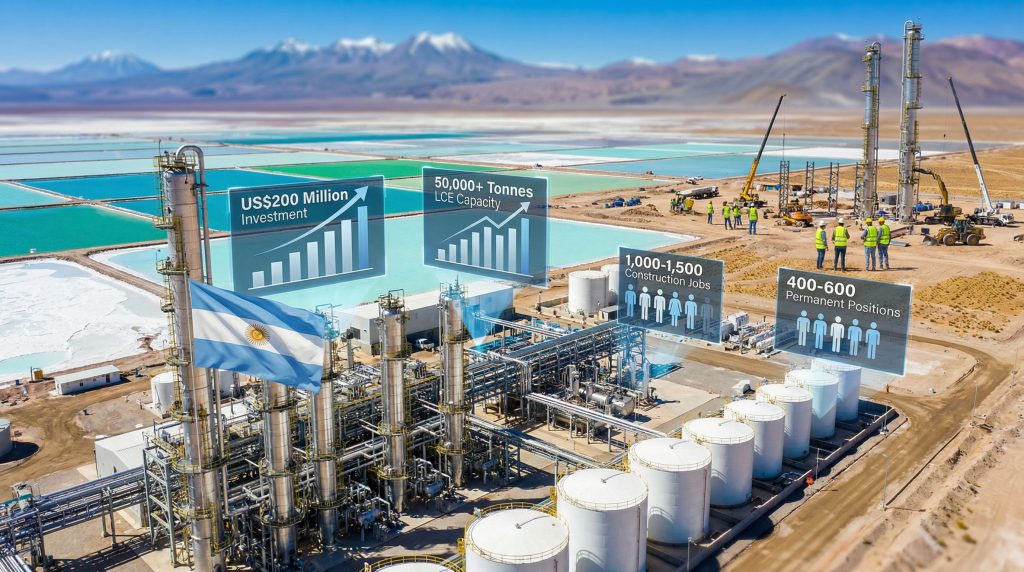
The expansion of lithium project Fénix in Catamarca represents a pivotal development in Argentina's strategic positioning within global critical mineral supply chains. This significant investment, valued at US$251 million, demonstrates how comprehensive regulatory frameworks can transform mining sector competitiveness and attract substantial international capital. The project's approval under Argentina's Large Investment Incentive Regime (RIGI) showcases the effectiveness of targeted fiscal policies in securing major infrastructure commitments across multi-decade operational horizons.
Modern lithium development operates within complex risk matrices where fiscal stability, technological capabilities, and operational scale converge to determine long-term viability. Investment decisions increasingly reflect sophisticated scenario modeling that accounts for regulatory evolution, market volatility, and infrastructure requirements across multi-decade operational horizons.
Understanding Argentina's Strategic Investment Framework for Critical Minerals
Argentina's Large Investment Incentive Regime represents a comprehensive policy response to competitive pressures within South America's lithium triangle. This framework addresses fundamental investment barriers through targeted fiscal mechanisms, regulatory streamlining, and extended stability guarantees that fundamentally alter risk-return calculations for major mining operations.
The regime operates through Law 27,742, establishing minimum investment thresholds of US$200 million while providing 30-year fiscal stability guarantees that extend regulatory certainty through the mid-2050s. This extended timeframe substantially exceeds typical mining investment planning horizons, creating multi-generational operational certainty that enables long-term capital commitments.
Fiscal Stability Framework Analysis
Key RIGI Benefits Structure:
• Foreign exchange access guarantees for international transactions
• Accelerated depreciation schedules for capital equipment
• Import duty exemptions on machinery and technical imports
• Streamlined regulatory approval processes reducing project development timelines
The framework has secured mining sector commitments exceeding US$26,000 million across 12 approved projects from 25 presentations, with primary focus on critical minerals including gold, silver, copper, and lithium. Government officials characterise this regime as instrumental to Argentina's competitive positioning against international mining destinations, addressing regulatory predictability concerns that historically constrained foreign direct investment.
Investment Threshold Requirements and Performance Metrics
Projects must demonstrate substantial capital commitments with minimum 40% disbursement within initial implementation phases. The expansion of lithium project Fénix in Catamarca exemplifies this framework's application, with its US$251 million investment commitment exceeding minimum thresholds by approximately 25%. This substantial commitment indicates strong confidence in project economics and favourable market conditions.
Resolution 431/2026, published in Argentina's Official Gazette, formalised the Fénix expansion's entry into the RIGI program on April 7, 2026, representing one of the more substantial lithium project approvals within the regime's operational history. Furthermore, this development aligns with broader Argentina lithium insights that highlight the country's strategic positioning in global markets.
When big ASX news breaks, our subscribers know first
What Makes the Salar del Hombre Muerto a Strategic Lithium Hub?
The Salar del Hombre Muerto stands as one of South America's premier lithium brine deposits, offering exceptional geological characteristics that enable economically competitive production at global scale. This geological formation provides the foundation for sustained industrial-scale operations that compete internationally on both cost and quality metrics.
Geological Advantages and Resource Quality
Industry analysis suggests the deposit possesses brine concentration and extraction conditions that justify substantial incremental infrastructure investment. The expansion of lithium project Fénix in Catamarca operates within this strategic location, with current production capacity of 28,500 tonnes of lithium carbonate equivalent annually.
The Phase 1B expansion increases capacity to 38,000 tonnes annually, representing a 33.3% capacity increase of 9,500 additional tonnes. This positioning places the Salar del Hombre Muerto among South America's premium lithium production centres by absolute capacity and operational sophistication.
Infrastructure Integration and Operational Synergies
Strategic positioning within Argentina's established mining corridors enables efficient logistics networks and shared infrastructure utilisation. The deposit's integration within existing infrastructure corridors contributes operational efficiencies that enhance project economics across multiple development phases.
Advanced Processing Infrastructure:
• Selective adsorption technology systems
• New carbonate precipitation plants
• Supplementary brine extraction wells
• Interconnected infrastructure systems
• Gas compression facility in neighbouring Salta province for dedicated energy supply
The brine extraction operation incorporates multiple processing stages representing technological sophistication typical of contemporary large-scale operations. In addition, the implementation of direct lithium extraction technologies demonstrates how modern extraction methods can enhance efficiency. A dedicated gas compression facility constructed in Salta province ensures consistent energy supply to the Catamarca-based processing complex, reflecting the energy-intensive nature of lithium carbonate production.
How Do RIGI Incentives Reshape Project Economics for Large-Scale Lithium Operations?
The RIGI framework provides fiscal stability guarantees that fundamentally alter investment risk profiles for major mining operations. Government economic analysis characterises these incentives as essential mechanisms for repositioning Argentina as a competitive destination for critical mineral investments in the context of accelerating global lithium demand.
Comprehensive Fiscal Benefit Structure
RIGI Incentive Components:
| Benefit Category | Specific Provision | Duration |
|---|---|---|
| Fiscal Stability | 30-year guarantee | Through 2050s |
| Equipment Imports | Duty exemptions | Project lifetime |
| Depreciation | Accelerated schedules | Investment period |
| Foreign Exchange | Guaranteed access | Full operation |
Officials emphasise that fiscal stability guarantees, combined with foreign exchange access provisions, fundamentally alter investment risk profiles by providing regulatory certainty that private capital requires for major infrastructure commitments. The framework addresses policy assessments that traditional structures created investor uncertainty constraining capital deployment compared to competing jurisdictions.
Targeted Application Framework
Critical to the Fénix approval structure is that RIGI benefits apply exclusively to newly committed expansion capacity rather than retroactively to existing production facilities. The expansion of lithium project Fénix in Catamarca qualified for benefits specifically for its Phase 1B expansion, with advantages not extending to the original production facility operational under prior regulatory frameworks.
This targeted approach ensures benefits flow to incremental investment whilst maintaining consistency with existing contractual arrangements. The structure demonstrates policy sophistication in differentiating new capacity commitments from established operations. However, these developments must also consider broader energy transition security requirements that influence global mineral demand.
What Are the Production Scaling Dynamics in Modern Lithium Operations?
Modern lithium project development increasingly follows modular, phased expansion approaches enabling operators to validate market conditions, optimise extraction processes, and refine operational parameters before committing to full-scale production increases. This risk management strategy proves particularly valuable in volatile commodity markets where demand fluctuations create operational uncertainty.
Phase-Based Expansion Strategies
Typical Expansion Sequence:
- Initial production phase: 20,000-30,000 tonnes LCE annually
- First expansion phase: Additional 10,000-15,000 tonnes
- Major scaling phase: Targeting 50,000+ tonnes capacity
- Optimisation improvements: Efficiency and technology integration
The expansion of lithium project Fénix in Catamarca demonstrates this phased approach with its progression from 28,500 to 38,000 tonnes annual capacity. The Phase 1B expansion investment of US$251 million represents capital deployment across infrastructure development, well drilling, plant construction, and auxiliary systems.
Technology Integration and Process Innovation
Advanced extraction technologies enable higher lithium recovery rates compared to traditional evaporation-only methodologies. The Fénix expansion incorporates selective adsorption technology alongside precipitation processes, representing technology integration typical of contemporary large-scale operations.
Process Innovation Components:
• Selective adsorption systems reducing evaporation pond requirements
• Carbonate precipitation chemistry optimisation
• Enhanced brine extraction efficiency
• Improved water management protocols
These technological advancements reduce environmental impact through decreased evaporation pond requirements and improved water management. Consequently, these innovations reflect broader industry evolution trends that emphasise sustainability and operational efficiency in modern mining operations.
How Do Employment Multipliers Impact Regional Economic Development?
Large-scale lithium projects generate employment effects extending far beyond immediate operational requirements. The expansion of lithium project Fénix in Catamarca demonstrates typical employment structure with construction phases creating temporary labour surges whilst operational phases provide sustained regional employment with higher skill requirements and wage premiums.
Direct vs. Indirect Job Creation Analysis
Employment Impact Structure:
| Phase | Direct Employment | Duration | Economic Impact |
|---|---|---|---|
| Construction | 1,143 positions | 12-36 months | Temporary surge |
| Operations | 504 permanent | Multi-decade | Sustained income |
| Indirect Regional | 800-1,200 jobs | Project lifetime | Multiplier effects |
| Service Sector | Variable | Ongoing | Community benefits |
Construction employment represents temporary labour surge, typically drawing workers from regional labour markets and national mobility patterns. Operational employment comprises positions spanning extraction operations, processing facility staffing, maintenance personnel, technical specialists, and administrative functions.
Government analysis emphasises that lithium development supports regional economic diversification, particularly in Catamarca province where traditional economic activities face structural challenges. Mining employment, characterised by higher-than-average wages and skill requirements, creates opportunities for human capital development and regional economic advancement.
Skills Development and Training Requirements
Modern lithium operations require specialised technical competencies including hydrogeological expertise, chemical engineering, equipment operation and maintenance, process optimisation, environmental monitoring, and advanced data analysis. These skill requirements necessitate comprehensive training programs creating lasting regional benefits.
Specialised Skill Categories:
• Hydrogeological analysis and brine management
• Chemical process engineering and optimisation
• Advanced equipment operation and maintenance
• Environmental monitoring and compliance
• Data analysis and process control systems
Mining sector employment typically provides wage compensation 40-60% above regional average labour costs, reflecting skill requirements and operational risks. This wage premium creates household income effects supporting local commerce and service sectors throughout project lifecycles.
What Role Does Export Revenue Play in National Economic Strategy?
The expansion of lithium project Fénix in Catamarca contributes approximately US$165 million in annual export revenues upon reaching full operational capacity. This export value represents significant contribution to Argentina's lithium export portfolio, positioning the project among the country's largest lithium revenue generators.
Foreign Exchange Generation Capacity
For a nation managing persistent balance of payments constraints and foreign exchange scarcity, lithium export revenues provide critical hard currency inflows supporting import financing and external debt servicing. Argentine government economic strategy increasingly emphasises lithium and critical mineral exports as central to resolving structural foreign exchange constraints that historically limited policy flexibility.
Export Revenue Analysis:
| Production Capacity | Annual Volume | Estimated Revenue | Market Position |
|---|---|---|---|
| Phase 1B Addition | 9,500 tonnes LCE | US$165 million | Regional leadership |
| Total Facility | 38,000 tonnes LCE | US$650+ million | Global significance |
Lithium carbonate equivalent pricing in international markets ranges US$15,000-20,000 per tonne depending on purity specifications, contract structure, and market conditions. Export revenues reflect midpoint pricing assumptions around US$17,000-18,000 per tonne for the incremental 9,500 tonnes annual capacity.
Supply Chain Integration Opportunities
Domestic value-added processing capabilities enable countries to capture higher margins along the lithium supply chain. Strategic positioning in battery precursor chemicals and cathode materials represents significant economic opportunity beyond raw material exports.
Officials characterise lithium development as strategic national priority supporting macroeconomic stabilisation through sustained hard currency inflows. The sector's contribution to foreign exchange reserves becomes particularly important during periods of current account pressure and international market volatility. Moreover, these developments align with Australia lithium innovations that demonstrate how different jurisdictions compete for global market share.
The next major ASX story will hit our subscribers first
How Do Environmental and Social Considerations Influence Project Approval?
Successful lithium developments increasingly require comprehensive community consultation and benefit-sharing arrangements. The expansion of lithium project Fénix in Catamarca demonstrates industry best practices with approximately 60% local procurement requirements, substantially exceeding minimum regulatory standards.
Community Engagement and Benefit Sharing
Local procurement requirements ensure economic benefits flow to regional suppliers and service providers. This integration approach reinforces impact on regional economies and supports development of specialised mining service capabilities within local business communities.
Community Integration Metrics:
• 60% local procurement target (exceeding minimum requirements)
• Regional supplier development programs
• Technical training and capacity building initiatives
• Infrastructure development contributions
The strong component of local integration reflects industry recognition that sustainable operations require community support and regional economic integration. Benefit-sharing arrangements extend beyond direct employment to encompass supplier development, infrastructure contributions, and technical capacity building.
Water Resource Management and Environmental Impact
Brine extraction operations must demonstrate sustainable water management practices, particularly in arid regions where water resources face competing demands. Advanced monitoring and recycling systems become essential components of project approval processes as environmental regulations evolve.
Modern extraction technologies, including the selective adsorption systems incorporated in the Fénix expansion, reduce environmental footprint through decreased evaporation pond requirements and improved water management protocols. These technological advantages prove increasingly important as environmental compliance standards tighten globally.
What Are the Competitive Positioning Implications for Argentina's Lithium Sector?
Argentina competes directly with Chile and Bolivia within the "Lithium Triangle," requiring differentiated value propositions to attract international investment. Regulatory efficiency, infrastructure quality, and political stability become key competitive factors determining capital allocation across regional jurisdictions.
Regional Competition Analysis
The RIGI framework represents Argentina's strategic response to competitive pressures within South America's lithium development landscape. By providing extended fiscal stability guarantees and streamlined approval processes, Argentina seeks to differentiate its investment proposition from competing jurisdictions.
Competitive Advantages:
• 30-year fiscal stability guarantees (longest regional timeframe)
• Streamlined regulatory approval processes
• Advanced infrastructure integration capabilities
• Established mining sector expertise and service capabilities
The expansion of lithium project Fénix in Catamarca demonstrates Argentina's capacity to support large-scale expansion projects with sophisticated technical requirements. Project formalisation through official resolution and performance-linked compliance frameworks signal regulatory maturity and institutional capacity.
Market Share and Production Capacity Projections
Current expansion projects position Argentina to capture increasing global market share as lithium demand accelerates. Strategic timing of capacity additions relative to market demand cycles determines long-term profitability and market positioning advantages.
The Fénix expansion's additional 9,500 tonnes annual capacity contributes meaningfully to Argentina's position within global lithium supply chains. Combined with other RIGI-approved projects, these investments support Argentina's strategic objective of maintaining competitive positioning against international producers. Furthermore, insights from Rio Tinto's Fenix operations provide additional context for understanding the project's strategic importance.
How Will Future Regulatory Developments Shape Investment Decisions?
RIGI framework provisions include adaptation mechanisms allowing regulatory updates whilst maintaining core stability commitments. This balance between flexibility and certainty proves crucial for long-term investor confidence as market conditions and technological requirements evolve.
Policy Evolution and Adaptation Mechanisms
The framework demonstrates policy sophistication in providing stability guarantees whilst maintaining regulatory flexibility for evolving environmental standards, technological requirements, and market conditions. This adaptive structure addresses investor concerns about regulatory obsolescence over multi-decade operational periods.
Regulatory Stability Features:
• Core fiscal provisions locked for 30-year periods
• Adaptation mechanisms for evolving environmental standards
• Technology integration flexibility within stability frameworks
• Performance-linked compliance maintaining benefit access
International Trade and Investment Treaty Implications
Argentina's participation in international investment protection agreements provides additional security for major mining investments. These multilateral frameworks complement domestic incentive regimes and enhance overall investment attractiveness through dispute resolution mechanisms and investor protections.
The combination of domestic fiscal incentives and international treaty protections creates comprehensive risk mitigation frameworks that enable major capital commitments. This institutional sophistication becomes particularly important for projects requiring sustained investment over extended development periods.
What Strategic Scenarios Could Emerge for South American Lithium Markets?
The evolution of Argentina's lithium sector under enhanced investment incentives represents a significant shift in global supply chain dynamics, with implications extending far beyond individual project economics to encompass regional development strategies and international competitive positioning.
Scenario 1: Accelerated Regional Integration
Coordinated development policies across Argentina, Chile, and Bolivia could create integrated supply chains enhancing collective competitiveness against non-regional producers. Shared infrastructure and technology development would strengthen the entire region's market position whilst reducing individual project risks.
The expansion of lithium project Fénix in Catamarca exemplifies infrastructure sophistication that could support regional integration initiatives. Cross-border energy supply arrangements and shared processing capabilities might emerge as regional cooperation mechanisms.
Scenario 2: Technology-Driven Differentiation
Advanced extraction and processing technologies could enable premium pricing for South American lithium products. Focus on sustainability credentials and supply chain transparency would support market differentiation strategies appealing to environmentally conscious battery manufacturers.
The selective adsorption technology incorporated in Fénix expansion represents the type of technological advancement that could drive regional differentiation. Environmental performance advantages and reduced water consumption create competitive positioning opportunities in evolving global markets.
Scenario 3: Downstream Integration Push
Regional governments might incentivise battery manufacturing and electric vehicle assembly to capture higher value-added segments. This vertical integration approach would reduce dependence on raw material exports whilst building industrial capabilities across the lithium value chain.
Argentina's RIGI framework could evolve to support downstream processing investments, leveraging existing mining expertise to develop battery precursor and cathode material production capabilities. Such integration would multiply the economic benefits of lithium resource development. Additionally, developments in lithium market expansion highlight the growing importance of strategic positioning in global supply chains.
Key Investment Decision Factors for Stakeholders
Modern lithium investment decisions must account for multiple interconnected factors including regulatory stability, technological capabilities, environmental compliance, and market positioning. The RIGI framework addresses many traditional investment barriers whilst creating new opportunities for strategic partnerships and long-term value creation.
Critical Success Factors:
• Extended fiscal stability guarantees reducing regulatory risk
• Advanced extraction technologies improving operational efficiency
• Strong community integration supporting operational sustainability
• Strategic positioning within global supply chain networks
The expansion of lithium project Fénix in Catamarca demonstrates successful integration of these factors, combining RIGI fiscal benefits with technological advancement and community engagement. This comprehensive approach provides a template for future lithium development across Argentina's strategic mineral sector.
Investment decisions increasingly reflect sophisticated risk modelling that accounts for regulatory evolution, market volatility, and technological advancement across multi-decade operational horizons. The RIGI framework's 30-year stability guarantees provide unprecedented certainty enabling long-term strategic planning and infrastructure commitments.
The transformation of Argentina's lithium investment landscape creates opportunities for sustained economic development whilst positioning the country as a reliable supplier within evolving global battery supply chains. Success requires continued policy innovation, technological advancement, and strategic market positioning as international competition intensifies and demand patterns evolve.
This analysis provides educational insights into lithium sector development and investment frameworks. Investment decisions should be based on comprehensive due diligence and professional financial advice.
Are You Positioning Your Portfolio for Argentina's Lithium Revolution?
Discovery Alert's proprietary Discovery IQ model provides instant notifications on significant ASX mineral discoveries, empowering subscribers to identify emerging opportunities in lithium and critical minerals before broader market recognition. Explore how major mineral discoveries have historically generated substantial returns, then begin your 14-day free trial today to secure your competitive advantage in Australia's dynamic mining sector.