August 4, 2026
When Falling Stocks Fail to Lift Prices: Understanding the Paradox at the Heart of Base Metal Markets
The LME aluminium cash bid price falls as stocks decline with surprising regularity, and this recurring dynamic exposes the limitations of single-variable thinking in commodity markets. Real-world metals markets, particularly the London Metal Exchange aluminium complex, routinely challenge the foundational textbook logic that shrinking supply automatically lifts prices. Understanding why this happens requires dismantling assumptions and replacing them with a more sophisticated, multi-factor analytical framework.
When big ASX news breaks, our subscribers know first
What the June 8 Price Data Actually Reveals Across the Full Contract Curve
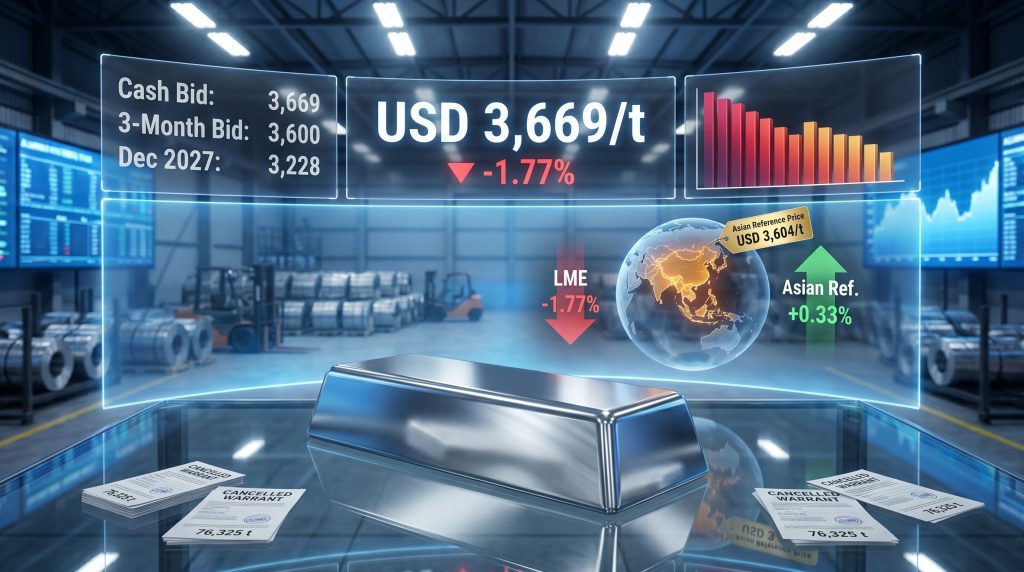
The June 8 trading session produced broad-based selling pressure across every major LME aluminium contract tenor, with no segment of the curve escaping the downward move. The cash bid price settled at USD 3,669 per tonne, representing a decline of approximately 1.77% from the USD 3,735 per tonne recorded during the prior session on June 5. This continued a losing streak that had already extended across multiple consecutive sessions.
| Contract Tenor | June 5 Price (USD/t) | June 8 Price (USD/t) | % Change |
|---|---|---|---|
| Cash Bid | 3,735 | 3,669 | -1.77% |
| Cash Offer | 3,736 | 3,669.5 | -1.78% |
| 3-Month Bid | 3,669 | 3,600 | -1.88% |
| 3-Month Offer | 3,669.5 | 3,600.5 | -1.88% |
| December 2027 Bid | 3,275 | 3,228 | -1.44% |
| December 2027 Offer | 3,280 | 3,233 | -1.43% |
| 3-Month Asian Ref. Price | 3,592 | 3,604 | +0.33% |
Reading the Curve: What Differential Declines Signal
The variation in percentage declines across tenors carries meaningful analytical weight. The 3-month contracts fell the hardest at -1.88%, outpacing the longer-dated December 2027 decline of -1.44% and even the cash market's -1.77% move. This differential suggests that near-term bearish conviction is more intense than long-run structural pessimism, a pattern typically associated with short-term demand softness or macro sentiment shifts rather than concerns about fundamental supply adequacy over a multi-year horizon.
Perhaps more revealing is the behaviour of the LME Aluminium 3-Month Asian Reference Price, which bucked the broader trend entirely by rising 0.33% to USD 3,604 per tonne. This regional divergence reflects a genuinely different set of demand conditions playing out across Asian trading hours, where Chinese downstream activity, regional logistics dynamics, and local currency movements can produce price signals that temporarily decouple from the primary LME benchmark. Furthermore, shifts in China industrial demand trends are increasingly influential in explaining these short-term regional price dislocations.
The Inventory Picture: Reading Beyond the Headline Stock Number
On the surface, the inventory data from June 8 appears straightforwardly bullish for prices. Stocks fell, cancelled warrants declined, and live warrants held steady. Yet prices dropped sharply anyway.
| Inventory Category | June 5 (tonnes) | June 8 (tonnes) | Change |
|---|---|---|---|
| Opening Stocks | 335,200 | 333,200 | -2,000 (-0.60%) |
| Live Warrants | 254,625 | 254,625 | Unchanged |
| Cancelled Warrants | 78,575 | 76,325 | -2,250 (-2.86%) |
| LME Alumina (Platts) | USD 305/t | USD 305/t | Unchanged |
Why Cancelled Warrant Direction Is the More Important Signal
Most market participants focus on total stock levels as their primary inventory indicator. However, experienced LME traders pay closer attention to the cancelled warrant figure, and the direction of its movement often tells a more nuanced story than total tonnes on warrant.
Cancelled warrants represent aluminium that has been formally designated for physical withdrawal from an LME-approved warehouse. When this figure rises, it signals that physical buyers are actively pulling metal off the exchange, which is genuinely bullish. When it falls, as it did on June 8 by 2.86%, it indicates that prior withdrawal orders are being completed and fulfilled rather than fresh demand-driven offtake being initiated.
The critical distinction is between completion of existing withdrawal orders versus initiation of new ones. A declining cancelled warrant figure in the context of falling prices is a bearish alignment because it confirms that the physical demand impulse underpinning earlier drawdowns has lost momentum.
Key Analytical Point: The combination of falling cancelled warrants and falling prices on June 8 is not contradictory. It is a coherent bearish signal. Physical demand urgency is moderating even as previously ordered metal continues to leave warehouses. The stock decline is a lagging indicator of past demand rather than a leading indicator of future scarcity.
Live warrants remaining flat at 254,625 tonnes across both sessions is equally telling. No new aluminium was being registered into the LME system, but no fresh wave of physical demand was driving new cancellations either. The market was essentially in a holding pattern on the physical side while financial sentiment drove prices lower. According to LME aluminium stock movements tracked by AlCircle, these inventory dynamics have been a persistent theme across recent sessions.
Five Concurrent Forces Driving LME Aluminium Price Formation
This is the central analytical challenge in understanding why the LME aluminium cash bid price falls as stocks decline. A comparable dynamic occurred on April 28, when the cash bid dropped from USD 3,660/t to USD 3,599/t while opening stocks simultaneously fell from 376,275 tonnes to 372,700 tonnes. This is not an anomaly. It is a recurring feature of how modern commodity markets function, and one that is directly relevant to the broader context of commodity market volatility playing out across base metals in 2025.
Aluminium price formation on the LME is driven by at least five concurrent force vectors operating simultaneously:
1. Macroeconomic Sentiment and Risk-Off Capital Flows
Base metals, including aluminium, are deeply embedded in the broader risk asset ecosystem. When institutional investors reduce portfolio risk exposure, whether due to rising recession probability, equity market weakness, or deteriorating business confidence surveys, commodity positions are among the first to be reduced. This selling pressure is entirely independent of physical supply conditions.
A strengthening US dollar compounds this dynamic. Because LME aluminium is priced in US dollars, dollar appreciation directly increases the cost of aluminium for buyers using other currencies, mechanically suppressing demand expectations and placing downward pressure on benchmark prices regardless of warehouse stock levels.
2. Forward Demand Expectations Rather Than Current Consumption
The LME price is fundamentally a forward-looking instrument. It reflects market participants' collective expectations about future consumption, not just current inventory balances. When major downstream consumers, including automotive manufacturers, construction firms, packaging producers, and aerospace suppliers, signal reduced near-term purchasing intentions, prices can decline even as existing stocks continue drawing down.
Slowing manufacturing PMI data across major consuming economies, which has been a recurring theme in global economic data through 2025 and into 2026, carries significant weight in this regard. A weak PMI print from China or the Eurozone can override the mechanical bullish signal from an inventory drawdown by signalling that the drawdown is a temporary position adjustment rather than the beginning of sustained physical tightness.
3. The Quality and Origin of the Inventory Drawdown
Not all stock reductions carry equal bullish implications. The metals financing trade, where market participants borrow metal from LME warehouses, sell it in the spot market, and simultaneously purchase forward contracts to replace it, can generate inventory movements that superficially resemble genuine physical demand without reflecting actual end-use consumption.
When these financing arrangements unwind, metal flows back into LME warehouses and stocks rebuild. A drawdown driven by financing deal creation, or the tail-end of financing deal unwinding, carries very different price implications than one driven by a genuine pickup in industrial consumption. This distinction is rarely visible in headline inventory data, which is why experienced analysts track multiple warrant metrics simultaneously.
4. Forward Curve Architecture: Backwardation Without Bullish Follow-Through
The June 8 session produced a notable structural feature in the LME aluminium forward curve. With the cash bid at USD 3,669/t and the 3-month bid at USD 3,600/t, the market was in backwardation, meaning spot prices exceeded forward prices by approximately USD 69 per tonne.
Featured Insight: A backwardated market structure signals that physical metal available today is perceived as more scarce or more urgently needed than metal deliverable in three months. In theory, this should support cash prices. In practice, backwardation and falling prices can coexist when macro forces are strong enough to overwhelm the physical tightness signal embedded in the curve structure.
The December 2027 contract at USD 3,228/t sits approximately USD 441/t below the cash price, implying the market expects either meaningful supply expansion or demand moderation over the next eighteen months. Consequently, this longer-dated discount reflects structural expectations rather than near-term physical dynamics.
5. Geopolitical and Trade Policy Overlays
Regional geopolitical developments, including trade route disruptions, sanctions regimes, and tariff adjustments, can introduce price volatility that interacts with LME benchmark pricing in complex ways. Middle East supply chain dynamics referenced in market commentary circulating around the June 8 session illustrate how regional instability can generate short-term price fluctuations.
In addition, the broader impacts of US aluminium tariffs have created persistent wedges between LME benchmark prices and the physical premiums paid in specific markets, particularly in regions subject to Section 232 tariffs or equivalent trade barriers. These wedges complicate the relationship between LME price movements and actual landed costs for downstream manufacturers.
The Asian Reference Price Divergence: A Window Into Regional Demand Dynamics
The 0.33% rise in the LME Aluminium 3-Month Asian Reference Price to USD 3,604/t on June 8, moving against a broadly falling LME complex, is analytically significant for several reasons. This reference price is calculated specifically during Asian trading hours and reflects the demand and liquidity conditions of the world's largest aluminium-consuming region.
Several factors could explain the divergence:
- Chinese downstream restocking activity, where fabricators replenish semi-finished product inventories ahead of anticipated production runs
- Regional supply disruptions or logistics constraints creating localised tightness not reflected in global LME warehouse data
- Currency dynamics where a weakening Asian currency makes US dollar-denominated aluminium relatively cheaper for regional buyers, supporting demand
- Timing differences in how macro risk-off sentiment transmits across time zones, with Asian markets potentially receiving the bearish signal with a lag
The divergence also highlights an important structural characteristic of LME pricing: the primary benchmark is heavily influenced by European and North American trading sessions, which means Asian demand signals can be underrepresented in the headline price until they transmit through the overnight session.
Raw Material Cost Stability: What the Alumina Price Holding at USD 305/t Means
The LME alumina Platts price holding steady at USD 305 per tonne across both the June 5 and June 8 sessions carries meaningful implications for the aluminium production cost curve. The shifting dynamics across aluminum and alumina markets in 2025 have made this cost stability particularly notable for producers managing margin compression.
Alumina typically represents 30 to 40 percent of a smelter's total production cost structure, making its price stability a significant factor in determining producer margins. With alumina costs unchanged and primary aluminium cash prices falling to USD 3,669/t, smelter margins are compressing. Most modern, energy-efficient smelters maintain positive operating margins at current price levels, but sustained downward pressure toward the USD 3,200 to USD 3,400/t range would begin to challenge higher-cost producers.
Energy costs represent the other dominant variable in the aluminium smelting cost equation, often accounting for 30 to 45 percent of total production costs. Aluminium smelting is among the most energy-intensive industrial processes in existence, consuming approximately 13 to 15 megawatt-hours of electricity per tonne of primary metal produced. Movements in power costs across key producing regions, from China's coal-dependent northwest to the hydropower-rich smelters of the Middle East and Scandinavia, therefore carry as much weight in long-run price formation as any short-term inventory fluctuation.
The next major ASX story will hit our subscribers first
Key Indicators for Forward Price Direction
For traders and analysts monitoring the LME aluminium complex, the following indicator hierarchy provides a structured framework for anticipating price direction across different time horizons. Understanding these signals is also central to building a sound global industrial metals outlook for the year ahead.
Short-Term Watch List (1 to 4 Weeks)
- Weekly LME warrant data releases, specifically whether cancelled warrants re-accelerate toward fresh highs, signalling renewed physical demand urgency
- US Dollar Index (DXY) directional bias, given its mechanical inverse relationship with dollar-denominated commodity prices
- Chinese manufacturing PMI monthly releases, which function as the single most influential demand signal given China's dominant share of global aluminium consumption and production
- LME warehouse location data, which can reveal whether drawdowns are concentrated in specific port locations serving genuine industrial demand versus financial centre warehouses associated with financing activity
Medium-Term Structural Factors (1 to 6 Months)
- Smelter curtailment and restart announcements, particularly from Chinese and European producers where economics are most sensitive to current price levels
- Energy market developments, including European power price trajectories and Chinese coal and hydropower availability, both of which directly affect production costs
- Downstream sector demand signals from automotive production schedules, construction activity indicators, and packaging sector capacity utilisation rates
Long-Term Thematic Drivers (6 to 24 Months)
- Electric vehicle production ramp-up, with each battery electric vehicle requiring approximately 40 to 80 kilograms more aluminium than a comparable internal combustion vehicle due to lightweighting requirements
- Solar panel frame and grid infrastructure demand, where aluminium's combination of conductivity, corrosion resistance, and formability makes it structurally irreplaceable in the energy transition buildout
- Green aluminium premiums, as environmental, social, and governance-driven procurement policies create a two-tier market where low-carbon smelter output commands meaningful price premiums
- Bauxite supply chain integrity, with Guinea's dominant position as a bauxite exporter creating concentration risk that periodically surfaces as a structural supply concern
Furthermore, according to IndexBox's analysis of LME aluminium price movements, these mixed price signals amid inventory declines have become increasingly characteristic of the current market environment, reinforcing the case for a multi-factor analytical approach.
Frequently Asked Questions: LME Aluminium Prices and Inventory Mechanics
What is the LME aluminium cash bid price?
The LME aluminium cash bid price represents the price at which buyers are willing to purchase aluminium for spot delivery on the London Metal Exchange. It functions as the global benchmark referenced across the entire aluminium value chain, from smelter off-take agreements to downstream fabricator pricing formulas. It differs from the offer price by a small spread reflecting liquidity and market-making activity.
Why can aluminium prices fall while LME stocks are also declining?
Because price formation is driven by multiple simultaneous factors, not inventory alone. Macroeconomic sentiment, currency movements, forward demand expectations, the nature of the inventory drawdown itself, and geopolitical overlays all contribute to the net price direction. A stock decline driven by the tail end of financing deal activity, for example, carries very different implications than one driven by genuine industrial offtake.
What does a decline in cancelled warrants signal for market direction?
Falling cancelled warrants indicate that the pace of physical metal being earmarked for withdrawal from LME warehouses is slowing. When this occurs alongside falling prices, it confirms that demand urgency is moderating rather than intensifying, which is a moderately bearish signal for near-term price direction.
What is the significance of the LME aluminium market being in backwardation?
Backwardation, where cash prices exceed forward prices, typically signals that physically available metal today is perceived as more scarce or urgently demanded than metal for future delivery. On June 8, the cash-to-3-month spread of approximately USD 69/t reflected this structure. However, backwardation does not guarantee upward price momentum when macro-driven selling pressure is sufficiently strong to overwhelm the physical tightness signal.
How does the Asian Reference Price differ from the primary LME benchmark?
The LME Aluminium 3-Month Asian Reference Price is calculated specifically during Asian trading hours and reflects regional demand and liquidity conditions across the world's largest aluminium-consuming markets. It can diverge from the primary LME benchmark, as it did on June 8 by moving counter to the broader falling trend, when regional demand dynamics, currency conditions, or trading patterns differ materially from those driving European and North American sessions.
Key Takeaways From the June 8 LME Aluminium Session
- Cash bid fell 1.77% to USD 3,669/t, extending a multi-session decline that underscores persistent bearish macro sentiment
- 3-month contracts declined more sharply at -1.88% than longer-dated December 2027 contracts at -1.44%, concentrating near-term bearish pressure in the front of the curve
- Cancelled warrants fell 2.86% to 76,325 tonnes, signalling that physical demand urgency is moderating rather than intensifying despite the ongoing total stock drawdown
- Live warrants held flat at 254,625 tonnes, indicating no fresh material registration or new demand-driven withdrawal activity across either session
- LME alumina Platts price remained steady at USD 305/t, providing raw material cost stability that partially cushions producer margins against falling aluminium prices
- The Asian Reference Price rose 0.33%, a divergence that highlights regionally differentiated demand dynamics and the partial insulation of Asian market participants from global risk-off sentiment during their trading window
Bottom Line: The June 8 LME aluminium session is a precise illustration of why single-variable inventory analysis consistently misleads market participants. The LME aluminium cash bid price falls as stocks decline not because the market is irrational, but because price formation is the product of at least five concurrent force vectors operating simultaneously. Inventory is one input into a complex, multi-factor pricing mechanism, and on June 8, macro sentiment, moderating physical demand signals, and forward demand concerns collectively outweighed the mechanical support that a falling stock figure might otherwise have provided.
Disclaimer: This article is intended for informational and educational purposes only and does not constitute financial or investment advice. All price data and inventory figures referenced are sourced from publicly available LME market data. Readers should conduct their own due diligence before making investment or trading decisions. Past price behaviour is not indicative of future performance.
Want to Capitalise on Real-Time Commodity Discoveries Before the Broader Market?
While understanding LME aluminium price mechanics provides a crucial analytical edge, Discovery Alert's proprietary Discovery IQ model delivers instant notifications on significant ASX mineral discoveries across 30+ commodities — turning complex market data into actionable opportunities the moment they are announced. Explore historic discovery returns that demonstrate how early positioning in major finds can generate substantial outcomes, and begin your 14-day free trial today to stay ahead of the market.