August 7, 2026
Global energy markets operate within an intricate web of geographic constraints that can reshape supply patterns within hours. Recent developments have seen LNG carriers steer clear of strait of Hormuz as geopolitical tensions intensify, highlighting the vulnerability of critical maritime corridors. The movement of liquefied natural gas across international waters represents one of the most complex logistical challenges in modern commodity trading, where single decisions by vessel operators can ripple through pricing mechanisms from Tokyo to Amsterdam. Understanding these dynamics requires examining both the physical infrastructure that enables energy flows and the risk assessment frameworks that govern operational choices during periods of heightened uncertainty.
What Makes the Strait of Hormuz Critical to Global LNG Markets?
Strategic Geography and Energy Transit Volumes
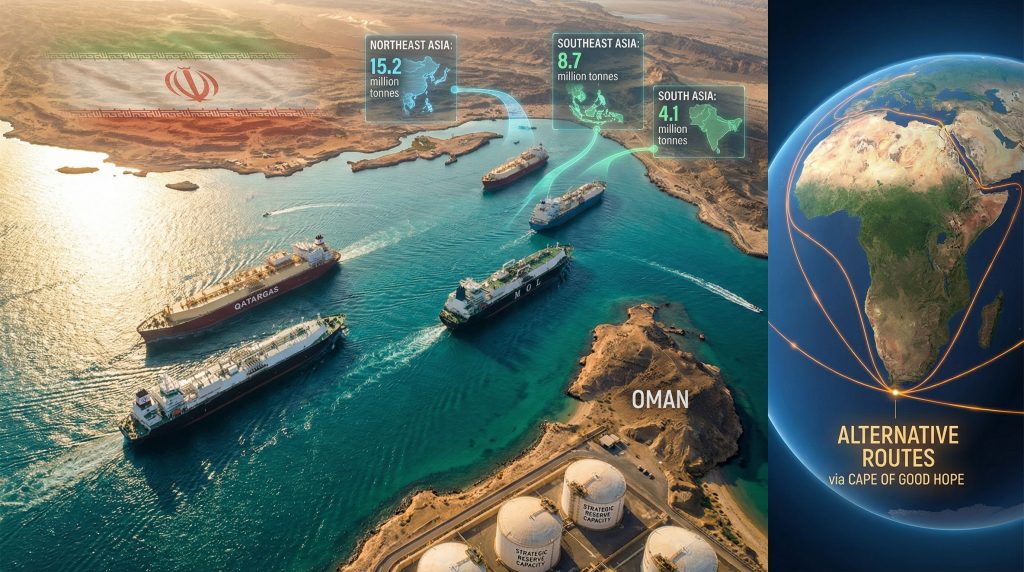
The Strait of Hormuz functions as a critical bottleneck for global energy distribution, with 82.6 million tonnes per annum of LNG supply requiring passage through this narrow waterway to reach international markets. This volume represents approximately 291 million cubic metres per day of pipeline gas equivalent, demonstrating the massive scale of energy dependency concentrated through this single geographic chokepoint.
Recent shipping data reveals that 19% of global LNG transit occurred through the Strait of Hormuz during February 2026, according to vessel tracking platforms. This concentration creates significant vulnerability for energy importers worldwide, as alternative routing options involve substantially longer transit times and higher operational costs. Consequently, these disruptions have contributed to an oil price rally that reflects broader energy market concerns.
Qatar emerges as the dominant regional producer, with state-owned QatarEnergy operating the majority of LNG export facilities in the Middle East Gulf region. The geographic positioning of these production facilities means that virtually all Qatari LNG exports must traverse the Strait of Hormuz to reach Asian and European markets.
| Maritime Chokepoint | Daily Energy Flow | Global Share | Alternative Routes |
|---|---|---|---|
| Strait of Hormuz | 291 million m³ LNG equivalent | 19% of global LNG | Cape of Good Hope |
| Suez Canal | Variable | 12% of global trade | Cape route |
| Strait of Malacca | Mixed energy flows | 15% of global trade | Lombok/Sunda Straits |
Economic Impact Assessment Framework
The economic implications of Hormuz disruptions extend far beyond immediate shipping delays. Brent crude prices reached $73 per barrel in late February 2026, marking the highest levels since July 2025, partly reflecting geopolitical risk premiums associated with potential supply disruptions. Furthermore, the OPEC oil market influence becomes more pronounced during such periods of uncertainty.
Insurance markets respond rapidly to elevated risk conditions, with maritime coverage modifications affecting vessel operating costs almost immediately. The complexity of risk assessment during crisis periods is compounded by AIS transponder interference, which obstructs accurate vessel tracking and creates additional uncertainty for underwriters and operators.
Cost multipliers for alternative routing scenarios can increase shipping expenses by 40-60% when vessels must navigate around the Cape of Good Hope rather than using the Suez Canal route. These additional costs ultimately influence regional price differentials and supply security calculations for energy importing nations.
When big ASX news breaks, our subscribers know first
How Do Shipping Companies Navigate Geopolitical Risk in Energy Transport?
Real-Time Decision Making Protocols
Modern LNG transportation relies heavily on sophisticated tracking technology, with platforms like Kpler and Vortexa providing real-time vessel position data to operators and market participants. However, AIS transponder interference in sensitive regions can severely compromise maritime domain awareness during critical periods.
On February 28, 2026, nine LNG carriers simultaneously changed course away from the Strait of Hormuz within a 6.5-hour window, demonstrating coordinated decision-making protocols among major shipping operators. The timing precision of these diversions indicates pre-established risk thresholds and communication systems between vessel operators and security agencies.
The United Kingdom Maritime Trade Operations (UKMTO) received unverified radio transmissions claiming strait closure authority, highlighting vulnerabilities in maritime communication systems. LNG carriers received messages through various channels, though UKMTO advised that such announcements are not legally binding under international maritime law.
Alternative Route Economics
When traditional shipping lanes become unavailable, carriers must evaluate multiple factors beyond simple distance calculations. In addition, the impact of global trade disruptions adds another layer of complexity to routing decisions.
• Cape of Good Hope routing adds approximately 6,000 nautical miles to Middle East-Europe journeys
• Fuel consumption increases by roughly 40% due to extended transit times
• Port congestion scenarios at alternative terminals can create additional delays
• Insurance premium adjustments reflect elevated operational risk profiles
The economic analysis becomes more complex when considering floating storage utilisation strategies. Some operators choose to hold LNG cargoes in storage vessels rather than commit to extended alternative routes, particularly when spot market conditions suggest higher future pricing.
Which Regional Markets Face the Greatest Supply Vulnerability?
Asian Import Dependencies Analysis
Egypt represents one of the most acute vulnerability cases, having lost 681 million cubic metres of Israeli natural gas imports (equivalent to 22.7 million cubic metres per day) following the shutdown of Israel's Karish and Leviathan gas fields. This supply disruption could drive Egyptian LNG import requirements to 6.4 million tonnes per annum, requiring one LNG cargo delivery every four days.
The 160,000 cubic metre Energos Eskimo floating storage and regasification unit was en route to Egypt from Turkish maintenance facilities during the February 2026 crisis. This represents critical near-term capacity enhancement for Egyptian import infrastructure, as vessels avoiding the Strait of Hormuz seek alternative supply routes.
Turkey faces similar vulnerability through its dependence on Iranian pipeline gas, which provided 18.6 million cubic metres per day as of December 2025. Should Tehran halt these exports during regional conflicts, Turkish LNG replacement demand could reach 5.3 million tonnes per annum, equivalent to one cargo every five days.
European Market Exposure Assessment
European markets maintain somewhat greater supply diversification compared to Asian importers, though significant exposure remains to Middle Eastern LNG sources. The European Union's Aspides naval mission operating in the Red Sea reflects recognition of maritime security importance for energy supplies.
Norwegian pipeline capacity provides alternative supply options for European markets, though maximum throughput limitations prevent complete substitution for LNG imports during supply disruptions. Strategic storage facilities across EU member states offer additional buffer capacity, though typical drawdown rates during extended disruptions can test inventory management systems.
What Are the Immediate Operational Responses to Shipping Disruptions?
Vessel Diversion Patterns and Logistics
The February 28, 2026 diversions revealed distinct operational patterns between laden and empty carriers. Seven empty vessels heading toward Middle East loading terminals represented 78% of diverted traffic, while two laden carriers (Al Sahla and Mraikh) carrying completed cargoes comprised 22% of diversions.
Diversion Timeline Analysis:
• Cool Explorer (empty): First diversion at 06:00 GMT
• LNG Abuja (empty): 09:00 GMT
• Broog (empty): 09:15 GMT
• Aseem and Onaiza (empty): Both at 09:45 GMT
• Al Sahla (laden): 10:00 GMT
• Taitar No.3 (empty): 10:00 GMT
• Gaslog Shanghai (laden): Final strait transit at 11:00 GMT
• Mraikh (laden): 11:00 GMT
• Al Marrouna (empty): 12:30 GMT
The Gaslog Shanghai represents the final laden LNG carrier to complete Hormuz transit before widespread diversions accelerated, with its 155,000 cubic metre capacity highlighting the substantial volumes involved in individual carrier movements.
Market Price Discovery Mechanisms
Spot LNG market volatility during transit disruptions reflects multiple competing factors beyond simple supply constraint calculations. Forward curve adjustments incorporate geopolitical risk premiums that can persist weeks or months beyond initial crisis events, particularly when market participants anticipate recurring disruption potential.
Regional price differentials emerge rapidly during supply constraints, with Asian spot prices typically showing greater sensitivity to Middle Eastern supply disruptions compared to European or North American markets. These differentials create arbitrage opportunities for carriers with flexible destination arrangements, though insurance coverage modifications during conflict zones can limit operational flexibility.
How Do Regulatory Frameworks Address Maritime Security Threats?
International Maritime Law Applications
The Strait of Hormuz operates under complex jurisdictional arrangements involving both international waters and territorial sea overlap between Iran and Oman. Freedom of navigation principles generally prevent coastal states from arbitrarily restricting commercial vessel passage, though enforcement mechanisms depend heavily on international cooperation and naval presence.
UKMTO guidance emphasises that broadcast announcements claiming strait closure authority lack legal validity under UN Convention on the Law of the Sea provisions. However, practical vessel safety considerations often override strict legal interpretations when operators assess risk exposure for crew and cargo, particularly as LNG carriers steer clear of strait of Hormuz during periods of heightened tension.
Industry Risk Management Standards
Modern risk assessment matrices incorporate multiple data streams beyond traditional geopolitical monitoring. Moreover, trade policy impacts increasingly influence routing decisions as companies adapt to changing regulatory environments.
• AIS tracking reliability in high-risk transit zones
• Communication system integrity between vessels and shore facilities
• Insurance underwriter guidance for conflict zone operations
• Flag state recommendations for vessel routing decisions
Technology solutions for enhanced vessel tracking include satellite-based backup systems when AIS interference occurs, though coverage gaps remain in some geographic areas. Emergency communication protocols enable coordination between commercial operators and naval forces providing maritime security services.
What Alternative Supply Scenarios Could Emerge?
Short-Term Market Rebalancing (0-6 months)
Immediate market responses focus on maximising utilisation of existing Atlantic Basin LNG supply sources, particularly US Gulf Coast export terminals and established European pipeline networks. Strategic petroleum reserve releases can provide temporary demand substitution effects, though natural gas cannot be directly replaced by oil products in most industrial applications.
European pipeline capacity activation represents the most immediate alternative for markets with existing infrastructure connections. Norwegian production increases and Russian pipeline flows (where politically feasible) can partially offset LNG import reductions, though total replacement capacity remains limited.
Medium-Term Infrastructure Adaptations (6-24 months)
New FSRU deployment projects accelerate during extended supply disruptions, with vulnerable import markets prioritising rapid capacity additions over long-term terminal construction projects. These floating units can be repositioned globally based on changing supply patterns, offering strategic flexibility unavailable with fixed infrastructure.
Pipeline capacity expansion from alternative sources requires longer development timelines but provides more permanent supply security improvements. Recent projects connecting Central Asian production to European markets exemplify this strategic approach to reducing Middle Eastern dependency.
The next major ASX story will hit our subscribers first
Which Investment Opportunities Arise from Supply Chain Disruptions?
Infrastructure Development Priorities
LNG terminal capacity expansion receives increased investment attention during supply security crises, with projects outside traditional Middle Eastern supply chains commanding premium valuations. Atlantic Basin production assets, including US and West African facilities, benefit from geographic diversification premiums. Furthermore, commodity market strategies are evolving to accommodate these changing dynamics.
Alternative transportation route investments extend beyond traditional pipeline projects to include:
• Enhanced storage facility construction in key import markets
• FSRU manufacturing and deployment capabilities
• Advanced vessel tracking technology development
• Maritime security service provision capabilities
Strategic Asset Valuation Changes
Energy infrastructure assets demonstrate varying risk-adjusted returns based on geographic positioning and supply source diversity. Non-Middle Eastern production facilities command valuation premiums during regional instability periods, while shipping companies with flexible routing capabilities benefit from increased demand for logistics expertise.
Energy storage and grid flexibility service providers gain strategic importance as import markets seek buffer capacity against future supply disruptions. Battery storage, compressed air energy storage, and other grid-scale technologies receive accelerated deployment consideration.
How Can Energy Importers Build Supply Chain Resilience?
Diversification Strategy Implementation
Multi-source procurement portfolio optimisation requires careful balance between cost efficiency and supply security considerations. Long-term contract restructuring enables importers to maintain access to diverse supply sources while managing price volatility through strategic hedging arrangements.
Regional cooperation frameworks for emergency sharing provide mutual support mechanisms during supply crises. These arrangements typically involve:
• Coordinated strategic reserve releases during supply emergencies
• Shared FSRU deployment capabilities across multiple import markets
• Information sharing protocols for maritime security intelligence
• Joint procurement initiatives for enhanced negotiating leverage
Technology Integration for Risk Mitigation
Advanced vessel tracking systems incorporating satellite-based backup capabilities address AIS interference challenges in sensitive maritime regions. Predictive analytics platforms combine geopolitical risk assessment with supply chain modelling to enable proactive decision-making before crisis escalation.
Automated response protocols reduce decision-making delays during rapidly evolving situations, though human oversight remains essential for complex geopolitical scenarios requiring nuanced judgement. Machine learning applications in maritime logistics continue evolving to address increasingly sophisticated risk management requirements.
What Long-Term Market Structure Changes Could Result?
Global Trade Flow Reconfigurations
Permanent shifts toward Atlantic Basin supply sources reflect investor and importer preferences for geographic diversification over cost optimisation alone. US Gulf Coast LNG exports benefit substantially from these strategic considerations, with long-term contract terms reflecting supply security premiums.
New bilateral energy security partnerships emerge between producing and consuming nations seeking stable, diversified trade relationships. These agreements often incorporate infrastructure investment commitments and security cooperation provisions extending beyond traditional commercial arrangements.
Energy Security Policy Evolution
National strategic reserve requirements undergo systematic review following major supply disruptions, with many importing nations expanding minimum inventory levels and diversifying storage locations. International cooperation mechanisms receive enhanced funding and institutional support for crisis management capabilities.
Market regulation adaptations address lessons learned during supply crises, including enhanced transparency requirements for vessel tracking data and standardised emergency communication protocols. These regulatory developments aim to improve market functioning during future geopolitical disruptions while maintaining commercial operational flexibility. Ultimately, as LNG carriers steer clear of strait of Hormuz, the global energy landscape continues to adapt and evolve.
This analysis reflects market conditions and regulatory frameworks as they existed during the referenced time period. Energy market participants should consult current sources for the most recent developments in maritime security, LNG supply patterns, and geopolitical risk assessment methodologies. Investment decisions should incorporate comprehensive risk analysis appropriate to specific operational circumstances and risk tolerance levels.
Looking to Capitalise on Energy Market Disruptions?
Discovery Alert's proprietary Discovery IQ model delivers instant notifications on significant ASX mineral discoveries, including critical energy metals and infrastructure opportunities that emerge during global supply chain disruptions. Visit Discovery Alert's dedicated discoveries page to explore how major mineral discoveries have historically generated substantial returns, then begin your 14-day free trial to position yourself ahead of the market during volatile energy transitions.