July 25, 2026
Global energy markets face mounting structural vulnerabilities as critical supply routes become increasingly concentrated through geographic chokepoints. The interconnected nature of liquefied natural gas infrastructure creates systemic risks that extend far beyond regional conflicts, reshaping industrial competitiveness and energy security dynamics frameworks across major economies. Furthermore, the LNG supply crunch from Iran war demonstrates how geopolitical tensions can rapidly transform energy markets, creating cascading effects throughout global supply chains.
Understanding the Strategic Importance of LNG in Global Energy Security
The Critical Role of Liquefied Natural Gas in Modern Energy Systems
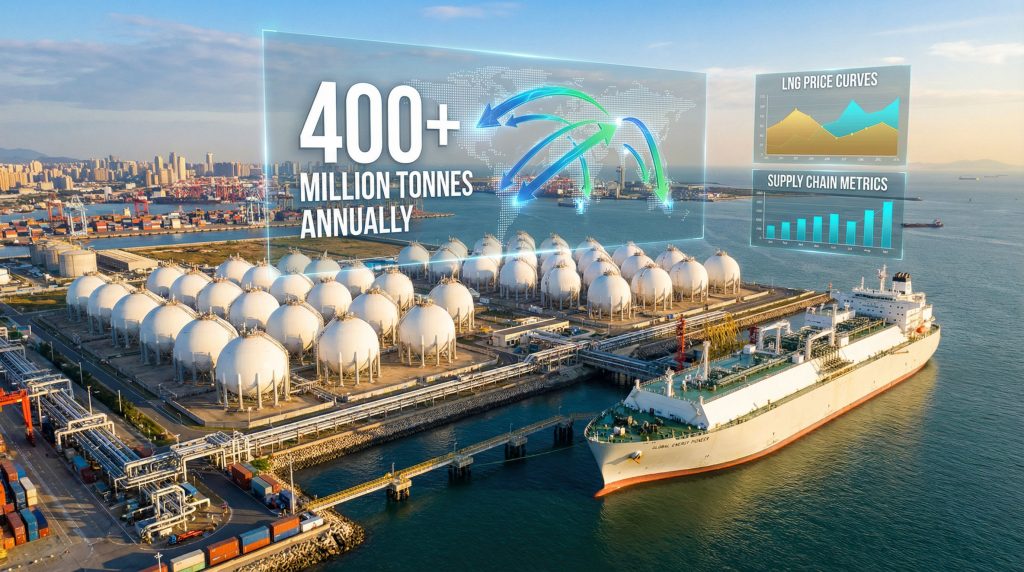
The global LNG trade operates at unprecedented scales, with over 400 million tonnes flowing through international markets annually. This massive volume represents more than just commodity transactions; it forms the backbone of energy security for numerous nations lacking domestic natural gas resources.
Industrial dependency patterns reveal the depth of LNG integration across economic sectors. In India alone, LNG accounts for 80% of gas demand in the fertiliser sector, while city gas usage comprises 36% of total demand. The power sector relies on LNG for 30% of its usage, refineries depend on it for 75% of their operations, and petrochemicals utilise 54% LNG in their production processes.
These dependency ratios underscore how supply disruptions can cascade through entire industrial ecosystems. Moreover, the LNG supply crunch from Iran war has highlighted these vulnerabilities in unprecedented ways, forcing industries to confront their reliance on concentrated supply sources.
Economic infrastructure investment patterns show concentrated exposure to single points of failure. Qatar's Ras Laffan terminal operates at 77 million tonnes per year capacity, representing a significant portion of global supply. Similarly, the UAE's Das Island facility processes 6 million tonnes annually, while these Middle Eastern facilities collectively serve as primary suppliers to Asian markets.
The structural economics reveal troubling trends in domestic production versus import dependency. Indian domestic gas production declined to 34.7 billion cubic metres in 2025, representing a 3% year-on-year decline. This production shortfall forces increased reliance on imported LNG, creating vulnerability to external supply shocks and price volatility.
Geographic Concentration Risks in Global LNG Supply
Maritime chokepoint analysis reveals extreme concentration risk in global LNG trade flows. The Strait of Hormuz represents the world's most critical energy shipping lane, with traffic declining by 94% during recent conflict periods. Only three tankers traversed this vital waterway during peak disruption, illustrating how geopolitical events can effectively halt energy flows.
Economic modelling shows that approximately 1.056 million tonnes of LNG became trapped on 13 vessels in the Middle East Gulf during shipping disruptions. This stranded cargo represents significant financial exposure for traders and buyers, with each delay multiplying storage costs and supply shortfalls downstream.
Infrastructure vulnerability extends beyond shipping lanes to production facilities themselves. According to Al Jazeera, Qatar's decision to halt production at Ras Laffan required multiple days to resume operations. These production stoppages create ripple effects throughout global markets, as alternative suppliers struggle to compensate for lost volumes.
The economic consequences manifest rapidly in downstream markets. India's Petronet LNG faced only two days of supply remaining at its Dahej terminal following shipping disruptions, forcing industrial users to implement emergency rationing measures. Gujarat Gas reduced daily supply to customers by 50% over a month-long period, while Gujarat State Petroleum Corporation cut industrial gas supply by approximately 70%.
Insurance market dynamics amplify geographic concentration risks through risk premium escalations. Additional War Risk Premiums surged from 0.15-0.2% of vessel value to approximately 1.0% during conflict periods, equivalent to $1.34 million for a large LNG carrier. While this represents a dramatic increase, it remains a fraction of total shipping costs, suggesting that insurance markets may undervalue true disruption risks.
When big ASX news breaks, our subscribers know first
What Economic Forces Drive LNG Price Volatility During Supply Crises?
Market Structure Analysis of Global LNG Pricing
Price volatility patterns during supply crises reveal fundamental structural weaknesses in global LNG markets. Northwest Europe April LNG prices surged to $19.33/million Btu, more than doubling from $9.98/million Btu within days, representing a 93.7% increase. Northeast Asia experienced similar volatility, with May delivery prices increasing to $16.87/million Btu from $10.14/million Btu, a 66.3% increase.
Regional price differentials highlight market segmentation and arbitrage opportunities. India's west coast LNG prices reached $23.3/million Btu, while east coast prices hit $23.5/million Btu, representing increases of $7.8-7.9/million Btu from previous sessions. These premiums reflect both supply scarcity and transportation cost escalations during crisis periods.
The contrast between regional markets and benchmark pricing illustrates market structure inefficiencies. Henry Hub natural gas prices increased only 6.8% to $3.05/million Btu during the same period, demonstrating how supply disruptions in one region can create massive arbitrage opportunities for producers in unaffected areas. This connects directly with US natural gas forecast trends, which show divergent pricing dynamics.
Key Price Differential Analysis:
| Market | Price ($/MMBtu) | Increase | Percentage Change |
|---|---|---|---|
| Northwest Europe (April) | $19.33 | $9.35 | 93.7% |
| Northeast Asia (May) | $16.87 | $6.73 | 66.3% |
| India West Coast (April) | $23.30 | $7.80 | 50.4% |
| Henry Hub (April) | $3.05 | $0.19 | 6.8% |
Supply Chain Economics Under Stress
Transportation cost structures reveal how crisis conditions multiply supply chain expenses beyond simple commodity pricing. While Additional War Risk Premiums reached $1.34 million per vessel, total shipping costs for a major cargo approached $30 million during peak market stress. This illustrates how multiple cost factors compound during disruptions, particularly when examining oil price movements in related markets.
Long-term contract premiums provide insight into market stress indicators. The indicative LNG contract price comprises 115% of Henry Hub plus $3/million Btu liquefaction fee. European LNG's premium over this contract price expanded to $12.82/million Btu, compared to February averages of $3.59/million Btu, representing more than triple the normal premium structure.
Capacity utilisation analysis shows limited flexibility in global supply systems. US LNG terminals achieved 94% utilisation rates, shipping 10.75 million tonnes in a 30-day period equivalent to 130.8 million tonnes annually. This high utilisation leaves minimal spare capacity to compensate for disruptions elsewhere, contributing to price volatility.
Market rejection thresholds illustrate buyer resistance to extreme pricing. Indian state distributors GAIL and GSPC issued tenders seeking March deliveries but did not award contracts as offers exceeded $25/million Btu. This indicates that even supply-constrained buyers have practical limits on acceptable pricing levels.
Regional Economic Impact Assessment: Asia-Pacific Markets
Industrial Sector Vulnerability Analysis
Manufacturing sector dependencies create cascading economic effects during LNG supply disruptions. The fertiliser industry faces particular vulnerability, with 80% of gas demand dependent on LNG imports. Production interruptions threaten agricultural supply chains and food security, creating political sensitivity beyond simple industrial economics.
Take-or-pay contract mechanisms shift risk allocation between suppliers and buyers during crisis periods. These contracts require buyers to either accept goods or pay penalties, ensuring risk-sharing but potentially exacerbating financial stress for industrial users already facing supply shortages.
Industrial Sector LNG Dependency (2025):
- Fertilisers: 80% of gas demand
- City Gas: 36% of total usage
- Power Sector: 30% utilisation rate
- Refineries: 75% dependency ratio
- Petrochemicals: 54% of total usage
Ceramic manufacturing clusters demonstrate concentrated geographic vulnerability. Gujarat's Morbi industrial cluster faced 50% supply reductions over month-long periods, forcing production adjustments and potentially triggering supply chain disruptions for downstream customers across multiple industries.
Energy Security Policy Implications
Strategic reserve adequacy assessments reveal insufficient buffer capacity across major importing nations. India maintained approximately 10 days of LPG stocks during supply disruptions, highlighting the narrow margin between normal operations and crisis conditions in energy-dependent economies.
Fuel switching economics become critical during supply shortages, but alternative options often face their own constraints. However, the broader context of energy transition challenges shows that diversification strategies require long-term planning beyond immediate crisis responses.
Priority allocation frameworks emerge during crisis periods, with residential and transportation fuels receiving preference over industrial applications. City gas firms prioritised domestic piped natural gas (PNG) for households and compressed natural gas (CNG) for vehicles over industrial supply, reflecting policy frameworks that protect consumer interests during shortages.
How Alternative Supply Sources Reshape Global Trade Patterns
Atlantic Basin LNG Market Dynamics
US export capacity demonstrates limited ability to compensate for Middle Eastern supply disruptions despite high utilisation rates. American terminals operated at 94% capacity utilisation, equivalent to 130.8 million tonnes annually, leaving minimal spare capacity to meet surge demand from Asian markets during crisis periods.
Arbitrage opportunities create competition between traditional market regions as supply sources become constrained. European and Asian buyers compete for Atlantic Basin LNG volumes, driving price premiums and reshaping traditional trade flow patterns established over decades of market development.
Maritime insurance cancellations by major Protection and Indemnity clubs including London P&I, Steamship Mutual Underwriting Association, American P&I, Gard, and Swedish Club demonstrate how risk management decisions by financial institutions can effectively shut down trade routes. Consequently, this affects broader trade war oil impact scenarios across energy markets.
Commissioning timeline constraints limit rapid capacity additions during crisis periods. New projects including Cheniere's Corpus Christi stage 3 expansion and the Golden Pass LNG facility represent additional capacity, but commissioning requirements prevent immediate supply increases when disruptions occur.
Long-term Structural Changes in Global Energy Trade
Investment flow redirection toward resilient infrastructure becomes economic imperative following major supply disruptions. The concentration risk exposed during Middle Eastern conflicts highlights the need for geographic diversification in both supply sources and transportation routes.
Geopolitical risk premium integration into energy pricing represents a permanent structural change in market dynamics. The dramatic price premiums observed during recent disruptions suggest that markets may systematically undervalue geopolitical risks during stable periods, creating potential for recurring volatility cycles.
Political risk insurance mechanisms gain importance as trade route vulnerabilities become apparent. US government offers of political risk insurance through the Development Finance Corporation at reasonable prices represent policy recognition of private market failures in adequately pricing and covering geopolitical risks.
Naval escort services for energy shipments represent a return to state intervention in commercial shipping. This has potential implications for international maritime law and trade route security frameworks extending far beyond current crisis conditions.
Economic Modelling of Crisis Duration Scenarios
Short-term Market Adjustment Mechanisms
Inventory depletion rates accelerate rapidly during supply disruptions, with major terminals facing critical supply levels within days rather than weeks. Petronet LNG's reduction to two days of remaining supply illustrates how quickly buffer stocks disappear when replenishment shipments face delays.
Demand destruction patterns vary significantly across sectors, with industrial users bearing the primary burden of supply rationing. 50-70% reductions in industrial gas supply occurred while residential and transportation fuels maintained priority access. This demonstrates how crisis management policies protect politically sensitive consumers.
Price elasticity testing reveals significant variation in buyer behaviour across price levels. Tender rejections above $25/million Btu indicate practical limits on price acceptance even during severe supply shortages. This suggests that extremely high prices may reduce rather than increase effective demand.
Medium-term Structural Adjustments
Production restart timelines create extended supply gaps beyond initial disruption periods. According to Wood Mackenzie analysis, Qatar's requirement for multiple days to resume operations after production halts demonstrates how security concerns can extend supply interruptions well beyond the duration of precipitating events.
Alternative fuel market pressures compound during extended disruptions as industrial users seek substitute energy sources. Propane and other alternative fuels face their own supply constraints, limiting the effectiveness of fuel switching as a crisis response mechanism.
Supply chain optimisation efforts focus on geographic diversification and route flexibility. However, implementation requires significant capital investment and extended development timelines that provide limited benefit during immediate crisis periods.
Investment and Policy Response Framework Analysis
Strategic Reserve Policy Economics
Cost-benefit analysis of emergency storage investments must account for the full economic impact of supply disruptions across multiple sectors rather than simple commodity price differences. The cascading effects through fertiliser, power, and industrial sectors justify higher storage investment levels than purely financial calculations might suggest.
International coordination mechanisms become essential during crisis periods as individual nation responses can exacerbate global supply constraints. Competitive bidding for limited available supplies drives prices higher for all participants while reducing overall supply security.
Reserve sizing optimisation requires consideration of maximum likely disruption duration rather than average shortage periods. This is particularly important given the non-linear economic impacts of complete supply interruptions versus partial shortages.
Infrastructure Resilience Investment Priorities
Supply route diversification economics favour investment in multiple smaller terminals rather than concentrated large-scale facilities. Despite potential scale economy disadvantages during normal operations, the economic benefits of operational redundancy become apparent during major disruptions.
Technology investment priorities include rapid restart capabilities for production facilities and flexible storage systems that can accommodate supply uncertainty. The ability to resume operations quickly after security-related shutdowns provides significant economic value during crisis periods.
Regional cooperation frameworks for infrastructure sharing can improve collective energy security while reducing individual nation investment requirements. However, these require international agreements that may prove difficult to negotiate during stable periods when risks appear manageable.
The next major ASX story will hit our subscribers first
Long-term Economic Implications for Global Energy Markets
Structural Market Changes and Investment Flows
Permanent supply chain restructuring appears likely as buyers recognise concentration risks previously considered acceptable. The dramatic price impacts and supply shortages experienced during recent disruptions will likely drive sustained investment in supply diversification even after immediate crisis conditions resolve.
Risk premium structures in energy pricing may undergo permanent adjustment as markets incorporate higher geopolitical risk assessments into long-term contracts and investment decisions. The traditional pricing models that failed to account adequately for supply disruption risks require fundamental revision.
Infrastructure investment patterns will likely shift toward resilience over pure efficiency, accepting higher costs during normal operations in exchange for better performance during crisis periods. This represents a fundamental change from decades of optimisation focused primarily on cost reduction.
Macroeconomic Consequences for Energy-Dependent Economies
GDP impact assessments for major LNG importing nations must consider both direct energy costs and indirect effects through reduced industrial production and supply chain disruptions. The multiplier effects through interconnected industries can exceed the direct commodity cost increases by substantial margins.
Industrial competitiveness shifts due to energy cost differentials may prove more persistent than temporary supply disruptions. Companies reassess location strategies based on energy security considerations rather than simply current pricing levels.
Economic policy adaptation strategies require balancing short-term crisis response measures with long-term structural adjustments to improve energy security. Emergency measures that distort market signals may hinder necessary investment in resilient infrastructure if maintained too long after immediate crises resolve.
The interconnected nature of global energy systems creates systemic risks that extend far beyond individual supply disruptions. This requires coordinated policy responses that recognise the international dimensions of energy security challenges. Moreover, the LNG supply crunch from Iran war serves as a stark reminder of how quickly geopolitical events can reshape entire energy markets and economic relationships.
Disclaimer: This analysis is based on market conditions and data available at the time of publication. Energy market dynamics can change rapidly, and past performance does not guarantee future results. Readers should consult current market data and professional advisors before making investment or policy decisions based on this analysis.
Looking to Capitalise on Energy Market Volatility?
Discovery Alert's proprietary Discovery IQ model provides real-time notifications on significant ASX mineral discoveries, including critical minerals essential for energy transition, helping investors identify actionable opportunities before broader market recognition. Begin your 14-day free trial today to position yourself ahead of energy security shifts and commodity price movements.