July 27, 2026
Understanding India's Current Energy Supply Challenges
India's liquefied petroleum gas market faces unprecedented disruptions as geopolitical tensions in West Asia create severe supply chain bottlenecks affecting millions of households nationwide. The LPG supply crisis in India has emerged as a critical energy security challenge, exposing deep structural vulnerabilities in the country's import-dependent energy infrastructure. Furthermore, this crisis demonstrates how regional conflicts can rapidly transform into domestic energy emergencies, particularly in nations heavily reliant on imported refined petroleum products for essential household functions.
The current shortage affects approximately 300 million households across urban and rural demographics, creating immediate hardships for families who depend on LPG for daily cooking needs. However, the implications extend far beyond individual households, affecting commercial operations, industrial processes, and broader economic stability.
When big ASX news breaks, our subscribers know first
Understanding India's LPG Supply Vulnerability: A Macro-Economic Analysis
The Strategic Importance of LPG in India's Energy Matrix
India's energy consumption patterns reveal deep structural dependencies that extend beyond crude oil imports into refined petroleum products. Liquefied petroleum gas represents a critical component of household energy security, serving approximately 300 million households across urban and rural demographics. The transition from traditional biomass fuels to LPG has created a nationwide dependency on imported supplies, fundamentally altering the country's energy risk profile.
The cooking fuel landscape demonstrates how policy initiatives designed to improve household welfare can inadvertently create new vulnerabilities. Government programs promoting LPG adoption have successfully reduced indoor air pollution and improved living standards, yet simultaneously increased import dependencies that expose households to international supply disruptions. This dependency mirrors broader trends in global energy markets where oil price trade war dynamics increasingly influence domestic energy security.
Import Dependency Statistics and Economic Implications
Current data indicates that India imports approximately 85-87% of its LPG requirements, with domestic refineries contributing only 13-15% of total consumption. This dependency structure creates significant economic exposure to international price volatility and supply chain disruptions. The financial implications extend beyond direct energy costs, affecting household budgets, commercial operations, and broader inflationary pressures.
West Asian suppliers provide the majority of these imports, with supply routes concentrated through critical maritime chokepoints. This geographic concentration amplifies risk factors, as disruptions in specific regions can affect substantial portions of India's total LPG supply simultaneously. Additionally, tariffs and market impact considerations further complicate import strategies during periods of international trade tension.
Household Energy Consumption Patterns Across Demographics
Energy consumption analysis reveals distinct patterns across income segments and geographic regions. Urban households typically consume 14.2 kg of LPG per month on average, while rural consumption averages 8.7 kg monthly due to continued use of alternative cooking fuels. These consumption patterns create differentiated vulnerability levels across demographic segments.
Higher-income households demonstrate greater resilience through their ability to absorb price increases and maintain emergency supplies. Lower-income segments face immediate hardship when supply disruptions occur, often reverting to traditional biomass fuels or reducing cooking activities entirely. Consequently, the LPG supply crisis in India disproportionately affects vulnerable populations who have limited alternatives.
How Do Geopolitical Tensions Create Energy Supply Shocks?
The Strait of Hormuz: A Critical Energy Chokepoint
The Strait of Hormuz represents one of the world's most significant energy bottlenecks, with approximately 21% of global petroleum liquids transiting through this narrow waterway. For India specifically, an estimated 50-60% of LPG imports depend on this route, creating concentrated vulnerability to regional disruptions.
Maritime insurance rates and shipping costs increase exponentially during periods of regional tension, even when physical disruptions remain minimal. These cost escalations filter through to end consumers, creating price volatility that can persist long after initial geopolitical triggers subside. Moreover, these dynamics contribute to broader oil price stagnation effects across global energy markets.
West Asian Supply Chain Dependencies in Global Markets
The concentration of refining capacity in West Asia creates structural dependencies that extend beyond crude oil production. Five major regional producers collectively account for approximately 20 million barrels per day of crude production and 5 million barrels per day of refining capacity. This concentration means that regional disruptions can simultaneously affect both crude supply and refined product availability.
Refinery infrastructure faces particular vulnerabilities during conflicts, as these facilities require continuous operation and are difficult to restart quickly after shutdowns. Unlike crude production fields that can resume operations relatively rapidly, refinery disruptions create prolonged shortages of refined products including LPG, diesel, and gasoline. In addition, other regions implementing similar Saudi exploration strategy initiatives may face comparable supply chain risks.
Risk Assessment Framework for Energy Import Strategies
Modern risk assessment models must incorporate multiple variables including shipping route dependencies, supplier concentration ratios, and storage capacity limitations. Traditional energy security frameworks focused primarily on crude oil availability often underestimate refined product vulnerabilities.
Storage infrastructure plays a crucial role in supply chain resilience. Countries with substantial strategic petroleum reserves can weather crude oil disruptions more effectively, but refined product storage typically receives less attention despite serving more immediate consumer needs.
What Are the Primary Drivers Behind India's Current LPG Crisis?
Regional Conflict Impact on Maritime Energy Routes
Current tensions in West Asia have created an estimated supply gap of approximately 10 million barrels per day by April 2026, according to energy market analysis. This disruption affects refined products more severely than crude oil, with LPG markets experiencing particularly acute shortages due to limited alternative supply sources.
Maritime route disruptions create cascading effects throughout the supply chain. According to India Today, even partial restrictions on shipping traffic can cause significant delays, as alternative routes often involve longer transit times and higher costs. These delays compound in markets with limited storage capacity, creating acute shortage conditions.
Infrastructure Bottlenecks in Alternative Supply Channels
India's import infrastructure demonstrates clear limitations when primary supply routes face disruption. Port facilities designed for specific supply patterns cannot easily accommodate alternative sourcing arrangements, creating bottlenecks even when substitute supplies are available from other regions.
Pipeline infrastructure connecting ports to distribution networks also creates constraints. Facilities optimised for specific supply sources may lack the flexibility to handle different product specifications or delivery schedules from alternative suppliers. Furthermore, the interconnected nature of energy markets means that disruptions affect related sectors, including natural gas price forecast trends.
Seasonal Demand Variations and Storage Capacity Constraints
LPG demand exhibits seasonal patterns that interact poorly with supply disruptions. Peak consumption periods during cooking festivals and wedding seasons coincide with periods when storage facilities operate at capacity, reducing the system's ability to absorb supply shocks.
Storage capacity limitations become critical during crisis periods. While India maintains strategic crude oil reserves, refined product storage receives less investment despite serving more immediate consumer needs. Subsequently, the LPG supply crisis in India reflects these systematic infrastructure gaps.
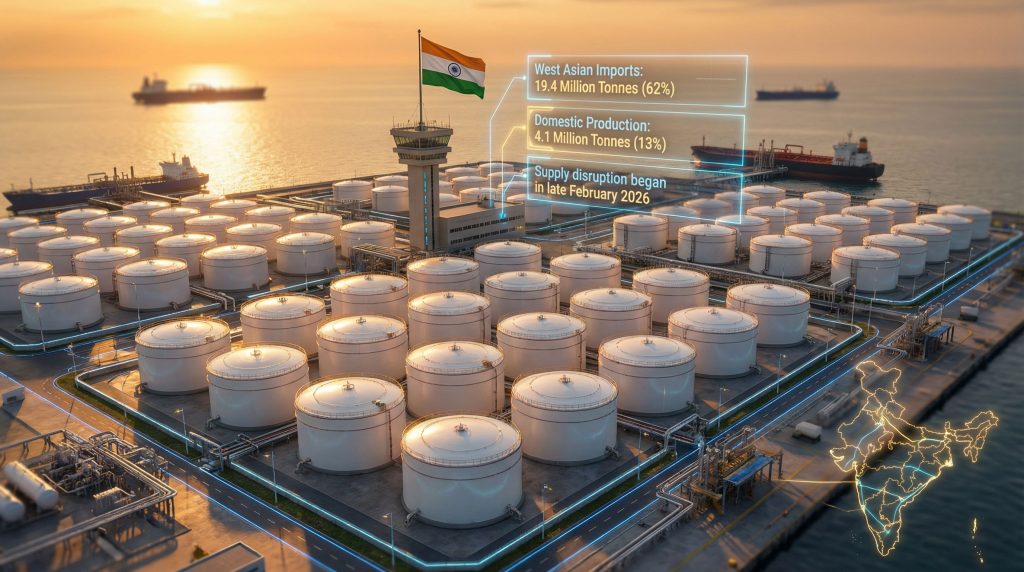
| Supply Source | Volume (Million Tonnes) | Percentage Share | Risk Level |
|---|---|---|---|
| Domestic Production | 4.1 | 13% | Low |
| West Asian Imports | 19.4 | 62% | Critical |
| Other Regional Imports | 7.8 | 25% | Medium |
Economic Consequences of Energy Supply Disruptions
Household Budget Impact Analysis Across Income Segments
LPG supply disruptions create disproportionate impacts across income demographics. Lower-income households typically allocate 3-4% of monthly income to cooking fuel, making them highly sensitive to price increases and availability constraints. Upper-income segments, allocating only 0.5-1% of income to cooking fuel, demonstrate greater resilience to supply disruptions.
The economic impact extends beyond direct energy costs. Households facing LPG shortages often increase expenditure on alternative fuels or prepared foods, creating additional budget pressures that can affect other essential spending categories. Consequently, the LPG supply crisis in India amplifies existing socioeconomic inequalities.
Commercial Sector Disruptions and GDP Implications
Commercial establishments dependent on LPG for operations face immediate productivity losses during supply disruptions. Restaurants, hotels, and food processing facilities cannot easily substitute alternative fuels, leading to reduced output or temporary closures.
Economic modelling suggests that sustained LPG shortages could reduce GDP growth by 0.2-0.3 percentage points annually, primarily through reduced commercial activity and increased production costs across multiple sectors. These impacts demonstrate how energy supply disruptions translate into broader economic consequences.
Inflationary Pressures from Energy Price Volatility
Energy price volatility creates broader inflationary pressures through multiple transmission mechanisms. Direct fuel cost increases affect household budgets immediately, while indirect effects emerge through higher transportation and production costs across the economy.
The Reserve Bank of India estimates that a 10% increase in LPG prices contributes approximately 0.1 percentage points to overall inflation, with effects persisting for 6-8 months due to sticky pricing in related sectors. Furthermore, these pressures interact with global energy market dynamics to compound domestic price volatility.
The supply disruption began in late February 2026, escalating rapidly through March as maritime routes became increasingly constrained, leading to delivery delays of up to 10 days in major urban centers.
Government Response Mechanisms and Policy Interventions
Emergency Supply Management Protocols
Government response to LPG supply crises involves multiple coordinated interventions designed to prioritise household access while managing broader economic impacts. Emergency protocols include direct allocation controls, price stabilisation mechanisms, and enhanced monitoring of distribution networks.
The LPG Control Order issued on March 8, 2026, represents a comprehensive emergency response framework. This directive requires Indian refineries to maximise LPG production by 30% through process optimisation and reduced export commitments, prioritising domestic household supply during the crisis period.
Strategic Reserve Utilisation and Distribution Controls
Strategic reserve utilisation requires careful balance between immediate relief and long-term preparedness. Government-controlled reserves typically maintain 15-20 days of normal consumption, providing limited buffer capacity during extended supply disruptions.
Distribution control mechanisms include priority allocation systems favouring household consumers over commercial users, rationing protocols to extend available supplies, and emergency distribution through alternative channels including direct delivery systems. However, implementing these measures requires careful coordination to prevent market distortions.
Inter-State Coordination for Crisis Management
Federal coordination becomes critical during supply crises, as individual states may implement conflicting policies that exacerbate overall shortages. Central coordination ensures equitable distribution across regions while preventing hoarding behaviours that can worsen crisis conditions.
Inter-state cooperation protocols include shared storage facility access, coordinated transportation arrangements, and unified pricing policies to prevent market fragmentation during emergency periods. These mechanisms help maintain national market integration during crisis conditions.
The next major ASX story will hit our subscribers first
Alternative Energy Solutions and Diversification Strategies
Pipeline Natural Gas (PNG) Expansion as Crisis Mitigation
Pipeline natural gas infrastructure offers potential alternatives to LPG dependency, yet current coverage remains limited to major urban centres. PNG networks serve approximately 12 million households compared to 300 million LPG connections, indicating substantial infrastructure gaps.
Expanding PNG coverage requires significant capital investment and extended implementation timelines, limiting its effectiveness as a short-term crisis response. However, strategic PNG expansion can reduce long-term LPG import dependencies while providing more stable pricing for consumers.
Traditional Fuel Alternatives and Rural Energy Security
Rural households often maintain familiarity with traditional biomass fuels, providing fallback options during LPG supply disruptions. However, reverting to traditional fuels creates health and environmental costs that contradict broader development objectives.
Improved biomass technologies including efficient cookstoves and biogas systems can provide intermediate solutions, reducing dependence on imported LPG while maintaining health and environmental benefits compared to traditional biomass burning. According to ABC News Asia, these alternatives become increasingly important during extended supply crises.
Long-term Import Diversification Planning
Import diversification strategies require developing supply relationships with non-traditional sources including the United States, Australia, and African suppliers. These arrangements involve long-term contracts, infrastructure investments, and quality certification processes that take years to implement.
Diversification also includes developing domestic production capacity through enhanced refinery operations and alternative production technologies. However, geological constraints limit India's potential for significant domestic LPG production expansion. In addition, coordination with international suppliers implementing different resource strategies affects long-term supply security.
Market Dynamics and Price Volatility Analysis
Supply-Demand Imbalance Quantification
Current market analysis indicates a supply shortage of approximately 2.5 million tonnes annually, representing roughly 8% of total consumption. This imbalance creates acute shortage conditions in specific regions while maintaining adequate supplies in areas with better storage and distribution infrastructure.
The supply-demand gap exhibits regional variations, with southern and western states experiencing more severe shortages due to their higher dependence on West Asian imports through affected shipping routes. Consequently, market dynamics vary significantly across different regions of the country.
Black Market Activity and Regulatory Enforcement
Supply shortages inevitably create opportunities for black market activities, with illegal resale of subsidised LPG cylinders and price manipulation by distributors. Regulatory enforcement becomes challenging during crisis periods as normal distribution channels face capacity constraints.
Government monitoring systems track cylinder movements through digital platforms, yet enforcement capabilities become strained during emergency periods when administrative resources focus on crisis management rather than regulatory compliance. These challenges require adaptive regulatory frameworks that can function effectively during crisis conditions.
Regional Price Disparities and Distribution Inequities
Price disparities emerge across different regions based on transportation costs, local supply availability, and regulatory enforcement effectiveness. Remote areas typically experience higher prices and greater supply uncertainty during crisis periods.
Urban centres with better infrastructure and stronger regulatory oversight generally maintain more stable pricing, while rural areas face greater volatility and potential exploitation by distributors taking advantage of supply constraints. These disparities reflect underlying infrastructure inequalities that become more pronounced during supply crises.
| Sector | Pre-Crisis Delivery Time | Current Delivery Time | Price Impact |
|---|---|---|---|
| Urban Households | 2-3 days | 8-10 days | 15-20% increase |
| Rural Areas | 4-5 days | 12-15 days | 25-30% increase |
| Commercial Users | Same day | 5-7 days | 35-40% increase |
Regional Vulnerability Assessment Across Indian States
High-Risk Metropolitan Areas and Supply Challenges
Major metropolitan areas demonstrate particular vulnerability to LPG supply disruptions despite better infrastructure, due to their high consumption density and complete dependence on external supplies. Cities like Mumbai, Delhi, and Bangalore consume substantial quantities while maintaining limited local storage capacity.
Metropolitan areas also face unique distribution challenges during crisis periods, as traffic congestion and complex delivery networks can exacerbate supply chain bottlenecks even when adequate supplies reach regional hubs. These urban vulnerabilities require specialised crisis management approaches.
Rural Distribution Network Resilience Factors
Rural distribution networks exhibit different vulnerability patterns compared to urban areas. While rural consumers often maintain alternative fuel options, they face longer supply chains and limited storage facilities that create acute shortages when primary distribution systems fail.
Rural areas also demonstrate greater social resilience through community cooperation and shared resources, yet these mechanisms cannot fully compensate for systemic supply shortfalls during extended crisis periods. Therefore, rural areas require different support mechanisms during supply emergencies.
Industrial Cluster Impact and Economic Spillovers
Industrial clusters dependent on LPG for manufacturing processes face immediate production constraints during supply disruptions. Food processing, chemical manufacturing, and small-scale industrial operations cannot easily substitute alternative fuels, creating cascading economic impacts.
Economic spillover effects include reduced employment in affected industries, supply chain disruptions for downstream sectors, and regional economic contraction in areas with high industrial LPG consumption. These impacts demonstrate how energy supply crises affect broader industrial ecosystems.
What Does This Crisis Reveal About Energy Security Planning?
Strategic Reserve Adequacy Evaluation
Current strategic reserve capacity appears inadequate for extended supply disruptions, with existing stocks providing only 15-20 days of normal consumption. International best practices suggest maintaining 90 days of refined product reserves, indicating substantial gaps in India's preparedness framework.
Reserve adequacy also depends on distribution capability during crisis periods. Having adequate storage means little if distribution networks cannot effectively deliver supplies to end consumers during emergency conditions. This highlights the importance of integrated supply chain resilience planning.
Infrastructure Investment Priorities for Future Resilience
Infrastructure investment priorities should focus on diversifying import terminals, expanding storage capacity, and developing alternative distribution networks. These investments require substantial capital commitments but provide essential resilience against future supply disruptions.
Priority areas include expanding LPG import terminal capacity beyond West Asian supply routes, developing inland storage facilities to serve as regional buffers, and implementing redundant distribution systems that can operate during primary network disruptions. However, these infrastructure developments require long-term planning and sustained investment commitment.
International Cooperation Frameworks for Energy Security
International cooperation becomes essential for managing energy supply crises that affect multiple countries simultaneously. Regional cooperation frameworks can facilitate emergency supply sharing, coordinated strategic reserve releases, and joint infrastructure development projects.
Bilateral agreements with diverse suppliers can provide alternative sources during regional supply disruptions, yet these arrangements require advance planning and relationship development that cannot be implemented during crisis periods. Moreover, effective cooperation requires institutional frameworks that can function during crisis conditions.
Energy analysts emphasise that while crude oil supplies remain manageable, refined product markets face deeper structural vulnerabilities due to limited domestic refining capacity and storage infrastructure constraints.
Long-term Implications for India's Energy Independence Strategy
Domestic Production Capacity Enhancement Requirements
Enhancing domestic LPG production capacity requires substantial refinery investments and technological upgrades that can take 5-7 years to implement. Current refinery utilisation rates suggest limited scope for immediate production increases without significant infrastructure expansion.
Production enhancement also requires addressing feedstock constraints, as domestic crude oil production cannot support substantial refinery expansion. Alternative feedstock sources including imported crude require careful supply chain planning to avoid creating new dependencies.
Technology Investment in Alternative Energy Infrastructure
Alternative energy technologies including biogas, electric cooking systems, and hydrogen-based solutions offer long-term substitution potential for LPG dependency. However, these technologies require substantial infrastructure investment and consumer adoption programs that span multiple years.
Electric cooking systems show particular promise in urban areas with reliable electricity supply, yet rural electrification quality and reliability constraints limit widespread adoption in the near term. Therefore, technology solutions must be tailored to different regional contexts and infrastructure capabilities.
Trade Partnership Diversification Beyond Traditional Suppliers
Diversifying trade partnerships requires developing relationships with non-traditional suppliers including the United States, Qatar, Australia, and African producers. These relationships involve long-term contracts, quality specifications, and infrastructure compatibility requirements.
Trade diversification also includes developing domestic transportation and storage infrastructure capable of handling supplies from multiple sources with different specifications and delivery schedules. This requires significant coordination between public and private sector stakeholders to ensure effective implementation.
FAQ: Understanding India's LPG Supply Crisis
How long is the current LPG shortage expected to last?
Current market analysis suggests the LPG supply crisis in India may persist for 4-6 months, depending on the resolution of regional tensions affecting West Asian supply routes. Recovery timelines depend on restoring normal shipping operations and rebuilding depleted storage inventories across the distribution network.
Which regions are most severely affected by supply disruptions?
Southern and western Indian states experience the most severe impacts due to their higher dependence on West Asian imports through affected shipping routes. States like Karnataka, Tamil Nadu, and Maharashtra face delivery delays of 10-15 days compared to normal 2-3 day delivery schedules.
What emergency measures can households implement during shortages?
Households can implement several emergency measures including conserving LPG through efficient cooking practices, utilising pressure cookers and energy-efficient appliances, maintaining emergency supplies during normal periods, and exploring alternative cooking methods including induction cooktops where electricity supply permits.
How does this crisis compare to previous energy supply disruptions?
The current crisis represents the most severe LPG supply disruption India has faced since the 2019 Middle East tensions, yet differs in its concentrated impact on refined products rather than crude oil. Previous disruptions primarily affected fuel prices rather than physical availability, making current shortages more immediately visible to consumers.
Investment Disclaimer: This analysis is for educational purposes only and does not constitute investment advice. Energy market investments involve substantial risks including price volatility, regulatory changes, and geopolitical factors. Readers should conduct independent research and consult qualified financial advisors before making investment decisions. Past performance does not guarantee future results, and energy sector investments can result in significant losses.
Looking to Capitalise on Energy Market Disruptions?
Discovery Alert's proprietary Discovery IQ model delivers real-time alerts on significant ASX mineral discoveries, helping subscribers identify actionable opportunities in resource markets during periods of global uncertainty. Begin your 14-day free trial today to secure your market-leading advantage in energy and resource investment opportunities.