July 20, 2026
Macroeconomic Conditions Set Stage for Recovery
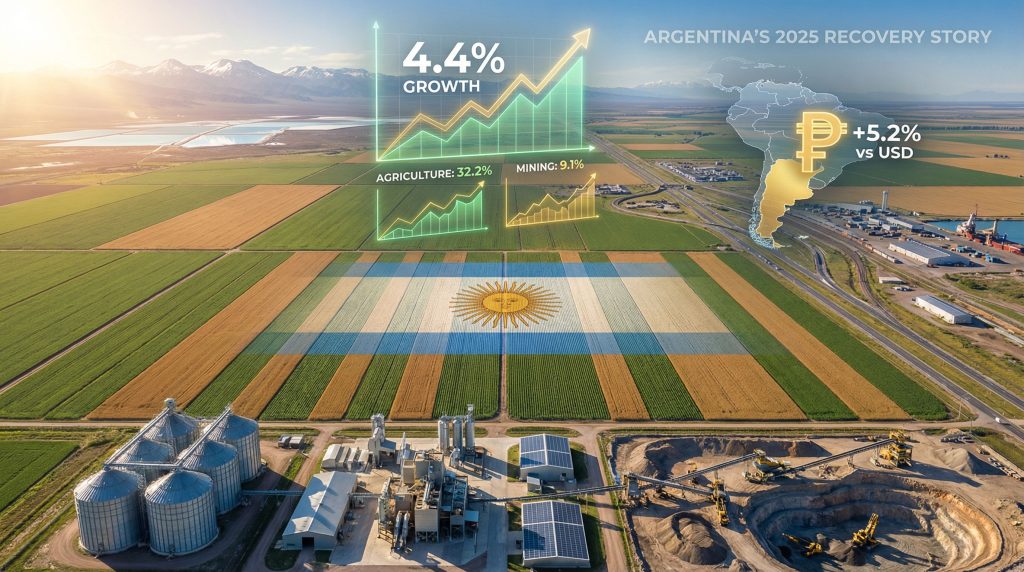
Global commodity markets entered a period of structural transformation in 2025, driven by shifting monetary policies, supply chain reconfigurations, and emerging market currency dynamics. Within this complex landscape, Argentina's economy growth in 2025 emerged as a critical case study in how fiscal consolidation can catalyse rapid economic expansion despite persistent inflationary pressures. The country's transition from contraction to 4.4% annual growth demonstrates the effectiveness of comprehensive macroeconomic stabilisation policies when implemented within supportive external conditions.
Understanding this recovery requires examining the interconnected mechanisms of commodity price cycles, currency market dynamics, and structural reform implementation. The volatility observed throughout 2025, ranging from monthly contractions to expansions exceeding 7.7%, reflects fundamental sectoral realignment rather than temporary stimulus-driven demand increases.
When big ASX news breaks, our subscribers know first
Foundations of Economic Acceleration
Argentina's economy growth in 2025 represented a remarkable reversal from the 1.7% contraction experienced in 2024, with preliminary government data from the Instituto Nacional de Estadística y Censos (INDEC) confirming the 4.4% annual expansion. This performance, while falling short of the government's 5% forecast and the IMF's 4.5% projection, established a foundation for sustained recovery through three primary structural mechanisms.
The most significant driver emerged from agricultural productivity enhancements, which generated 32.2% year-over-year growth in December 2025. This expansion reflected not merely favourable weather conditions but systematic improvements in input cost management and export market access. The agricultural sector's contribution to overall growth demonstrates Argentina's continued reliance on its comparative advantage in commodity production.
Furthermore, successful mineral exploration insights have supported the country's broader resource-based economic recovery strategy, particularly in relation to lithium and other critical minerals.
Fiscal Consolidation Impact
| Metric | 2025 Performance | Historical Context |
|---|---|---|
| Primary Fiscal Balance | +0.9% of GDP (H1 2025) | First surplus in decades |
| Annual GDP Growth | 4.4% | Recovery from -1.7% (2024) |
| December Growth Rate | 3.5% year-over-year | Strongest Q4 performance |
| Monthly Volatility Range | -0.1% to +7.7% | Indicates sectoral realignment |
The achievement of a primary fiscal surplus of +0.9% of GDP in the first half of 2025 marked a watershed moment for Argentine macroeconomic policy. This represented the first such surplus in decades, signalling a fundamental shift away from the deficit-financing cycle that had previously generated chronic inflation and currency instability.
Sectoral Performance Dynamics
The composition of Argentina's economy growth in 2025 revealed distinct patterns of sectoral divergence, with commodity-producing industries driving expansion while manufacturing faced continued contraction pressures. This bifurcated recovery pattern highlights the structural challenges facing the Argentine economy as it transitions toward sustainable growth.
Agricultural Sector Leadership
- December performance: 32.2% year-over-year expansion
- Export revenue impact: Enhanced foreign currency inflows supporting peso stability
- Quarterly momentum: Primary contributor to Q4 growth acceleration
- Seasonal dynamics: Agricultural cycles influenced monthly volatility patterns
The agricultural sector's exceptional performance stemmed from multiple factors including improved global commodity prices, enhanced productivity measures, and better access to international markets. This 32.2% December expansion provided critical support for Argentina's balance of payments position through increased export revenues.
Moreover, Argentina lithium insights reveal significant potential for the country's mining sector, which represents a crucial component of its commodity-driven recovery strategy.
Service Sector Divergence
Financial intermediation emerged as a standout performer within the services sector, achieving 14.1% annual growth in December 2025. This expansion reflected improved credit conditions and asset valuations as currency stabilisation reduced foreign exchange hedging costs. The central bank's enhanced liquidity position facilitated credit expansion as risk premiums declined across the financial system.
However, consumer-facing service sectors experienced contraction, with hospitality declining 1.5% annually and retail trade falling 1.3%. This divergence indicates persistent consumer spending constraints despite overall economic recovery, suggesting that the benefits of growth had not yet translated into broad-based improvements in household purchasing power.
Industrial Production Challenges
| Sector | December Performance | Growth Trajectory |
|---|---|---|
| Manufacturing | -3.9% annual decline | Continued contraction |
| Mining | +9.1% growth | Commodity export strength |
| Fisheries | +18.3% increase | Export base diversification |
The 3.9% manufacturing decline despite overall 4.4% GDP growth revealed critical structural adjustments within the Argentine economy. This contraction suggests that policy frameworks were successfully strengthening commodity export sectors while manufacturing faced competitive pressures from imports and input cost challenges.
Mining sector expansion of 9.1% supported commodity export revenues, particularly important given Argentina's significant lithium reserves and their strategic importance for global battery supply chains. The 18.3% fisheries growth demonstrated successful diversification of the country's export base beyond traditional agricultural commodities.
Currency Market Transformation
The peso's performance represented one of the most dramatic reversals in regional currency markets during 2025-2026. After depreciating 28.9% against the US dollar throughout 2025, the peso appreciated 5.2% between January and February 2026, ranking second only to Brazil's real in regional performance.
This currency stabilisation reflected direct transmission effects from fiscal discipline to foreign exchange markets. Market participants began revaluing Argentina's medium-term stability prospects based on demonstrated policy credibility rather than temporary measures. The mechanism operated through reduced central bank financing needs, which decreased monetary expansion pressures and improved inflation expectations.
Regional Currency Performance Comparison
The peso's 5.2% appreciation in early 2026 demonstrates how fiscal consolidation creates confidence effects that extend well beyond government budget metrics. This currency reversal provides Argentine exporters with enhanced competitiveness while reducing imported inflation pressures.
Inflation Trajectory and Monetary Policy
Despite significant economic progress, Argentina's economy growth in 2025 occurred alongside persistent inflationary pressures. January 2026 inflation reached 32.4%, representing the lowest rate in eight years but still indicating substantial price stability challenges ahead.
In addition, understanding broader macroeconomic trends helps contextualise Argentina's performance within the global economic landscape, particularly as central banks worldwide navigate complex monetary policy decisions.
Inflation Projection Divergences
- Government target for 2026: 10.1%
- IMF projection: 16.4% annual inflation
- JPMorgan forecast: 26%
- BBVA estimate: 22%
These divergent projections reflect fundamental uncertainties about the sustainability of current disinflationary trends. The government's ambitious 10.1% target assumes continued fiscal discipline and successful implementation of structural reforms. Private sector forecasts remain more cautious, suggesting that inflationary inertia may prove more persistent than official estimates anticipate.
The inflation persistence despite fiscal consolidation indicates that price stability requires comprehensive approaches beyond budget balance achievement. Structural factors including indexation mechanisms, utility tariff adjustments, and exchange rate pass-through effects continue to influence price dynamics.
Labor Market and Structural Reforms
Argentina's economy growth in 2025 coincided with significant labour market adjustments, reflected in the 7.6% unemployment rate that indicates ongoing structural transition pressures. The government's reform agenda includes comprehensive labour market flexibility measures currently awaiting final Senate approval.
Legislative Reform Pipeline
- Labour market flexibility: Enhanced employment contract options
- Extractive project facilitation: Streamlined environmental approval processes
- Investment incentive frameworks: Foreign capital attraction mechanisms
- Tax reform measures: Simplified compliance requirements
These reforms aim to enhance Argentina's investment climate while maintaining social stability during the economic transition period. The extractive project facilitation measures hold particular significance given Argentina's substantial lithium reserves and their strategic importance for global battery supply chains.
The next major ASX story will hit our subscribers first
International Financial Relations
Argentina maintains the largest credit exposure with the International Monetary Fund globally, with $41.8 billion in outstanding credits representing 35% of the IMF's total exposure. According to recent reports from Reuters, this relationship provides both support and constraints for Argentina's policy implementation flexibility.
The fiscal surplus achievement and currency stabilisation create improved conditions for:
- Enhanced sovereign debt sustainability metrics
- Improved access to international capital markets
- Strengthened regional economic cooperation within Mercosur
- Increased attractiveness for foreign direct investment
Growth Projections and Economic Scenarios
Looking ahead to 2026, Argentina's economy growth projections vary significantly across institutional forecasters, reflecting underlying uncertainties about policy implementation effectiveness and external economic conditions.
What Are the Key Growth Projections for 2026?
| Institution | Projection | Key Assumptions |
|---|---|---|
| Argentine Government | 5.0% | Successful reform implementation |
| International Monetary Fund | 4.0% | Continued fiscal discipline |
| World Bank | 3.0-4.0% range | Moderate domestic demand recovery |
| Private Sector Average | 3.5% | Political stability maintenance |
The 5% government target reflects optimism about reform implementation success and continued commodity price strength. International institutions project more moderate growth rates, emphasising the importance of maintaining fiscal discipline and managing external economic pressures.
Furthermore, research from OECD Economic Surveys supports these cautious projections, noting that sustained growth depends on successful structural reform implementation.
Commodity Market Implications
Argentina's economy growth in 2025 carries significant implications for global commodity markets, particularly in agricultural products, mining outputs, and energy resources. The country's enhanced production capacity affects international pricing dynamics across multiple sectors.
Key Commodity Export Impacts
- Lithium production: Critical supply chain support for global battery manufacturing
- Beef exports: Regional protein market stabilisation effects
- Soybean output: Influence on global oilseed market balance
- Natural gas resources: Potential for enhanced regional energy security
The expansion in fisheries (18.3% growth) and mining (9.1% growth) demonstrates Argentina's successful diversification beyond traditional agricultural exports. This diversification provides enhanced resilience against commodity price volatility while supporting sustained foreign currency earnings.
However, it's worth noting that developments in other commodity markets, particularly the gold price forecast, may influence investor appetite for alternative commodity investments in Argentina.
Investment Climate Assessment
The transformation in Argentina's macroeconomic fundamentals creates substantially improved conditions for international investment consideration. The fiscal surplus achievement, currency stabilisation, and structural reform progress address several key investor concerns that had previously limited capital allocation to Argentine markets.
Foreign direct investment attractiveness has improved through multiple channels:
- Reduced sovereign risk perception from fiscal consolidation success
- Enhanced currency stability reducing foreign exchange hedging costs
- Streamlined regulatory frameworks for extractive industry projects
- Improved macroeconomic predictability supporting long-term planning
However, investment decisions must still account for remaining implementation risks, particularly regarding labour reform completion and inflation trajectory management. Consequently, investors may consider diversification strategies that include exposure to precious metals as a gold price inflation hedge alongside Argentine equity positions.
Regional Economic Integration
Argentina's economy growth in 2025 strengthens the country's position within regional economic frameworks, particularly Mercosur trade arrangements. Enhanced agricultural and mining production creates opportunities for deeper integration with Brazilian and Chilean supply chains.
The currency stabilisation facilitates more predictable trade relationships with regional partners, reducing the transaction costs associated with frequent exchange rate adjustments. This stability supports increased cross-border investment and joint venture development across multiple sectors.
Future Monitoring Considerations
Sustaining Argentina's economic growth beyond 2025 requires continued attention to several critical indicators that will determine the trajectory of economic recovery. Monthly inflation deceleration patterns provide the most immediate signal of macroeconomic stability maintenance.
The implementation timeline for labour reform legislation represents a crucial determinant of investment climate improvement and employment market flexibility. Foreign currency reserve accumulation rates will indicate the sustainability of current account improvements and external financial stability.
Success in maintaining the fiscal discipline that enabled the +0.9% of GDP surplus in the first half of 2025 remains essential for preserving investor confidence and currency stability. The balance between growth acceleration and inflation control will define Argentina's medium-term economic trajectory and its position within the broader Latin American economic landscape.
Disclaimer: The economic projections and analysis contained in this article reflect information available as of February 2026. Actual economic performance may vary significantly from projections due to external market conditions, policy implementation challenges, or unforeseen economic developments. Investors should conduct independent analysis before making investment decisions based on Argentine economic performance.
Ready to Capitalise on the Next Major Mineral Discovery?
Discovery Alert's proprietary Discovery IQ model delivers real-time notifications on significant ASX mineral discoveries, instantly empowering subscribers to identify actionable trading opportunities ahead of the broader market. Understand why major mineral discoveries can lead to exceptional returns by exploring Discovery Alert's dedicated discoveries page, showcasing historic examples of transformative market outcomes.