August 3, 2026
The Infrastructure Financing Gap That Mining Revenues Are Being Asked to Fill
Across the African continent, a quiet architectural shift is underway in how resource wealth is captured, retained, and redeployed. For decades, the dominant model saw mining revenues flow outward through royalty payments, corporate repatriation, and bilateral agreements that left host nations with limited domestic capital formation. That model is now under sustained pressure, and a new generation of resource governance frameworks is emerging in its place.
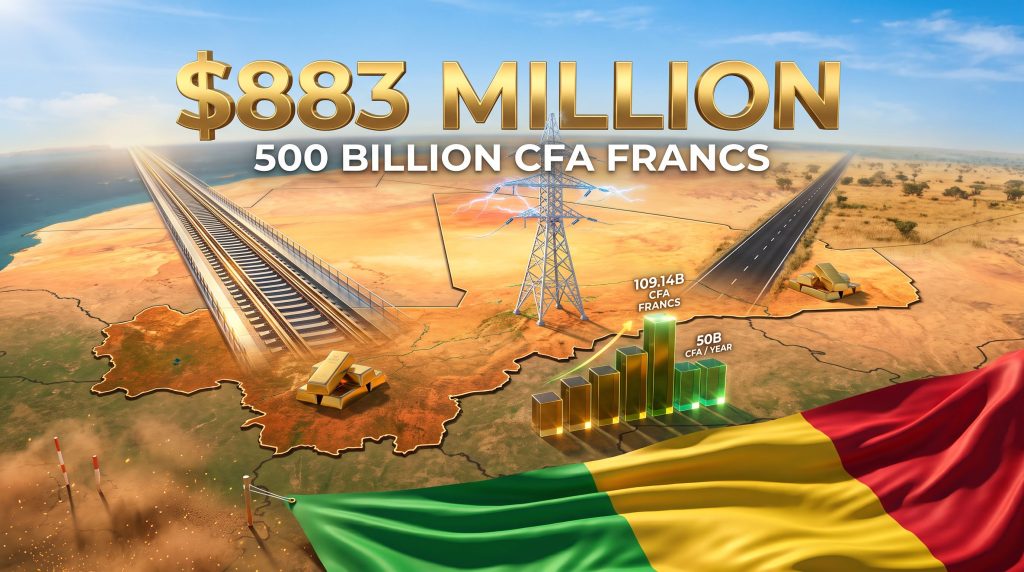
Mali sits near the centre of this transition. Through its Energy, Water and Transport Infrastructure Development Fund, established in 2023 alongside a comprehensive overhaul of the national mining code, the country has constructed one of West Africa's more structurally sophisticated attempts to convert mining sector fiscal flows into sovereign infrastructure capital. The ambition is significant: leverage an accumulated fund base into up to 500 billion CFA francs, equivalent to approximately $883 million USD, in financing for energy systems, water infrastructure, road corridors, railways, and aviation assets.
Understanding how the Mali mining-backed infrastructure fund works, what risks it carries, and what it signals for the broader African resource policy landscape requires looking well beyond the headline numbers.
When big ASX news breaks, our subscribers know first
What Makes Mali's Infrastructure Fund Structurally Distinct
The Revenue Architecture Behind the Fund
Unlike infrastructure programmes funded through general budget allocations or windfall taxes applied inconsistently across boom cycles, Mali's fund draws from a legislated, dedicated contribution mechanism applied to all mining permit holders. The contribution structure is designed with an escalating logic that rewards early compliance while building in long-term revenue growth.
| Contribution Type | Rate | Applicable Period |
|---|---|---|
| Quarterly turnover levy | 1% of quarterly turnover | First 5 years of mine operation |
| Ad valorem tax contribution | 10% of ad valorem taxes | First 5 years of mine operation |
| Escalated turnover levy | 2% of quarterly turnover | Post year 5 onwards |
The dual-stream architecture, drawing from both turnover-based and ad valorem contributions, is notable. Ad valorem taxes are calculated against the market value of extracted minerals, meaning gold price appreciation automatically increases fund contributions without requiring legislative amendment. Turnover levies, by contrast, capture gross operational scale regardless of commodity price movements, providing a partial buffer against price-driven revenue compression.
The escalation from 1% to 2% of quarterly turnover after year five is architecturally significant. It means the fund's revenue base is structurally designed to grow as mines mature, coinciding with the period when operations typically reach peak production and generate peak cashflows. This creates a long-term revenue curve built into the contribution framework rather than dependent on annual policy decisions.
Capital Accumulated and Leverage Ambition
Between January 1, 2025 and June 30, 2026, representing approximately 18 months of active deployment, the fund accumulated 109.14 billion CFA francs, or roughly $193 million USD at the reference exchange rate of 566.20 CFA francs per US dollar. The fund is reported to generate a minimum of 50 billion CFA francs annually, establishing a reliable baseline before leverage strategies are applied.
The critical distinction is between the fund's accumulated cash base and its stated financing ambition. Mali's Finance Minister indicated the fund could be leveraged to support up to 500 billion CFA francs (~$883 million USD) in infrastructure financing. This suggests the government envisions the accumulated capital functioning as collateral, equity, or a catalytic tranche within larger, blended financing instruments rather than as a direct project cash fund. According to Reuters, this leverage potential could unlock up to $800 million for infrastructure projects across the country.
This leverage model, where a smaller pool of sovereign capital is used to attract and underwrite significantly larger external financing, is increasingly common in African development finance. The African Development Bank and similar multilateral institutions often require a demonstrated domestic funding commitment before co-financing large infrastructure projects.
The 2023 Mining Code Overhaul: Policy Architecture and Operator Tensions
What the Revised Code Changed
Mali's 2023 mining code reform introduced several structural changes simultaneously. Furthermore, the breadth of these simultaneous changes distinguishes Mali's approach from incremental fiscal adjustments, amounting to a comprehensive renegotiation of the terms on which international mining capital operates within the country:
- Increased royalty rates across mineral extraction categories
- Elevated requirements for state equity participation in new and renegotiated mining projects
- Mandatory contributions to the infrastructure fund from all permit holders
- A parallel Local Mining Development Fund directing revenues toward community and municipal-level spending
Consequently, these reforms reflect a broader pattern of government intervention in mining that is reshaping how extractive industries operate across Sub-Saharan Africa.
The Audit Recovery and Its Political Significance
Prior to the fund's active deployment, a government audit identified 761 billion CFA francs in alleged unpaid arrears from mining operators, a figure equivalent to approximately $1.34 billion USD at current exchange rates. This audit recovery claim served multiple functions: it generated immediate political legitimacy for the stricter fiscal regime, it established a precedent for aggressive compliance enforcement, and it signalled that the government viewed historical contribution levels as insufficient relative to the sector's economic footprint.
The audit outcome preceded well-documented disputes with international operators including Canada's Barrick Gold, one of the world's largest gold producers with significant assets in Mali. These disputes illustrate the central tension embedded in resource nationalism strategies: maximising state revenue capture from existing operations while preserving enough investor confidence to attract the next generation of mining projects that will sustain future fund contributions.
Analytical Note: Resource nationalism in its moderate form, what some analysts characterise as fiscal tightening without outright ownership transfer, creates a calculable risk premium for operators. The question is whether Mali's revised terms fall within the range that sophisticated mining capital will absorb, or whether they push the risk-adjusted economics of new investment below viable thresholds.
Infrastructure Priorities: Where the Capital Is Directed
Transport as the Foundational Priority
For a landlocked nation like Mali, transport infrastructure is not simply a development amenity; it is a structural economic constraint. Landlocked countries in Sub-Saharan Africa face freight costs that are frequently 50% to 100% higher than their coastal counterparts, a differential that directly erodes mining project economics, agricultural export competitiveness, and consumer purchasing power.
Projects presented to the fund span a broad transport mandate:
- Railway corridor development connecting mining zones to border crossings and population centres
- Road construction programmes targeting the last-mile connectivity gap between extraction sites and logistics networks
- Inland waterway expansion through boat and vessel acquisitions for river transport routes
- Aviation infrastructure linked to the state-owned carrier Mali Airlines SA
Railway investment is particularly significant from an economic density perspective. A single standard railway corridor in West Africa typically costs between $150 million and $500 million per 100 kilometres of track, depending on terrain, gauge specification, and signalling requirements. If the fund's full leverage capacity were achieved, it could meaningfully contribute to one or two major rail projects alongside multiple complementary road and waterway initiatives.
Energy and Water: The Enabling Infrastructure Layer
Energy and water infrastructure occupy a unique position within the fund's mandate because they function as enabling inputs for virtually every other economic sector. Mining operations themselves require reliable power and water access; without investment in these systems, the contributor base for the fund faces ongoing operational constraints that could suppress production levels and, by extension, the fund's revenue generation capacity.
This creates an internally reinforcing logic: fund contributions from mining operations finance energy and water infrastructure that, in turn, reduces operating costs and improves productivity for those same mining contributors. In addition, the critical minerals demand surge across global markets strengthens the long-term case for sustained investment in these enabling systems.
The Dual-Fund Architecture: National and Community Level
How the Local Mining Development Fund Operates in Parallel
Mali's infrastructure financing approach operates across two distinct levels simultaneously. While the national fund targets strategic, large-scale assets, the Local Mining Development Fund channels revenues directly to municipalities and communities in mining-adjacent areas.
In March 2026, approximately 18.4 billion CFA francs (~$33 million USD) was redistributed from the local fund to municipalities across Mali. This distribution represents a deliberate attempt to address the community-level resource grievances that have historically destabilised mining operations across the Sahel region.
| Fund | Target Scale | Primary Beneficiaries | Reported 2026 Activity |
|---|---|---|---|
| Energy, Water & Transport Infrastructure Development Fund | National / strategic | Energy, transport, water sectors | 109.14B CFA francs mobilised (Jan 2025 to Jun 2026) |
| Local Mining Development Fund | Municipal / community | Local governments, communities | ~18.4B CFA francs redistributed (March 2026) |
The dual-track model acknowledges a structural lesson from mining-dependent economies across the continent: large-scale national infrastructure investment that bypasses local communities frequently generates social conflict that disrupts operations and undermines the very revenue streams meant to fund development. These African mining finance trends point toward increasingly sophisticated, multi-tiered distribution models becoming the regional norm.
Regional Context: How Mali Compares With African Peers
Ghana's Big Push as a Policy Parallel
Ghana's parliament approved the use of mineral revenues to fund a flagship infrastructure programme known as the Big Push, establishing a structural parallel to Mali's approach. Both frameworks use legislated extraction from mining revenues to capitalise public investment vehicles rather than relying on discretionary budget transfers.
The key governance difference is significant: Ghana's framework operates within a democratic legislative structure with public accountability mechanisms, while Mali's fund was established under military governance. This distinction affects not only domestic legitimacy but also the appetite of multilateral development finance institutions to co-invest alongside the fund.
Zambia, Zimbabwe, and the Democratic Republic of Congo have each implemented varying degrees of mining revenue retention policies, creating a pattern across the continent. However, the shifting geopolitical mining landscape adds further complexity to how these frameworks attract or deter international capital. This reflects growing consensus around the principle that extractive sector value should be more systematically retained within host economies.
The next major ASX story will hit our subscribers first
Risk Factors Investors and Analysts Should Monitor
Commodity Price Dependency
The fund's annual baseline of 50 billion CFA francs is structurally linked to the production volumes and commodity prices of its contributing mining operations. Gold accounts for the dominant share of Mali's mining output. A sustained decline in gold prices, or a material reduction in production from major contributors following operator disputes, could compress fund inflows below the baseline figure.
Investor Confidence and the Long-Term Contributor Base
The fund's long-term viability depends entirely on maintaining a sufficient base of active, productive mining operations. If aggressive fiscal renegotiation deters new project development or causes existing operators to curtail investment in mine extensions and capacity expansion, the contributor pool contracts.
The paradox is that the fiscal tightening designed to maximise current fund revenues may reduce future revenues by shrinking the base from which contributions are drawn. Furthermore, the broader trend of mining industry consolidation through joint ventures and asset sales could reshape which operators remain active contributors to the fund over time.
Governance and Disbursement Transparency
Under military governance, the independent oversight mechanisms typically required by international co-financiers are limited. Multilateral development banks and bilateral development finance institutions generally require governance benchmarks, independent project selection methodologies, and public disbursement reporting as preconditions for co-financing. The absence of these structures could constrain the fund's ability to achieve its full $883 million leverage ambition.
Risk Callout: The gap between the fund's accumulated base of ~$193 million USD and its $883 million leverage target is substantial. Bridging that gap requires attracting co-financing partners whose participation criteria may conflict with current governance arrangements. The EITI's transparency framework for Mali offers one potential pathway for establishing the credibility that international co-financiers typically require.
Frequently Asked Questions: Mali Mining-Backed Infrastructure Fund
How much has Mali's infrastructure fund raised so far?
Between January 2025 and June 2026, the fund accumulated 109.14 billion CFA francs, equivalent to approximately $193 million USD at the reference rate of 566.20 CFA francs per US dollar.
What is the maximum financing capacity of the fund?
The Mali mining-backed infrastructure fund has been positioned as capable of underpinning up to 500 billion CFA francs (~$883 million USD) in infrastructure financing, with the accumulated capital intended to function as a catalytic base for attracting larger blended financing instruments.
What types of projects qualify for funding?
Eligible projects span energy infrastructure, water systems, road construction, railway development, inland waterway transport, and aviation-related projects under the mandate of Mali's Ministry of Infrastructure and Transport.
Who contributes to the fund?
All holders of large and small-scale mining permits in Mali contribute through a combination of quarterly turnover levies and ad valorem tax contributions, with levy rates escalating after the first five years of mine operation.
Key Metrics at a Glance
| Metric | Value |
|---|---|
| Fund established | 2023 |
| Capital mobilised (Jan 2025 to Jun 2026) | 109.14 billion CFA francs (~$193M USD) |
| Annual baseline generation | At least 50 billion CFA francs (~$88M USD) |
| Maximum leverage target | 500 billion CFA francs (~$883M USD) |
| Audit-recovered arrears claim | 761 billion CFA francs (~$1.34B USD) |
| Local fund redistribution (March 2026) | 18.4 billion CFA francs (~$33M USD) |
| CFA franc exchange rate reference | $1 USD = 566.20 CFA francs |
What the Fund Signals for African Resource Policy
Mali's Mali mining-backed infrastructure fund represents more than a domestic financing mechanism. It reflects a structural hypothesis gaining traction across Sub-Saharan Africa: that mining revenues, if captured and retained through purpose-built institutional vehicles rather than general budget absorption, can become a reliable foundation for sovereign infrastructure investment at scale.
The dual-fund architecture addressing both national strategic assets and community-level development simultaneously suggests a degree of policy sophistication that goes beyond simple revenue maximisation. Whether that sophistication translates into durable infrastructure outcomes will depend on commodity market conditions, the government's capacity to maintain a productive mining contributor base, and its ability to attract the co-financing partners needed to bridge the gap between accumulated capital and the fund's full leverage ambition.
For regional policymakers watching Mali's model, the design choices around contribution escalation, dual-level distribution, and leverage-based financing offer a replicable template. The governance prerequisites that determine whether international development capital will engage with such templates remain the central unresolved challenge.
This article is intended for informational purposes only and does not constitute financial or investment advice. Figures relating to fund leverage capacity and infrastructure financing projections involve forward-looking assumptions and are subject to change based on commodity prices, operator compliance, and evolving governance conditions.
Want to Track the ASX Mining Discoveries Shaping the Next Wave of Resource Investment?
Discovery Alert's proprietary Discovery IQ model delivers real-time alerts on significant ASX mineral discoveries, instantly translating complex data across 30+ commodities into clear, actionable insights for both short-term traders and long-term investors — explore historic discovery returns on Discovery Alert's discoveries page to understand what early positioning in major finds can mean, then begin your 14-day free trial at Discovery Alert to stay ahead of the market.