June 20, 2026
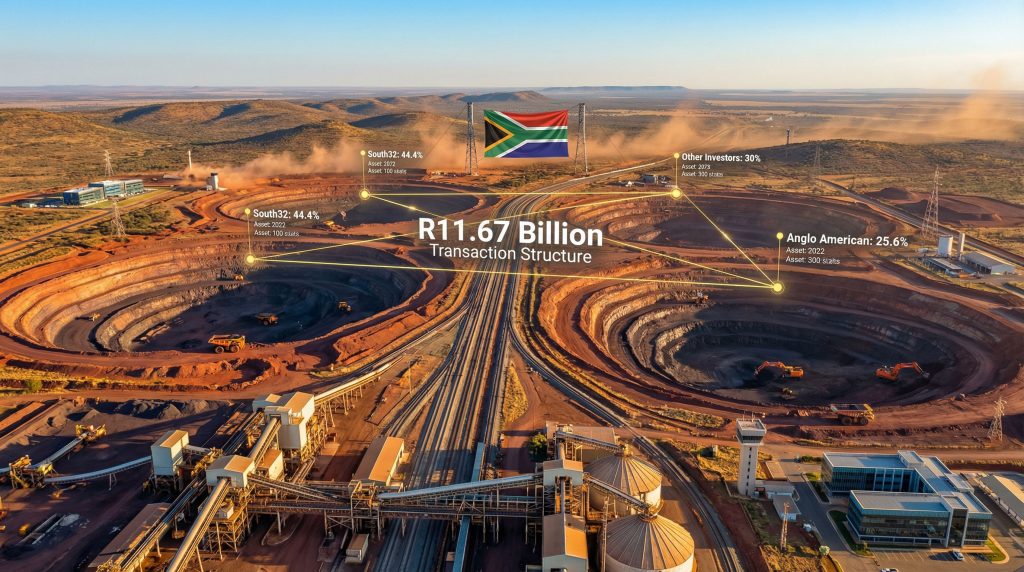
The transformation of South Africa's manganese sector through strategic consolidation represents a fundamental shift toward operational efficiency and market dominance. Rather than maintaining fragmented ownership structures across the resource-rich Kalahari Manganese Field, industry leaders are pursuing comprehensive acquisition strategies that unite complementary assets under unified management frameworks. The Exxaro manganese acquisition exemplifies this trend, demonstrating how mining consolidation trends are reshaping the competitive landscape.
Market Concentration Drivers in the Kalahari Manganese Field
South Africa's Northern Cape region contains some of the world's most significant manganese reserves, traditionally operated by multiple independent entities with varying operational capabilities and market access. The Exxaro manganese acquisition consolidates control across four distinct mining operations, creating economies of scale that were previously unattainable under fragmented ownership structures.
This consolidation addresses longstanding inefficiencies in the South African manganese sector, where overlapping resource boundaries and competing operational strategies limited overall productivity. By bringing together Ntsimbintle Mining, Tshipi Borwa operations, Mokala Mines, and minority interests in Hotazel Manganese Mines under coordinated management, the transaction creates a unified production platform capable of optimising resource extraction across adjacent deposits.
The Kalahari Manganese Field's geological characteristics favour large-scale, coordinated mining approaches rather than fragmented operations. Manganese ore bodies in this region extend across property boundaries, making integrated planning essential for maximising resource recovery rates and minimising operational waste. Furthermore, this approach aligns with broader mining industry innovation trends that emphasise operational efficiency through technological integration.
When big ASX news breaks, our subscribers know first
Vertical Integration Benefits Across the Manganese Value Chain
The acquisition structure demonstrates sophisticated vertical integration strategy, combining mine ownership, processing capabilities, and marketing rights within a single operational framework. Exxaro's comprehensive approach to acquiring 100% of Ntsimbintle Marketing alongside mining assets creates direct control over customer relationships and pricing strategies.
This integrated approach provides significant advantages in managing manganese product specifications for different end markets. Steel production requires different manganese ore grades compared to battery technology applications, and unified marketing control allows for optimised product allocation based on premium pricing opportunities.
The vertical integration model also enables improved quality control throughout the production chain. Rather than relying on third-party marketing entities with potentially conflicting priorities, integrated operations can align mining, processing, and sales activities to meet specific customer requirements and maximise value realisation.
Competitive Positioning Against Global Manganese Producers
Global manganese production is concentrated among a relatively small number of major producing countries, with South Africa, Australia, Gabon, and Ghana representing the primary supply sources. The Exxaro manganese acquisition positions the company to compete more effectively against established international producers through enhanced operational scale and efficiency.
South African manganese operations benefit from well-established export infrastructure through Saldanha Bay and Richards Bay ports, providing cost advantages over landlocked or geographically remote competitors. The consolidated operations can leverage these logistical advantages more effectively than smaller, independent operators.
International manganese markets increasingly favour suppliers capable of providing consistent, large-volume shipments with reliable quality specifications. The consolidation creates the operational scale necessary to fulfil major long-term supply contracts that smaller operators cannot accommodate. However, this positioning must also consider supply chain security challenges that affect global mineral distribution networks.
What Makes This R11.67 Billion Transaction Structure Unique?
The Exxaro manganese acquisition employs a sophisticated multi-asset framework that achieves operational control through layered ownership structures rather than traditional direct acquisition models. This approach minimises capital requirements whilst maximising operational influence across the target asset portfolio.
Multi-Tiered Acquisition Framework Analysis
The transaction structure demonstrates innovative financial engineering through its combination of direct acquisitions, minority stake purchases, and joint venture arrangements. Rather than pursuing 100% ownership of all target assets, Exxaro achieves effective control through strategic positioning across multiple ownership layers.
Exxaro Manganese Asset Portfolio Structure
| Asset Component | Ownership % | Strategic Value | Completion Status |
|---|---|---|---|
| Ntsimbintle Mining | 100% | Direct mine control | Unconditional |
| Jupiter Mines stake | 19.99% | Tshipi access rights | Unconditional |
| Tshipi effective control | 60.1% | Production influence | Unconditional |
| Mokala Mines | 51% | Operational control | Conditional |
| Hotazel stake | 9% | Market intelligence | Unconditional |
The most sophisticated element of this structure involves achieving 60.1% effective control over Tshipi Borwa operations through a combination of direct and indirect ownership mechanisms. By acquiring 100% of Ntsimbintle Mining (which holds 50.1% of Tshipi Borwa) and simultaneously purchasing a 19.99% stake in Jupiter Mines (which holds the remaining 49.9% of Tshipi Borwa), Exxaro creates a cooperative governance framework that provides operational control without requiring majority ownership of the primary asset.
This approach demonstrates advanced understanding of corporate governance structures within complex mining joint ventures. Rather than engaging in potentially expensive bidding competitions for direct control, the transaction creates aligned incentives between Exxaro and Jupiter Mines whilst ensuring Exxaro maintains decisive operational influence.
Risk Mitigation Through Phased Completion Timelines
The transaction divides assets into conditional and unconditional tranches, allowing Exxaro to secure core operational control whilst managing completion risks for more complex components. The unconditional portion of the transaction, representing the majority of the strategic value, completed on January 29, 2026, providing immediate operational benefits.
The conditional acquisition of 51% of Mokala Mines remains subject to outstanding conditions with a completion deadline of February 27, 2026. This structure allows Exxaro to begin realising synergies from core assets whilst completing due diligence and regulatory processes for the Mokala component.
This phased approach reduces execution risk by avoiding dependencies between different transaction components. If regulatory or contractual issues delay the Mokala acquisition, the core transaction proceeds unimpacted, ensuring that primary strategic objectives are achieved regardless of complications affecting secondary assets.
Tag-Along Rights Impact on Total Investment Exposure
The transaction includes tag-along rights that could increase total investment from R11.67 billion to R14.64 billion if minority shareholders in Jupiter Mines elect to sell their stakes to Exxaro. This mechanism provides Exxaro with the option to acquire additional ownership in Jupiter Mines if market conditions and strategic priorities warrant increased exposure.
Tag-along rights create asymmetric optionality for Exxaro, providing upside participation in Jupiter Mines' performance without mandatory investment commitments. If Jupiter Mines' manganese operations perform strongly, Exxaro can increase its stake. If performance disappoints, Exxaro maintains its current 19.99% position without additional capital exposure.
This structure demonstrates sophisticated risk management, allowing Exxaro to scale its manganese exposure based on operational performance and market conditions rather than committing to maximum investment at transaction initiation.
Which Operational Synergies Drive Long-Term Value Creation?
The consolidation creates substantial operational synergies through the application of Exxaro's bulk commodity expertise across newly acquired manganese operations. These synergies extend beyond simple cost reductions to encompass strategic positioning advantages that enhance competitive positioning.
Bulk Commodity Logistics Expertise Application
Exxaro's established bulk commodity operations provide immediate operational advantages across the manganese asset portfolio. The company's existing relationships with South African rail operators, port authorities, and logistics providers translate directly into reduced transportation costs and improved export efficiency for manganese operations.
Exxaro's established rail and port infrastructure knowledge provides immediate operational advantages across newly acquired manganese operations, reducing transportation costs and improving market access efficiency.
South African manganese exports require sophisticated logistics coordination involving rail transportation across hundreds of kilometres and specialised port handling for bulk commodity shipments. Exxaro's decades of experience managing these logistics networks provides immediate cost advantages and operational reliability that standalone manganese operators cannot match.
The company's existing volume commitments with Transnet rail services create negotiating leverage that benefits the expanded manganese operations. Rather than competing for rail capacity as independent operators, the consolidated operations can optimise transportation scheduling and secure favourable freight rates through Exxaro's established logistics relationships.
Shared Services Integration Across Four Mining Operations
The acquisition enables consolidation of administrative, technical, and support functions across four separate mining operations, creating significant cost synergies through elimination of duplicated overhead expenses. Shared services integration extends across finance, human resources, procurement, safety, and maintenance functions.
Procurement consolidation provides particularly significant benefits given the substantial equipment and consumables requirements of large-scale manganese mining. By combining purchasing volume across four operations, Exxaro can negotiate superior terms with suppliers and reduce per-unit costs for mining equipment, replacement parts, and operational consumables.
Technical expertise sharing allows for rapid deployment of best practices across all operations. Rather than maintaining separate technical teams for each mine, the consolidated structure enables specialist expertise to be applied where most needed, improving overall operational efficiency and reducing technical staffing requirements.
Marketing Rights Consolidation Benefits
The acquisition of 100% of Ntsimbintle Marketing creates unified customer relationship management and pricing strategy across the manganese portfolio. This consolidation eliminates potential conflicts between separate marketing entities and enables coordinated market positioning for optimal price realisation.
Unified marketing rights provide enhanced flexibility in product allocation across different customer segments. Steel producers, battery manufacturers, and chemical companies require different manganese product specifications, and consolidated marketing enables optimal product allocation to maximise revenue across the customer base.
The consolidated marketing approach also strengthens negotiating position with major customers by providing reliable, large-volume supply capabilities that individual operations cannot offer. Long-term supply contracts with premium pricing become feasible when backed by coordinated production from multiple mining operations. In addition, similar consolidation patterns can be observed in other sectors, such as the recent manganese mine expansion projects across Australia.
How Does This Position Exxaro in Global Manganese Supply Chains?
The acquisition fundamentally repositions Exxaro within global manganese supply chains, transforming the company from a peripheral player to a significant participant capable of influencing market dynamics and capturing premium pricing opportunities.
Battery Metal Transition Strategy Implementation
Global manganese demand is experiencing structural transformation as battery technology applications expand rapidly alongside traditional steel production uses. The acquisition positions Exxaro to participate in both market segments whilst maintaining flexibility to optimise product allocation based on relative pricing dynamics. This aligns with broader critical minerals strategy developments across the mining sector.
Manganese Market Applications Breakdown:
• Steel Production: 85-90% of global demand
• Battery Technology: 8-12% (rapidly growing)
• Chemical Applications: 2-3% specialty uses
The battery technology segment represents the highest-growth component of manganese demand, driven by electric vehicle adoption and renewable energy storage expansion. However, battery-grade manganese requires higher purity specifications and more sophisticated processing compared to steel-grade material.
Exxaro's consolidated operations provide the scale and technical capabilities necessary to develop battery-grade manganese production capabilities whilst maintaining traditional steel market positioning. This dual-market strategy reduces dependence on any single demand segment whilst capturing growth opportunities in premium applications.
Geographic Diversification from Coal Dependency
The manganese acquisition represents strategic diversification from Exxaro's traditional thermal coal operations, which face long-term demand challenges due to global energy transition policies. Manganese demand demonstrates more favourable long-term growth prospects across both traditional and emerging applications.
This geographic and commodity diversification reduces exposure to specific market risks whilst maintaining focus on South African mining operations where Exxaro possesses established operational expertise and regulatory relationships. The strategy avoids international expansion risks whilst achieving portfolio diversification benefits.
Manganese mining also aligns with environmental, social, and governance priorities more effectively than thermal coal operations. The metal's essential role in steel production and growing importance in battery technology provides more sustainable long-term demand prospects compared to fossil fuel applications.
ESG Compliance Through Domestic Asset Control
The acquisition maintains South African ownership and control of strategic mineral resources, addressing government priorities for domestic participation in the mining sector. This positioning provides regulatory advantages and social licence benefits that enhance long-term operational security.
Domestic ownership structures facilitate community development programmes and local procurement initiatives that strengthen social licence to operate. These factors become increasingly important as mining companies face growing stakeholder scrutiny regarding their social and environmental impact.
The consolidation also enables more effective implementation of safety and environmental standards across multiple operations through unified management systems and shared best practices. This systematic approach to ESG compliance provides competitive advantages in accessing capital and maintaining regulatory approvals.
The next major ASX story will hit our subscribers first
What Are the Regulatory and Financial Completion Scenarios?
The transaction completion involves complex regulatory and financial considerations that could impact final outcomes and total investment requirements. Understanding these variables provides insights into potential value realisation scenarios and risk factors.
Suspensive Conditions Analysis for Mokala Component
The conditional nature of the Mokala Mines acquisition reflects specific regulatory, financial, or contractual requirements that differ from the unconditional transaction components. While the exact nature of these conditions has not been disclosed, they likely relate to competition authority approvals, financing arrangements, or third-party consent requirements.
Timeline Scenario Modelling:
• Best Case: Full completion by February 27, 2026
• Partial Completion: Core assets operational, Mokala delayed
• Extended Timeline: Tag-along rights exercised, total value R14.64 billion
The February 27, 2026 completion deadline provides limited time for resolving outstanding conditions, suggesting that most regulatory and financial requirements are well advanced. However, the conditional structure indicates that some uncertainty remains regarding final completion.
If Mokala conditions cannot be satisfied by the deadline, Exxaro retains the core transaction benefits whilst avoiding exposure to a problematic asset. This outcome would reduce total investment whilst preserving primary strategic objectives.
Competition Authority Approval Pathways
South African competition authorities evaluate mining consolidations based on market concentration, competitive effects, and public interest considerations. The manganese sector involves multiple producers and diverse customer segments, potentially facilitating regulatory approval.
The transaction maintains competitive dynamics within South African manganese production whilst creating operational efficiencies that could benefit overall sector competitiveness. These factors generally align with competition authority objectives of promoting economic efficiency whilst preserving market competition.
Public interest considerations include employment impacts, community development, and export earnings generation. The consolidation's potential to improve operational efficiency and expand export capacity supports positive public interest assessment.
Foreign Investment Clearance Requirements
While the transaction involves primarily domestic entities, certain components may require foreign investment approvals due to Jupiter Mines' Australian listing and potential international shareholder participation. These clearances typically focus on national security and strategic resource considerations.
Manganese's classification as a critical mineral for steel production and battery technology creates strategic resource considerations that regulatory authorities evaluate carefully. However, the transaction's emphasis on maintaining South African ownership and control supports favourable regulatory assessment.
The transaction structure's complexity requires coordination across multiple regulatory jurisdictions, potentially creating completion risks if approvals are delayed or conditions imposed that affect transaction economics.
How Do Market Fundamentals Support This Investment Thesis?
The strategic rationale for manganese consolidation rests on favourable long-term demand fundamentals across multiple application segments, combined with supply chain security considerations that benefit established producing regions.
Steel Demand Recovery Projections for 2026-2030
Global steel production, which represents 85-90% of manganese consumption, demonstrates cyclical recovery patterns following economic downturns. Infrastructure development in emerging markets, particularly across Asia and Africa, drives sustained steel demand growth that translates directly into manganese consumption.
Global Manganese Demand Drivers:
• Infrastructure development in emerging markets
• Renewable energy storage expansion
• Electric vehicle battery requirements
• Traditional steelmaking growth
Renewable energy infrastructure projects require substantial steel content for wind turbine structures, transmission towers, and support facilities. This demand source provides additional growth drivers beyond traditional construction and manufacturing applications.
The 2026-2030 timeframe coincides with major infrastructure development cycles across multiple regions, suggesting sustained demand for manganese-dependent steel production throughout the post-acquisition integration period.
Supply Chain Security Considerations
Global supply chain disruptions have increased focus on supplier diversification and strategic inventory management among major manganese consumers. South African production provides geographic diversification away from other major producing regions that may face geopolitical or operational challenges.
The consolidated Exxaro operations offer supply security through operational redundancy across multiple mine sites and established export infrastructure. This reliability premium becomes increasingly valuable as customers prioritise supply chain resilience over purely cost-based procurement strategies.
Long-term supply contracts with premium pricing reflect customer willingness to pay for supply security and consistent quality specifications. The consolidated operations' enhanced capability to fulfil these contracts creates sustainable competitive advantages.
Price Volatility Management Through Diversified Operations
Manganese prices demonstrate significant volatility due to concentrated demand from steel producers and relatively inelastic short-term supply responses. Diversified operations across multiple mine sites provide operational flexibility to optimise production levels based on market conditions.
The ability to adjust production mix between different manganese product grades enables optimised revenue realisation across varying market conditions. High-grade material for battery applications commands premium pricing during periods of strong battery demand, whilst steel-grade production provides stable revenue base during market downturns.
Operational diversification also enables risk management through geographic and geological diversity. If operational challenges affect one mine site, production can be maintained through alternative operations within the consolidated portfolio.
What Strategic Alternatives Were Available to Exxaro?
The acquisition decision reflects careful evaluation of multiple strategic pathways for entering the manganese sector, each presenting distinct risk-return profiles and capital requirements.
Greenfield Development vs. Acquisition Analysis
Greenfield manganese development would require substantially longer timeframes and higher capital investment compared to acquiring established operations. Manganese mining projects typically require 3-5 years for development from exploration through production, compared to immediate operational control through acquisition.
The Kalahari Manganese Field's established geology and proven reserves reduce exploration risk compared to greenfield alternatives. Acquired operations also provide immediate cash flow generation rather than extended capital investment periods before production begins.
However, greenfield development would enable optimisation of mining methods, processing facilities, and infrastructure design for current technological standards and operational requirements. Acquired operations may require upgrade investments to achieve optimal efficiency levels.
Joint Venture Structures vs. Full Control Benefits
Joint venture arrangements could provide manganese sector exposure with lower capital requirements and shared operational risks. However, joint ventures also create potential conflicts over operational strategies, investment priorities, and profit distribution.
The acquisition structure achieves benefits of joint venture risk sharing through the Jupiter Mines partnership whilst maintaining decisive operational control. This hybrid approach provides operational flexibility whilst sharing capital requirements and market risks.
Full control acquisition would eliminate partnership complications but require substantially higher capital investment. The chosen structure balances control requirements with capital efficiency through sophisticated ownership arrangements.
International Expansion vs. Domestic Consolidation Trade-offs
International manganese acquisition alternatives exist in Australia, Brazil, and other producing regions, potentially providing geographic diversification benefits. However, international expansion introduces additional regulatory, operational, and currency risks.
Domestic consolidation leverages Exxaro's established South African operational expertise, regulatory relationships, and infrastructure knowledge. These advantages reduce integration risks and accelerate synergy realisation compared to international alternatives.
The domestic focus also aligns with South African government preferences for local participation in strategic mineral sectors, providing regulatory and social licence advantages that support long-term operational security.
Which Stakeholder Groups Benefit Most From This Consolidation?
The transaction creates value across multiple stakeholder groups through operational efficiency improvements, enhanced investment capacity, and strengthened competitive positioning.
Community Development Through Expanded Operations
The consolidation creates enhanced capacity for community development programmes through improved operational profitability and coordinated social investment strategies. Rather than maintaining separate community programmes for each operation, unified management enables more strategic and impactful development initiatives.
The transaction maintains South African ownership of strategic mineral assets whilst providing enhanced community investment capacity through larger-scale operations and improved profitability.
Consolidated operations provide greater employment stability through operational diversification and shared support functions. Economic downturns affecting individual mines can be managed through reallocation of personnel and resources across the broader operational portfolio.
The improved operational efficiency also supports enhanced local procurement opportunities as consolidated operations provide larger, more predictable demand for goods and services from local suppliers.
Employee Retention and Skills Development Opportunities
The consolidation creates enhanced career development pathways through expanded operational scope and specialised technical functions. Employees can access broader experience bases and advancement opportunities within the integrated organisation.
Shared technical expertise enables more sophisticated training and development programmes that individual operations could not support independently. This investment in human capital development provides competitive advantages whilst improving employee satisfaction and retention.
However, consolidation may also create redundancies in administrative and support functions, requiring careful change management to minimise negative impacts on affected employees.
Supplier Network Expansion Potential
Consolidated procurement requirements create opportunities for supplier network expansion and development. Local suppliers can access larger, more predictable demand volumes that support business growth and investment in capabilities.
The enhanced operational scale also enables development of specialised supplier relationships for technical services, equipment maintenance, and operational consumables. These relationships provide competitive advantages through improved service levels and cost optimisation.
Supplier development programmes become more viable when supported by substantial, long-term demand commitments from consolidated operations.
How Will This Transform Exxaro's Corporate Strategy Beyond 2026?
The manganese acquisition represents the initial phase of strategic transformation that repositions Exxaro for long-term success in evolving mineral markets whilst reducing dependence on thermal coal operations.
Portfolio Rebalancing Away from Thermal Coal
The acquisition initiates systematic portfolio rebalancing toward minerals with more favourable long-term demand prospects. Manganese's essential role in steel production and growing battery applications provides sustainable demand base compared to thermal coal's declining prospects.
This transition requires careful timing to maintain cash flow generation whilst building new operational capabilities. The manganese acquisition's immediate operational benefits provide financial foundation for further portfolio transformation initiatives.
The rebalancing strategy also addresses environmental, social, and governance considerations that increasingly influence capital access and regulatory approval processes.
Future Acquisition Targets in Battery Minerals
The successful integration of manganese operations could serve as a template for expansion into other battery-related minerals such as lithium, cobalt, or rare earth elements. South Africa contains significant resources across multiple battery mineral categories.
Strategic Development Roadmap:
- Phase 1 (2026): Integration completion and operational optimisation
- Phase 2 (2027-2028): Expansion capacity evaluation
- Phase 3 (2029+): Additional battery mineral acquisitions
Future acquisitions could leverage operational synergies developed through the manganese consolidation whilst providing further diversification across the battery technology supply chain.
The expansion strategy would require careful evaluation of market dynamics, resource quality, and operational requirements for each mineral category.
Technology Investment Priorities for Manganese Processing
The consolidated operations provide platforms for technology investment in manganese processing capabilities, particularly for battery-grade material production. These investments could create competitive advantages in premium market segments.
Advanced processing technologies enable production of higher-purity manganese products that command premium pricing in battery and chemical applications. The investment requirements for these technologies become more viable when supported by consolidated production volumes.
Technology partnerships with equipment suppliers, research institutions, and downstream customers could accelerate development of advanced processing capabilities whilst sharing development risks and costs.
What Risks Could Derail This Strategic Vision?
The consolidation strategy faces multiple risk categories that could impact value realisation and strategic objective achievement, requiring active risk management and contingency planning.
Commodity Price Volatility Impact Scenarios
Manganese prices demonstrate substantial volatility due to concentrated steel industry demand and supply chain disruptions. Sustained price declines could impact project economics and delay expansion investment plans.
The diversified operational base provides some protection against price volatility through production optimisation and cost management capabilities. However, severe market downturns could still impact profitability and strategic development plans.
Long-term supply contracts with fixed or formula-based pricing provide some revenue stability, but market price volatility still affects contract renewal negotiations and expansion project justifications.
Regulatory Changes in Mining Policy
South African mining policy continues evolving with respect to ownership requirements, community participation, and environmental standards. Regulatory changes could impact operational costs, ownership structures, or development permissions.
The transaction's emphasis on maintaining domestic ownership provides some protection against potential foreign investment restrictions. However, other regulatory changes regarding taxation, labour requirements, or environmental standards could still impact operations.
Active engagement with regulatory authorities and industry associations becomes essential for managing regulatory risks and influencing policy development processes.
Integration Complexity Management Challenges
The integration of four separate mining operations with different operational cultures, systems, and procedures creates substantial management challenges. Integration failures could reduce synergy realisation and impact operational performance.
The complex ownership structures involving joint venture arrangements with Jupiter Mines require sophisticated governance frameworks to prevent conflicts and ensure effective decision-making processes.
Change management across multiple operational sites and employee groups requires careful planning and communication to maintain productivity during the integration period. Furthermore, detailed acquisition updates provide insights into the strategic rationale and implementation timeline for this transformative transaction.
Disclaimer: This analysis is based on publicly available information and should not be considered investment advice. Commodity markets are subject to substantial volatility, and mining operations involve significant operational and regulatory risks. Readers should conduct independent research and consult qualified financial advisors before making investment decisions related to mining sector investments.
Looking to Capitalise on Mining Sector Consolidation?
Discovery Alert's proprietary Discovery IQ model delivers real-time alerts on significant ASX mineral discoveries, instantly empowering subscribers to identify actionable opportunities ahead of the broader market. Begin your 14-day free trial today and secure your market-leading advantage in identifying the next major discovery before consolidation transforms entire sectors.