May 14, 2026
Understanding Manufacturing PMI as a Global Economic Transmission System
The global economy operates through interconnected channels where manufacturing indicators in major economies create ripple effects across international markets. Manufacturing purchasing managers' indices represent forward-looking sentiment gauges that capture production expectations, supply chain dynamics, and demand forecasting across industrial sectors. When these metrics shift in the world's second-largest economy, the implications extend far beyond domestic borders.
China's manufacturing sector operates as a critical demand driver for raw materials sourced from resource-rich economies, particularly Australia. The relationship between Chinese industrial activity and Australian commodity exports creates a transmission mechanism that influences everything from currency valuations to mining company share prices. Understanding this economic interconnection provides the foundation for evaluating investment opportunities when manufacturing sentiment improves.
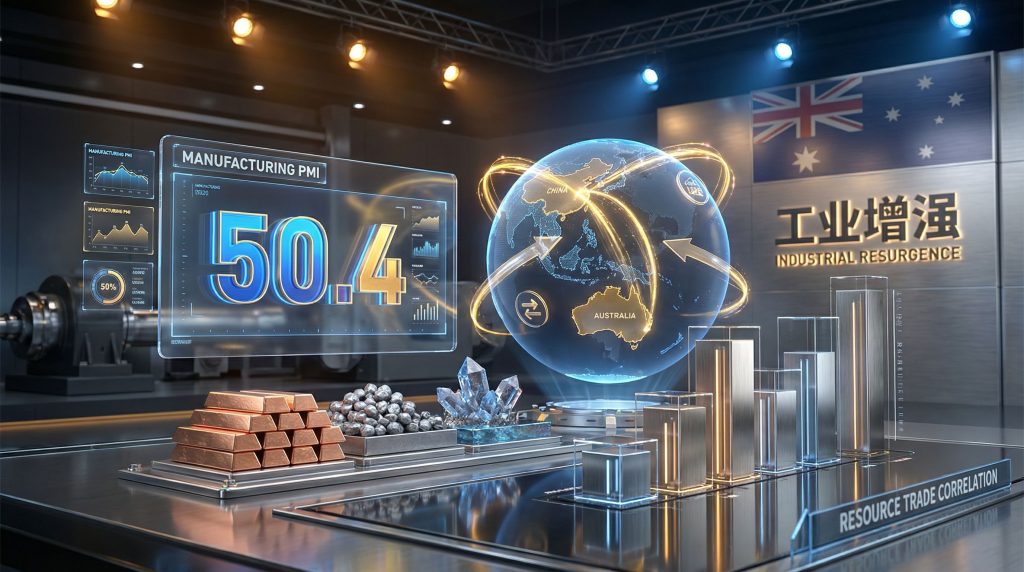
The March 2026 National Bureau of Statistics Manufacturing PMI reading of 50.4, representing an increase from February's 49.0 and marking the strongest performance since March 2025, signals a potential inflection point in this economic relationship. This improvement above the critical 50-point expansion threshold suggests manufacturing sector growth that historically correlates with China's manufacturing PMI impact on ASX stocks through increased commodity consumption patterns.
When big ASX news breaks, our subscribers know first
The Economic Mechanics Behind PMI-Driven Commodity Demand
Manufacturing purchasing managers' indices capture several key components that directly influence raw material requirements. New orders expansion indicates future production increases, while inventory restocking signals immediate commodity purchasing needs. When these sub-components move synchronously into expansion territory, the combined effect typically generates sustained demand for industrial inputs.
Key PMI Sub-Components Affecting Resource Demand:
- Production levels and capacity utilization rates
- New order intake and order backlog accumulation
- Raw material purchasing intentions
- Employment levels reflecting production confidence
- Export order growth suggesting international demand
The timing relationship between PMI improvements and commodity price movements operates through established supply chain patterns. Manufacturing expansion typically precedes raw material procurement by 2-3 months, as companies adjust production schedules, secure supply contracts, and rebuild inventory positions. This lag effect creates investment opportunities for resource sector exposure before commodity prices fully reflect improved demand fundamentals.
China's high-tech manufacturing PMI component reached 52.1 in March 2026, maintaining its 14th consecutive month in expansion territory. This sustained strength in technology manufacturing drives specific commodity demand patterns, particularly for copper investment insights in electrical applications, rare earth elements in electronic components, and lithium in battery production for electric vehicles and energy storage systems.
Resource Sector Investment Transmission Channels
Australia's commodity-dependent economy responds to Chinese manufacturing recovery through multiple transmission mechanisms operating at different timeframes and intensities. These channels create investment opportunities across various asset classes and company types within the resource sector. Furthermore, understanding these patterns helps investors position themselves strategically ahead of demand recovery cycles.
Primary Transmission Mechanisms:
- Direct export flows: Iron ore, copper, coal, and LNG shipments to Chinese manufacturers
- Currency strengthening: Improved commodity prices supporting Australian Dollar appreciation
- Investment capital allocation: International funds redirecting capital to resource development projects
- Supply chain reactivation: Mining services and equipment sectors benefiting from increased activity
The correlation between China's manufacturing PMI impact on ASX stocks operates through established historical patterns. Resource companies with direct Chinese customer relationships typically demonstrate the strongest price responsiveness to PMI improvements, particularly those with flexible production capacity and established supply agreements.
Commodity Sector Response Hierarchy
Immediate Response Commodities (0-3 months):
Iron ore demand correlates directly with Chinese steel production, which typically increases following manufacturing PMI expansion. Companies with established Chinese customer relationships and flexible production capacity demonstrate the strongest correlation to PMI improvements. Current iron ore trends and port inventory levels in China create additional leverage for Australian producers when demand accelerates.
Copper demand benefits from dual drivers within Chinese manufacturing recovery. Industrial equipment production requires copper for electrical components, while infrastructure development supporting manufacturing expansion drives additional consumption. The combination of supply constraints at major global copper mines and recovering Chinese demand creates favourable pricing dynamics for copper-focused producers.
Secondary Response Commodities (3-6 months):
Energy commodities experience mixed impacts from Chinese manufacturing recovery. Increased industrial activity elevates thermal coal and liquefied natural gas consumption, but China's renewable energy transition policies create offsetting demand pressures. Companies with diversified energy portfolios and long-term supply contracts demonstrate greater resilience to policy-driven demand volatility.
Battery materials including lithium, nickel, and cobalt benefit from China's electric vehicle manufacturing expansion and renewable energy equipment production. However, these commodities typically experience longer response times to PMI improvements as automotive production schedules and battery supply chains operate on extended planning cycles. Additionally, lithium industry innovations continue to reshape demand patterns.
Critical Minerals and Technology Materials:
Rare earth elements benefit from high-tech manufacturing expansion, particularly in defence applications, renewable energy equipment, and advanced electronics. China's strategic focus on technology manufacturing creates sustained demand for these specialised materials, supporting companies with production capacity outside Chinese domestic sources. Moreover, the critical minerals transition continues to drive strategic allocation towards these essential materials.
| Commodity Type | Response Timeframe | Demand Driver | Price Sensitivity |
|---|---|---|---|
| Iron Ore | 0-2 months | Steel production | High |
| Copper | 1-3 months | Industrial equipment | High |
| Thermal Coal | 1-4 months | Energy generation | Medium |
| Lithium | 3-6 months | EV battery production | Very High |
| Rare Earths | 2-5 months | High-tech manufacturing | High |
| LNG | 2-4 months | Industrial heating | Medium |
Risk Assessment Framework for PMI-Driven Investment Strategies
Macro-Economic Risk Factors
Chinese economic policy represents the primary risk to PMI-driven investment strategies. Property sector deleveraging continues constraining steel demand despite manufacturing improvements, creating divergent signals for iron ore and construction-related commodities. Environmental regulations limiting manufacturing expansion could curtail the sustainability of PMI improvements, particularly in heavy industry sectors.
Geopolitical tensions affecting China-Australia trade relationships create additional uncertainty for resource companies with concentrated Chinese customer exposure. US-China trade impacts including trade restrictions, tariff implementations, or supply chain diversification policies could disrupt established commodity flow patterns regardless of manufacturing PMI strength.
Global Economic Headwinds:
- US Federal Reserve monetary policy affecting emerging market capital flows
- European manufacturing weakness reducing global industrial demand
- Supply chain disruptions from geopolitical tensions
- Currency volatility affecting competitiveness of Australian exports
Company-Specific Execution Risks
Resource companies face operational challenges that could prevent them from capitalising on improved Chinese demand. Production ramp-up delays at new mining operations, cost inflation in mining services and equipment, and environmental approval processes create execution risks independent of demand fundamentals.
Operational Risk Categories:
- Production capacity constraints limiting ability to meet increased demand
- Cost structure inflation reducing profitability despite higher commodity prices
- Environmental compliance requirements affecting production schedules
- Currency hedging exposure impacting revenue realisation from improved prices
PMI Sustainability Analysis
The durability of manufacturing PMI improvements depends on several leading indicators that investors should monitor continuously. Chinese government infrastructure spending commitments provide underlying support for industrial activity, while export order trends indicate international demand sustainability beyond domestic consumption.
Critical Sustainability Metrics:
- Chinese credit conditions and monetary policy support
- Infrastructure investment allocations and project approvals
- Export competitiveness and international order patterns
- Raw material inventory levels across manufacturing supply chains
Manufacturing PMI improvements create investment opportunities, but success requires understanding both demand drivers and supply-side constraints that could limit companies' ability to benefit from improved market conditions.
According to Chinese manufacturing activity analysis, the March PMI reading exceeded expectations, suggesting momentum could continue into the second quarter of 2026.
Portfolio Construction Strategies for Resource Sector Exposure
Risk-Adjusted Allocation Framework
Successful exposure to China's manufacturing PMI impact on ASX stocks requires balanced portfolio construction that accounts for different risk profiles and return expectations across commodity sectors and company types.
Core Holdings Strategy (40-50% of resource allocation):
Large-cap diversified miners provide stable exposure to manufacturing recovery with lower volatility than specialised commodity producers. Companies with established Chinese relationships, multiple commodity exposure, and strong balance sheets offer defensive characteristics while maintaining upside participation in demand recovery.
These companies typically demonstrate operational flexibility to adjust production in response to demand changes, established infrastructure reducing execution risk, and financial strength to maintain operations during commodity cycle volatility.
Growth-Oriented Positions (30-35% of resource allocation):
Mid-cap specialist producers focusing on high-demand commodities offer amplified exposure to specific commodity price movements. Copper producers, lithium developers, and critical minerals companies provide targeted exposure to technology-driven demand growth within Chinese manufacturing expansion.
Selection criteria should emphasise development projects aligned with Chinese manufacturing priorities, management teams with proven execution capabilities, and financing structures supporting production expansion during favourable demand cycles.
Speculative Opportunities (15-20% of resource allocation):
Small-cap miners and exploration companies provide maximum leverage to commodity price movements but require careful risk management due to operational uncertainties and funding risks. These positions suit experienced investors comfortable with high volatility in exchange for potential substantial returns.
Timing and Catalyst Management
Investment timing around PMI-driven opportunities requires monitoring multiple data points beyond the headline manufacturing index. Monthly PMI releases provide primary catalysts, but supporting economic data including Chinese industrial production, steel output, and commodity import statistics offer confirmation of demand trends.
Short-term Catalysts (1-3 months):
- April 2026 PMI release confirming trend continuation
- Q1 2026 earnings results from resource companies
- Chinese government policy announcements affecting manufacturing
- Commodity price momentum and inventory data
Medium-term Catalysts (3-12 months):
- Production expansion announcements from major resource companies
- New supply agreement signings with Chinese manufacturers
- Infrastructure project funding confirmations
- Technology sector demand acceleration beyond current levels
Risk Management and Position Sizing
Effective risk management requires diversification across multiple dimensions: commodity types, company development stages, and geographic exposure within resource portfolios. Currency hedging considerations become critical for companies with significant Chinese revenue exposure.
Position Sizing Guidelines:
- Individual stock positions: Maximum 5-8% of total portfolio for large-cap miners
- Commodity sector concentration: Maximum 15-20% in any single commodity
- Development stage diversification: Balance production-stage and development companies
- Cash reserves: Maintain 10-15% for opportunistic additions
Exit Strategy Considerations:
- Monitor PMI trend changes over consecutive months
- Track Chinese credit conditions and policy shifts
- Set position size limits based on volatility tolerance
- Maintain flexibility for portfolio rebalancing as cycles evolve
Historical Analysis of PMI-Resource Sector Relationships
Previous Manufacturing Recovery Cycles
The 2016-2017 commodity supercycle provides instructive precedent for current opportunities. China's PMI expansion from 49.4 to 51.7 over six months drove significant resource sector outperformance, with iron ore prices increasing 85% and copper prices rising 55% during the recovery period.
Australian resource companies demonstrated varying response patterns during this cycle. Diversified miners with established Chinese relationships outperformed by 45-60%, while specialist copper producers achieved gains of 75-120% over the 18-month period. Companies with development projects and limited production capacity experienced higher volatility but generated substantial returns for investors with appropriate risk tolerance.
Post-COVID Recovery Patterns (2020-2021)
The rapid PMI recovery from 35.7 to 52.1 following COVID-19 disruptions created an 18-month commodity bull market with distinct sector performance variations. Iron ore reached record pricing above $200 per tonne, while lithium began its multi-year rally as Chinese EV manufacturing accelerated.
Key Performance Differentiators:
- Operational flexibility: Companies that quickly restored production capacity captured maximum price benefits
- Balance sheet strength: Firms with conservative debt levels invested in expansion during the recovery
- Customer relationships: Established supply agreements provided volume certainty during price volatility
- ESG alignment: Companies meeting Chinese sustainability standards secured preferred supplier status
Global Financial Crisis Recovery (2009-2010)
Extended PMI expansion above 52.0 for 12 consecutive months supported multi-year resource sector outperformance, establishing patterns relevant to current investment opportunities. Chinese stimulus programs focused on infrastructure development created sustained commodity demand lasting beyond the initial manufacturing recovery period.
This cycle demonstrated the importance of government policy support in extending PMI-driven demand beyond typical manufacturing cycles. Resource companies with exposure to infrastructure commodities (iron ore, copper, steel-making coal) outperformed those focused on consumer-driven materials during the extended recovery phase.
The next major ASX story will hit our subscribers first
Strategic Investment Implementation
Sector-Specific Opportunity Assessment
Copper Mining Companies:
Current supply constraints combined with Chinese manufacturing recovery create favourable dynamics for copper-focused producers. Recent labour disputes at major global mines and environmental challenges at key facilities support pricing even before demand acceleration from PMI improvements.
Companies with near-term production increases, established Chinese customer relationships, and by-product revenue streams offer balanced risk-return profiles. Operational metrics including cash costs, resource grades, and expansion timelines become critical selection criteria.
Iron Ore Producers:
Direct correlation with Chinese steel production makes iron ore producers immediate beneficiaries of sustained manufacturing expansion. However, Chinese government policies regarding steel capacity and environmental standards create policy-dependent demand patterns requiring continuous monitoring.
High-grade iron ore commands pricing premiums during strong demand periods, making resource quality a key competitive advantage. Companies with beneficiation capabilities and flexible shipping arrangements demonstrate superior pricing realisation during demand recovery cycles.
Lithium and Battery Materials:
Electric vehicle manufacturing expansion within Chinese industrial growth drives lithium demand through extended supply chains. However, battery technology evolution and recycling developments create long-term demand uncertainties requiring careful analysis.
Production ramp-up timelines and processing capabilities determine companies' ability to benefit from improved demand. Technical-grade lithium carbonate pricing versus battery-grade specifications significantly affects profitability for different producers.
Energy Commodities:
Thermal coal and LNG benefit from increased industrial energy consumption, but Chinese renewable energy policies create mixed demand signals. Companies with long-term supply contracts and diversified customer bases reduce exposure to policy-driven demand volatility.
Environmental regulations affecting both production and consumption create additional risk layers requiring ongoing assessment. Premium product specifications and transportation advantages become increasingly important competitive differentiators. Stocks to watch as China recovers include energy companies positioned for this transition.
This comprehensive analysis of China's manufacturing PMI impact on ASX stocks reveals investment opportunities across multiple commodity sectors and company types. However, successful implementation requires understanding both the cyclical demand drivers and structural risk factors that could influence long-term sector performance.
The March 2026 PMI improvement represents a significant demand signal, but investors should focus on companies with proven operational capabilities, diversified exposure, and strong financial foundations rather than speculative positions on single-commodity price movements. Effective portfolio construction balances growth opportunities with risk management while maintaining flexibility to adapt to changing economic conditions.
Investment success depends on continuous monitoring of Chinese economic indicators, commodity supply-demand dynamics, and company-specific execution factors that determine which firms can effectively capitalise on improved market conditions.
Looking for Your Next Mining Investment Edge?
Discovery Alert's proprietary Discovery IQ model delivers instant notifications on significant ASX mineral discoveries, empowering investors to identify actionable opportunities ahead of broader market recognition. With China's manufacturing recovery driving renewed commodity demand, begin your 14-day free trial today to position yourself strategically ahead of the next major mineral discovery cycle.