May 19, 2026
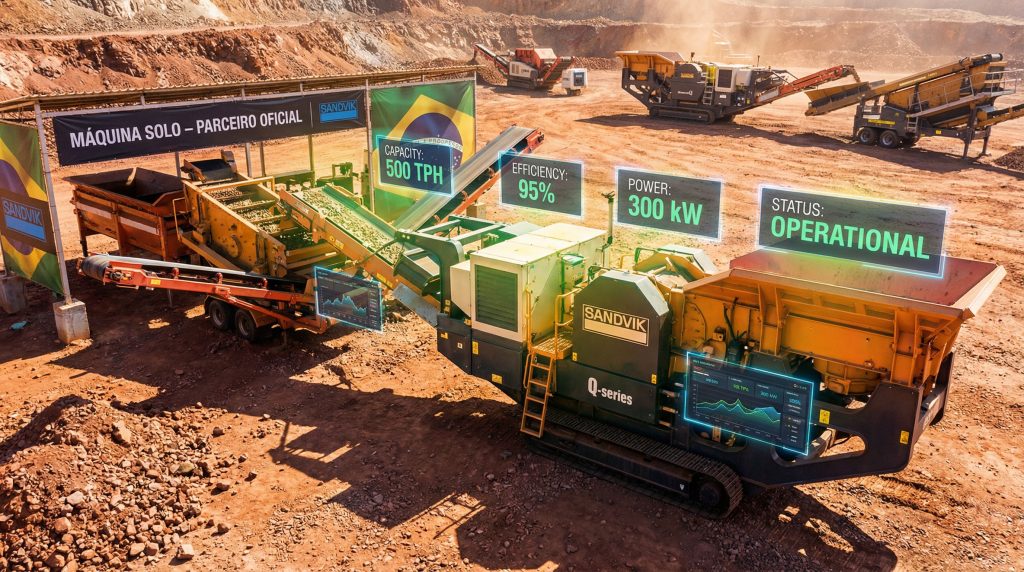
The market for mobile processing equipment in Brazil has undergone significant transformation, with Máquina Solo e Sandvik no mercado brasileiro representing a strategic partnership that exemplifies how local expertise combines with international technology to serve diverse industrial segments across the nation.
How Does the Brazilian Mobile Mineral Processing Equipment Market Function?
Brazilian mining is experiencing a quiet but revolutionary transformation. Whilst operations traditionally depended on fixed crushing and screening installations, a new operational philosophy is gaining momentum: bringing processing to where the ore is found, rather than transporting all raw material to centralised plants.
Technical Overview of the Mobile Crushing Sector
The national market for mobile mineral processing equipment represents a specialised segment within the heavy equipment industry. Máquina Solo e Sandvik no mercado brasileiro exemplify how strategic partnerships can redefine the distribution of advanced technologies in the country.
Máquina Solo, with 27 years of experience and more than 1,000 pieces of equipment distributed nationally, has established a solid foundation to serve various industrial segments. Furthermore, the partnership with Sandvik, a Swedish manufacturer with 160 years of global experience, represents the union between local knowledge and international expertise.
The growing integration of evolution and innovation in mining operations has accelerated demand for these mobile solutions.
Demand for In-Situ Processing Solutions in Mining
The increasing demand for mobile equipment reflects fundamental changes in Brazilian mining operational strategies. The main reasons include:
• Reduction of logistics costs through processing close to extraction points
• Operational flexibility for different types of ores and terrain conditions
• Optimisation of deposit utilisation with reduced waste movement
• Adaptability to changes in mining plans and operational expansions
The shift towards data-driven operations has made mobile processing equipment increasingly attractive for mining companies.
Main Players and Distribution in the National Market
Sandvik has maintained an established presence in Brazil for more than 20 years, with more than 250 machines between crushers and screens operating in the national territory. The new partnership with Máquina Solo aims to expand this penetration through better technical service and proximity to customers.
The market is characterised by clear segmentation between different industrial applications, including mining, civil construction, recycling and agribusiness, each with specific technical demands and distinct processing volumes.
When big ASX news breaks, our subscribers know first
What Are the Technical Specifications of Sandvik Equipment Distributed by Máquina Solo?
The technical offering of the Máquina Solo e Sandvik no mercado brasileiro partnership spans 54 different products, organised into two main lines that serve everything from small-scale operations to large industrial complexes.
Q Line: Equipment up to 450 Tonnes/Hour
The Q Line represents the solution for medium-scale operations, offering versatility and efficiency for various types of applications:
| Model | Type | Capacity | Primary Application |
|---|---|---|---|
| QH441 | Cone crusher | Up to 450 t/h | Aggregates and mining |
| QJ341 | Jaw crusher | Up to 400 t/h | Primary material |
| QI441 | Impact crusher | Up to 450 t/h | Civil construction |
| QA441 | Screening plant | Up to 450 t/h | Size separation |
Distinctive technical characteristics:
• Hybrid mobility: Track and wheel versions available
• Power systems: Diesel and hybrid diesel/electric models
• Quick setup: The QH441 model stands out for mobility ease and reduced setup time
• Application versatility: Suitable for cone, impact and jaw crushing
U Line: Equipment from 450 to 1,000 Tonnes/Hour
The U Line serves large-scale operations where maximum productivity is fundamental:
| Specification | Q Line | U Line |
|---|---|---|
| Maximum capacity | 450 t/h | 1,000 t/h |
| Operational focus | Flexibility | Maximum productivity |
| Technical complexity | Medium | High |
| Investment | Moderate | Elevated |
The UJ640E equipment represents the top of the line, capable of processing 1,000 tonnes per hour, demonstrating Sandvik's technical capability to serve Brazil's largest mining operations.
Mobility Technology: Tracks vs. Wheels
The choice between mobility systems directly impacts operational flexibility:
Track systems:
• Greater stability on irregular terrain and slopes
• Better weight distribution reducing soil compaction
• All-terrain capability to access remote mining areas
Wheel systems:
• Higher speed for movement between work locations
• Ease of transport on public highways
• Lower operational cost for frequent movements
Why Are Mobile Equipment Units Revolutionising Brazilian Mining?
The growing adoption of mobile equipment represents a paradigmatic shift in the operational approach of national mining, with impacts that go far beyond simple technology replacement.
Reduction of Transport and Logistics Costs
The in-situ processing strategy can reduce logistics costs by up to 40% through elimination of raw material transport, allowing only processed products to be moved to dispatch points.
Economic benefits include:
• Elimination of long-haul freight of low value-added raw material
• Reduced need for permanent transport infrastructure
• Optimised utilisation of trucks and handling equipment
• Less wear on internal mine roads
Operational Flexibility in Different Applications
The versatility of mobile equipment allows service to multiple segments through a single technological platform:
Mining:
• Processing of iron ore, gold, copper and aggregates
• Adaptation to different hardness levels and geological characteristics
• Capability to follow mining face advances
Civil construction:
• Production of aggregates in different size ranges
• Processing of recycled materials
• Service to infrastructure works
Recycling:
• Reprocessing of concrete and asphalt
• Processing construction waste
• Valorisation of discarded materials
The implementation of AI in mining operations has further enhanced the capabilities of these mobile solutions.
PlanDesigner Technology: Layout Optimisation
Sandvik's PlanDesigner solution represents a fundamental tool for maximising operational results. This technology enables:
- Precise dimensioning of equipment for each specific application
- Optimised sequencing of crushing and screening processes
- Material flow modelling for bottleneck identification
- Result prediction before physical implementation
The integration of this tool with monitoring systems allows continuous adjustments for maintaining maximum operational efficiency.
How Does Technical Support Differentiate Máquina Solo's Operation?
The competitive differential of Máquina Solo in the mobile equipment market lies in its after-sales relationship strategy, developed over a decade of intensive investments in technical infrastructure.
After-Sales Structure and Technical Assistance
Máquina Solo's technical support programme comprises integrated elements:
- Total technical assistance with rapid response to operational demands
- Preventive maintenance scheduling customised per equipment
- Specialised technical support for performance optimisation
- Strategic inventory of spare parts for downtime minimisation
- Qualified team including experienced engineers, mechanics and technicians
Preventive Maintenance Programmes
The preventive maintenance approach is based on specific schedules developed for Brazilian operational conditions:
• Adaptive intervals based on operating hours and working conditions
• Scheduled inspections for early wear identification
• Planned replacements of critical components before failures
• Inventory optimisation of parts based on predictive analyses
Continuous Technical Training
The training programme represents strategic investment in service quality:
Approximately 20 technicians from Máquina Solo recently participated in specific training programmes in Sandvik technology, covering:
• Application aspects for adequate equipment recommendation
• Maintenance techniques specific to each model
• Diagnostic procedures for rapid problem resolution
• Operational optimisation for productivity maximisation
What Is the Impact of Intelligent Monitoring Systems?
The integration of embedded monitoring technologies in Sandvik equipment represents a significant evolution in operational management of mobile mineral processing equipment.
Embedded Sensing in Equipment
All Sandvik equipment incorporates sensing systems that enable:
• Continuous transmission of performance data to analysis software
• Monitoring of critical parameters for real-time production
• Proactive identification of operational deviations before they affect productivity
• Problem anticipation through predictive analysis algorithms
The use of 3D geological modeling complements these monitoring systems for enhanced operational planning.
Performance Analysis Software
Collected data feeds analysis systems that offer:
Operational indicator dashboard:
• Instantaneous and accumulated production rates
• Energy consumption per tonne processed
• Crushing and classification efficiency
• Operating time vs. unscheduled stops
Productivity reports:
• Comparative analyses between shifts and operators
• Efficiency pattern identification
• Correlation between operational conditions and performance
• Benchmarking with industry standards
The combination of these elements enables continuous optimisation based on historical data and operational trends, resulting in sustainable incremental improvements in process efficiency.
What Are the Future Trends for Mobile Equipment in Brazil?
The Brazilian mobile processing equipment market is positioned for significant expansion, driven by structural changes in the economy and evolution of industrial demands.
Expansion into New Market Segments
Agribusiness:
• Processing limestone for soil correction
• Processing materials for rural construction
• Production of aggregates for agricultural infrastructure
Urban infrastructure:
• Urban mobility and public transport projects
• Smart Cities development with demand for special aggregates
• Expansion of sanitation and utility networks
Sustainability and recycling:
• Growth of circular economy with material reprocessing
• Valorisation of civil construction waste
• Environmental remediation projects
The integration of natural capital in mining considerations drives demand for more sustainable processing solutions.
Expected Technological Innovations
Advanced automation:
• Autonomous operation systems for operational cost reduction
• Integration with GPS and 3D mapping technologies
• Remote control for operation in dangerous environments
Energy efficiency:
• Expansion of fully electric models
• Hybrid systems with energy recovery
• Integration with renewable energy sources
Market Perspectives for 2026-2030
| Segment | Projected Growth | Main Drivers |
|---|---|---|
| Mining | 15-20% p.a. | New projects and modernisation |
| Construction | 10-15% p.a. | Infrastructure and housing |
| Recycling | 25-30% p.a. | Sustainability and regulation |
| Agribusiness | 12-18% p.a. | Agricultural expansion and soil correction |
Projections based on market trends and sectoral investment analysis.
The next major ASX story will hit our subscribers first
How to Evaluate ROI of Mobile Crushing Equipment?
Return on investment analysis for mobile equipment requires multifaceted evaluation that goes beyond initial acquisition cost, incorporating long-term operational factors.
Productivity and Efficiency Metrics
Fundamental quantitative indicators:
• Tonnes processed per operational hour – direct measure of productive capacity
• Energy consumption per tonne produced – operational energy efficiency
• Availability rate – percentage of productive time vs. stops
• Achieved particle size – final product quality
Operational Cost Analysis
OPEX components to consider:
• Fuel and energy – direct impact on daily operation
• Preventive and corrective maintenance – parts and labour costs
• Operation – operator and supervision salaries
• Transport and mobilisation – costs of movement between locations
• Insurance and depreciation – financial and accounting costs
Typical payback period:
For mining operations with utilisation exceeding 2,000 hours/year, the return period typically sits between 3-5 years, depending on application type and specific operational conditions.
Investment Decision Factors
Viability analysis by operation type:
- Large-scale mining – focus on maximum productivity and availability
- Temporary projects – emphasis on flexibility and mobility
- Remote operations – prioritisation of reliability and technical support
- Urban applications – consideration of noise and emissions
Life cycle considerations:
Quality mobile equipment presents economic life of 10-15 years with adequate maintenance, with the first 5 years representing the period of highest productivity and lowest maintenance cost.
According to industry analysis from Revista O Empreiteiro, the partnership between Máquina Solo and Sandvik represents a significant advancement in the Brazilian mobile crushing market.
Frequently Asked Questions about Sandvik Mobile Equipment
What is the difference between Sandvik's Q and U lines?
The Q Line serves applications up to 450 tonnes/hour, focused on versatility and operational flexibility. The U Line serves operations from 450 to 1,000 tonnes/hour, prioritising maximum productivity for large industrial complexes. The choice depends primarily on the volume of material to be processed and specific operational characteristics.
How does preventive maintenance work in mobile equipment?
Preventive maintenance is based on adaptive schedules that consider operating hours, working conditions and predictive analysis through embedded sensors. The monitoring system enables problem anticipation before they affect productivity, whilst strategic parts inventory ensures rapid response to maintenance needs.
What are the benefits of hybrid models?
Diesel/electric models offer energy flexibility, enabling operation with electric power when available (reducing costs and emissions) and diesel autonomy for remote locations. This configuration optimises operational costs and reduces environmental impact according to electrical infrastructure availability at the site.
How to choose between track or wheel equipment?
The choice depends primarily on terrain conditions and movement frequency. Track equipment is ideal for irregular terrain and operations with sporadic movement, offering greater stability. Wheel systems are preferable when there is need for frequent movement and adequate terrain, providing higher displacement speed.
For more information about Máquina Solo's comprehensive equipment range, visit their official website.
Disclaimer: This article contains analyses and projections based on publicly available market information. Performance data and return on investment are estimates that may vary according to specific operational conditions. Specialised technical consultation is recommended before investment decisions.
Ready to Capitalise on Brazil's Mining Equipment Revolution?
Whilst Brazil's mobile processing sector evolves with partnerships like Máquina Solo and Sandvik, the real opportunities lie in the ASX-listed companies driving innovation and supplying this growing market. Discovery Alert's proprietary Discovery IQ model identifies significant mineral discoveries and equipment sector breakthroughs the moment they're announced, turning complex market movements into actionable insights for both short-term traders and long-term investors. Explore historic examples of exceptional mining discoveries that have generated substantial returns, then begin your 14-day free trial today to position yourself ahead of the market.