July 22, 2026
The Global Stakes Behind the Marco Rubio Strait of Hormuz Warning
Freedom of navigation has underpinned the modern international trading order for decades, yet the legal and military frameworks that sustain it are rarely tested as directly as they are today. The Marco Rubio Strait of Hormuz warning sits at the epicentre of a dispute that is simultaneously a regional military conflict, a contest over international maritime law, and a geopolitical signalling exercise with implications stretching from the Persian Gulf to the South China Sea.
Understanding why this narrow stretch of water commands such intense international attention requires examining not just the geography, but the legal architecture and strategic calculations that make it irreplaceable.
When big ASX news breaks, our subscribers know first
The Physical Reality That Makes Hormuz Irreplaceable
Why Geometry Becomes Strategy in the Persian Gulf
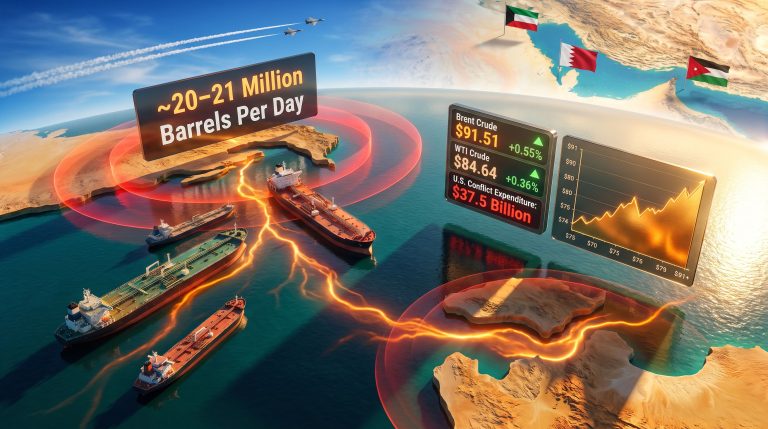
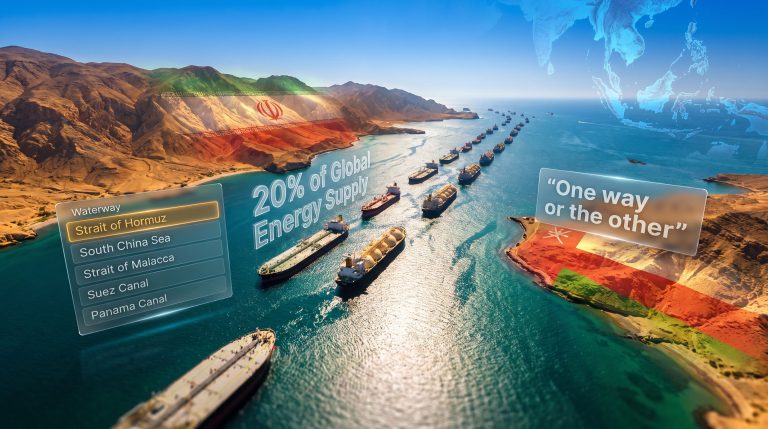
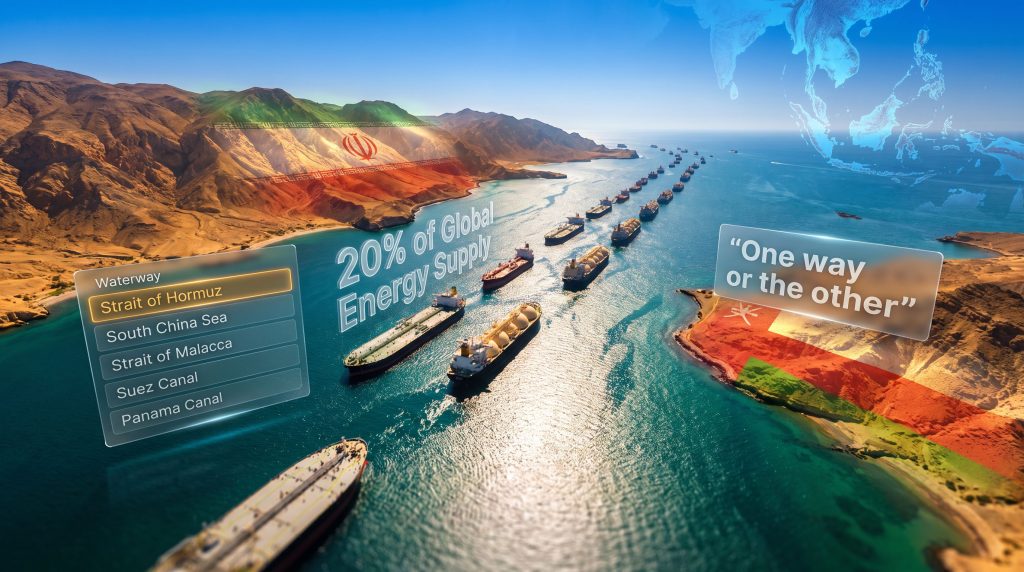
The Strait of Hormuz measures approximately 33 kilometres at its narrowest navigable point, a physical constraint that belies its outsized role in the global economy. Roughly 20% of the entire world's energy supply transits this single chokepoint every day, including the majority of crude oil exported from Saudi Arabia, the United Arab Emirates, Kuwait, Iraq, and Iran itself.
The dependency map is heavily skewed toward Asia. China, Japan, South Korea, and India collectively account for the overwhelming majority of seaborne crude oil that passes through the strait. European markets face secondary exposure through liquefied natural gas exports from Qatar, which also route through Hormuz before reaching LNG terminals across the continent.
What makes the strait structurally irreplaceable is the absence of any credible substitute. While pipelines such as the Abu Dhabi Crude Oil Pipeline and the East-West Pipeline in Saudi Arabia offer partial bypass capacity, their combined throughput falls dramatically short of Hormuz transit volumes. Furthermore, there is no engineering solution or alternative shipping lane that can absorb the full flow of Gulf energy exports if the strait is disrupted.
The Strait of Hormuz is not simply a geographic feature. It is a systemic vulnerability embedded into the architecture of global energy supply, one that cannot be engineered away in any timeframe relevant to near-term geopolitical crises.
The Marco Rubio Strait of Hormuz Warning Explained
Freedom of Navigation as a Non-Negotiable Principle
Speaking at the ASEAN Foreign Ministers' Meeting in Manila, Philippines on July 22, 2026, U.S. Secretary of State Marco Rubio delivered remarks that crystallised Washington's position on the Hormuz dispute with notable clarity and force. As Al Jazeera reported, Rubio stated the waterway would reopen "one way or another."
Rubio's central argument was that the Strait of Hormuz qualifies as an international waterway under established maritime law, meaning no coastal state holds the unilateral right to impose tolls, restrict traffic, or charge fees on commercial vessels exercising their right of transit passage. His rejection of any Iranian fee or traffic-control mechanism was categorical.
The phrase Rubio employed — warning that the United States would do what is necessary to keep the waterway open — carried unmistakable implications about American willingness to use sustained military force rather than accept a precedent of Iranian control. His simultaneous statement that Washington remained committed to diplomacy if Tehran demonstrated genuine seriousness framed the situation as a conditional offer rather than an open-ended negotiation.
The Precedent Argument: Why Rubio Chose an ASEAN Audience
The most strategically significant dimension of the Marco Rubio Strait of Hormuz warning was not the specific reference to Iran, but the broader precedent argument Rubio constructed around it. These US-China trade war impacts add further complexity to what is already a volatile strategic environment.
Rubio argued that permitting a nation-state to assert control over an international waterway, impose transit fees, and threaten vessels that decline to pay would establish a replicable model for any state with geographic access to a strategic maritime passage. His veiled reference to China and the South China Sea was deliberate and pointed.
By delivering this message at an ASEAN forum, in front of foreign ministers from nations that have competing territorial claims with China in the South China Sea, Rubio was doing more than warning Tehran. He was signalling to Beijing that the United States views waterway sovereignty challenges as interconnected threats requiring a consistent legal and military response.
The South China Sea context reinforces this reading. China's nine-dash line claim encompasses nearly the entirety of a sea through which an estimated $3.4 trillion in global trade transits annually, according to figures cited by the Council on Foreign Relations. A 2016 ruling by the Permanent Court of Arbitration found that China's expansive maritime claims lacked any foundation under international law, yet Beijing has consistently refused to recognise that outcome. The parallel with Iran's Hormuz position was impossible to ignore.
The June 2026 MOU: Ambiguity as a Source of Crisis
What the U.S.-Iran Agreement Left Unresolved
On June 17, 2026, the United States and Iran signed an interim memorandum of understanding that suspended military operations, called for the reopening of the Strait of Hormuz, and established a 60-day negotiation window covering Iran's nuclear programme and related issues. The document was intended as a diplomatic foundation, but its ambiguity on a critical question has since become the primary driver of renewed hostilities.
The MOU did not clearly define who holds authority over traffic management in the strait after the interim period concludes. This omission created space for fundamentally incompatible interpretations that have proven impossible to bridge through diplomatic channels alone.
| Disputed Element | Iran's Interpretation | U.S. Position |
|---|---|---|
| Traffic management rights | Recognised Iranian role in managing strait transit | No country holds unilateral control rights |
| Toll and fee authority | Permissible after the 60-day window expires | Categorically rejected under international law |
| Sovereignty framing | Coastal state sovereign rights apply to the strait | UNCLOS transit passage provisions supersede coastal claims |
| MOU legal status | Established a framework for formalising Iranian authority | Temporary ceasefire arrangement, not a sovereignty grant |
Iran's reading of the document, as reflected in Tehran's official statements, was that the MOU implicitly acknowledged the legitimacy of Iranian maritime management authority and opened the door to a formalised fee structure for vessels transiting the strait. Washington's counter-position was direct: the agreement was a ceasefire mechanism, not a recognition of any Iranian right to regulate or monetise international shipping.
The Iran-Oman Joint Statement and Its Legal Complications
On June 23, 2026, Iran and Oman issued a joint declaration asserting that all arrangements relating to the Strait of Hormuz must fully respect the sovereignty and sovereign rights of both coastal states. The statement introduced a third voice into the dispute in a way that complicates the straightforward U.S. legal argument.
Oman occupies an unusual diplomatic position. Muscat has historically served as a back-channel intermediary between Washington and Tehran, giving it a credibility that few other regional actors possess. The joint statement therefore carried weight beyond its literal text, signalling that even a U.S.-aligned mediator state viewed the coastal state dimension of Hormuz governance as legitimately unresolved.
The distinction between transit passage rights under the United Nations Convention on the Law of the Sea (UNCLOS) and coastal state management authority is not as clean as Washington's public position implies. UNCLOS does grant coastal states specific regulatory functions over safety, environmental standards, and traffic separation schemes in international straits. The legal debate is not simply about whether Iran has any role at all, but about how far that role extends.
U.S. Military Operations and the Deterrence Strategy
Eleven Consecutive Nights of Strikes: What the Campaign Signals
U.S. Central Command confirmed strikes on Iranian targets across 11 consecutive nights, with stated objectives focused on degrading Iran's capacity to threaten commercial shipping in the Strait of Hormuz. Confirmed target categories included military operations centres, drone storage infrastructure, and military logistics networks.
The choice of sustained, incremental pressure over a single decisive strike reflects a deliberate deterrence logic. The campaign is designed to impose mounting costs on Iranian military capacity without triggering the kind of single escalatory event that could spiral into a broader regional war.
Rubio framed the strikes explicitly as consequences for Tehran's failure to honour its commitments under the June MOU. This framing matters strategically because it maintains the diplomatic door open while demonstrating military resolve — a combination that is difficult to sustain but is clearly the posture Washington is attempting to project.
Historical Parallels: Operation Earnest Will and the Lessons of 1987
The current situation carries echoes of Operation Earnest Will, the 1987–1988 U.S. naval operation in which American forces escorted reflagged Kuwaiti oil tankers through the Persian Gulf during the Iran-Iraq War. That operation involved direct naval engagement with Iranian forces and established the precedent that the United States was prepared to use military power to enforce freedom of navigation in Gulf waters.
The current campaign differs in scope and character, but the underlying strategic logic is consistent. Washington has repeatedly demonstrated that it views Hormuz access as a vital interest worth defending through force when diplomatic mechanisms fail. The geopolitical landscape in mining and energy sectors is consequently being reshaped by these compounding pressures.
The Economic Architecture of a Potential Closure
Which Economies Face the Greatest Exposure?
The economic stakes of a sustained Hormuz disruption are asymmetric across the global economy. While the United States has substantially reduced its Gulf import dependency through the domestic shale revolution, the major Asian economies remain deeply exposed.
- China imports more than 40% of its crude oil from Gulf producers whose exports transit Hormuz, making it the single most exposed major economy to any sustained closure.
- Japan and South Korea import the vast majority of their crude oil requirements through the strait, with limited ability to substitute alternative supply sources at short notice.
- India has been rapidly expanding its Gulf crude imports, increasing its exposure even as it attempts to diversify through Russian and African supply agreements.
- European markets face secondary shock transmission through LNG pricing, as Qatari gas exports that transit Hormuz represent a meaningful share of European LNG supply.
Historical modelling of Hormuz disruption scenarios has estimated short-term oil price spikes of 30% to 50% in response to even a 72-hour closure, with sustained closures producing cascading effects across energy-intensive industries globally. These are estimates based on historical market behaviour and carry significant uncertainty.
The China Strategic Dilemma
Beijing's position in the Hormuz crisis is one of the most structurally complex elements of the entire situation. The China market challenges facing Beijing are compounded by its crude oil import dependency on Gulf producers, yet its broader geopolitical alignment with Iran creates competing incentives that make a clear pro-navigation stance politically difficult.
Rubio's explicit call for outside powers — a clear reference to China — to apply pressure on Tehran to honour its MOU commitments was a calculated appeal to Beijing's economic self-interest. Whether that appeal produces any measurable diplomatic pressure from China on Iran remains one of the most consequential open questions in the current crisis.
The next major ASX story will hit our subscribers first
The Legal Framework: UNCLOS and the Limits of Coastal State Authority
How International Maritime Law Governs Transit Passage
The legal foundation of the U.S. position rests on UNCLOS provisions governing transit passage through international straits. Under this framework, all vessels, including commercial ships and warships, hold the right of continuous and expeditious transit through straits used for international navigation. Coastal states cannot suspend, obstruct, or impose compulsory fees on vessels exercising this right.
The critical distinction under UNCLOS is between territorial sea sovereignty and transit passage rights. While Iran holds territorial sea rights over its coastal waters adjacent to the strait, the waterway itself falls under transit passage provisions that limit how extensively coastal states can regulate or monetise that passage.
| Waterway | Governing Framework | Key Dispute History | Current Status |
|---|---|---|---|
| Strait of Hormuz | UNCLOS transit passage | Iranian toll and control claims, 2026 | Active military enforcement |
| South China Sea | UNCLOS EEZ provisions | China nine-dash line claim | Ongoing U.S. freedom of navigation operations |
| Strait of Malacca | UNCLOS and bilateral agreements | Historical piracy, sovereignty overlaps | Managed multilaterally |
| Suez Canal | Egyptian sovereign control (post-1956) | Nationalisation crisis | State-controlled, internationally recognised fee structure |
| Panama Canal | Panamanian sovereign control | U.S. handover in 1999 | State-controlled, internationally recognised fee structure |
The Suez Canal and Panama Canal operate under sovereign state control with internationally recognised fee mechanisms, a model Iran appears to be seeking for Hormuz. However, those canals are entirely man-made structures constructed within undisputed national territory, whereas the Strait of Hormuz is a natural international waterway explicitly governed by UNCLOS transit passage provisions — a legally distinct category.
Hormuz as a Blocking Issue in Nuclear Diplomacy
How the Strait Dispute Is Undermining the Broader Negotiation
The June 2026 MOU was explicitly designed to create space for a comprehensive nuclear negotiation within a 60-day window. However, the Hormuz management dispute has become the primary obstacle to that process advancing. Iranian intransigence on transit authority is consuming diplomatic bandwidth and eroding trust in ways that make any broader nuclear agreement harder to reach.
Rubio's statement that Iran is not currently serious about talks established a condition for re-engagement: Tehran must demonstrate good faith on Hormuz before Washington will invest political capital in nuclear negotiations. This sequencing creates a structural barrier to progress, since Iran views its Hormuz position as a legitimate sovereign claim rather than a concession it can simply withdraw.
Potential Diplomatic Off-Ramps
Several compromise frameworks are theoretically available, though none is politically easy to execute:
- International maritime authority oversight of Hormuz transit, potentially through an expanded role for the International Maritime Organization, could provide a neutral governance mechanism that neither endorses Iranian sovereign control nor entirely excludes coastal state interests.
- An Oman-administered transit arrangement, given Muscat's unique credibility with both parties, could potentially establish a formalised traffic management structure that satisfies Iranian economic interests without granting Tehran unilateral authority.
- A formalised fee structure with international supervision, modelled loosely on canal governance frameworks but adapted to UNCLOS transit passage constraints, represents a middle ground that Washington has not publicly endorsed but has not explicitly ruled out either.
The gap between Iranian and American positions remains structurally wide. Iran wants recognised authority. The United States is prepared to accept Iranian participation in a multilateral framework but not Iranian control. Until that distinction is bridged at the political level, the military dimension of this crisis is unlikely to be resolved through diplomacy alone.
Frequently Asked Questions: Marco Rubio and the Strait of Hormuz
What exactly did Marco Rubio say about the Strait of Hormuz?
U.S. Secretary of State Marco Rubio stated at the ASEAN Foreign Ministers' Meeting in Manila on July 22, 2026 that the Strait of Hormuz must remain open to international shipping without Iranian-imposed tolls or restrictions. He characterised any attempt to impose such controls as a violation of international maritime law and warned that permitting it would establish a dangerous precedent replicable by other states in other strategic waterways.
Why does Iran want control over the Strait of Hormuz?
Iran, as one of the two coastal states bordering the strait alongside Oman, argues that it holds legitimate sovereign rights over traffic management in the waterway. Tehran's reading of the June 2026 MOU is that the document recognised an Iranian role in managing transit and opened the door to a formalised maritime services fee structure after the initial ceasefire period. The broader oil price shock implications of this standoff are already being felt across global energy markets.
How much of the world's oil passes through the Strait of Hormuz?
Approximately 20% of the global energy supply transits the Strait of Hormuz on a daily basis, making it the most critical single energy chokepoint in the world. China, Japan, South Korea, and India are the primary destination economies for crude oil transported through the strait. In addition, the oil price movements driven by this uncertainty are already registering across futures markets globally.
What legal basis does the U.S. use to challenge Iranian control?
The United States relies on UNCLOS provisions governing transit passage through international straits. These provisions prohibit coastal states from suspending, blocking, or imposing compulsory fees on vessels exercising their right of transit passage. Under this framework, the Strait of Hormuz is classified as an international waterway subject to transit passage rights, not as sovereign Iranian territory.
What were the U.S. military strikes targeting in Iran?
U.S. Central Command confirmed strikes across 11 consecutive nights targeting Iranian military operations centres, drone storage facilities, and military logistics infrastructure, with the stated objective of degrading Iran's capacity to threaten commercial shipping in the Strait of Hormuz.
What is the significance of Rubio's remarks at the ASEAN meeting?
By delivering his Hormuz warning at the ASEAN Foreign Ministers' Meeting in Manila, Rubio deliberately framed the dispute as a global freedom of navigation principle with direct relevance to Southeast Asia. The choice of venue was a signal to China that Washington views challenges to international waterway access — whether in the Persian Gulf or the South China Sea — as interconnected threats requiring consistent legal and military responses. Iran International has further documented how Tehran has responded to these signals in its own diplomatic communications.
What the Hormuz Crisis Reveals About the Future of Maritime Order
A New Stress Test for International Maritime Law
The Hormuz dispute is functioning as a live stress test for the international legal order governing maritime passage. UNCLOS was designed to provide a stable framework for resolving exactly these kinds of competing claims, but its enforcement depends entirely on the willingness of major powers to defend its provisions through political and, when necessary, military means.
The precedent question that Rubio raised is the most consequential long-term dimension of this crisis. If a coastal state successfully asserts unilateral control over an international strait — even partially or temporarily — the implications extend far beyond the Persian Gulf. Every strategically important maritime passage becomes subject to reassessment by any state with coastal geography and the ambition to leverage it.
The U.S. response to the Hormuz crisis will be read as a signal not just by Iran, but by every state that holds geographic leverage over international shipping lanes. How Washington balances the demands of military deterrence, legal principle, and diplomatic engagement in the weeks ahead will shape the architecture of maritime governance for years to come.
This article contains forward-looking analysis and scenario assessments based on publicly available information as of July 2026. Energy price projections and geopolitical outcome assessments involve significant uncertainty and should not be interpreted as financial advice or definitive predictions.
Want to Stay Ahead of the Market Disruptions Shaping Commodity Prices?
Geopolitical crises like the Hormuz standoff can trigger rapid, far-reaching shifts across energy and minerals markets, and Discovery Alert's proprietary Discovery IQ model delivers real-time alerts on significant ASX mineral discoveries, ensuring subscribers can identify actionable opportunities the moment they emerge. Explore historic examples of major discovery returns and begin your 14-day free trial today to position yourself ahead of the next market-moving event.