August 4, 2026
The Structural Shift Reshaping How Critical Minerals Are Funded
For most of mining's history, capital formation followed a predictable arc. Junior explorers scraped together funds through equity placements on resource exchanges, majors relied on debt markets and retained earnings, and venture capital stayed firmly in software. That separation is now collapsing. The forces driving it are not subtle: artificial intelligence infrastructure, electrification, and geopolitical pressure on supply chains have elevated copper and lithium from industrial commodities to strategic necessities. The surge in critical minerals demand has created a new category of company, one that borrows the funding architecture of Silicon Valley and applies it to hard rock extraction.
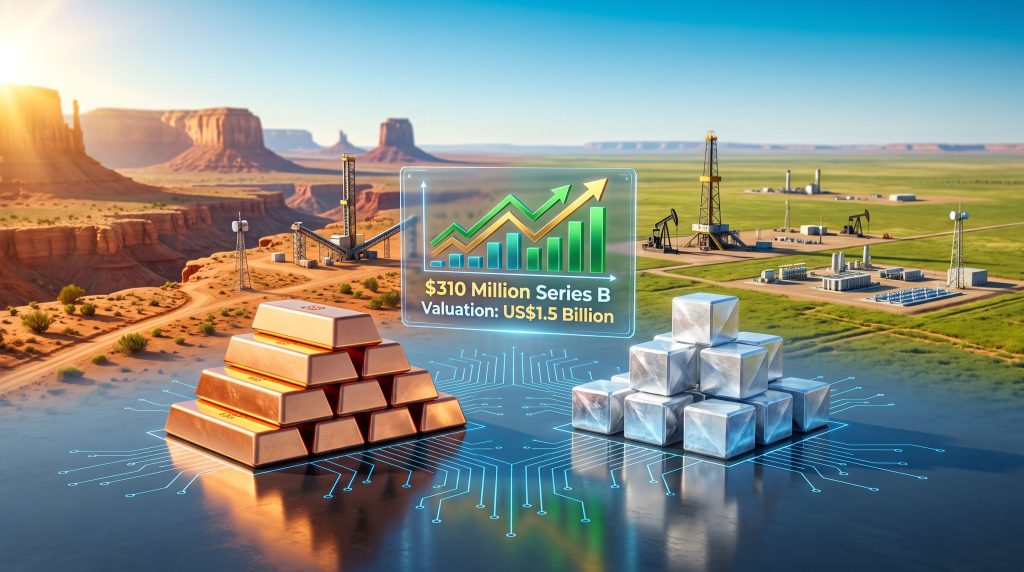
The Mariana Minerals $310 million funding round, closed in August 2026, is one of the clearest expressions of this structural shift yet seen.
When big ASX news breaks, our subscribers know first
Breaking Down the $310 Million Series B
The round's architecture is worth examining carefully, because the composition of its investor group tells a more complete story than the headline figure alone.
| Metric | Detail |
|---|---|
| Funding Round | Series B |
| Amount Raised | US$310 million |
| Total Capital Raised to Date | ~US$400 million |
| Implied Company Valuation | US$1.5 billion |
| Round Close Date | August 3, 2026 |
| Lead Investor | Khosla Ventures |
Khosla Ventures, the firm built by Vinod Khosla following his co-founding of Sun Microsystems, led the round. That specific pedigree matters. Khosla has long argued that transformational capital should flow toward problems that software alone cannot solve, and hard materials extraction is precisely that kind of problem. His firm's leadership of this round signals that deep tech venture capital has arrived at mining with genuine conviction rather than passing curiosity.
Who Are the Investors Behind the Round?
The full investor roster represents a deliberate cross-section of capital types, each bringing a different form of validation:
- Khosla Ventures – Lead investor; brings deep technology venture credibility rooted in hardware and energy system transformation
- Andreessen Horowitz – Continued participation from one of Silicon Valley's most influential venture platforms, indicating sustained conviction across multiple funding cycles
- Breakthrough Energy Ventures – Climate-focused capital reinforcing the thesis that domestic critical mineral supply chains are inseparable from clean energy transition goals
- Greenoaks – A new entrant in this round; a growth-stage specialist known for concentrated, high-conviction positions in companies approaching commercial scale
- BHP Ventures – The strategic participation of one of the world's largest diversified mining majors adds operational credibility that pure financial capital cannot provide
- Mitsubishi Corporation – The Japanese industrial conglomerate's involvement signals downstream industrial interest, particularly relevant given Japan's dependency on imported critical minerals
- In-Q-Tel – The US government-affiliated venture arm whose participation in a mining startup is a notable signal about national security dimensions of critical mineral supply
The presence of In-Q-Tel is particularly striking and often underappreciated by generalist investors. In-Q-Tel was established to invest in technologies that serve US intelligence and national security interests. Its participation in a copper and lithium development company reflects how thoroughly the critical minerals conversation has moved beyond economics into strategic national interest territory — a dynamic further shaped by evolving US critical minerals policy.
What BHP Ventures' Participation Signals to the Market
When a mining major of BHP's scale takes a strategic position in a venture-backed startup, it rarely does so for purely financial reasons. BHP Ventures functions as a window into emerging business models that could reshape how the broader industry operates. Its involvement with Mariana suggests the major sees genuine optionality in the technology-integrated approach to resource development, particularly MarianaOS, which is discussed in detail below.
Strategic corporate participation from entities like BHP Ventures and Mitsubishi Corporation is not passive. These organisations typically attach information rights, first-look provisions, or offtake conversations to their investment positions, making their involvement a form of upstream supply chain optionality as much as a financial stake.
What Is Mariana Minerals and How Was It Built?
Mariana Minerals describes itself as a mining company of the future, a phrase that risks sounding like marketing shorthand until you examine what it actually means operationally. The company was constructed around a technology-first philosophy rather than an asset-first one, which inverts the traditional resource development model.
In conventional mining, companies acquire a deposit, conduct feasibility studies, and then layer technology onto an existing operational plan. Mariana's approach, however, treats data architecture, decision-support systems, and resource modelling as foundational elements that precede and inform everything else. The distinction is subtle but consequential in terms of capital efficiency and the speed at which operational decisions can be validated.
Vertical Integration as a Competitive Moat
Most junior and mid-tier miners rely on a constellation of external service providers: geological consultants, mine planning software vendors, metallurgical laboratories, and engineering firms. Each handoff between providers introduces latency, data loss, and interpretation risk. Mariana's vertical integration model internalises many of these functions, creating a tighter feedback loop between exploration data, resource modelling, and production planning.
This architecture is difficult to replicate quickly. It requires simultaneous competence in geoscience, software development, and mine engineering — a combination of disciplines that traditional mining companies have not historically hired for or built internally.
MarianaOS: The Platform That Changes the Valuation Equation
MarianaOS is Mariana's proprietary operating system for resource development. It integrates exploration datasets, subsurface geological models, operational workflows, and resource estimation tools into a unified digital environment accessible across the organisation.
Understanding MarianaOS is essential to understanding why this company is valued at US$1.5 billion before it has reached commercial production.
How MarianaOS Works in Practice
Traditional mine planning software operates in silos. Geological modelling tools produce outputs that are manually transferred into mine planning packages, which then feed separately into scheduling and fleet management systems. Each translation step introduces error and slows the decision cycle.
MarianaOS aims to eliminate those translation layers by creating a single data environment where:
- Drill hole assay data is ingested and interpreted in real time
- Geological models update dynamically as new data arrives
- Resource estimates are continuously refined rather than periodically restated
- Mine planning scenarios are stress-tested against live geological inputs
This approach has significant implications for capital efficiency. Faster, more accurate resource models mean less capital wasted on drilling campaigns that are poorly targeted or on mine designs built on outdated geological assumptions.
The Platform Monetisation Question
Here is where analysis must become speculative, and readers should treat the following as scenario-based thinking rather than established fact. If MarianaOS proves effective at commercial scale, it carries standalone licensing potential. Mining companies globally spend substantial sums on geological software, mine planning tools, and operational management systems.
A platform that integrates these functions and learns from its own operational data could plausibly attract licensing interest from operators who lack the resources to build equivalent systems internally. Whether Mariana pursues this path or treats MarianaOS purely as an internal competitive advantage is a strategic decision that will have meaningful implications for how the company is valued in subsequent funding rounds or a potential public market debut.
The Core Projects: Copper One and Lithium One
The $310 million is allocated across two development projects and continued platform development.
Copper One: Southeastern Utah
- Location: Southeastern Utah, United States
- Primary commodity: Copper
- Strategic context: The United States currently imports a significant proportion of its refined copper needs, and domestic mine supply has not kept pace with projected demand growth driven by grid electrification and AI data centre infrastructure
Copper's role in artificial intelligence infrastructure is frequently underestimated by investors without an engineering background. A single large-scale hyperscale data centre requires substantial copper for power distribution systems, cooling loops, server interconnects, and grounding infrastructure. As AI compute demand accelerates, the copper intensity per unit of digital output is rising, not falling. Furthermore, the broader copper supply crunch is intensifying the strategic rationale for domestic US production.
Utah's southeastern region has established geological precedent for copper mineralisation, though specific grade and tonnage data for Copper One has not been publicly disclosed at this stage of the project's development. The region's geology is characterised by sediment-hosted copper systems, which can offer advantages in terms of processing simplicity compared to porphyry copper deposits that require more complex metallurgical treatment.
Lithium One: East Texas
- Location: East Texas, United States
- Primary commodity: Lithium
- Project type: Lithium brine extraction
- Strategic context: East Texas sits within a broader Gulf Coast industrial corridor with established chemical processing infrastructure and proximity to emerging battery manufacturing activity
Lithium brine projects differ fundamentally from hard rock lithium mines in their extraction economics and environmental profile. Brine operations pump lithium-bearing groundwater to surface and process it through evaporation or direct lithium extraction technologies, avoiding the large-scale earthmoving and waste rock management associated with spodumene mining. DLE in particular has attracted significant investor attention because it can, in theory, produce battery-grade lithium carbonate or hydroxide at higher recovery rates and with lower water consumption than conventional brine evaporation ponds.
The East Texas geological formation hosting Lithium One is part of a broader brine aquifer system that extends through the Gulf Coast sedimentary basin. This geological setting has been increasingly scrutinised by lithium developers as DLE technology matures and makes previously uneconomic brine grades more commercially viable.
Valuation Analysis: Does US$1.5 Billion Hold Up?
Applying conventional mining valuation metrics to Mariana produces an uncomfortable answer: at pre-production stage with no published resource estimate, the company would be difficult to value above a few hundred million dollars using net asset value or enterprise value per pound of resource methodologies.
The US$1.5 billion valuation only makes sense when Mariana is assessed through a hybrid framework:
| Valuation Component | Traditional Miner | Mariana Minerals |
|---|---|---|
| Capital source | Debt markets, institutional equity | Venture capital, strategic corporates |
| Valuation basis | Resource multiples, NAV | Technology platform + resource hybrid |
| Technology role | Supplementary | Core to business model |
| Investor profile | Resource funds, pension capital | VC, sovereign, industrial strategics |
| Operational philosophy | Asset-heavy, incremental | Vertically integrated, platform-driven |
The premium embedded in Mariana's valuation reflects the market pricing MarianaOS as a technology asset alongside the physical resources. This is a conceptually similar approach to how investors value vertically integrated technology companies compared to pure-play hardware manufacturers.
The next major ASX story will hit our subscribers first
Key Risks Investors Should Assess
No analysis of Mariana is complete without a clear-eyed risk framework. The company faces several categories of execution uncertainty that are distinct from those facing conventional miners.
Venture-backed mining companies face a dual execution challenge: proving a technology thesis and delivering physical resource production simultaneously. These two timelines rarely align neatly, and the capital requirements of each can compete with the other. Investors should carefully assess both the technical de-risking pathway and the capital runway required to reach first production.
Primary Risk Categories
Execution risk: Transitioning from a well-capitalised startup to an operating mine is a qualitatively different challenge. The skills, regulatory relationships, and operational disciplines required for mine construction and commissioning are not the same as those required to build software platforms or attract venture capital.
Permitting complexity: US critical mineral mining permitting risks under the National Environmental Policy Act (NEPA) and related state-level frameworks can extend timelines by years. Even projects with strong economic and strategic rationales have experienced multi-year permitting delays that materially affect project economics.
Technology scale risk: MarianaOS has been developed in a pre-production environment. Whether its integration architecture performs as designed under the data volumes, system complexity, and operational pressures of a live mining operation is an open question that only production-stage operation can definitively answer.
Commodity price sensitivity: Copper and lithium prices are volatile. While the structural demand thesis for both metals is compelling over a multi-year horizon, short-term price cycles can materially affect project economics and investor sentiment. Lithium in particular experienced a severe price correction in 2023 and 2024 as oversupply from Chinese production weighed on spot markets, demonstrating that even strategically important commodities are not immune to cyclical downturns.
What This Round Means for Critical Minerals Investment More Broadly
The Mariana Minerals $310 million funding is not an isolated event. It is a data point in a larger pattern of capital reallocation toward technology-integrated resource development.
Several dynamics are converging to sustain this trend:
- The US industrial policy environment, including the Inflation Reduction Act and CHIPS and Science Act frameworks, has created incentive structures that reward domestic critical mineral development, though these policies represent broad regulatory frameworks rather than project-specific support for any individual company
- AI infrastructure buildout is creating sustained demand for copper that analysts at major banks including Goldman Sachs have described as a structural supercycle dynamic rather than a cyclical upturn
- Battery storage deployment is accelerating globally, with BloombergNEF projecting annual lithium demand growth of approximately 20% through 2030 under base case scenarios
- Downstream industrial companies including automakers, battery manufacturers, and technology hardware producers are increasingly seeking to secure upstream supply through direct investment rather than relying entirely on spot markets
Key Takeaways for Investors Watching This Space
- Valuation frameworks are evolving. The US$1.5 billion benchmark Mariana has established will serve as a reference point for how markets price technology-integrated resource companies at pre-production stage.
- Investor composition is as important as quantum. The combination of venture capital, strategic industrial capital, and national security-adjacent investment signals that critical minerals have moved beyond a commodity thesis into a technology and geopolitical thesis.
- MarianaOS is the variable most investors are not pricing correctly. If the platform proves scalable, it fundamentally changes the company's addressable market and margin profile.
- Dual execution risk is real and underappreciated. Building technology and building mines are both hard. Doing both simultaneously, with investor expectations calibrated to Silicon Valley timelines, creates a pressure dynamic that management teams in this category will need to navigate carefully.
Frequently Asked Questions About Mariana Minerals' $310 Million Funding
How much has Mariana Minerals raised in total?
Mariana Minerals has raised approximately US$400 million across all funding rounds, with the US$310 million Series B representing the largest single raise and closing in August 2026.
Who led the Series B round?
Khosla Ventures, founded by Vinod Khosla, the co-founder of Sun Microsystems, led the round. Several other prominent investors participated, including Andreessen Horowitz, Breakthrough Energy Ventures, Greenoaks, BHP Ventures, Mitsubishi Corporation, and In-Q-Tel.
What is the company's current valuation?
The Series B positioned Mariana Minerals at an implied valuation of approximately US$1.5 billion, placing it within the venture capital definition of a unicorn company.
What are the funds being used for?
Capital from the round is directed toward advancing the Copper One project in southeastern Utah, progressing the Lithium One brine project in East Texas, and continuing development of the MarianaOS operational software platform.
What is MarianaOS?
MarianaOS is Mariana's proprietary digital platform that integrates exploration data management, geological modelling, resource estimation, and mine planning decision-support into a single operational environment. It is the technological differentiation that separates Mariana from conventional resource developers.
Why is BHP Ventures investing in a startup miner?
BHP Ventures' participation reflects a strategic interest in technology-driven resource development models. Major mining companies are increasingly investing in startups that could reshape exploration, mine design, and operational management, providing optionality on business model disruption within their own industry.
This article is intended for informational purposes only and does not constitute financial advice. Projections, forecasts, and valuation analyses referenced herein involve inherent uncertainty and should not be relied upon as predictions of future performance. Readers should conduct their own due diligence before making any investment decisions.
Want to Catch the Next Major ASX Mineral Discovery Before the Market Does?
Discovery Alert's proprietary Discovery IQ model delivers real-time alerts on significant ASX mineral discoveries — translating complex resource data into actionable insights for traders and investors at every level — so explore historic examples of exceptional discovery returns and begin your 14-day free trial today to position yourself ahead of the market.