Mclaren Minerals Ltd
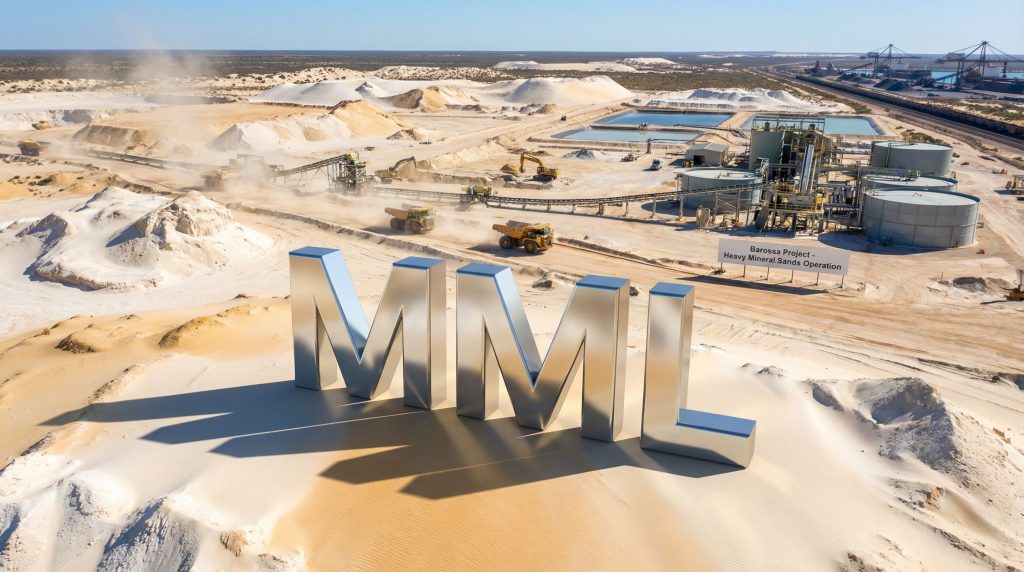
- ASX Code: MML
- Market Cap: $8,449,059
McLaren Minerals Unveils High-Grade Zircon Discovery at Barossa Project
McLaren Minerals Limited (ASX: MML) has released compelling exploration results from its recently acquired Barossa Project in South Australia's proven Eastern Eucla Basin. The comprehensive data review reveals exceptional high-grade intersections with some intervals reaching over 35% Heavy Mineral (HM) content, positioning the McLaren Minerals Barossa Project as a potentially significant zircon-rich mineral sands opportunity.
The standout results include remarkable intersections such as 1.5m @ 35.66% HM at Kalahari and 1.5m @ 26.88% HM at the same prospect. Furthermore, these exceptional grades demonstrate the potential across the 583 holes drilled to date.
With an average grade of approximately 4.6% HM across prospect areas and a valuable heavy mineral assemblage containing ~16% zircon, ~60% ilmenite, and ~2% rutile, the project represents a compelling addition to the company's mineral sands portfolio.
When big ASX news breaks, our subscribers know first
Strategic Acquisition in a World-Class Mineral Sands Province
The McLaren Minerals Barossa Project's location within the Eastern Eucla Basin cannot be overstated in terms of strategic value. Positioned approximately 90km southeast of Iluka Resources' tier-one Jacinth-Ambrosia mine and 120km north of Thevenard Port, the project benefits from established infrastructure and proven geological prospectivity.
The Eastern Eucla Basin hosts some of Australia's most significant heavy mineral sand deposits. The nearby Jacinth-Ambrosia operation historically reported mined grades of approximately 6-7% HM.
This regional context provides strong validation for McLaren's acquisition strategy. In addition, it highlights the fertile nature of the geological environment surrounding the McLaren Minerals Barossa Project.
High-Grade Intersection Highlights by Prospect
| Prospect | Drill Hole | Intersection | Grade |
|---|---|---|---|
| Kalahari | YE16911 | 9.5m @ 8.19% HM | 35.66% HM peak |
| Kalahari | YE16900 | 7.5m @ 8.67% HM | 26.86% HM peak |
| Mojave | YE2399 | 18m @ 3.81% HM | 18.8% HM peak |
| Mojave | YE2475 | 13.5m @ 4.53% HM | 17.81% HM peak |
| Gobi | YE16866 | 4.5m @ 8.54% HM | 18.61% HM peak |
Understanding Heavy Mineral Assemblages: The Zircon Advantage
Heavy mineral assemblages represent the valuable component of mineral sands deposits, containing the economically important minerals that drive project economics. These assemblages form when weathering and erosion concentrate heavy minerals from source rocks.
Ocean currents and wave action further sort materials by density and size. This natural process creates the concentrated deposits that companies target for economic extraction.
Zircon is a premium mineral commanding high prices due to its applications in ceramics, foundry casting, and nuclear industries. The mineral's exceptional hardness and chemical resistance make it indispensable for high-temperature industrial applications.
Unlike titanium minerals, zircon prices have shown resilience and growth. Consequently, this makes zircon-rich deposits increasingly attractive to investors.
At the McLaren Minerals Barossa Project, the 16% zircon content within the valuable heavy mineral fraction is particularly significant. This combination with substantial ilmenite (~60%) and rutile (~2%) content provides diversified revenue streams and enhanced project economics.
Ilmenite serves as the primary source of titanium dioxide, essential for paints, plastics, and paper manufacturing. Rutile represents the highest grade titanium mineral, commanding premium prices for welding electrodes and titanium metal production.
This mineral assemblage positions the project favourably compared to titanium-dominated deposits. It offers potential for premium returns through the high-value zircon component whilst maintaining substantial tonnage through the titanium minerals.
Comprehensive Database Reveals Systematic Exploration Opportunity
The 583 drill holes completed across multiple campaigns (2008, 2010, 2013, and 2018) provide McLaren with an exceptionally comprehensive dataset. This extensive drilling, conducted by previous operator Iluka Resources, represents millions of dollars in exploration investment.
Moreover, it provides immediate value to McLaren's shareholders through the McLaren Minerals Barossa Project acquisition.
Key Database Strengths:
- Systematic coverage across three main prospects (Mojave, Kalahari, Gobi)
- JORC-compliant sampling and analytical procedures
- Multiple high-grade zones identified with clear extension potential
- Geological continuity suggesting connected mineralisation system
- Infrastructure context with established transport routes to Thevenard Port
The data review indicates the mineralised system remains open and under-explored. This highlights potential for further success with systematic exploration across each prospect area within the acquired lease package.
Each prospect area demonstrates clear potential for mineralisation extensions along the interpreted shoreline system. However, additional drilling will be required to fully define these opportunities.
Management Commentary on Strategic Vision
Managing Director Simon Finnis commented: "The acquisition of this Project area from Iluka has materially expanded the opportunity for McLaren in the Eucla Basin, a proven hunting ground for economic mineral sands systems."
"As a very large titanium system, the McLaren deposit provides the foundation of our Company building efforts. Furthermore, our early data review is now highlighting the potential for a significant zircon-rich mineral sands opportunity at Barossa."
2026 Exploration Programme: Unlocking Extension Potential
McLaren's technical review has identified clear opportunities for extensional and follow-up drilling across all three prospect areas. The company has commenced planning for comprehensive exploration programmes within calendar year 2026.
These programmes target both validation of historical results and testing of priority extension zones. The systematic approach reflects McLaren's commitment to advancing the McLaren Minerals Barossa Project through the development pipeline.
Planned Activities Include:
- Step-out drilling along interpreted shoreline trends
- Infill drilling in high-grade zones to increase confidence
- Geological reinterpretation using modern techniques
- Metallurgical testwork to optimise processing parameters
- Resource estimation studies following successful drilling
With tenement transfer processes underway with South Australian Department of Energy and Mining, the company is positioned to commence field activities upon regulatory approvals. This timeline aligns with McLaren's strategic development objectives for the project.
What Makes This Geological Setting Special?
The McLaren Minerals Barossa Project lies within the eastern Eucla Basin, a region recognised for hosting significant heavy mineral sand deposits. These deposits developed within marine sediments formed between the Eocene and Miocene periods (approximately 34-23 million years ago).
These ancient beach and shallow marine environments created ideal conditions for heavy mineral concentration. The geological processes that formed these deposits are well understood and predictable.
The Mojave, Kalahari and Gobi prospects are interpreted to represent a stacked shoreline strand system developed along a common regional ancient shoreline. Although geographically separated, the occurrences display consistent geological characteristics.
This suggests formation within the same mineralising environment, providing confidence in exploration targeting across the project area.
Additional Notable Intercepts:
Mojave:
- YE2444 – 9m @ 5.44% HM including 1.5m @ 15.14% HM
- YE2476 – 21m @ 4.58% HM including 1.5m @ 15.86% HM
- YE2517 – 16.5m @ 3.79% HM including 1.5m @ 14.88% HM
Kalahari:
- YE16910 – 11m @ 6.79% HM including 1.5m @ 30.61% HM
- YE16908 – 10m @ 6.26% HM including 1.5m @ 24.16% HM
- YE16941 – 9m @ 5.73% HM including 1.5m @ 20.46% HM
Gobi:
- YE16710 – 8m @ 3.60% HM including 1.5m @ 9.27% HM
- YE16868 – 5m @ 4.70% HM including 1.5m @ 15.05% HM
Investment Thesis: Positioning for Mineral Sands Growth
McLaren Minerals presents a compelling investment opportunity through its strategic positioning in Australia's premier mineral sands province. The Barossa acquisition significantly enhances the company's project pipeline.
It provides immediate exploration targets with proven high-grade potential in a world-class geological setting. The combination creates substantial value for shareholders.
Key Investment Highlights:
- Zircon-rich assemblage offering premium mineral exposure
- Extensive database providing immediate drill-ready targets
- Strategic location within established mining region
- Infrastructure advantages with proximity to port facilities
- Experienced management with proven mineral sands expertise
- 2026 catalyst pipeline through planned exploration programmes
The combination of McLaren's flagship titanium project with the newly acquired zircon-rich system creates a diversified mineral sands portfolio. This portfolio is capable of supporting sustained company growth through multiple commodity exposures.
Current Market Dynamics Support Growth
The mineral sands sector has experienced renewed investor interest following supply constraints and growing demand for titanium dioxide and zircon. Premium zircon grades have commanded prices exceeding US$1,800 per tonne.
Meanwhile, rutile prices have strengthened above US$1,400 per tonne, supporting project economics for high-grade deposits. These market conditions favour the development of quality mineral sands projects.
With mineral sands demand driven by infrastructure development and green energy transitions, McLaren is positioned to benefit from favourable market dynamics. The timing of the acquisition aligns well with these positive trends.
Technical Competency and JORC Compliance
The information relating to exploration results has been compiled and reviewed by Mr Adam Grogan, an independent consultant to McLaren Minerals Limited. Mr Grogan is a Member of the Australian Institute of Geoscientists (MAIG).
He has sufficient experience relevant to mineral sands deposits and exploration activities. This ensures the technical information meets industry standards for public reporting.
The historical exploration database acquired with the tenement package has been reviewed for geological interpretation and reporting of exploration results. All drilling campaigns followed industry-standard procedures with appropriate quality control measures.
These included the use of standards and duplicates during analytical work, ensuring data integrity throughout the McLaren Minerals Barossa Project evaluation.
The next major ASX story will hit our subscribers first
Why Investors Should Follow McLaren Minerals
McLaren Minerals has strategically positioned itself as a significant player in Australia's mineral sands sector through the acquisition of the high-grade project. With exceptional intersections exceeding 35% HM and a comprehensive 583-hole database, the company offers immediate exploration upside.
The proven geological environment provides confidence in future exploration success. The 2026 exploration programme represents a major catalyst for value creation.
There is potential to define substantial mineral resources across multiple prospect areas. Combined with McLaren's existing titanium project, investors gain exposure to a diversified mineral sands portfolio.
The strategic location within 90km of Iluka's tier-one operation provides both geological validation and infrastructure advantages. The zircon-rich mineral assemblage offers exposure to premium commodity pricing.
With planned exploration activities targeting resource definition and extensional drilling, McLaren presents multiple catalysts for near-term value creation. The McLaren Minerals Barossa Project represents a cornerstone asset in this growth strategy.
McLaren Minerals has positioned itself as a major player in Australia's mineral sands sector, with significant upside potential due to the high-grade Barossa acquisition in the proven Eastern Eucla Basin. With upcoming exploration milestones in 2026, investors should keep a close eye on developments as the company advances multiple prospects toward resource definition.
Looking for the Next Mineral Sands Discovery?
Discovery Alert's proprietary Discovery IQ model delivers real-time alerts on significant mineral sands discoveries like McLaren's exceptional Barossa Project results, instantly empowering subscribers to identify actionable opportunities ahead of the broader market. Understand why major mineral discoveries can lead to substantial market returns by exploring Discovery Alert's dedicated discoveries page, showcasing historic examples of exceptional outcomes, and begin your 14-day free trial today to position yourself ahead of the market.