June 14, 2026
The Rise of Mega-Scale Coal Consolidation in China's Energy Landscape
State-driven energy sector consolidation has emerged as a defining strategy for managing resource allocation during periods of economic transition. When major economies face deflationary pressures and margin compression across industrial sectors, government-controlled enterprises often pursue large-scale asset reorganisation to achieve operational efficiencies that individual entities cannot attain independently. This dynamic has become particularly pronounced in China's coal sector, where the Shenhua coal asset acquisition represents a pivotal moment in addressing overlapping state enterprise operations that policymakers now view as counterproductive to broader strategic objectives.
The mechanics of such consolidation reveal deeper insights into how centralised economic planning adapts to changing market conditions. Rather than allowing market forces alone to determine industry structure, state planners are actively reshaping energy sector architecture through targeted asset transfers that eliminate redundant operations whilst concentrating technical capabilities and resource access within unified platforms.
When big ASX news breaks, our subscribers know first
Understanding the Scope of China's Latest Energy Mega-Deal
Transaction Magnitude and Strategic Architecture
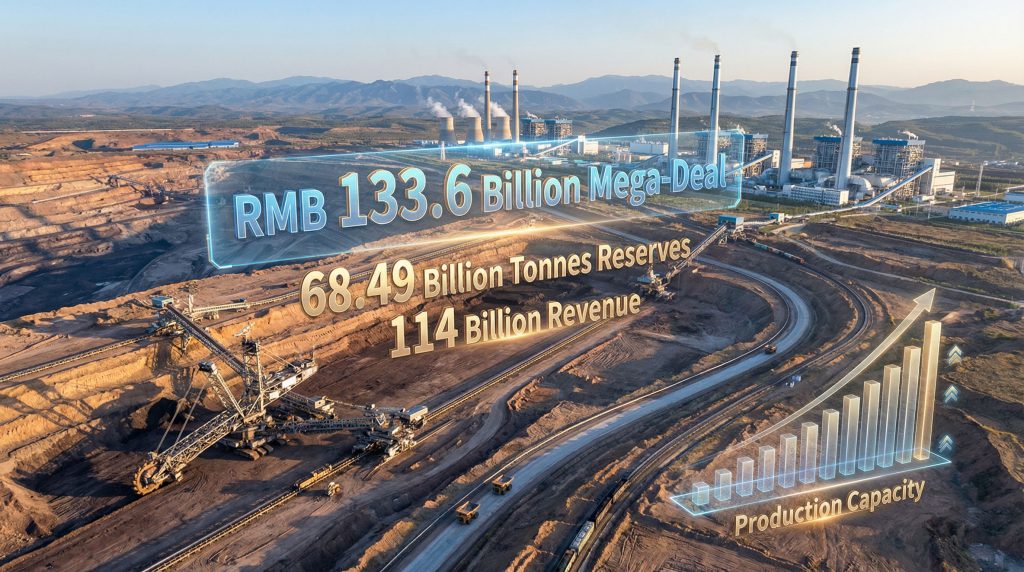
China Shenhua Energy's acquisition of assets worth 133 billion yuan represents one of the most significant energy sector consolidations in recent global history. The transaction encompasses equity interests in 12 separate enterprises previously controlled by China Energy Investment Group, spanning four critical operational domains: coal production facilities, power generation infrastructure, coal chemical processing capabilities, and integrated logistics networks.
The deal's scale becomes apparent when considering its impact on Shenhua's asset base. Post-acquisition, the company's total assets will exceed 200 billion yuan, fundamentally altering its operational scope and market positioning. This expansion includes strategic geographic diversification into Xinjiang and Inner Mongolia autonomous regions, areas that hold particular significance for China's domestic energy security challenges.
Key Transaction Components:
• Coal Mining Operations: Including high-capacity facilities such as the Jundong open-pit mine with 35 million tonnes per annum production capability
• Power Generation Assets: Pit-head coal-fired facilities that enable vertical integration and reduce transportation costs
• Chemical Processing Units: Value-added coal conversion facilities for industrial chemical production
• Transportation Infrastructure: Rail networks, port facilities, and shipping assets for supply chain optimisation
Geographic and Operational Expansion Analysis
The acquisition's geographic focus on Xinjiang and Inner Mongolia reflects strategic considerations beyond simple capacity expansion. These regions contain some of China's highest-grade coal reserves and offer proximity advantages to major industrial consumption centres. Inner Mongolia's mining operations benefit from established transportation corridors to eastern manufacturing regions.
Xinjiang assets provide access to western development initiatives and potential export opportunities. According to analysis from Guosheng Securities, the consolidation aims to eliminate two decades of same-industry competition between Shenhua and its controlling shareholder by concentrating coal-focused assets within the listed company structure.
This reorganisation addresses operational redundancies that have historically reduced overall sector efficiency and profitability. Furthermore, the coal supply challenges facing the industry make such consolidation particularly timely for optimising resource allocation.
Financial Structure and Capital Allocation Strategy
Funding Mechanisms and Market Implications
The acquisition's financial architecture reveals sophisticated capital structure planning designed to balance immediate liquidity requirements with long-term shareholder considerations. Based on the transaction's 133 billion yuan value, the funding approach incorporates both cash payments and equity instruments to minimise dilution whilst ensuring adequate capital availability.
Gary Ng Cheuk-yan, Senior Economist at Natixis Corporate and Investment Bank, characterises this consolidation as reflecting broader state enterprise reform objectives. According to his analysis, the transaction addresses excessive competition and efficiency challenges among state-owned enterprises during a period of compressed profit margins and deflationary economic pressures.
Financial Impact Metrics:
• Combined Revenue Base: Target companies generate approximately 114 billion yuan in annual revenues
• Net Profit Contribution: Acquired operations contribute 9.43 billion yuan in annual net profits
• Asset Quality Premium: Transaction multiple reflects strategic value of mining locations and operational capabilities
Integration Challenges and Synergy Opportunities
Successful consolidation requires coordinating operations across geographically dispersed assets with varying geological, technical, and regulatory characteristics. The integration process must address differences in mining methods, environmental compliance requirements, and local stakeholder relationships across multiple provinces and autonomous regions.
Potential synergy sources include eliminated duplicate administrative functions, consolidated procurement processes, and optimised transportation routing between production facilities and end markets. Technology deployment across the expanded asset base could standardise operational practices and improve safety metrics throughout the integrated network.
Strategic Positioning Within China's Energy Transition Framework
How Does Coal Fit Into China's Decarbonisation Strategy?
The apparent contradiction between large-scale coal asset acquisition and China's carbon neutrality commitments requires nuanced interpretation. Rather than representing expansion of coal dependency, this consolidation can be understood as efficiency optimisation during the energy transition period. By eliminating internal competition and improving operational standards, the merged entity could theoretically reduce per-unit emissions whilst maintaining necessary baseload power generation capabilities.
State enterprise reform objectives extend beyond immediate profitability to encompass broader economic planning goals. The concentration of coal assets within a single platform facilitates coordinated decision-making regarding future investments, technology deployment, and eventual transition planning as renewable energy capacity scales. Moreover, the decarbonisation benefits become more achievable through consolidated operations.
Transitional Energy Strategy Elements:
• Operational Efficiency: Consolidation reduces redundant facilities and optimises resource allocation
• Technology Integration: Unified platform enables consistent deployment of cleaner operational technologies
• Strategic Flexibility: Concentrated ownership structure allows rapid strategic pivoting as energy mix evolves
• Resource Security: Maintains domestic energy security whilst renewable capacity development continues
State Enterprise Reform Implementation
This transaction exemplifies broader state enterprise reform principles that prioritise elimination of internal competition and concentration of strategic assets within specialised platforms. The approach reflects lessons learned from previous consolidation efforts in steel, telecommunications, and other strategic industries where fragmented state ownership created inefficiencies.
By concentrating coal-focused assets within the listed company structure, policymakers create clearer accountability mechanisms and more direct oversight capabilities. This organisational approach also facilitates future strategic transitions by consolidating decision-making authority within a single entity rather than coordinating across multiple competing state enterprises.
Market Position Transformation and Competitive Dynamics
Production Capacity and Reserve Base Enhancement
The Shenhua coal asset acquisition fundamentally alters the company's competitive position through both scale advantages and quality improvements. Access to high-grade mining assets in strategic locations provides cost advantages and operational flexibility that enhance market positioning relative to both domestic and international competitors.
Reserve base expansion enables longer-term production planning and reduces exploration risks associated with developing new mining sites. The geographic diversification across multiple provinces creates operational resilience against regional disruptions whilst optimising transportation costs to different market segments.
| Operational Metric | Pre-Acquisition | Post-Acquisition Impact |
|---|---|---|
| Geographic Coverage | Limited regional presence | Expanded to Xinjiang, Inner Mongolia |
| Production Capacity | Existing facilities | Enhanced through 35 Mtpa+ additions |
| Vertical Integration | Partial | Complete coal-to-power-to-chemicals |
| Transportation Control | Limited | Comprehensive rail, port, shipping |
Technology and Operational Excellence
Consolidation creates opportunities for standardising operational practices across all facilities, potentially improving safety metrics, environmental compliance, and production efficiency. The unified management structure enables consistent technology deployment and training programmes that were previously complicated by separate organisational structures.
Advanced mining technologies, including automated equipment and real-time monitoring systems, can be deployed more efficiently across the expanded network. This technological integration supports both immediate operational improvements and longer-term adaptation to changing regulatory and market requirements. In addition, this aligns with broader mining industry evolution trends.
Regulatory Framework and Approval Processes
Required Clearances and Timeline Considerations
The transaction requires approval from multiple regulatory authorities, reflecting both its scale and strategic significance. Securities regulators must approve the A-share private placement component, whilst competition authorities evaluate potential market concentration impacts. Environmental compliance reviews ensure all acquired assets meet current and projected regulatory standards.
Hong Kong Stock Exchange filings provide transparency for international investors, whilst Shanghai Stock Exchange requirements govern domestic market participation. The dual-listing structure creates additional compliance obligations but also enhances capital market access and liquidity.
Regulatory Review Components:
• Securities Compliance: Hong Kong and Shanghai exchange requirements for major transactions
• Competition Review: Market concentration analysis and competitive impact assessment
• Environmental Assessment: Compliance verification for all acquired mining and power assets
• Strategic Asset Review: Government evaluation of national security and strategic implications
Shareholder Approval Mechanisms
The transaction structure requires comprehensive shareholder approval processes that balance majority control with minority shareholder protection. Board resolution procedures must demonstrate independent director participation and fair valuation processes. Voting mechanisms ensure adequate representation for all shareholder categories whilst maintaining state control objectives.
However, the complexity of these approval processes reflects the significance of this consolidation within China's broader industrial strategy. The industry consolidation trends evident across multiple sectors suggest this transaction forms part of a systematic restructuring approach.
The next major ASX story will hit our subscribers first
Investment Analysis and Risk Assessment Framework
Valuation Considerations and Financial Metrics
The transaction's 133 billion yuan valuation for assets generating 114 billion yuan in annual revenue reflects strategic premium pricing rather than traditional acquisition multiples. This 1.17x revenue multiple indicates asset quality considerations and strategic value attribution beyond pure financial metrics.
Key Investment Evaluation Factors:
• Strategic Asset Premium: Geographic positioning and resource quality advantages
• Integration Synergies: Cost reduction potential through operational consolidation
• Market Position Enhancement: Competitive advantages through scale and scope expansion
• Risk Mitigation: Geographic diversification and operational resilience improvements
What Are the Primary Risk Factors?
Investment risks include coal demand volatility during energy transition, regulatory changes affecting operational permissions, and integration execution challenges across geographically dispersed assets. Currency exposure and commodity price fluctuations create additional financial risks that require active management.
Mitigation strategies focus on operational flexibility, diversified geographic exposure, and maintained relationships with key regulatory authorities. The state ownership structure provides some protection against adverse regulatory changes whilst enabling coordination with broader economic policy objectives. For instance, detailed analysis from Mysteel highlights the transaction's role in strengthening energy supply chains.
"Critical Risk Considerations: Coal sector investments face inherent uncertainty regarding long-term demand patterns, regulatory evolution, and competitive positioning during energy transition periods. Investors should evaluate these factors within broader portfolio context and risk tolerance parameters."
Global Energy Market Implications and Competitive Response
International Trade and Supply Chain Effects
China's enhanced domestic coal production capacity through this consolidation could influence international coal trade patterns and pricing dynamics. Increased operational efficiency and expanded production capabilities may reduce import requirements whilst potentially creating export opportunities in regional markets.
The consolidation's impact on global coal markets depends on broader demand trends, international trade policies, and regional energy security considerations. Enhanced Chinese production efficiency could pressure international coal prices whilst creating competitive challenges for exporters traditionally serving Chinese markets.
Technology Transfer and Operational Best Practices
The unified operational platform created through consolidation facilitates technology development and deployment that could influence global coal industry practices. Standardised safety protocols, environmental compliance systems, and operational efficiency measures developed within the consolidated entity may establish new industry benchmarks.
International coal companies monitoring Chinese consolidation strategies may adapt their own operational approaches to maintain competitive positioning. The scale advantages achieved through state-directed consolidation create pressure for efficiency improvements throughout the global coal supply chain.
Future Scenario Analysis and Strategic Implications
Energy Transition Adaptation Pathways
The consolidated entity's strategic positioning enables multiple adaptation pathways as China's energy mix continues evolving. Concentrated asset ownership facilitates coordinated investment decisions regarding technology upgrades, capacity modifications, and eventual transition planning to alternative energy applications.
Operational efficiency improvements achieved through consolidation provide financial resources for future strategic investments. Whether directed toward cleaner coal technologies, renewable energy development, or alternative industrial applications, the unified platform creates flexibility for strategic pivoting as market conditions change.
Furthermore, this Shenhua coal asset acquisition demonstrates how traditional energy companies can position themselves during transition periods whilst maintaining operational efficiency and market leadership positions.
Long-Term Competitive Positioning
Success measurement for this consolidation extends beyond immediate financial metrics to encompass strategic positioning advantages during China's energy transition period. The ability to maintain operational efficiency whilst adapting to changing regulatory and market requirements represents the primary strategic objective.
Strategic Success Indicators:
• Operational Integration: Seamless coordination across geographically dispersed assets
• Efficiency Gains: Measurable cost reductions and productivity improvements through consolidation
• Strategic Flexibility: Demonstrated ability to adapt operations to changing policy and market requirements
• Market Leadership: Enhanced competitive positioning relative to domestic and international competitors
Reshaping China's Energy Sector Architecture
Consolidation as Reform Implementation
The Shenhua coal asset acquisition exemplifies state enterprise reform principles that prioritise operational efficiency over fragmented competition. By eliminating two decades of internal competition between related state entities, policymakers demonstrate commitment to rationalised industry structure that supports broader economic objectives.
This consolidation approach creates precedents for other strategic sectors where state enterprise coordination could enhance overall efficiency. The successful integration of coal assets within a unified platform may inform similar reorganisation efforts in steel production, telecommunications, and other industries with multiple state-controlled competitors.
Strategic Transformation Outcomes
The transaction's ultimate success depends on achieving operational synergies whilst maintaining strategic flexibility during China's ongoing energy transition. Enhanced efficiency through consolidated management must balance immediate cost optimisation with longer-term adaptation requirements as renewable energy capacity continues scaling.
Monitoring integration progress provides insights into broader state enterprise reform effectiveness and strategic industry management capabilities. The consolidated entity's performance metrics will influence future consolidation strategies across multiple economic sectors where similar internal competition elimination opportunities exist.
Consequently, this landmark transaction serves as both immediate operational enhancement and strategic positioning for future energy sector evolution within China's broader economic development framework.
Disclaimer: This analysis is based on publicly available information and expert commentary current as of December 2025. Coal sector investments involve significant risks including commodity price volatility, regulatory changes, and long-term demand uncertainty during global energy transition periods. Investment decisions should incorporate comprehensive due diligence and professional financial advice appropriate to individual circumstances and risk tolerance levels.
Want to Stay Ahead of Major Resource Sector Moves?
Discovery Alert's proprietary Discovery IQ model delivers instant notifications on significant ASX mineral discoveries, empowering investors to identify actionable opportunities before the broader market catches on. Start your 30-day free trial today and gain the market-leading edge needed to capitalise on transformative resource discoveries as they're announced.