Metallium Ltd
- ASX Code: MTM
- Market Cap: $668,379,296
Metallium Secures Game-Changing Supply Agreement with Global Mining Giant Glencore
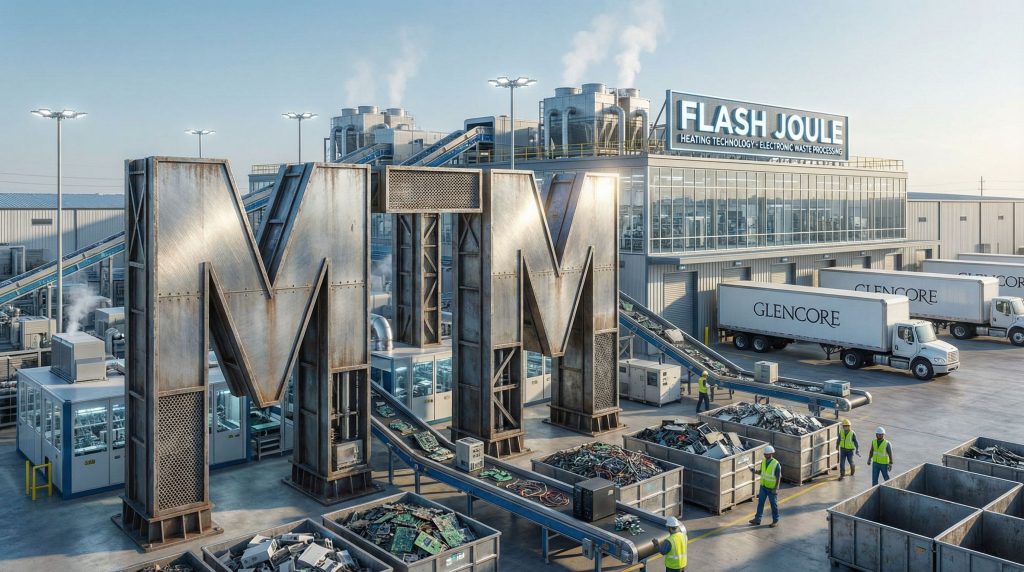
The Metallium Ltd supply agreement with Glencore represents a transformative milestone for Australian technology company Metallium Limited (ASX: MTM). This multi-year contract guarantees access to 2,400 tonnes per annum of electronic scrap, providing the feedstock certainty needed to commission and scale the company's revolutionary Flash Joule Heating (FJH) technology in Texas.
This landmark agreement represents far more than a simple supply contract—it validates Metallium's technology with one of the world's largest recycling operations. Furthermore, it establishes the foundation for predictable, scalable metal recovery operations in the United States.
When big ASX news breaks, our subscribers know first
Breaking Down the Commercial Milestone
The Metallium Ltd supply agreement with Glencore delivers several critical advantages for Metallium's U.S. expansion:
• Feedstock Security: Guaranteed access to 2,400 tonnes annually of high-grade electronic scrap from Glencore's global recycling network
• Operational Predictability: Enables stable mass-balance planning during commissioning and predictable reactor utilisation
• Scale-Up Foundation: Provides the throughput certainty required for multi-line deployment across the Texas Technology Campus
• Market Validation: Glencore's commitment validates both the FJH technology and Metallium's commercial strategy
The contract structure includes standard commercial terms, with pricing referenced to established markets. These include the London Bullion Market Association, London Metals Exchange, and Fastmarkets MB. Importantly, the agreement allows for volume expansion by mutual agreement, indicating potential for significant growth beyond the initial 2,400 tonne baseline.
Management Perspective
"This is a defining moment for Metallium. Our first binding supply agreement gives us exactly what every processing technology company needs most: consistent, secure, high-quality feedstock." – Michael Walshe, Managing Director & CEO
Understanding Flash Joule Heating Technology
Flash Joule Heating represents a breakthrough in metal recovery technology. Moreover, it offers distinct advantages over conventional smelting approaches:
What is FJH? Flash Joule Heating uses rapid electrical heating to instantaneously liberate metals from complex waste matrices. Unlike traditional pyrometallurgical processing, FJH operates through precise electrical discharge rather than sustained high-temperature furnace operations.
Why it Matters for Investors: This technology addresses a critical gap in U.S. metal recycling capacity. Traditional smelters are capital-intensive, slow to build, and optimised for copper concentrates. In contrast, they struggle with the heterogeneous, polymer-rich electronic waste streams that contain the highest concentrations of valuable metals.
The modular nature of FJH enables rapid deployment and scalable capacity expansion. Consequently, this is exactly what's needed to capture the growing electronic waste opportunity domestically rather than shipping materials overseas for processing.
The Strategic Context: E-Waste as a High-Value Resource
Electronic waste represents one of the most valuable waste streams in the global recycling industry. In fact, printed circuit boards contain elevated concentrations of gold, silver, palladium, and copper compared to most primary mining operations.
| Key Market Dynamics | Impact on Opportunity |
|---|---|
| Accelerating server replacement cycles | Sustained increase in PCB scrap generation |
| EV power system upgrades | Growing supply of high-value electronic components |
| Defence electronics modernisation | Premium-grade waste streams entering market |
| Historical offshore processing | Limited domestic capacity creates onshoring opportunity |
The U.S. has historically exported PCB scrap to offshore smelters due to limited domestic processing capacity. This creates supply chain vulnerabilities and reduces transparency for companies seeking secure, domestic sources of critical metals. The Metallium Ltd supply agreement with Glencore precisely addresses this gap through the company's FJH technology.
Glencore's recycling division processes approximately 100,000 tonnes annually of recycling materials. Furthermore, it has handled over one million tonnes since the 1990s. This partnership provides Metallium with access to a proven, scalable supply chain managed by one of the industry's most experienced operators.
What Makes This Partnership Significant?
The agreement marks a pivotal transition from technology development to commercial operations for Metallium. However, it represents much more than a typical supplier relationship.
Industry Validation: Glencore's commitment validates the commercial viability of FJH technology. For a company processing such vast quantities of materials annually, technical due diligence standards are exceptionally high.
Strategic Timing: The partnership aligns perfectly with U.S. industrial policy that increasingly emphasises supply chain resilience. Additionally, it supports domestic critical metal production initiatives.
Scalability Potential: The modular nature of FJH technology enables rapid capacity expansion without the capital intensity of traditional smelting operations. Combined with secured feedstock, this creates a pathway to meaningful revenue growth.
Commissioning Progress and Scale-Up Timeline
With the supply agreement now executed, Metallium can advance several critical operational milestones. For instance, the company can now focus on delivery scheduling and multi-line deployment planning.
Immediate Priorities:
- Delivery Scheduling: Coordinating logistics to support commissioning and initial commercial-scale processing campaigns
- Offtake Agreement Finalisation: Completing the complementary binding agreement covering metal products recovered via FJH
- Multi-Line Deployment: Leveraging feedstock certainty to plan additional processing lines across the Technology Campus
The agreement's 1 January 2026 commencement with annual extensions provides long-term operational visibility. This structure enables Metallium to plan capacity expansions with confidence whilst maintaining flexibility for volume growth.
Contract Structure Summary:
| Term | Details |
|---|---|
| Duration | 1 January 2026 – 31 December 2026 (with evergreen extensions) |
| Volume | 2,400 metric tons ±5% (expandable by mutual agreement) |
| Pricing | Referenced to established metal markets (LBMA, LME, Fastmarkets MB) |
| Quality Control | Weighing and sampling at Glencore's facilities |
Investment Implications and Market Opportunity
The Metallium Ltd supply agreement with Glencore validates several key investment themes that make this partnership particularly compelling.
Technology Validation: Glencore's commitment follows extensive technical and commercial collaboration. This indicates high confidence in FJH's commercial viability and operational effectiveness.
Market Positioning: U.S. industrial policy increasingly emphasises supply chain resilience and domestic critical metal production. Metallium's FJH platform aligns perfectly with these strategic objectives whilst addressing real capacity constraints in the domestic recycling industry.
Revenue Potential: The modular design of FJH technology creates opportunities for rapid scaling. Furthermore, the secured feedstock arrangement provides the foundation for predictable revenue streams.
Strategic Expansion: As Metallium's inaugural binding supply agreement, this contract establishes the foundation for additional partnerships. The company has indicated several more similar agreements under negotiation.
Why This Technology Matters for Electronic Waste Processing
Electronic waste streams present unique challenges that conventional processing methods struggle to address effectively. However, FJH technology offers compelling advantages for these specific applications.
Traditional Limitations: Conventional smelters are optimised for homogeneous copper concentrates. In contrast, electronic waste contains complex polymer matrices and varied metal compositions that reduce processing efficiency.
FJH Advantages: The rapid heating approach of Flash Joule technology can process heterogeneous waste streams effectively. Additionally, the modular design allows for flexible deployment and scalable capacity increases.
Domestic Processing Benefits: By processing electronic waste domestically, companies can reduce supply chain risks. Furthermore, they can improve transparency and support strategic objectives around critical metal security.
Looking Forward: Commercial Execution Phase
This agreement marks Metallium's successful transition from development to commercial execution. Consequently, several factors support continued investor attention and market interest.
Near-Term Catalysts:
• Revenue Generation: Commissioning activities at the Texas Technology Campus position the company for production and revenue generation
• Partnership Expansion: The Glencore relationship provides validation for additional strategic partnerships and customer relationships
• Technology Advantage: FJH offers compelling advantages over conventional processing for electronic waste streams
• Market Tailwinds: Growing electronic waste generation combined with U.S. onshoring initiatives creates a favourable operating environment
The completion of the complementary offtake agreement will provide full supply chain integration. This approach spans from feedstock through final metal product sales, maximising value capture whilst ensuring operational predictability.
The next major ASX story will hit our subscribers first
Key Tracking Points for Investors
Metallium has successfully transitioned from technology development to commercial operations with a validated technology platform. Moreover, it has secured feedstock from a Tier-1 global recycling partner. The company is positioning FJH as the preferred domestic processing solution for high-value electronic waste streams.
Investment Monitoring Factors:
- Commercial Validation: First binding supply agreement with major industry player demonstrates market acceptance
- Scalable Technology: Modular FJH platform enables rapid capacity expansion without excessive capital requirements
- Strategic Market Position: Addressing domestic processing gap for high-value waste streams aligns with policy objectives
- Growth Pipeline: Additional supply agreements under negotiation indicate expansion potential
- Revenue Timeline: Commissioning activities support near-term production and revenue generation
Key Takeaway:
The Metallium Ltd supply agreement with Glencore establishes the foundation for commercial-scale metal recovery operations in the United States. With secured feedstock from a proven global recycling leader, the company's FJH technology platform addresses real market needs whilst aligning with U.S. strategic supply chain objectives. This positioning creates a compelling opportunity in the critical materials space.
Ready to Capitalise on Metallium's Commercial Breakthrough?
With the landmark Glencore supply agreement now secured and commercial operations advancing rapidly at the Texas Technology Campus, Metallium Limited (ASX: MTM) is transitioning from technology developer to revenue-generating producer. This game-changing partnership validates the company's Flash Joule Heating technology whilst providing the feedstock certainty needed for scalable metal recovery operations. To access detailed company analysis, project updates, and exclusive investor insights as Metallium executes its commercial strategy, join the investor hub today and stay ahead of this emerging critical metals opportunity.