June 12, 2026
Why the Mining Industry's Ore Problem Is Getting Harder to Ignore
The mathematics of modern mining have shifted dramatically over the past two decades. As surface-level, high-grade deposits become exhausted, the industry is being forced deeper underground and into geologically complex terrain where ore bodies are harder to define, more expensive to process, and far less forgiving of analytical errors. This structural transition is not a temporary disruption; it represents a permanent reconfiguration of how metals and minerals are extracted from the earth, and it demands a fundamentally different approach to process intelligence.
Against this backdrop, the question of how mining companies characterise their feed materials before committing to a processing route has moved from a technical afterthought to a commercially critical decision. The mineral exploration importance of correctly identifying which minerals are present, how they associate with each other, and how they behave under different processing conditions, now sits at the centre of responsible capital allocation across the mining project lifecycle.
Metso's recent investment in enhanced Metso mineralogy capabilities in Pori reflects precisely this shift. By expanding the analytical infrastructure at its Finnish research centre, the company is positioning itself to deliver a form of intelligence that is increasingly scarce and commercially valuable: fast, quantitative, and process-relevant mineralogical data derived from one of the most technically advanced automated analysis platforms available in the industry today.
When big ASX news breaks, our subscribers know first
The Deteriorating Ore Quality Crisis Reshaping Global Mining Economics
The gradual erosion of ore quality across major commodity sectors has been well documented, yet its full implications for process design and capital efficiency continue to be underestimated by many mining operators. Copper, one of the most strategically important metals of the energy transition, offers a particularly instructive case study. Average copper head grades have declined significantly over the past fifteen years, a trend that directly translates into higher energy consumption, greater reagent use, and increased tailings generation per unit of recovered metal.
McKinsey has warned that many existing mining assets are experiencing declining performance at mature sites, while greenfield projects are becoming increasingly complex and technically demanding to bring into production. This dual pressure, deteriorating quality at established operations and higher development risk at new projects, creates a compounding challenge for an industry that must simultaneously maintain production from aging assets while developing the next generation of supply.
What makes this situation particularly acute from a process engineering perspective is that lower-grade ore bodies are rarely just lower in grade; they are typically also more mineralogically complex. Furthermore, elements of economic interest are often more finely disseminated within the host rock, locked within gangue minerals in ways that require precise liberation before any conventional processing method can effectively recover them. Understanding mineralogy in mining economics early in the project lifecycle is therefore essential to avoiding costly process route mismatches.
"The commercial consequences of poor mineralogical intelligence compound across every stage of project development, from feasibility through to operations, making early-stage characterisation one of the highest-return investments available to a mining company."
What Automated Mineralogy Actually Does and Why It Matters
To appreciate why investments like those being made at Pori are strategically significant, it helps to understand what automated mineralogy is and how it differs from conventional analytical methods.
Traditional approaches to sample characterisation relied heavily on optical microscopy and wet chemical assay techniques. While these methods are well established, they are inherently limited in throughput, resolution, and the quantitative depth of information they can generate. A geologist examining a polished section under an optical microscope can identify major minerals and make qualitative observations about grain size and association, but the process is slow, operator-dependent, and difficult to scale.
Automated mineralogy transforms this process by combining scanning electron microscopy (SEM) with energy-dispersive X-ray spectroscopy (EDS) in a system that can analyse hundreds or thousands of particles per session. It generates fully quantitative datasets on mineral abundance, grain size distribution, liberation characteristics, and mineral association patterns. The shift from qualitative to quantitative is not merely a technical refinement; it changes the nature of the information available to process engineers and project teams entirely.
| Analytical Capability | Traditional Method | Automated Mineralogy (FE-SEM + Multidetector) |
|---|---|---|
| Sample throughput | Low | High |
| Elemental resolution | Limited | High-resolution |
| Turnaround time | Slow | Significantly faster |
| Data quantification | Qualitative | Fully quantitative |
| Operator dependency | High | Low |
| Process integration | Manual | Automated and scalable |
| Coverage of products | Feed only, typically | Feed, concentrates, tailings, intermediates |
This quantitative foundation is what makes automated mineralogy so consequential for flowsheet development. When a process engineer knows not just that a mineral is present but precisely how it is associated with neighbouring phases, at what grain size it occurs, and how well liberated it is after comminution, they have a fundamentally stronger basis for selecting and optimising a processing circuit.
Inside the Metso Pori Research Centre: Decades of Applied Expertise
The Metso Research Centre in Pori, Finland, functions as one of the company's principal hubs for research and product development. Unlike purely theoretical research institutions, the Pori facility bridges the gap between early-stage project design and full-scale operational deployment, making it a resource of direct practical value to mining companies across multiple stages of project maturity.
The centre's research disciplines span four interconnected technical domains:
- Mineral processing research and test services for physical separation methods including flotation, gravity concentration, and comminution
- Hydrometallurgical process development covering leaching, solvent extraction, and electrowinning applications
- Battery material process solutions addressing the growing technical demands of the energy transition minerals sector
- Smelting and pyrometallurgical technology for high-temperature processing of concentrates and complex feed materials
This multi-disciplinary structure is significant because it means that mineralogical intelligence generated at Pori does not exist in isolation. It is interpreted and applied within the context of actual process expertise across all major metallurgical routes, which increases the practical value of the analytical outputs for customers making real project decisions.
Matthew Hicks, Director of Minerals Processing at Metso, has noted that the Pori centre's mineralogy expertise spans decades, and that the latest investment strengthens an already well-established capability rather than building one from scratch. By expanding analytical capacity and shortening turnaround times, the centre is positioned to deliver actionable mineralogical data across a greater volume of customer cases, with each piece of data directly targeting reduction in project risk and improvement in resource efficiency.
The TESCAN TIMA System: Technical Architecture and Operational Advantage
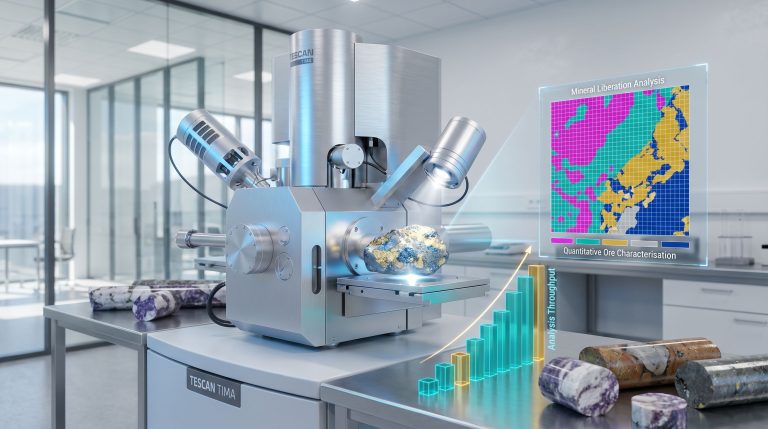
The centrepiece of Metso's latest investment is the installation of a TESCAN TIMA automated mineralogy analyser at the Pori facility. This instrument represents a significant step forward in what quantitative mineralogical characterisation can deliver within an industrial research environment.
The TESCAN TIMA architecture integrates two core analytical technologies into a single, fully automated platform:
- High-resolution field emission scanning electron microscopy (FE-SEM) provides the imaging foundation, capturing detailed morphological and textural information about individual particles and mineral grains at resolutions that reveal structural features invisible to optical methods.
- Multidetector elemental analysis uses multiple energy-dispersive X-ray detectors simultaneously to dramatically accelerate the elemental identification process, enabling faster phase assignment across large particle populations.
The combination of these two capabilities in an automated workflow means that samples can be characterised at a scale and speed that was previously impractical in most research settings. The system is capable of analysing feed materials, concentrates, tailings, and intermediate process products within the same analytical framework, providing a consistent and comparable dataset across the entire processing chain.
"The significance of multidetector design should not be underestimated. By collecting X-ray signals from multiple detectors simultaneously rather than a single detector sequentially, analysis times can be reduced by a factor that makes high-volume mineralogy programs economically and operationally viable for the first time."
From a risk management perspective, faster turnaround times translate directly into earlier availability of critical design information. When mineralogical data that previously took weeks to generate can be delivered in days, project teams can make metallurgical route decisions earlier, test assumptions before committing significant capital, and respond more rapidly to unexpected variations in feed material characteristics.
From Feed Material to Flowsheet: How Mineralogy Drives Route Selection
The relationship between feed mineralogy and metallurgical process performance is not a peripheral technical consideration; it is the governing relationship that determines whether a processing circuit achieves its recovery and grade targets. Tero Kravtsov, Senior Mineralogist at Metso, has articulated this clearly, noting that in minerals processing and metals refining, the mineralogy of the feed material fundamentally governs what the overall process can achieve.
This principle applies with equal force across all three major metallurgical route categories:
In mineral processing, the liberation characteristics of a mineral, meaning the degree to which it has been separated from surrounding gangue by comminution, directly determine what recovery is achievable through flotation or physical separation. If a sulphide mineral is insufficiently liberated, flotation will fail to recover it regardless of reagent optimisation.
In hydrometallurgy, the specific mineralogical form in which a metal of interest occurs, whether in an oxide, sulphide, or silicate host, determines which leaching chemistry will be effective. The copper leaching process benefits vary considerably depending on whether the dominant ore minerals are oxides or sulphides, making accurate characterisation essential before committing to a processing route.
In pyrometallurgy, the presence of penalty elements locked within specific mineral phases can disrupt smelting chemistry, contaminate products, and impose significant downstream processing costs. Identifying these elements and their mineralogical hosts before designing a smelting flowsheet is far preferable to discovering them during commissioning.
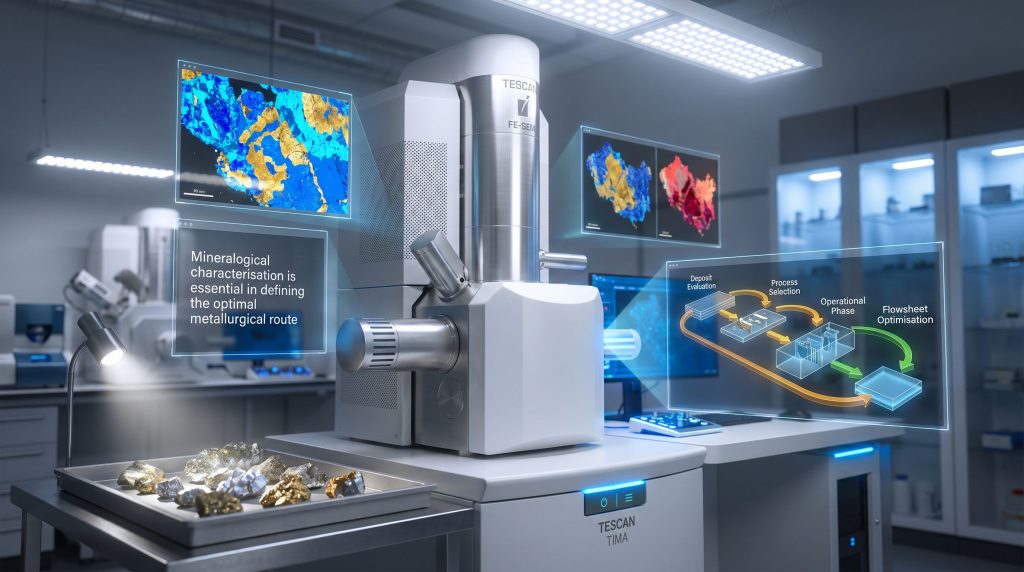
Rodrigo Grau, Vice President of Minerals Processing Solutions at Metso, has emphasised that mineralogical characterisation is essential to defining the optimal metallurgical route, and that strengthening mineralogy capabilities directly enhances the ability to support early customer engagement and promote integrated flowsheet development built around core processing technologies.
The next major ASX story will hit our subscribers first
Breaking the Data Bottleneck: From Sensor Signals to Process Intelligence
One of the more underappreciated tensions in modern mining operations is the gap between data generation and data application. Deloitte has highlighted that mining companies now accumulate vast volumes of operational data from across their operations, covering haulage systems, drilling equipment, processing plants, and power infrastructure, with sensors generating time-series data streams at exponential rates. Yet productivity improvements are only achievable when that data is systematically managed and applied toward clearly defined operational objectives.
Mineralogical data occupies a particularly important position within this broader information architecture because it provides the interpretive context that makes sensor data actionable. A flotation circuit generating real-time performance metrics, such as froth characteristics, concentrate grade trends, and reagent consumption rates, produces far more useful intelligence when those metrics can be interpreted against a baseline understanding of feed mineralogy.
Metso's expanded capacity at Pori, enabled by the TESCAN TIMA system's significantly increased analysis speed and higher sample throughput, means that specialists can generate quantitative data on ore characteristics, mineral associations, and metallurgical behaviour across a greater number of samples and projects simultaneously. This capacity expansion has direct implications for how many customer engagements can be supported with high-quality mineralogical intelligence at any given time.
Strategic Benefits for Mining Customers Across the Project Lifecycle
The practical implications of Pori's expanded Metso mineralogy capabilities in Pori extend across multiple phases of mining project development, with distinct value propositions at each stage.
| Lifecycle Stage | Mineralogical Input | Business Outcome |
|---|---|---|
| Deposit Evaluation | Ore characterisation and mineral association mapping | Informed project feasibility |
| Process Selection | Feed material testing and metallurgical behaviour profiling | Optimal route selection |
| Operational Phase | Concentrate and tailings analysis | Improved recovery and efficiency |
| Flowsheet Optimisation | Quantitative data integration with simulation tools | Reduced operational risk |
At the deposit evaluation stage, mineralogical intelligence informs feasibility assessments by establishing whether a deposit's mineralogical characteristics are consistent with economic processing. This goes beyond simple grade determination to address questions of mineral speciation, deleterious element content, and the spatial variability of mineralogical properties across the ore body.
During process selection, quantitative mineralogical data from automated systems like the TESCAN TIMA enables process engineers to design pilot programmes around the actual characteristics of the ore rather than simplified assumptions. Consequently, this reduces the risk of flowsheet designs that perform well on test samples but fail when exposed to the full range of ore types present in a real mining operation.
In the operational phase, continued mineralogical monitoring of concentrates and tailings provides feedback on where value is being lost and why. This creates an evidence base for targeted circuit optimisation that goes beyond empirical trial and error, and it aligns closely with cut-off grade economics where marginal ore processing decisions are increasingly consequential.
At the flowsheet refinement stage, quantitative mineralogical outputs feed directly into process simulation tools, enabling engineers to model the impact of mineralogical variability on circuit performance before implementing changes in physical plant, reducing both cost and production risk.
Why Co-Located Research, Testing, and Mineralogy Expertise Matters
The competitive advantage of the Metso Pori facility is not reducible to any single piece of equipment, including the TESCAN TIMA system. It derives from the co-location of mineralogical analytical capability with deep, multi-disciplinary process expertise across mineral processing, hydrometallurgy, pyrometallurgy, and battery materials.
This integration matters because mineralogical data does not interpret itself. The value of knowing that a copper ore contains chalcopyrite as its primary copper mineral, associated with pyrite and hosted within a quartz-feldspar matrix, depends entirely on having access to process engineers who understand what that association means for flotation selectivity, for leach kinetics, and for concentrate smelting behaviour.
When mineralogy, process testing, and flowsheet design capabilities are housed within the same research infrastructure, the feedback loops between analytical insight and process application become much shorter and more productive. A mineralogical finding can be immediately tested against process performance data, and process performance observations can immediately trigger targeted mineralogical investigation.
This integrated model represents a meaningful differentiation from service providers that offer mineralogical analysis as a standalone analytical service without the broader process engineering context that transforms data into decision-relevant intelligence.
Frequently Asked Questions: Metso Mineralogy Capabilities in Pori
What is the Metso Research Centre in Pori used for?
The Pori Research Centre serves as one of Metso's principal hubs for research, product development, and customer testing services. Its work spans mineral processing, hydrometallurgy, battery material process solutions, and smelting technologies, making it a multi-disciplinary facility capable of supporting projects across the full range of metals and minerals processing applications.
What does the TESCAN TIMA analyser do in minerals processing?
The TESCAN TIMA integrates high-resolution field emission scanning electron microscopy with multidetector elemental analysis in a single automated platform. It generates quantitative data on mineral abundance, grain size, liberation characteristics, and mineral associations across feed materials, concentrates, tailings, and intermediate process products at significantly higher throughput than traditional analytical methods.
How does mineralogical analysis reduce risk in mining projects?
By identifying what minerals are present, how they associate with each other, and how they behave under processing conditions, mineralogical analysis enables project teams to select appropriate metallurgical routes before committing significant capital. Furthermore, interpreting drill results alongside mineralogical data gives project teams a far more complete picture of deposit characteristics before significant capital is committed.
What types of materials can be analysed at Metso's Pori facility?
The facility can analyse a broad range of materials including ore feed samples, flotation concentrates, hydrometallurgical feed, smelter feed, tailings, and intermediate process products across commodity types spanning base metals, precious metals, battery materials, and industrial minerals.
How does automated mineralogy support battery materials and hydrometallurgy?
For battery materials, automated mineralogy helps characterise the specific mineral forms in which lithium, cobalt, nickel, and other critical metals occur, which directly influences leaching chemistry selection and downstream processing design. For hydrometallurgy more broadly, mineralogical analysis identifies the host phases of target metals and any deleterious elements that may interfere with leaching or solvent extraction circuits.
Why is early-stage mineralogical characterisation important for flowsheet development?
Early characterisation allows process engineers to design pilot testing programmes around the actual mineralogical characteristics of an ore body rather than simplified assumptions. This prevents the costly scenario of discovering fundamental mineralogical constraints only after significant capital has been committed to a processing circuit that cannot meet its targets.
What Metso's Pori Investment Signals for the Future of Minerals Processing
The broader significance of Metso's enhanced Metso mineralogy capabilities in Pori extends well beyond the operational details of a single facility upgrade. It reflects a structural shift in how leading minerals processing companies are positioning themselves for a more complex and technically demanding mining landscape. The global mining review of Metso's expanded Finnish operations highlights how such investments are being recognised as industry benchmarks for analytical capability and process integration.
As ore bodies become lower in grade and higher in mineralogical complexity, the ability to generate fast, accurate, and process-relevant mineralogical intelligence will increasingly separate operators who can consistently achieve their metallurgical targets from those who cannot. The mining companies most exposed to risk in this environment are those that continue to treat mineralogical characterisation as a discretionary investment rather than a foundational input to process design.
For mining companies navigating the combined pressures of declining ore quality, rising capital costs, and growing investor scrutiny of project delivery performance, the message embedded in Metso's Pori investment is worth taking seriously: analytical intelligence is not a cost to be minimised; it is a capability to be developed. The earlier and more comprehensively that mineralogical data is integrated into project decision-making, the lower the risk of the costly surprises that have defined too many mining project histories.
The trajectory of the broader industry points toward a future where mineralogy-first process design becomes standard practice rather than best practice. Facilities capable of delivering that intelligence at speed and scale, such as those detailed in Metso's research brochure, will become increasingly central to how mining projects are developed, financed, and operated.
This article contains forward-looking analysis and industry commentary for informational purposes only. It does not constitute financial or investment advice. Readers should conduct independent research and seek professional guidance before making any investment or project decisions.
Want to Discover the Next Major ASX Mineral Find Before the Market Does?
Discovery Alert's proprietary Discovery IQ model delivers real-time alerts on significant ASX mineral discoveries, instantly transforming complex geological data into actionable investment insights — explore historic discoveries and their exceptional returns to understand the opportunity, then begin your 14-day free trial at Discovery Alert to position yourself ahead of the market.