
July 28, 2026
Understanding Mexico's Mining Concession Recovery Initiative
The global mining industry operates within an intricate web of regulatory frameworks that balance resource sovereignty with investment attraction. Concession systems worldwide face persistent challenges in maintaining productive utilization of allocated mining rights, creating scenarios where valuable mineral resources remain undeveloped despite formal legal permissions. This dynamic has prompted various jurisdictions to explore mechanisms for optimising their mining concession portfolios through different approaches ranging from aggressive nationalisation to collaborative negotiation strategies.
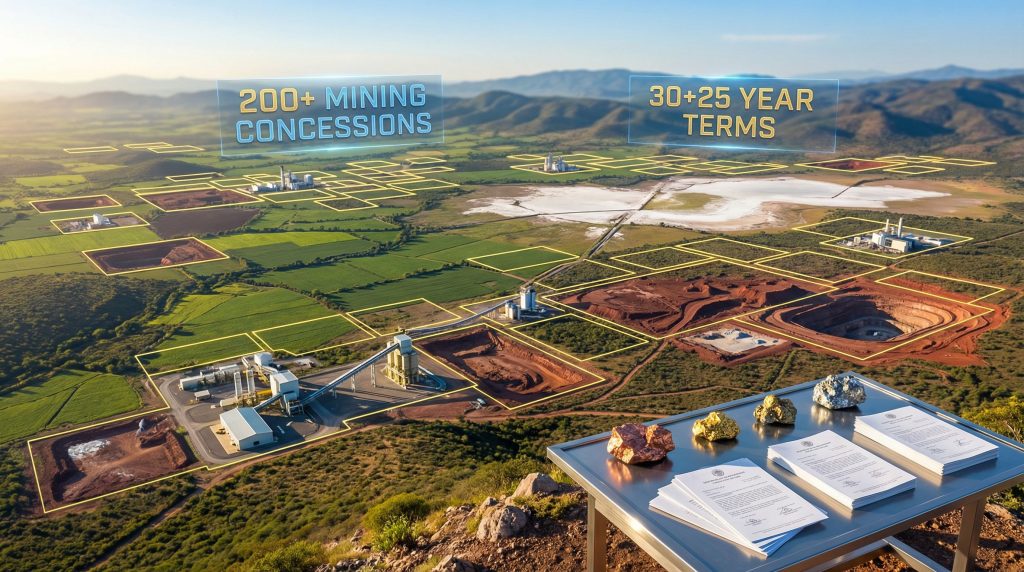
Mexico's recent initiative targeting the voluntary return of mining concessions in Mexico represents a calculated approach to addressing inactive mining titles without triggering the investment uncertainty typically associated with forced revocation policies. The announcement by President Claudia Sheinbaum in February 2026 identified over 200 mining concessions as targets for voluntary return, specifically focusing on projects that fail to generate productive output despite holding valid mining rights.
What Defines an Inactive Mining Concession?
Under Mexico's current mining claims framework, the classification of inactive or dormant concessions centres on productive output metrics rather than exploration activity levels. The government's approach focuses on identifying concessions where holders maintain legal rights but fail to advance projects toward commercial production phases. This distinction becomes critical as many legitimate exploration projects may appear inactive during normal development cycles that can span several years.
The criteria for determining inactive status likely encompasses multiple factors including:
- Absence of regular reporting on development activities
- Lack of environmental impact assessments or production permits
- Missing infrastructure development or capital investment
- Extended periods without exploration drilling or resource definition work
Legal Framework Behind Voluntary Returns
Mexico's mining law provides the structural foundation for concession management, though the specific legal mechanisms governing voluntary returns require careful navigation of existing regulatory frameworks. The voluntary approach suggests the government seeks to operate within established legal parameters rather than implementing emergency legislative changes that could create broader regulatory uncertainty.
Furthermore, the negotiation-based methodology allows concession holders to engage in discussions regarding their development timelines, financial constraints, or strategic priorities without facing immediate legal penalties. This framework potentially provides companies with opportunities to retain concessions where legitimate development plans exist while surrendering those that no longer align with corporate strategies.
Timeline and Implementation Process
While the specific timeline for Mexico's voluntary return initiative remains to be fully detailed, the process likely involves multiple phases including initial identification, formal notification to concession holders, negotiation periods, and final documentation of voluntary surrenders. However, the government's emphasis on voluntary cooperation suggests extended timeframes to allow meaningful dialogue between authorities and mining companies.
The implementation process may include:
- Initial Assessment Phase: Government review of concession activity levels
- Notification Period: Formal communication with identified concession holders
- Negotiation Window: Structured discussions on voluntary return terms
- Documentation Phase: Legal processing of surrendered concessions
- Reallocation Preparation: Framework development for redistributing returned titles
When big ASX news breaks, our subscribers know first
Why Is Mexico Targeting Unused Mining Titles?
Resource optimisation strategies in mining-dependent economies require balancing multiple competing interests including revenue generation, employment creation, environmental stewardship, and strategic resource development. Mexico's focus on unused mining titles reflects broader economic policy objectives that extend beyond simple administrative efficiency to encompass national resource management goals.
Resource Optimisation Strategy
The concentration of over 200 inactive concessions represents significant unrealised potential within Mexico's mining sector. These dormant titles may cover areas with established geological potential that could attract new operators with different development capabilities, financial resources, or market timing strategies. In addition, by reclaiming unused concessions, Mexico positions itself to redistribute these opportunities to entities better positioned for near-term development.
Resource optimisation also addresses the inefficient allocation of geological data and exploration investments. Previous exploration work conducted on these concessions represents valuable information that new operators could leverage more effectively, potentially accelerating development timelines and reducing overall project risks.
Economic Impact of Dormant Concessions
Inactive mining concessions create multiple economic inefficiencies that extend beyond lost government revenues to include foregone employment opportunities, reduced infrastructure development, and delayed community economic benefits. Consequently, the economic impact assessment likely encompasses both direct costs such as uncollected taxes and indirect costs including missed multiplier effects in regional economies.
The financial implications include:
- Revenue Loss: Uncollected production royalties and taxes
- Employment Impact: Missing job creation in mining and support sectors
- Infrastructure Deficits: Delayed development of mining-related transportation and utilities
- Community Effects: Reduced local business opportunities and economic diversification
Land Use Efficiency Goals
Mexico's territorial management requires optimising land use across multiple economic sectors including agriculture, tourism, manufacturing, and resource extraction. Inactive mining concessions may restrict alternative land use opportunities while failing to deliver the economic benefits that justified their original allocation.
Land use efficiency considerations encompass environmental factors where dormant concessions may limit conservation opportunities or sustainable development alternatives. The reallocation process could prioritise operators with stronger environmental management capabilities or more comprehensive community engagement strategies.
How Does Voluntary Return Differ from Forced Revocation?
The distinction between voluntary return and forced revocation mechanisms carries significant implications for investment climate stability, legal certainty, and international investor confidence. Mexico's selection of a negotiation-based approach represents a strategic choice to maintain regulatory predictability while achieving resource optimisation objectives.
Negotiation-Based Approach vs. Legal Enforcement
Voluntary return processes create opportunities for mutually beneficial outcomes where companies can negotiate transition terms, retain portions of larger concession packages, or coordinate timing with broader corporate strategies. This collaborative approach reduces the adversarial dynamics that typically accompany forced revocation procedures and may result in more efficient transitions.
Furthermore, the negotiation framework allows for:
- Selective Retention: Companies maintaining active portions while surrendering inactive areas
- Timeline Flexibility: Extended transition periods for ongoing exploration or development planning
- Data Transfer: Structured handover of geological and technical information
- Financial Considerations: Potential compensation for exploration investments or infrastructure
Preserving Investment Climate Stability
International mining investment decisions heavily weight regulatory risk assessments, with forced revocation policies creating long-term uncertainty that extends far beyond immediately affected projects. Mexico's voluntary approach demonstrates commitment to working within established legal frameworks while addressing resource optimisation goals.
Investment climate considerations include:
- Legal Predictability: Maintaining established property rights principles
- Process Transparency: Clear communication of government intentions and procedures
- Stakeholder Engagement: Including international investors in policy development discussions
- Future Protection: Preserving security for active operations and development projects
Comparison with Historical Mining Reforms
Mexico's mining sector has undergone various regulatory changes over recent decades, with different administrations implementing distinct approaches to foreign investment, concession management, and resource sovereignty. The current voluntary return of mining concessions in Mexico initiative represents a moderate position compared to more aggressive nationalisation policies implemented in other Latin American jurisdictions.
| Policy Period | Approach | Enforcement Method | Industry Impact |
|---|---|---|---|
| 2018-2022 | Constitutional reforms limiting new concessions | Legislative changes | Moderate uncertainty |
| 2024 | Modified concession terms (30+25 year structure) | Regulatory adjustment | Enhanced predictability |
| 2026 | Voluntary return initiative | Negotiated agreements | Investment climate preservation |
What Are the Implications for Mining Companies?
The voluntary return initiative creates both challenges and opportunities for mining companies operating in Mexico, requiring strategic assessments of concession portfolios, development timelines, and resource allocation priorities. However, companies must evaluate their positions across multiple dimensions including financial capabilities, technical requirements, and market timing considerations.
Risk Assessment for Concession Holders
Mining companies must now conduct comprehensive reviews of their Mexican concession portfolios to identify properties that might be considered inactive under government criteria. This assessment requires evaluating exploration activities, development spending, regulatory compliance, and production planning across all holdings.
Key risk factors include:
- Activity Documentation: Maintaining clear records of exploration and development work
- Regulatory Compliance: Ensuring all reporting requirements and permit obligations are current
- Development Timeline: Demonstrating credible plans for advancing projects toward production
- Financial Commitment: Showing ongoing investment in concession development activities
Due Diligence Requirements Going Forward
The initiative establishes new standards for demonstrating active concession management that extend beyond minimum legal requirements to encompass substantive development activities. Furthermore, companies may need to enhance documentation practices, increase community engagement, and provide more detailed government reporting on project progress.
Enhanced due diligence may include:
- Quarterly Activity Reports: Regular updates on exploration and development progress
- Financial Investment Documentation: Evidence of continuing capital commitment
- Community Engagement Records: Demonstration of local stakeholder involvement
- Environmental Compliance: Up-to-date environmental assessments and permits
- Technical Progress Reports: Detailed geological and engineering advancement documentation
Strategic Response Options for Operators
Companies facing potential voluntary return requests have several strategic options depending on their specific circumstances, financial capabilities, and corporate priorities. The negotiation-based approach provides flexibility for tailored solutions that address both government objectives and company constraints.
Strategic options include:
- Portfolio Optimisation: Voluntarily surrendering marginal properties while retaining core assets
- Joint Venture Formation: Partnering with active operators to accelerate development
- Asset Divestiture: Selling concessions to companies with development capabilities
- Development Acceleration: Increasing investment to demonstrate active status
- Partial Surrender: Reducing concession size while maintaining high-priority areas
Regional Impact Analysis: Which Areas Are Most Affected?
The geographic distribution of targeted concessions likely reflects broader patterns in Mexico's mining sector development, with certain regions experiencing higher concentrations of dormant titles due to infrastructure limitations, market access challenges, or geological complexity factors that have delayed project advancement.
Geographic Distribution of Targeted Concessions
While specific regional breakdowns of the 200+ targeted concessions have not been publicly detailed, the distribution likely correlates with historical mining activity patterns across Mexico's mineral-rich states. Traditional mining regions may contain legacy concessions acquired during different market cycles but never advanced due to commodity price fluctuations or technical challenges.
Potential concentration areas may include:
- Northern Border States: Properties affected by infrastructure or security considerations
- Central Mining Districts: Historic areas with complex geological conditions
- Remote Regions: Concessions hindered by access or transportation limitations
- Environmental Sensitive Areas: Properties facing regulatory development constraints
State-Level Implementation Variations
Mexico's federal mining law provides the overarching framework, but state-level factors may influence implementation approaches, timeline variations, and specific criteria applied to concession assessments. In addition, states with stronger mining economies may advocate for more accommodating approaches, while others might prioritise alternative land use opportunities.
Implementation considerations include:
- State Government Coordination: Alignment between federal initiative and state economic priorities
- Local Community Input: Regional variation in stakeholder engagement processes
- Infrastructure Development: State-specific transportation and utility considerations
- Environmental Factors: Regional environmental protection requirements and constraints
Impact on Local Communities and Employment
The reallocation of dormant concessions to active operators could generate significant employment and economic development benefits in affected communities, particularly in regions where mining represents a primary economic driver. However, transition periods may create uncertainty for communities that had anticipated eventual development of currently inactive properties.
Community impact factors include:
- Employment Creation: Potential job opportunities through new operator activities
- Infrastructure Development: Accelerated community infrastructure improvements
- Economic Diversification: Opportunities for service sector and supply chain development
- Social Investment: Enhanced corporate social responsibility programs from active operators
International Precedents for Mining Concession Recovery
Mining concession management challenges are not unique to Mexico, with various jurisdictions implementing different approaches to optimise resource allocation while maintaining investment climate stability. These experiences address similar mining permitting challenges and provide valuable insights into policy effectiveness, investor responses, and economic outcomes across different regulatory frameworks.
Comparative Analysis with Other Latin American Countries
Latin American mining jurisdictions have implemented diverse approaches to concession management, ranging from aggressive nationalisation policies to market-based reallocation mechanisms. These experiences offer lessons regarding the relationship between policy approaches and long-term investment attraction capabilities.
Regional policy variations include:
- Peru: Use-it-or-lose-it provisions with structured development requirements
- Chile: Market-based concession trading mechanisms
- Colombia: Environmental compliance-linked concession management
- Argentina: Provincial variation in federal mining policy implementation
- Bolivia: State-controlled resource development with limited private participation
Best Practices from Global Mining Jurisdictions
International mining jurisdictions have developed various mechanisms for balancing resource optimisation with investment attraction, providing models for effective policy implementation that Mexico may adapt to its specific circumstances and objectives.
Global best practices encompass:
- Australia: Transparent work requirement systems with clear development milestones
- Canada: Flexible concession terms adapted to geological and market realities
- South Africa: Structured local content requirements linked to concession maintenance
- Ghana: Community development integration in concession management
Lessons from Voluntary vs. Mandatory Approaches
International experience demonstrates that voluntary approaches generally maintain better long-term investment climate stability while achieving resource optimisation objectives, though implementation requires careful design to ensure effectiveness without creating loopholes for continued inactivity.
"Policy frameworks that balance resource sovereignty objectives with investor protection mechanisms tend to achieve better long-term outcomes for both government revenue generation and sustainable mining sector development."
The comparative evidence suggests that negotiation-based approaches require robust monitoring mechanisms and clear performance criteria to prevent indefinite delays while providing legitimate flexibility for companies facing development challenges beyond their control.
The next major ASX story will hit our subscribers first
What Does This Mean for Mexico's Mining Investment Climate?
Mexico's voluntary return of mining concessions in Mexico initiative sends complex signals to international investors that require careful interpretation within broader policy context and historical precedent. The approach demonstrates government commitment to resource optimisation while attempting to preserve investment security for active operations and legitimate development projects.
Signal to International Investors
The selection of voluntary mechanisms over forced revocation suggests Mexico recognises the importance of maintaining investment climate stability while pursuing resource sovereignty objectives. This approach may reassure investors that the government prioritises collaborative solutions and legal predictability over aggressive resource nationalism.
Investment climate signals include:
- Regulatory Stability: Commitment to working within existing legal frameworks
- Stakeholder Engagement: Willingness to negotiate rather than impose unilateral changes
- Active Operation Protection: Focus on inactive rather than productive concessions
- Process Transparency: Public communication of policy intentions and procedures
Balance Between Resource Sovereignty and Foreign Investment
Mexico's approach reflects the complex challenge of optimising national resource utilisation while maintaining the foreign investment flows necessary for mining sector development. Furthermore, the voluntary return mechanism attempts to thread this needle by reclaiming unused assets without undermining property rights for active operators.
Balancing considerations encompass:
- National Resource Control: Ensuring productive utilisation of mineral wealth
- Investment Attraction: Maintaining competitive investment climate relative to regional alternatives
- Economic Development: Generating employment and government revenue through active mining
- Social Development: Ensuring mining sector contributes to community development objectives
Long-term Implications for Mining Sector Growth
The success of Mexico's voluntary return initiative could establish precedents for future resource management policies and influence broader investment decision-making across the mining sector. Effective implementation that achieves resource optimisation without deterring investment could enhance Mexico's position as a preferred mining investment destination.
Long-term growth implications include:
- Concession Utilisation Rates: Improved productive use of allocated mining rights
- Investment Quality: Attraction of operators with stronger development capabilities
- Sector Competitiveness: Enhanced efficiency compared to regional mining jurisdictions
- Policy Innovation: Potential model for other resource management challenges
Frequently Asked Questions About Mexico's Mining Concession Policy
How Many Concessions Are Being Targeted?
President Claudia Sheinbaum announced in February 2026 that Mexico is seeking the voluntary return of mining concessions in Mexico involving more than 200 mining concessions identified as not being used for productive output. This figure represents a significant portion of inactive titles within Mexico's broader mining concession portfolio, though the total number of allocated concessions and the percentage represented by these 200+ properties has not been publicly specified.
The targeting process likely involved comprehensive review of concession activity levels, production records, exploration progress, and development spending across Mexico's mining sector. Furthermore, the specific criteria used to identify these particular concessions may include factors such as duration of inactivity, lack of regulatory compliance, or absence of credible development plans.
What Happens If Companies Refuse to Return Concessions?
The government has not publicly detailed the consequences for companies that decline to voluntarily return targeted concessions. The emphasis on voluntary mechanisms suggests the government prefers negotiated solutions, but the lack of specified alternatives raises questions about potential escalation procedures if voluntary cooperation is insufficient to achieve resource optimisation objectives.
Potential scenarios for non-compliance may include:
- Enhanced Scrutiny: Increased government oversight of concession activities and compliance
- Regulatory Enforcement: Stricter application of existing work requirements and reporting obligations
- Timeline Pressure: Shortened deadlines for demonstrating development progress
- Legal Review: Evaluation of concessions for technical compliance violations
- Policy Evolution: Development of mandatory mechanisms if voluntary approaches prove ineffective
Will This Affect Active Mining Operations?
The government's focus on concessions "not being used to produce any output" explicitly suggests that active mining operations will not be targeted under the current initiative. This distinction aims to preserve investment security for productive projects while reclaiming genuinely dormant titles that fail to contribute to economic development objectives.
However, the definition of "active" may require clarification regarding:
- Exploration vs. Production: Whether active exploration qualifies as productive use
- Development Timeline: How long development projects have before being considered inactive
- Production Levels: Minimum production thresholds that qualify as active operations
- Investment Requirements: Whether ongoing capital investment demonstrates active status
How Does This Compare to Previous Mining Reforms?
Mexico's voluntary return initiative represents a more moderate approach compared to previous administrations' mining policy changes, which included constitutional reforms and legislative modifications that created broader uncertainty about foreign investment in the mining sector, affecting both industry evolution trends and executive mining permits.
Policy Evolution Comparison:
2018-2022 Period: Constitutional changes limited new foreign concession acquisitions and created uncertainty about existing operations, generating concerns about broader resource nationalism trends.
2024 Regulatory Changes: Modified concession terms to a 30-year initial period plus 25-year extension structure, providing greater clarity on tenure while reducing maximum concession duration.
2026 Voluntary Return Initiative: Negotiation-based approach targeting specifically inactive concessions while preserving active operation security, representing the most collaborative approach in recent mining policy evolution.
This progression suggests movement toward more targeted, consultative policy approaches that address specific resource optimisation objectives without creating systemic investment uncertainty across the entire mining sector.
Future Outlook: What's Next for Mexico's Mining Sector?
The success or failure of Mexico's voluntary return initiative will likely influence future mining policy development and establish precedents for addressing similar resource management challenges. The approach represents a test case for balancing resource sovereignty with investment attraction in an increasingly competitive global mining investment environment.
Potential for Additional Policy Changes
The voluntary return initiative may serve as a pilot programme for broader mining sector reforms if it successfully achieves resource optimisation objectives without deterring investment. Future policy developments could expand on this collaborative approach to address other mining sector challenges including environmental compliance, community development, and technological advancement requirements.
Potential future policy areas include:
- Local Content Requirements: Enhanced domestic supplier utilisation obligations
- Technology Transfer: Requirements for sharing technical knowledge and capabilities
- Environmental Standards: Upgraded environmental protection and restoration requirements
- Community Investment: Expanded corporate social responsibility obligations
- Value-Added Processing: Incentives for domestic mineral processing development
Impact on Mexico's Position in Global Mining Markets
Mexico's ability to effectively manage the voluntary return process while maintaining investment attraction could enhance its competitive position relative to other Latin American mining jurisdictions. Success could demonstrate sophisticated policy management capabilities that attract higher-quality investment and development partnerships.
Competitive positioning factors include:
- Regulatory Sophistication: Demonstrated capability for nuanced policy implementation
- Investment Climate Stability: Maintained investor confidence despite resource optimisation initiatives
- Operational Efficiency: Improved concession utilisation rates and development timelines
- International Reputation: Enhanced standing with international mining companies and investors
Opportunities for New Concession Applications
The reallocation of returned concessions could create significant opportunities for new operators with development capabilities, financial resources, and technical expertise suited to advancing previously dormant projects. Consequently, the application and allocation process for returned concessions will likely emphasise development capability and timeline commitments.
New concession opportunities may prioritise:
- Development Experience: Proven track record of successful project advancement
- Financial Capacity: Demonstrated ability to fund exploration and development activities
- Technical Expertise: Geological and engineering capabilities suited to specific concession characteristics
- Community Engagement: Commitment to local stakeholder involvement and development
- Environmental Management: Advanced environmental protection and restoration capabilities
The redistribution process could attract new international investors seeking entry into Mexico's mining sector while potentially benefiting domestic companies with expansion capabilities. This dynamic could enhance overall sector activity levels and contribute to Mexico's economic development objectives, particularly as the industry experiences consolidation alongside broader industry consolidation strategies.
Disclaimer: This analysis is based on publicly available information and should not be considered as investment advice. Mining investments carry significant risks, and policy changes can affect investment outcomes. Readers should conduct independent research and consult with qualified professionals before making investment decisions.
Looking for Your Next Mining Investment Opportunity?
Mexico's voluntary concession return initiative could create significant opportunities as dormant assets become available to active operators with genuine development capabilities. Discovery Alert's proprietary Discovery IQ model delivers real-time alerts on significant mineral discoveries across the ASX, helping investors identify actionable opportunities before they hit the mainstream market. Start your 14-day free trial today and position yourself ahead of the market when the next major discovery is announced.