
June 15, 2026
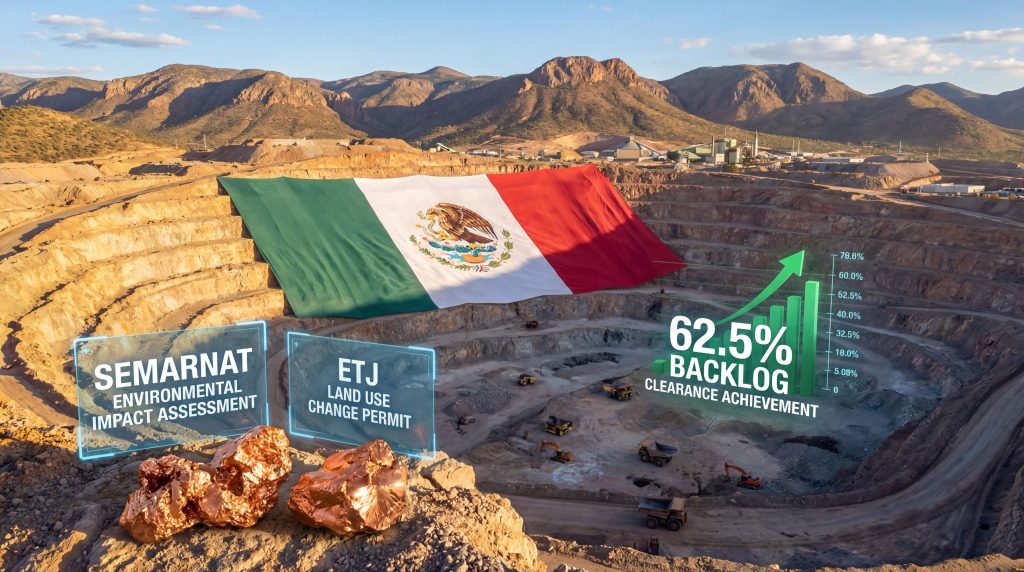
Mexico's mining sector stands at a pivotal juncture where regulatory efficiency increasingly determines which billion-dollar projects advance and which remain trapped in bureaucratic limbo. The intricate web of federal environmental assessments, state-level approvals, and community engagement protocols creates a complex landscape that separates successful mining ventures from costly delays. Furthermore, understanding this regulatory architecture has become essential for investors seeking to navigate Mexico's US$11 billion mining project pipeline effectively, particularly when considering mining permitting basics and modern mining claims framework principles.
What Makes Mexico's Mining Permit System Critical for Billion-Dollar Projects?
The Regulatory Architecture Behind Mexico's US$11 Billion Mining Pipeline
Mexico's mining permit framework operates through a sophisticated dual-track system that separates mineral rights from environmental authorisation. The Secretaría de Economía grants mining concessions covering subsurface rights, while SEMARNAT (Ministry of Environment and Natural Resources) controls environmental impact assessments that ultimately determine project viability.
This bifurcated approach creates distinct regulatory pathways with varying timelines and requirements:
- Federal jurisdiction applies to projects exceeding 500 hectares or involving significant water resources
- State-level oversight governs smaller operations and regional environmental considerations
- Municipal coordination addresses local zoning and infrastructure impacts
- Ejido negotiations handle communal land access rights affecting approximately 60% of Mexico's forested mining areas
The current regulatory environment reflects Mexico's commitment to balancing resource extraction with environmental protection. Projects like San Nicolás mining permits Mexico face comprehensive scrutiny across multiple regulatory tiers, requiring sophisticated compliance strategies that align technical feasibility with environmental stewardship.
Economic Impact Assessment Framework
SEMARNAT employs rigorous economic evaluation criteria when assessing large-scale mining applications. Projects exceeding US$1 billion in capital investment undergo enhanced federal review processes that consider regional economic multiplier effects and long-term sustainability metrics.
The assessment framework evaluates several critical factors:
- Direct employment generation potential in mining-dependent regions
- Infrastructure development contributions to transportation and energy networks
- Tax revenue projections at federal, state, and municipal levels
- Supply chain integration with existing industrial clusters
- Technology transfer opportunities for domestic mining sector advancement
Investment threshold analysis reveals that projects approaching the US$1.3 billion scale typically require 18-28 months for complete permit approval, assuming comprehensive pre-application preparation and stakeholder alignment. This timeline aligns with current Mexican mining sector developments, where substantial investments are driving unprecedented permit activity.
When big ASX news breaks, our subscribers know first
How Do Environmental Impact Assessments Shape Mining Project Timelines?
SEMARNAT's Evaluation Process for Large-Scale Mining Operations
The MIA-R (Manifestación de Impacto Ambiental – Regional) represents Mexico's most comprehensive environmental assessment tool for major mining projects. This process requires detailed documentation across eight critical evaluation areas that determine project approval prospects.
Technical requirements for open-pit mining operations include:
- Baseline environmental studies covering 24-month minimum data collection periods
- Hydrological impact modeling with particular emphasis on groundwater protection
- Air quality assessments incorporating meteorological modeling and dust dispersion analysis
- Biodiversity conservation plans addressing endemic species protection and habitat restoration
- Waste management strategies covering both operational and post-closure phases
Processing timelines vary significantly based on application completeness and technical complexity. Complete applications typically receive initial review within 60 days, while comprehensive evaluation extends 12-18 months for major mining projects. Moreover, projects demonstrating proactive environmental stewardship and community engagement often experience expedited review processes, particularly those incorporating modern waste management solutions.
Land Use Change Permits: Navigating Mexico's ETJ Requirements
The ETJ (Evaluación Técnica Justificativa) permit addresses forest land conversion requirements that affect approximately 75% of Mexico's prospective mining areas. This specialised authorisation process integrates with broader environmental assessments to ensure comprehensive land use planning.
ETJ applications must demonstrate:
- Forest compensation ratios typically requiring 3:1 reforestation commitments
- Biodiversity offset programs that achieve net positive environmental outcomes
- Soil conservation measures preventing erosion and maintaining agricultural productivity
- Water resource protection through watershed management integration
- Carbon sequestration planning aligning with Mexico's climate commitments
Community consultation mandates require meaningful engagement with ejido leadership and affected populations. Projects succeeding in ETJ approval typically invest 6-12 months in pre-application community relationship building, establishing trust and addressing concerns before formal permit submission.
What Factors Determine Mining Permit Approval Success Rates in Mexico?
Policy Shifts Under the Sheinbaum Administration
Mexico's regulatory landscape has experienced significant transformation since 2024, with permit processing efficiency emerging as a key performance indicator for federal environmental agencies. The administration has achieved notable progress in addressing historical permit backlogs while maintaining rigorous environmental standards.
Key policy developments include:
- Digital transformation of permit application and tracking systems
- Streamlined inter-agency coordination reducing duplicative review processes
- Priority classification systems for strategically important projects
- Enhanced technical review capacity through additional specialised staff
- Accelerated timelines for complete applications meeting pre-established criteria
Strategic prioritisation criteria now emphasise projects demonstrating exceptional environmental stewardship, significant job creation potential, and alignment with Mexico's energy transition objectives. Additionally, mining operations supporting critical mineral production for renewable energy infrastructure receive enhanced consideration during the evaluation process, reflecting broader industry innovation trends.
Technical Compliance Standards for Modern Mining Operations
Mexico's evolving regulatory framework increasingly emphasises technological innovation and sustainability performance in permit evaluation. The NOM-141 standard governing tailings dam safety has been strengthened following international best practices, requiring enhanced monitoring and risk management protocols.
Modern compliance standards encompass:
| Compliance Area | Key Requirements | Monitoring Frequency |
|---|---|---|
| Tailings Management | Real-time stability monitoring, emergency response protocols | Continuous digital monitoring |
| Water Quality | Advanced treatment systems, zero liquid discharge capability | Daily laboratory analysis |
| Air Emissions | Dust suppression technology, PM2.5 monitoring networks | Continuous ambient monitoring |
| Biodiversity Protection | Habitat restoration programs, species monitoring protocols | Quarterly ecological surveys |
| Community Relations | Grievance mechanisms, benefit-sharing agreements | Monthly stakeholder meetings |
Sustainability metrics increasingly influence approval decisions, with projects demonstrating measurable environmental improvements receiving preferential treatment. Consequently, advanced mining technologies that minimise environmental impact while maximising resource recovery align with Mexico's modernisation objectives for the mining sector.
Case Study Analysis: Strategic Lessons from Major Mexican Mining Permits
Comparative Timeline Analysis of Recent Permit Approvals
Analysis of major mining permit approvals since 2022 reveals distinct patterns in processing efficiency and success rates. Projects demonstrating comprehensive stakeholder engagement and technical excellence consistently outperform industry averages in both timeline and approval probability.
The data indicates several critical success factors:
- Pre-application community engagement reduces formal review time by 25-40%
- Integrated environmental planning accelerates inter-agency coordination
- Advanced technology adoption enhances approval prospects for complex projects
- Local partnership strategies improve social licence acquisition timelines
- Proactive regulatory consultation identifies potential issues before formal submission
Projects achieving permit approval within 24 months typically invest heavily in preparation phases, conducting comprehensive baseline studies and establishing robust stakeholder relationships before initiating formal applications. This front-loaded approach proves more cost-effective than managing delays during active review periods, particularly for complex projects like San Nicolás mining permits Mexico.
Investment Risk Assessment Framework
Permit-related delays create substantial financial exposure for billion-dollar mining projects, with cost escalation averaging 3-5% annually during extended review periods. Sophisticated investors increasingly employ quantitative risk models to evaluate permit probability and timeline uncertainty.
Risk assessment frameworks consider:
- Technical complexity scores based on environmental sensitivity and project scale
- Stakeholder alignment metrics measuring community support and opposition intensity
- Regulatory track record analysis for specific permit categories and geographic regions
- Political stability indicators affecting policy continuity and enforcement consistency
- Market timing sensitivity to commodity price volatility during permit phases
Contingency planning strategies typically incorporate 15-25% budget reserves for permit-related delays and additional environmental mitigation measures. Projects with strong technical fundamentals and community support demonstrate lower risk profiles, commanding premium valuations in investment markets, particularly when supported by effective joint venture strategies.
How Do Community Relations Impact Mining Permit Outcomes?
Ejido Land Negotiation Strategies
Mexico's communal land ownership system presents unique challenges and opportunities for mining project development. Approximately 60% of Mexico's forested mining areas involve ejido lands, requiring sophisticated negotiation strategies that balance community interests with project economics.
Successful ejido engagement typically involves:
- Early relationship building beginning 2-3 years before permit applications
- Transparent benefit-sharing models ensuring equitable value distribution
- Capacity building programmes enhancing community technical understanding
- Cultural sensitivity training for project development teams
- Long-term partnership commitments extending beyond operational phases
Legal frameworks governing surface rights versus subsurface mining concessions create complex negotiation dynamics. Mining companies must secure both federal mineral rights and community surface access agreements, often requiring parallel negotiation processes with different stakeholder groups and legal requirements.
Social Licence to Operate: Beyond Regulatory Compliance
Modern mining projects increasingly recognise that regulatory approval represents minimum requirements rather than sufficient conditions for operational success. Social licence to operate has become a critical determinant of long-term project viability and investment returns.
Best practices for social licence acquisition include:
- Community ownership opportunities through equity participation or profit-sharing arrangements
- Local procurement commitments supporting regional economic development
- Environmental stewardship programmes delivering measurable benefits beyond compliance requirements
- Education and training initiatives building local capacity for mining-related employment
- Healthcare and infrastructure investments addressing community development priorities
Projects demonstrating authentic commitment to community development typically experience smoother permit processes and reduced operational disruptions. Investment in social infrastructure often yields returns through improved regulatory relationships and enhanced project stability.
What Are the Financial Implications of Mexico's Permit System for Mining Investors?
Capital Allocation During Permitting Phases
Optimal capital deployment strategies during permit review periods require careful balance between project advancement and risk management. Investors must maintain development momentum while avoiding premature commitments that could be compromised by regulatory delays or modifications.
Strategic spending priorities during permitting include:
- Community infrastructure development building goodwill and demonstrating commitment
- Environmental baseline monitoring gathering data supporting permit applications
- Technical optimisation studies refining project parameters for enhanced sustainability
- Stakeholder engagement programmes maintaining relationships with key constituencies
- Regulatory compliance preparation ensuring readiness for approval conditions
Infrastructure development timing relative to permit milestones presents complex trade-offs. Early infrastructure investment demonstrates project commitment and community benefit, but premature spending increases exposure to permit-related risks. However, successful projects typically phase infrastructure development to align with permit milestone achievements.
Market Timing Considerations for Permit-Dependent Projects
Commodity price volatility creates additional complexity for permit-dependent projects, particularly those requiring 18-28 month approval timelines. Market conditions at project sanction may differ substantially from conditions during operational commencement, requiring sophisticated hedging and financing strategies.
Key timing considerations include:
- Commodity price cycle alignment with production ramp-up schedules
- Supply chain positioning advantages during infrastructure development phases
- Capital market accessibility for construction financing during permit periods
- Technology advancement integration opportunities during extended development timelines
- Strategic partnership development leveraging permit uncertainty for favourable deal structures
Permitted projects command significant premiums in M&A scenarios, with regulatory approval reducing investment risk and accelerating development timelines. Strategic investors increasingly target pre-development projects with strong permit prospects rather than early-stage exploration assets. Recent developments highlight this trend, with Mexico's mining permit environment showing billions in held-up investments awaiting regulatory clarity.
The next major ASX story will hit our subscribers first
Future Outlook: Mexico's Mining Permit Evolution Through 2030
Regulatory Modernisation Initiatives
Mexico's mining regulatory framework continues evolving toward greater efficiency and environmental rigour. Digital transformation initiatives promise to reduce administrative delays while enhancing transparency and stakeholder access to permit information.
Anticipated modernisation developments include:
- Integrated digital platforms enabling real-time permit tracking and status updates
- Automated compliance monitoring using remote sensing and IoT technologies
- Streamlined inter-agency coordination through shared databases and standardised procedures
- Enhanced public participation through online consultation platforms and virtual hearings
- Performance-based review timelines with expedited processing for high-quality applications
Climate change considerations are becoming increasingly prominent in permit evaluation criteria. Projects demonstrating carbon neutrality or net positive environmental outcomes may receive preferential treatment as Mexico advances its climate commitments under international agreements.
Investment Climate Projections
Mexico's investment climate for large-scale mining projects appears increasingly favourable through 2030, driven by growing demand for critical minerals supporting energy transition and nearshoring trends. Regulatory clarity and processing efficiency improvements should reduce investment risk premiums for well-prepared projects.
Sectoral priorities likely to receive enhanced regulatory support include:
- Critical mineral projects supporting renewable energy and battery manufacturing
- Copper operations aligned with electrical infrastructure expansion requirements
- Strategic metal production reducing import dependence for key industrial inputs
- Technology-intensive operations demonstrating environmental leadership and innovation
- Integrated supply chain projects supporting North American manufacturing competitiveness
Regional development strategies increasingly recognise mining as a catalyst for broader economic diversification, particularly in states like Zacatecas where mineral resources can anchor sustainable development initiatives.
Strategic Recommendations for Mining Companies Navigating Mexican Permits
Pre-Application Optimisation Strategies
Success in Mexico's permit system requires comprehensive preparation beginning years before formal application submission. Companies achieving optimal outcomes invest heavily in stakeholder relationship building, technical studies, and regulatory consultation during pre-application phases.
Critical pre-application activities include:
- Comprehensive baseline studies extending 24-36 months to capture seasonal variations
- Stakeholder mapping and engagement identifying all relevant constituencies and influence networks
- Regulatory authority consultation clarifying expectations and identifying potential concerns
- Community partnership development establishing trust and addressing development priorities
- Technical design optimisation incorporating environmental and social considerations from project inception
Due diligence frameworks should evaluate permit feasibility alongside geological and economic factors. Projects with complex environmental profiles or challenging social contexts may require additional preparation time and investment to achieve acceptable permit probabilities.
Risk Mitigation and Contingency Planning
Sophisticated mining companies increasingly adopt portfolio approaches to permit-dependent project development, diversifying regulatory risk across multiple projects and jurisdictions. This strategy reduces exposure to individual project delays while maintaining development pipeline momentum.
Effective risk mitigation strategies encompass:
- Multiple project development spreading regulatory risk across diverse geographic and technical profiles
- Partnership structures sharing permit-related risks and costs with experienced local operators
- Contingency timeline planning incorporating realistic delay scenarios in project economics
- Alternative development scenarios maintaining flexibility for modified project configurations
- Political risk insurance protecting against adverse regulatory changes or policy shifts
The evolving landscape of San Nicolás mining permits Mexico demonstrates both the challenges and opportunities within Mexico's regulatory framework. Companies that invest appropriately in stakeholder relationships, technical excellence, and regulatory compliance consistently outperform those adopting purely transactional approaches to permit acquisition.
Investment in mining projects involves substantial risks including regulatory, environmental, market, and operational uncertainties. This analysis is for informational purposes only and does not constitute investment advice. Prospective investors should conduct independent due diligence and consult qualified financial advisors before making investment decisions.
Ready to Discover Mexico's Next Major Mining Breakthrough?
Mexico's complex permit landscape creates significant opportunities for investors who can identify projects positioned to navigate regulatory requirements successfully. Discovery Alert's proprietary Discovery IQ model delivers real-time alerts on significant ASX mineral discoveries, instantly empowering subscribers to spot actionable opportunities ahead of the broader market and understand why major discoveries can generate substantial returns through their historic discoveries showcase.