June 15, 2026
When Energy Chokepoints Dictate Global Policy: The Economics Behind the US and Iran Peace Deal
The modern global economy is more vulnerable to geography than most policymakers care to admit. A single narrow waterway, barely 33 kilometres wide at its tightest point, can transmit inflation across continents, force central banks to reverse course, and reshape the diplomatic calculus of the world's most powerful nations. The US and Iran peace deal announced on June 14, 2026, is not simply a ceasefire between two adversaries. It is the product of a four-month economic stress test that exposed just how deeply intertwined military conflict and consumer purchasing power have become in the twenty-first century.
When big ASX news breaks, our subscribers know first
The Strait of Hormuz: A Chokepoint That Held the World's Economy Hostage
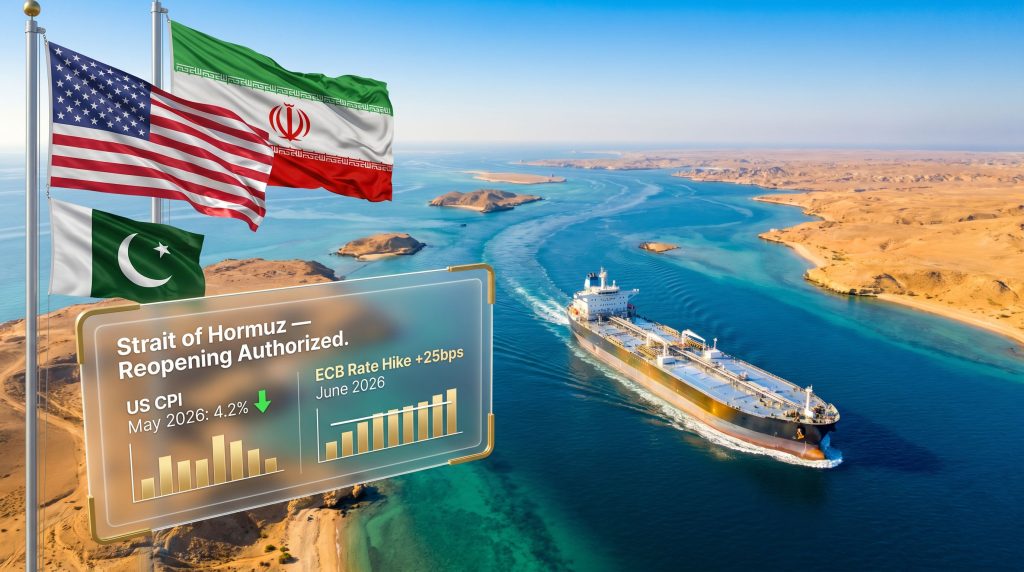
The Strait of Hormuz is the single most consequential maritime corridor in the global energy system. Running between the Persian Gulf and the Gulf of Oman, it serves as the exit point for oil and liquefied natural gas exports from Saudi Arabia, the United Arab Emirates, Kuwait, Iraq, and Iran itself. Roughly 20% of the world's seaborne oil passes through it daily under normal conditions, along with significant volumes of LNG and fertiliser feedstocks.
When the US-Iran conflict began in late February 2026, the Strait's effective closure did not merely create an oil supply problem. It created a cascading input cost shock that moved through energy, transport, agriculture, and manufacturing simultaneously. Furthermore, fertiliser shipments, which depend heavily on Persian Gulf export routes, were disrupted at a critical planting-season window for Northern Hemisphere agriculture.
That disruption carries a delayed economic consequence: fertiliser price spikes typically transmit into food prices with a lag of three to six months, meaning agricultural inflation may persist well beyond the energy market's initial recovery. Consequently, understanding crude oil price trends in the lead-up to the conflict helps contextualise just how rapidly the situation deteriorated.
"The Strait of Hormuz closure in 2026 is a textbook example of how a geographically contained event can produce globally distributed economic pain across supply chains, monetary policy, and household budgets simultaneously."
This is the economic architecture that made the US and Iran peace deal not just a diplomatic necessity, but a macroeconomic imperative.
What the Agreement Actually Contains
Pakistan's Prime Minister Shehbaz Sharif confirmed on June 14, 2026, via a post on X, that a peace agreement between the United States and the Islamic Republic of Iran had been formally reached following intensive diplomatic negotiations. Both governments declared an immediate and permanent cessation of military operations across all active theatres, including Lebanon. A signing ceremony has been scheduled for June 19, 2026, in Switzerland.
US President Donald Trump confirmed the deal shortly after Sharif's announcement, authorising the toll-free reopening of the Strait of Hormuz and ordering the simultaneous removal of the US Naval blockade.
Based on reporting from Iranian state media ahead of the announcement, a 14-page draft memorandum had already been circulating outlining the proposed framework. The key terms as reported are structured as follows:
| Term | Detail |
|---|---|
| Ceasefire | Immediate and permanent termination of military operations on all fronts |
| Strait of Hormuz | Reopening authorised; Iran to clear mines and cease shipping harassment within 30 days |
| Nuclear Commitments | Iran to commit to non-weaponization; enrichment negotiations to follow |
| Sanctions Relief | US oil sanctions to be lifted; scope and sequencing under negotiation |
| Frozen Assets | Partial release tied to compliance milestones |
| Humanitarian Mechanism | Access to civilian goods and aid guaranteed |
Pakistan's role as a neutral intermediary throughout this process is itself a geopolitically significant development. Rather than relying on traditional Western diplomatic infrastructure, Washington and Tehran used Islamabad as a backchannel, reflecting a pragmatic approach to conflict resolution. In addition, the global LNG supply outlook for the remainder of 2026 will hinge substantially on how smoothly these terms are implemented.
Switzerland's selection as the signing venue reinforces the deal's multilateral legitimacy, consistent with its historical role as neutral diplomatic ground for high-stakes international agreements.
The Lebanon Variable and Why the Deal Almost Collapsed
Earlier on June 14, before the announcement was made, Israeli strikes in Beirut and retaliatory activity by Iran-backed Hezbollah forces created a serious risk that the deal would unravel before it could be confirmed. Trump publicly warned both Iran and Hezbollah against escalation, signalling that US patience for proxy-driven disruption had limits even within an active peace process.
This episode illustrates a structural vulnerability in the agreement. The ceasefire is nominally between the United States and Iran, but the conflict's geography involves multiple proxy actors, particularly Hezbollah, whose operational decisions are not always perfectly synchronised with Tehran's diplomatic posture.
"The durability of the US and Iran peace deal depends as much on what happens in Beirut and southern Lebanon as it does on what is signed in Switzerland. Proxy theatre management is the deal's most fragile variable."
Moreover, geopolitical trade disruptions of this nature have consistently demonstrated that proxy actor behaviour remains one of the hardest variables to control in any negotiated settlement. Any significant escalation by Hezbollah could provide political cover for either side to characterise the other as acting in bad faith, creating an exit ramp from commitments that neither side may be fully ready to abandon.
Inflation, Interest Rates, and the Central Bank Dilemma
The macroeconomic consequences of the conflict have been severe and measurable. US annual inflation reached 4.2% in May 2026, its highest reading in three years, driven substantially by energy price pass-through following the Strait's closure. The European Central Bank responded by raising its key interest rate by 25 basis points in June 2026, becoming the first major global central bank to hike rates since 2023, and the first to do so explicitly in response to the energy shock generated by the conflict.
| Indicator | Pre-Conflict (Feb 2026) | Conflict Peak | Post-Deal Outlook |
|---|---|---|---|
| US CPI (Annual) | ~2.8% | 4.2% (May 2026) | Gradual decline expected |
| ECB Policy Rate | Stable | +25bps (June 2026) | Likely pause |
| Fed Rate Expectations | Cuts priced in | Hikes priced in | Possible reversal |
| Strait of Hormuz | Open | Closed | Reopening authorised |
Prior to the conflict, market consensus had priced in a rate-cutting cycle across major economies. The Strait's closure reversed that entirely. According to CME FedWatch data, the Federal Reserve had been expected to raise rates before the end of 2026, a dramatic shift from the dovish expectations that characterised early 2026. The inflation and rate outlook heading into this period had already signalled mounting risks that were subsequently amplified by the conflict.
Vice President JD Vance, speaking on Fox News following the deal's announcement, framed the agreement in unambiguously domestic economic terms. His comments emphasised that the administration's primary motivation for reaching a settlement was the direct relief it would provide to American consumers through lower energy costs, both immediately and over the longer term.
This framing matters for understanding the deal's political logic. The Trump administration's decision to negotiate rather than escalate was driven by the feedback loop between energy prices, headline inflation, and domestic political sentiment.
The Overtightening Risk Central Banks Now Face
Here is where the peace deal creates a new and underappreciated policy complication. The ECB's June 2026 rate hike was calibrated to an inflationary environment caused largely by an energy supply shock. If the Strait reopens on schedule and oil inventories rebuild rapidly, the supply-side inflation driver that justified the hike disappears.
The ECB, and potentially the Fed, may consequently find themselves having tightened monetary policy into a slowing economy just as the primary inflation driver reverses. This sequencing risk is not hypothetical. It mirrors the policy errors of the early 1980s, when central banks that tightened in response to energy-driven inflation found themselves needing to pivot sharply as commodity prices corrected.
What Each Side Needed From This Deal
Understanding why the US and Iran peace deal was reached requires analysing the distinct pressures each side faced by mid-2026.
United States strategic priorities:
- Reduction of domestic energy inflation that was eroding consumer confidence and political approval ratings
- Removal of the geopolitical risk premium that had embedded itself across commodity and bond markets
- A demonstrable diplomatic achievement ahead of domestic political cycles
- Containment of Iran's nuclear ambitions through negotiated mechanisms rather than prolonged military engagement
Iran's strategic objectives:
- Relief from oil export sanctions that had severely compressed government revenues during the conflict
- Access to frozen financial assets held in international accounts
- Humanitarian goods access to ease domestic civilian pressure
- Avoidance of further military and infrastructure degradation while preserving strategic leverage in any follow-on negotiations
The humanitarian goods mechanism included in the framework is particularly telling. Its presence suggests that Iran's civilian economy faced meaningful stress during the conflict and sanctions period, creating internal political pressure on Tehran's leadership that ultimately contributed to its willingness to engage substantively with the peace framework. Furthermore, OPEC's market influence will play a critical role in determining how quickly production normalises once the Strait reopens fully.
The next major ASX story will hit our subscribers first
Where the Deal Could Still Break Down
Analysts and observers tracking the US and Iran peace deal should watch for the following fault lines in the weeks ahead:
- Lebanon proxy activity: Hezbollah actions outside direct Iranian command remain the single highest near-term risk. Any significant strike against Israeli targets before the June 19 signing could provide grounds for either party to withdraw.
- Nuclear verification disagreements: The enrichment caps, inspection access, and compliance timelines that will need to be negotiated in follow-on talks are historically the most contentious elements of any Iran nuclear framework.
- Sanctions sequencing disputes: If Iran's leadership concludes that sanctions relief is being withheld beyond the timelines implied by the deal, domestic political pressure from hardliners could force a public withdrawal.
- US Congressional resistance: Congressional opposition to sanctions relief or treaty ratification represents a structural constraint on the administration's ability to deliver its side of the bargain, regardless of executive intent.
- Oil market credibility test: Futures market pricing in the days following the announcement will serve as a real-time referendum on how credible traders consider the deal to be. A failure of oil prices to retreat would signal scepticism about the Strait's actual reopening timeline.
The Signals Worth Monitoring Before June 19
Several concrete indicators will reveal whether the US and Iran peace deal is on a durable path or moving toward collapse before the Switzerland signing:
- Tanker traffic resuming movement through the Strait of Hormuz within the 30-day reopening window
- No major military incidents in Lebanon, Iraq, or Yemen between now and June 19
- Iranian state media maintaining constructive and consistent framing of the agreement
- CME FedWatch shifting rate expectations back toward neutral or easing, reflecting confidence that energy inflation will reverse
- Statements from Iranian parliamentary and Supreme Leadership figures indicating domestic political cohesion around the deal
Frequently Asked Questions: US and Iran Peace Deal
What did the US and Iran agree to?
Both governments agreed to an immediate and permanent cessation of military operations across all active fronts, including Lebanon. The framework includes the reopening of the Strait of Hormuz, the lifting of US oil sanctions on Iran, Iran's commitment to nuclear non-weaponization negotiations, and a formal signing scheduled for June 19, 2026, in Switzerland.
Who brokered the agreement?
Pakistan served as the primary diplomatic intermediary. Prime Minister Shehbaz Sharif confirmed the deal on June 14, 2026, via a post on X and announced the signing ceremony details.
How will the deal affect oil prices?
The authorised reopening of the Strait of Hormuz is expected to ease supply constraints that elevated energy prices during the conflict. As tanker traffic resumes and crude inventories rebuild, downward pressure on oil prices is broadly anticipated. However, the pace of normalisation will depend on how quickly shipping lanes stabilise and whether the ceasefire holds.
Is this deal fully ratified?
As of June 14, 2026, the agreement is structured as a memorandum of understanding pending formal signing on June 19. Some reporting indicates that final ratification processes within both governments remain in progress. The deal's durability depends on ceasefire stability across all active fronts before the signing ceremony.
Why does the Strait of Hormuz matter so much?
The Strait is the world's most strategically significant energy corridor, handling roughly a fifth of global seaborne oil under normal conditions, alongside substantial LNG and fertiliser volumes. Its closure since late February 2026 transmitted supply-side inflation across energy, food, and industrial input markets simultaneously, forcing central bank policy reversals across major economies.
Disclaimer: This article contains forward-looking analysis based on publicly available information as of June 14, 2026. The US-Iran peace deal framework described remains subject to formal ratification and ongoing negotiation. Nothing in this article constitutes financial or investment advice. Economic forecasts and market projections referenced herein are speculative and subject to material change depending on geopolitical developments.
Want to Capitalise on the Commodity Market Shifts Triggered by the US-Iran Peace Deal?
Discovery Alert's proprietary Discovery IQ model delivers real-time alerts on significant ASX mineral discoveries, instantly translating complex commodity market movements — including those driven by geopolitical events like the Strait of Hormuz reopening — into actionable investment opportunities for subscribers. Explore how historic mineral discoveries have generated extraordinary returns on Discovery Alert's dedicated discoveries page, and begin your 14-day free trial today to position yourself ahead of the next major market shift.