June 29, 2026

When Geopolitics Rewires an Energy System
Every generation or so, an external shock forces economies to confront the structural assumptions buried deep within their energy infrastructure. The 1973 Arab oil embargo exposed Western industrial economies' addiction to cheap Middle Eastern crude. Europe's 2022 gas crisis revealed the precariousness of relying on a single pipeline network controlled by a hostile state. Now, in 2026, the Middle East crisis accelerates Asia's electrification drive as disruption of oil and gas flows through the Strait of Hormuz delivers an equivalent reckoning to Asia — with one critical distinction: for the first time in energy history, cost-competitive alternatives are available at commercial scale. The question confronting every Asian government right now is not whether to transition, but how fast.
When big ASX news breaks, our subscribers know first
Asia's Hormuz Dependency: A Vulnerability Hidden in Plain Sight
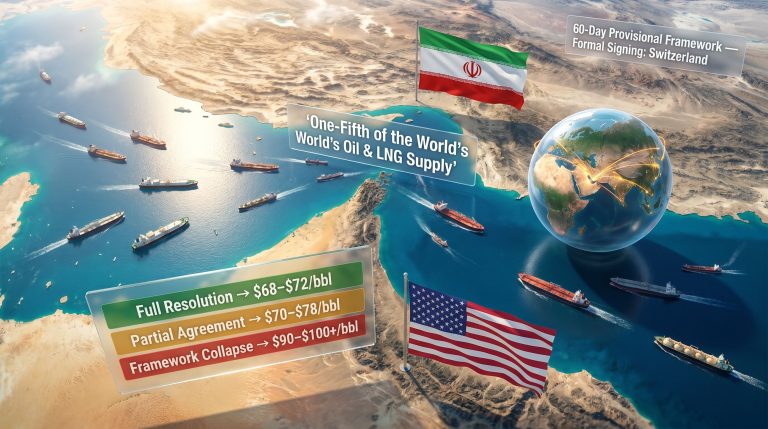
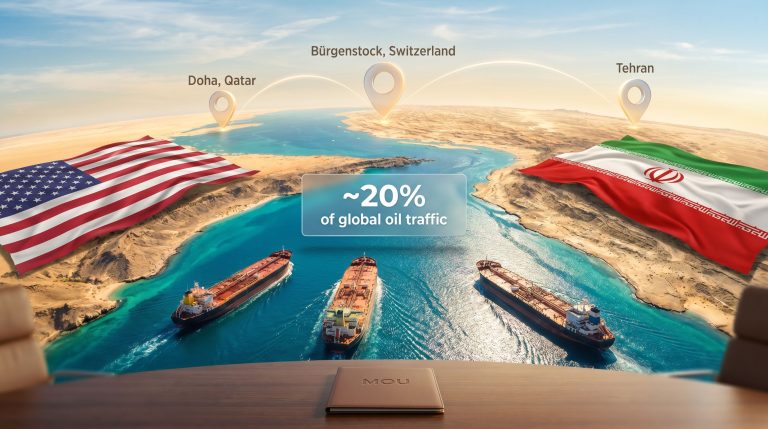
For decades, analysts flagged the concentration of Asian energy imports through a single narrow waterway as a systemic risk. That risk has now become a live crisis. Approximately 80% of crude oil bound for Asian markets transits the Strait of Hormuz, making the waterway arguably the most consequential chokepoint in the global energy system. ASEAN nations collectively source around 55% of their crude and 17% of their natural gas from Middle Eastern producers, placing an estimated 28% of ASEAN's total final energy consumption at risk from any sustained disruption.
The LNG dependency picture is equally concentrated. Qatar and the UAE together supply roughly 30% of China's LNG imports and more than 50% of India's LNG intake. For India, the consequences cascade well beyond industrial energy consumption, with over 330 million households dependent on Middle Eastern gas supplies for basic cooking fuel. These are not marginal dependencies that can be quickly substituted. They represent decades of infrastructure investment and trade relationships built on the assumption of reliable Hormuz transit.
Furthermore, understanding the broader picture of critical minerals and energy security reveals just how interconnected these supply vulnerabilities have become across the region.
Mapping the Exposure: Who Faces What Risk
| Country/Region | Middle East Oil Dependency | Middle East LNG Dependency | Primary Exposure |
|---|---|---|---|
| China | High (30%+ LNG from Qatar/UAE) | High | Industrial output and grid supply |
| India | Very High | Over 50% of LNG imports | Household energy and power generation |
| Japan | High | High | Grid stability and industrial baseload |
| ASEAN Bloc | 55% crude from region | 17% natural gas | Economic growth and consumer inflation |
| South Korea | Significant | Significant | Refining margins and petrochemicals |
The Initial Response: Survival Mode Before Strategy
Asia's first instinct when the Hormuz supply shock materialised in early 2026 was entirely predictable. Refiners slashed run rates across multiple markets as crude availability contracted sharply. Several governments enacted fuel export bans to protect domestic supply. Emergency declarations followed, with some nations reinstating work-from-home protocols last seen during the pandemic era.
The UAE's Ruwais refinery and QatarEnergy issued force majeure notices, compounding pressure across regional supply chains. Pakistan's situation became particularly acute, with the country's oil import costs surging 167% from pre-war levels, prompting a series of emergency LNG tenders as the power system strained under the shortfall, according to reporting from Oilprice.com.
The Coal Rebound: Emergency Bridge, Not Strategic Retreat
With gas and oil supplies constrained, Asian governments defaulted to their most accessible backup: coal. The response was widespread:
- India maximised utilisation of domestic coal reserves to sustain base power generation
- South Korea lifted existing restrictions on coal-fired capacity to manage grid stability
- Vietnam and the Philippines expanded coal output to compensate for gas supply shortfalls
- Bangladesh and Thailand deployed comparable coal-first emergency measures
- Demand management tools including fuel price caps, petroleum tax relief, four-day working weeks, and mandated increases in commercial building thermostat settings were activated across multiple markets
The coal rebound is real, but energy analysts broadly characterise it as a transitional bridge measure rather than a signal of strategic reversal. The economics of renewables and electric vehicles have shifted sufficiently that the long-term transition trajectory remains intact, and the crisis is actively reinforcing it by making fossil fuel import vulnerability tangible to consumers and policymakers simultaneously.
Asia's Ukraine Moment: A Crisis With a Different Set of Options
The comparison to Europe's 2022 gas shock is instructive, but the differences matter as much as the similarities. When Russia curtailed pipeline gas deliveries following its invasion of Ukraine, Europe faced a brutal transition toward LNG and accelerated renewables deployment. The alternatives were expensive, slow to build, and limited in scale. Asia's 2026 Hormuz crisis arrives in a fundamentally different technological environment. In addition, the energy transition in mining sectors across the region is further reshaping how nations think about long-term resource dependency.
| Dimension | 1970s Oil Shocks | Europe 2022 Gas Crisis | Asia 2026 Hormuz Crisis |
|---|---|---|---|
| Primary trigger | OPEC embargo | Russian pipeline cutoffs | Strait of Hormuz disruption |
| Clean alternatives available | Nascent, expensive | Emerging | Cost-competitive at scale |
| EV technology maturity | Non-existent | Early adoption | Commercially viable |
| BESS deployment readiness | None | Limited | Accelerating rapidly |
| Speed of potential response | Decades | 2 to 4 years | Potentially compressed |
Daan Walter, Principal at Ember, stated in April 2026 that Asia's oil vulnerability had been laid bare by the current crisis, characterising it explicitly as Asia's equivalent of Europe's 2022 reckoning. Walter further noted that unlike the oil crises of the 1970s, cost-competitive alternatives to petroleum now exist, making electric vehicles a rational and increasingly practical hedge against future supply volatility.
This framing carries specific analytical weight. In the 1970s, when OPEC's embargo sent oil prices soaring, there was no commercially viable substitute for liquid fuels in road transportation. The only available responses were conservation, efficiency improvements, and supply diversification within the fossil fuel system. That constraint no longer applies.
Southeast Asia Was Already Leading Before the Shock Hit
One of the most underappreciated dimensions of the current electrification acceleration is that it builds on a foundation that was already exceptional. An analysis published by energy think tank Ember in December 2025 — two months before the Middle East conflict disrupted regional energy markets — found that ASEAN nations collectively held the highest EV sales penetration of any regional grouping globally.
Countries including Singapore, Vietnam, Thailand, and Indonesia had already surpassed the EV market share figures recorded in the United States, the European Union, and the United Kingdom. Ember's Electricity and Data Analyst Euan Graham noted in December 2025 that the assumption of EV growth stalling outside Europe and China had already been rendered analytically obsolete. Consequently, emerging markets were positioned to define the next phase of global EV expansion.
The $600 Billion Economic Case for Electrification
The economic argument for EV adoption in import-dependent Asian economies is striking in its scale. Ember analysts have calculated that replacing the oil consumed in road transportation with domestically charged electric vehicles could save Asian import-dependent economies more than $600 billion annually. That figure represents the single largest lever available to any government seeking to structurally reduce its fossil fuel import exposure.
It is not a long-term projection requiring decades of infrastructure buildout. It is a figure that scales in proportion to EV fleet growth, meaning benefits accumulate progressively as adoption accelerates. Furthermore, the broader landscape of battery metals investment is rapidly evolving to meet this surging demand across the region.
The sector that drove oil demand growth across Asia for decades is now structurally positioned to drive its decline. The economic incentive has flipped: fuel price volatility, once a drag on consumer spending, now actively pushes purchasing decisions toward electrification.
Battery Storage and Renewables: From Supplementary to Strategic
The crisis has elevated battery energy storage systems from a useful grid management tool to a core infrastructure priority across the region. Fastmarkets projections presented at the Asia Battery Raw Materials and Recycling Conference in Hanoi forecast that global BESS capacity additions will grow ninefold between 2025 and 2036, with Asia, including China, accounting for a disproportionate share of that buildout, as noted by Reuters columnist Clyde Russell citing those forecasts.
To understand what a ninefold increase in storage capacity means in practical terms:
- Grid operators gain the ability to absorb and dispatch much larger volumes of variable renewable energy
- The baseload role previously filled by imported fossil fuels becomes increasingly substitutable with stored solar and wind output
- Energy security becomes a domestic infrastructure question rather than an import procurement problem
- Price volatility in global LNG and crude markets becomes progressively less relevant to electricity system stability
Solar and wind investment, already growing before the crisis, is now being reframed at the government level as an energy security measure rather than a climate commitment. That rhetorical and political shift matters, because energy security arguments typically unlock faster regulatory action and broader political coalitions than climate arguments alone. The expansion of renewable energy solutions is consequently moving from the margins to the mainstream of government planning across Asia.
The next major ASX story will hit our subscribers first
The LNG Growth Narrative Is Being Structurally Reassessed
Asia's LNG demand story, for years treated as one of the most reliable long-term growth projections in global energy markets, is now under significant analytical pressure. Asia's LNG imports hit a seven-year low in March 2026 as the conflict choked Qatari supply, according to Oilprice.com reporting. Qatar faces a multi-year timeline to recover full production capacity, and new capacity addition timelines across the Middle East have been disrupted.
What makes this moment analytically distinct from previous LNG supply disruptions is that low-cost alternatives now exist at the scale needed to provide structural substitution rather than temporary relief. Ember analysts described this inflection point directly, noting that electrotech is currently cheaper, faster to deploy, and more supply-secure than fossil alternatives, and that these advantages carry irreversible structural consequences for fossil fuel demand trajectories.
Country-Level Pressure and Opportunity
The crisis does not affect all Asian economies equally, and transition readiness varies substantially across the region.
India
India faces the most acute immediate pressure given its high LNG dependency and the scale of its household energy exposure. With over 40 India-bound ships reported stranded near the Strait of Hormuz at the height of the crisis, the country has been actively pursuing alternative supply partnerships, including US LPG arrangements. Domestically, coal has been maximised as a bridge fuel while renewable buildout accelerates under an energy security framing that commands broader political support than climate-based arguments historically have.
ASEAN Bloc
The collective monthly addition to ASEAN's import bill from the supply shock reached an estimated $3.36 billion per month. Despite this pressure, the bloc entered the crisis as the global leader in EV penetration, giving it a structural head start on the transition pathway. Chinese EV manufacturers have emerged as the primary commercial beneficiaries, with export volumes to South and Southeast Asia surging during the March and April 2026 crisis window. The scale of critical minerals demand underpinning this EV surge is reshaping supply chains across the region.
Japan and South Korea
Both advanced industrial economies temporarily lifted coal capacity restrictions under emergency conditions and face the symbolic milestone of the first oil tankers reaching their ports through the Strait of Hormuz since the conflict began. Their advanced grid infrastructure and technology export capacity position them as potential leaders in BESS and grid management systems deployment across the broader region.
The Strategic Binary: Build Forward or Patch Backward
Every Asian government now faces a version of the same fundamental choice in how it responds to the supply shock. Ember analysts framed the question directly: whether governments choose to build toward an electric future or reach backward to reinforce fossil fuel supply infrastructure. The economic logic increasingly favours the former, not as an ideological position but as a rational calculation based on demonstrated supply fragility and the current cost structure of clean alternatives.
The fossil reinforcement path involves securing alternative crude supply routes from the United States, Africa, or Russia, expanding domestic coal capacity, investing in strategic petroleum reserves, and locking in new LNG supply agreements from non-Middle Eastern sources. This path reduces immediate supply vulnerability but does not address the structural chokepoint dependency.
The electrification acceleration path involves fast-tracking EV incentives and charging infrastructure deployment, prioritising domestic solar, wind, and BESS buildout, gradually restructuring fossil fuel subsidies to redirect capital toward clean energy, and attracting private investment into renewable infrastructure at scale. This path addresses the root cause rather than the symptoms.
The Middle East crisis accelerates Asia's electrification drive in a way that years of climate policy frameworks and voluntary commitments failed to achieve, precisely because it makes the cost of fossil dependency tangible in real time. As the World Economic Forum has noted, energy security arguments carry political weight that abstract climate targets rarely do, and the 2026 supply shock has made the argument for domestic clean energy infrastructure in terms that finance ministries, defence planners, and consumer households can all understand simultaneously.
| Response Scenario | EV Adoption Rate | Oil Demand Impact by 2030 | BESS Buildout | LNG Dependency Outlook |
|---|---|---|---|---|
| Conservative | Moderate acceleration | Modest reduction | 3 to 4x current capacity | Partially restructured |
| Base Case | Significant acceleration | Meaningful structural reduction | 6 to 7x current capacity | Substantially reduced |
| Accelerated Transition | Rapid adoption across markets | Structural decline begins early | Approaching 9x (Fastmarkets) | Fundamentally disrupted |
Disclaimer: This article contains forward-looking statements, scenario projections, and analyst forecasts that involve inherent uncertainty. Figures relating to energy demand trajectories, EV adoption rates, BESS capacity growth, and import cost savings represent analytical estimates and should not be construed as investment advice. Readers should conduct independent research and consult qualified financial and energy advisors before making any investment or policy-related decisions. Energy market conditions can change rapidly, and past supply disruption patterns may not accurately predict future outcomes.
Want to Invest in the Minerals Powering Asia's Electrification Surge?
As demand for battery metals, critical minerals, and energy storage materials accelerates across Asia, Discovery Alert's proprietary Discovery IQ model delivers real-time notifications on significant ASX mineral discoveries — transforming complex geological data into actionable investment insights the moment they hit the market. Explore historic discoveries and their extraordinary returns to understand the scale of opportunity, then begin your 14-day free trial to position yourself ahead of the next major find.