
June 12, 2026
Understanding Mine Tailings and Their Construction Material Potential
Mine tailings management represents one of the most pressing engineering challenges facing the global mining sector today. With massive volumes accumulating at processing facilities worldwide, the traditional approach of indefinite storage in tailing dams has created mounting environmental liabilities and regulatory pressures. This convergence of sustainability demands and resource scarcity has catalysed innovative approaches to transform these industrial byproducts into valuable construction materials, fundamentally reshaping how the mining innovation trends conceptualise waste streams. The use of mine tailings in building products has emerged as a promising solution that addresses both environmental concerns and material resource shortages.
Mine tailings consist of the finely ground rock particles left after valuable minerals are extracted during ore processing. These materials typically contain silicates, aluminates, iron oxides, and varying concentrations of trace metals, depending on the parent ore body and extraction methods employed. The chemical and physical properties of tailings vary significantly across different mining operations, with particle size distributions, pH levels, and mineral compositions directly influencing their suitability for construction applications.
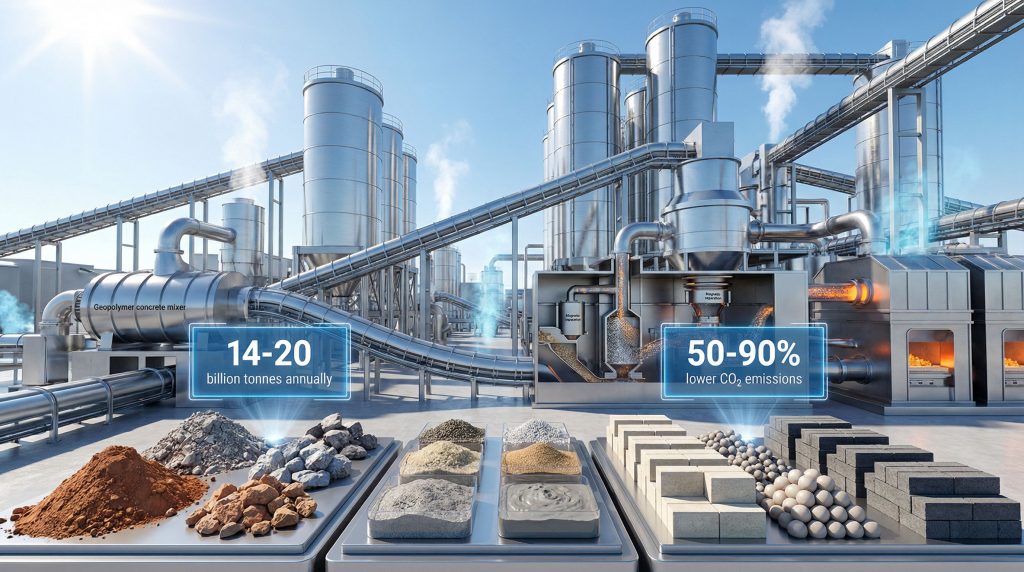
Global mining operations generate an estimated 14-20 billion tonnes of tailings annually, creating both a massive waste management challenge and an unprecedented opportunity for material recovery. The sheer volume of this waste stream has prompted mining companies to explore alternative approaches beyond traditional storage methods.
Environmental concerns driving tailings reuse initiatives include dam stability risks, acid mine drainage potential, and long-term groundwater contamination threats. Traditional tailings storage facilities require ongoing monitoring and maintenance costs that can extend for decades beyond mine closure. Furthermore, regulatory frameworks in major mining jurisdictions increasingly emphasise circular economy principles, creating economic incentives for companies to develop productive reuse strategies rather than indefinite storage solutions.
Chemical Composition and Material Properties
The use of mine tailings in building products depends heavily on understanding their fundamental chemical characteristics. Tailings from different mineral processing operations exhibit distinct compositional profiles that determine their suitability for specific construction applications.
For graphite processing operations, tailings typically contain lower concentrations of sulfide minerals compared to copper or gold processing waste, potentially reducing acid generation risks. However, each tailings stream requires comprehensive characterisation to assess heavy metal content, pH stability, and reactivity with construction material additives.
Key physical properties affecting construction material performance include:
• Particle size distribution: Fine tailings may require blending with coarser aggregates
• Specific gravity: Influences concrete density and structural load calculations
• Absorption characteristics: Affects water-cement ratios in concrete applications
• Chemical reactivity: Determines compatibility with cement and other binders
Environmental Drivers and Regulatory Landscape
Mining companies face increasing pressure to demonstrate environmental stewardship through innovative waste management approaches. The transformation of tailings into construction materials addresses multiple environmental objectives simultaneously, including waste volume reduction, carbon footprint minimisation, and habitat restoration acceleration. This aligns with broader sustainable production practices being adopted across the mining industry.
Recent developments in European markets demonstrate institutional support for tailings valorisation projects. The European Investment Bank has provided cooperation agreements for projects integrating mining waste utilisation into battery supply chains, indicating that financial institutions recognise the strategic value of circular economy approaches in resource-intensive industries. Additionally, research from CSIRO highlights promising developments in geopolymer technology using mine tailings.
When big ASX news breaks, our subscribers know first
Transformation Technologies for Mine Tailings Processing
Converting raw mine tailings into construction-grade materials requires sophisticated processing technologies that address both performance requirements and environmental safety standards. The transformation process typically involves multiple stages of beneficiation, stabilisation, and quality enhancement to meet building material specifications.
Mechanical Beneficiation Systems
Primary processing begins with mechanical beneficiation to optimise particle size distribution and remove unwanted contaminants. Advanced separation technologies include:
• Magnetic separation: Removes ferromagnetic materials that could affect concrete performance
• Density separation: Concentrates useful mineral fractions while eliminating deleterious components
• Screening and classification: Achieves target particle size distributions for specific applications
• Dewatering systems: Reduces moisture content to facilitate subsequent processing steps
These mechanical processes must be carefully calibrated for each tailings source, as mineral composition and particle characteristics vary significantly between mining operations and ore types.
Geopolymer Technology Applications
One of the most promising approaches for tailings utilisation involves geopolymer technology, which enables cement-free concrete production through alkali activation of aluminosilicate-rich materials. Companies like Betolar have commercialised proprietary systems that can process industrial mine tailings into low-carbon building materials.
The geopolymer formation process involves:
- Alkaline activation: High-pH solutions activate silicate and aluminate species in tailings
- Polymerisation reactions: Chemical bonds form three-dimensional networks similar to cement hydration
- Curing protocols: Controlled temperature and humidity conditions optimise strength development
- Quality verification: Testing ensures mechanical properties meet construction standards
Research indicates that properly formulated geopolymer systems can achieve 50-90% lower CO2 emissions compared to traditional Portland cement concrete, while maintaining comparable structural performance characteristics. This technology represents a significant advancement in mine reclamation innovation.
Chemical Stabilisation Protocols
Heavy metal immobilisation represents a critical aspect of tailings processing for construction applications. Chemical stabilisation techniques prevent leaching of potentially harmful elements during the service life of building materials.
Common stabilisation approaches include:
• pH buffering: Lime or cement additions neutralise acidic tailings
• Chelation chemistry: Organic additives bind metal ions in stable complexes
• Encapsulation matrices: Polymer or ceramic coatings isolate reactive components
• Ion exchange: Clay minerals trap mobile contaminants through adsorption mechanisms
These treatments must demonstrate long-term effectiveness under various environmental conditions, including freeze-thaw cycling, wet-dry alternation, and chemical exposure scenarios typical in construction environments.
Construction Product Applications and Performance Standards
Mine tailings can be incorporated into numerous categories of building materials, each requiring specific processing approaches and performance validation. The selection of appropriate applications depends on tailings composition, local building codes, and economic considerations. Modern data-driven operations help optimise these processes.
Concrete and Aggregate Systems
Concrete applications represent the largest potential market for processed mine tailings. Research has demonstrated successful replacement ratios of 10-50% sand substitution in standard concrete mixes, with properly processed tailings achieving 20-50 MPa compressive strength performance.
| Application Type | Replacement Ratio | Strength Target | Key Benefits |
|---|---|---|---|
| Structural Concrete | 10-30% | 25-50 MPa | Reduced aggregate costs |
| Non-structural Fill | 30-70% | 10-25 MPa | High volume utilisation |
| Lightweight Systems | 20-40% | 15-35 MPa | Reduced structural loads |
| Precast Elements | 15-35% | 30-60 MPa | Controlled production quality |
Critical performance factors include workability, setting time, durability under environmental exposure, and long-term strength development. Proper mix design optimisation ensures that tailings-based concrete meets or exceeds conventional material performance while providing environmental benefits.
Masonry and Fired Brick Products
Clay-tailings composite bricks offer opportunities for high-volume tailings utilisation in residential and commercial construction. The manufacturing process combines tailings with clay materials, followed by firing at controlled temperatures to achieve target mechanical properties.
Manufacturing parameters requiring optimisation include:
• Tailings-to-clay ratios: Typically 20-60% tailings content by weight
• Firing temperature profiles: 900-1100°C depending on composition
• Moisture content control: 12-18% optimal for forming operations
• Dimensional stability: Less than 2% shrinkage during drying and firing
Fired brick applications can achieve enhanced thermal insulation properties compared to conventional clay bricks, while providing productive reuse pathways for large tailings volumes.
Road Construction Materials
Highway and infrastructure construction applications offer significant opportunities for tailings utilisation, particularly in base course and pavement systems. Road construction typically accepts lower-grade materials compared to structural concrete, enabling higher tailings incorporation ratios.
Successful applications include:
• Stabilised base courses: Tailings-cement mixtures providing load-bearing foundation layers
• Granular subbase: Blended aggregates with 30-70% tailings content
• Asphalt concrete: Partial aggregate replacement in hot-mix asphalt systems
• Embankment fill: High-volume applications for highway construction projects
Performance requirements focus on load-bearing capacity, frost resistance, and long-term dimensional stability under traffic loading conditions.
Technical Challenges and Engineering Solutions
Despite promising applications, several technical challenges must be addressed to ensure reliable performance of tailings-based construction materials. These challenges span chemical compatibility, processing optimisation, and long-term durability prediction.
Chemical Compatibility and Reactivity Issues
Sulfide mineral content in tailings poses significant risks for concrete applications, as oxidation reactions can generate sulfuric acid and cause expansion-related damage. Pyrrhotite and pyrite minerals require careful assessment and mitigation strategies.
Alkali-silica reaction (ASR) prevention represents another critical concern, as certain tailings may contain reactive silica forms that can cause concrete deterioration over time. Testing protocols must identify potentially reactive components and establish safe usage limits.
pH management strategies include:
• Neutralisation treatments: Lime addition to raise pH above 8.5
• Buffer systems: Long-term pH stability through chemical additives
• Dilution approaches: Blending acidic tailings with alkaline materials
• Encapsulation methods: Preventing contact between reactive components and cement paste
Processing and Quality Control Challenges
Achieving consistent material properties from variable tailings feeds requires sophisticated processing control systems. Batch-to-batch variation in mineral composition, particle size, and moisture content must be managed through statistical process control methods.
Key processing variables requiring monitoring include:
• Particle gradation: Maintaining optimal size distributions for each application
• Moisture content: Controlling water levels for consistent mixing and curing
• Chemical composition: Tracking major and minor element concentrations
• Physical properties: Monitoring density, abrasion resistance, and other characteristics
Transportation economics also influence project feasibility, as tailings must typically be processed within a 250-300 kilometre radius of mining operations to maintain cost competitiveness with conventional aggregates.
Long-term Performance Prediction
Predicting the 50+ year service life performance of tailings-based construction materials requires accelerated testing protocols and predictive modelling approaches. Limited historical data on long-term tailings behaviour in construction applications creates uncertainty for building code approval processes.
Research priorities include:
• Durability testing: Freeze-thaw, wet-dry, and chemical exposure cycling
• Leaching assessments: Long-term heavy metal mobility under various pH conditions
• Microstructural analysis: Understanding how tailings interact with cement matrices over time
• Field validation: Monitoring performance of pilot installations
For instance, research from the West Australian Government explores the potential of mine waste for construction solutions, providing valuable insights into performance validation.
Global Implementation and Regional Case Studies
Commercial deployment of tailings-based construction materials varies significantly across regions, with different countries adopting distinct approaches based on local mining industries, regulatory frameworks, and market conditions.
European Integration Models
European markets demonstrate advanced integration of research institutions, technology companies, and mining operations in tailings valorisation projects. The collaboration between the Geological Survey of Finland (GTK) and technology companies represents a model for institutional cooperation in sustainable materials development.
Finnish research initiatives focus specifically on Nordic climate adaptations, addressing freeze-thaw durability requirements that differ from warmer climate applications. The involvement of government research organisations provides technical credibility and regulatory pathway development that facilitates commercial deployment.
Expected production scales in European projects target mass production applications rather than niche specialty products, indicating confidence in both technical feasibility and market acceptance. Consequently, the integration with battery supply chain development suggests that tailings valorisation may become integral to broader circular economy strategies in critical mineral sectors.
African Development Projects
African mining operations, particularly in Tanzania, represent significant opportunities for tailings utilisation due to large-scale mineral processing operations and growing construction demand. The Epanko graphite project expects to generate 73,000 tonnes per annum of processing tailings suitable for building material applications.
Local construction markets in developing economies may demonstrate greater flexibility in adopting alternative building materials, particularly when cost advantages and environmental benefits align with development priorities. However, quality assurance infrastructure and building code frameworks may require parallel development to support commercial deployment.
Research Infrastructure and Institutional Support
The Amira Global sustainable and innovative tailings dam research program represents industry-wide recognition of the need for systematic research into tailings valorisation approaches. This collaborative framework enables knowledge sharing across mining companies and technology developers.
Key research institutions advancing tailings-based construction materials include:
• Colorado School of Mines: Advanced geopolymer concrete research and testing protocols
• Geological Survey of Finland: Nordic climate adaptation and regulatory pathway development
• University research partnerships: Material characterisation and long-term performance studies
• International development organisations: Funding and technical support for emerging market applications
Economic Benefits and Market Drivers
The economics of tailings utilisation in construction depend on multiple factors including disposal cost avoidance, raw material substitution value, transportation logistics, and regulatory compliance benefits. Successful projects typically demonstrate positive economics across several of these categories simultaneously.
Cost Reduction Opportunities
Traditional tailings disposal costs range from $2-15 per tonne, depending on regulatory requirements, storage facility engineering, and monitoring obligations. These costs can extend for decades beyond mine closure, creating significant long-term liabilities for mining companies.
Raw material substitution benefits include:
• Aggregate cost reduction: 15-30% savings compared to quarried materials in favourable locations
• Transportation savings: Reduced haul distances when processing facilities are located near construction projects
• Bulk handling efficiency: Large-scale processing operations can achieve economies of scale
• Quality consistency: Controlled processing may provide more consistent properties than natural aggregates
Operations producing 900,000 tonnes per annum of tailings could generate substantial cost avoidance and revenue streams if successfully converted to building materials, particularly in markets with high construction activity and limited natural aggregate resources.
Revenue Generation and Value Creation
Beyond cost avoidance, tailings valorisation creates opportunities for new revenue streams from what was previously considered waste material. Premium pricing may be achievable for specialised applications that provide unique performance benefits.
Value-added product opportunities include:
• High-strength geopolymer concrete: Premium pricing for specialised structural applications
• Lightweight aggregates: Enhanced performance in earthquake-resistant construction
• Thermal insulation products: Energy-efficient building materials for climate-controlled structures
• Carbon credit generation: Verified emissions reductions from cement substitution
International development funding and government incentives increasingly support circular economy initiatives in mining regions, providing additional financial resources for technology development and commercial deployment.
Investment Landscape and Funding Mechanisms
The convergence of environmental sustainability requirements and resource scarcity has attracted investment from both public and private sectors. Government incentives for circular economy projects include grants, tax credits, and preferential financing for innovative waste valorisation initiatives.
Private sector partnerships between mining companies and construction material manufacturers enable risk sharing and market development collaboration. The involvement of financial institutions like the European Investment Bank in mining waste valorisation projects demonstrates institutional recognition of commercial viability.
International development funding from organisations such as the World Bank and regional development banks supports technology transfer and capacity building in emerging market applications, particularly where mining waste management intersects with infrastructure development priorities.
The next major ASX story will hit our subscribers first
Environmental Benefits and Life Cycle Analysis
Environmental benefits from tailings-based construction materials extend beyond simple waste diversion to encompass carbon footprint reduction, ecosystem restoration, and resource conservation. Comprehensive life cycle assessments demonstrate significant environmental advantages compared to conventional building materials. These benefits align with broader decarbonisation benefits being realised across the mining industry.
Carbon Footprint Reduction Analysis
Cement production accounts for approximately 8% of global CO2 emissions, making cement substitution through geopolymer technology a high-impact climate mitigation strategy. Properly designed tailings-based geopolymer systems can achieve 50-90% lower CO2 emissions compared to conventional Portland cement concrete.
Additional carbon benefits include:
• Reduced quarrying energy: Eliminating extraction and processing of virgin aggregates
• Transportation optimisation: Shorter haul distances when tailings are processed locally
• Manufacturing efficiency: Lower temperature processing compared to cement kilns
• Extended material service life: Comparable or superior durability extending replacement intervals
Life cycle assessment studies must account for energy requirements during tailings processing, chemical additive production, and transportation to construction sites to provide accurate environmental impact comparisons.
Waste Stream Diversion Metrics
Large-scale tailings utilisation programs can achieve significant waste diversion volumes. A single mining operation generating 900,000 tonnes annually of processing waste could potentially divert the majority of this material from permanent storage to productive construction applications.
Volume reduction benefits include:
• Tailings storage facility footprint reduction: Decreased land area requirements for waste storage
• Progressive site rehabilitation: Enabling earlier revegetation and habitat restoration
• Water management improvement: Reduced long-term water treatment obligations
• Community impact mitigation: Lower dust generation and visual impacts from storage facilities
Ecosystem Restoration Acceleration
Converting tailings to building materials facilitates faster mine site rehabilitation by reducing the volume of material requiring long-term storage and monitoring. This acceleration enables earlier habitat restoration and community land use transitions.
Ecological benefits include:
• Soil stabilisation: Preventing erosion and dust generation from exposed tailings surfaces
• Groundwater protection: Eliminating potential leaching sources through productive material removal
• Habitat connectivity: Enabling wildlife corridor restoration through site rehabilitation
• Air quality improvement: Reducing particulate matter emissions from tailings storage areas
Future Technology Development and Market Evolution
The use of mine tailings in building products sector continues evolving rapidly through technology advancement, regulatory development, and market expansion. Emerging technologies promise to enhance both performance capabilities and economic viability of these sustainable building systems.
Advanced Processing Technologies
Artificial intelligence and machine learning applications are beginning to optimise tailings characterisation and mix design processes. AI-driven systems can rapidly analyse complex mineral compositions and predict optimal processing parameters for specific performance targets.
Next-generation activation systems under development include:
• Novel chemical activators: Enhanced geopolymer performance through advanced alkaline solutions
• Hybrid binding systems: Combining geopolymer chemistry with supplementary cementitious materials
• Nano-modification approaches: Improved durability through nanoscale additives
• Bio-based activators: Sustainable alkaline sources from agricultural and industrial byproducts
3D printing applications represent an emerging frontier for tailings-based construction materials, enabling precise material placement and complex geometric structures that maximise performance while minimising material consumption.
Regulatory Framework Evolution
Building code integration represents a critical pathway for widespread adoption of tailings-based construction materials. Formal recognition in national and international construction standards would provide the regulatory certainty required for large-scale commercial deployment.
Policy development trends include:
• Extended producer responsibility: Mining companies' obligations for comprehensive waste lifecycle management
• Circular economy legislation: Regulatory frameworks prioritising waste valorisation over disposal
• Green building standards: Performance-based specifications for sustainable construction materials
• International standardisation: ISO and ASTM specifications for recycled mining materials
Carbon pricing mechanisms and emissions trading systems may provide additional economic incentives for low-carbon building materials, enhancing the competitive position of tailings-based products in construction markets.
Market Expansion Projections
Industry analysts project significant growth potential for mine waste construction materials, with global market size estimates reaching $2.5 billion by 2030. This growth reflects increasing environmental regulations, resource scarcity pressures, and technology maturation.
Regional growth patterns indicate fastest adoption in mining-intensive economies where large tailings volumes coincide with active construction markets. Technology transfer opportunities between developed and emerging markets could accelerate global deployment through knowledge sharing and capacity building initiatives.
Market expansion factors include:
• Regulatory mandate acceleration: Stricter tailings management requirements driving alternative solutions
• Construction industry sustainability goals: Green building standards creating demand for low-carbon materials
• Resource scarcity premiums: Higher costs for conventional aggregates improving tailings competitiveness
• Technology cost reduction: Economies of scale reducing processing costs as deployment expands
Risk Assessment and Performance Validation
Despite promising technical and economic prospects, several risk factors require ongoing attention to ensure successful deployment of tailings-based construction materials. Risk mitigation strategies must address technical performance, regulatory compliance, and market acceptance challenges.
Technical Performance Risks
Long-term durability prediction remains the most significant technical challenge, as limited field performance data exists for many tailings-based material systems. Accelerated testing protocols provide guidance, but may not fully replicate real-world exposure conditions over multi-decade service lives.
Critical risk factors include:
• Chemical instability: Potential for delayed reactions affecting material integrity
• Environmental exposure effects: Freeze-thaw, chemical attack, and UV degradation impacts
• Load-bearing performance: Structural adequacy under design loading conditions
• Interface compatibility: Interaction with other building system components
Comprehensive quality assurance programs must establish statistical process control methods to ensure consistent material properties despite natural variation in tailings composition.
Regulatory Compliance Challenges
Building code approval processes vary significantly across jurisdictions, with some regions demonstrating greater openness to innovative materials than others. Regulatory pathways may require extensive testing documentation and field validation data that could delay commercial deployment.
Compliance strategies include:
• Performance-based specifications: Demonstrating equivalent or superior performance compared to conventional materials
• Pilot project validation: Field testing programs providing real-world performance data
• Industry collaboration: Working with building code organisations to develop appropriate standards
• Third-party certification: Independent verification of material properties and performance claims
Important Disclaimer: The information presented in this article includes forward-looking statements regarding market projections, technology development timelines, and economic benefits. These projections are based on current industry analysis and may not reflect actual future conditions. Investment decisions should be based on comprehensive due diligence and professional financial advice. Environmental performance claims require verification through independent life cycle assessment studies. Regulatory approval timelines and requirements may vary significantly across jurisdictions and applications.
The transformation of mine tailings into construction materials represents a significant opportunity to address environmental challenges while creating economic value. In conclusion, success requires continued collaboration between mining companies, technology developers, research institutions, and regulatory authorities to ensure both technical performance and market acceptance of these innovative sustainable building solutions.
Are You Investing in the Next Generation of Mining Innovation?
The transformation of mine tailings into construction materials represents just one example of how mining companies are innovating to create value from waste streams. Discovery Alert's proprietary Discovery IQ model identifies the most promising exploration and development companies pioneering such sustainable technologies across Australian markets. Stay ahead of the next breakthrough discovery with real-time alerts on companies driving mining innovation forward – start your 14-day free trial today.