June 4, 2026
Egypt's mineral sector transformation represents a critical component in the global shift toward renewable energy and advanced manufacturing, creating compelling opportunities for cooperation in mineral exploration in Egypt. The country's strategic location at the intersection of Africa, the Middle East, and Europe creates unique value propositions for international mining enterprises seeking to establish resilient supply chains while accessing multiple key markets. This geographic positioning, combined with improving regulatory frameworks and substantial infrastructure investments, has attracted significant attention from global mining companies exploring long-term partnership opportunities.
Furthermore, Egypt's approach to mineral sector development extends beyond conventional resource extraction. The evolving dynamics present opportunities to leverage geological endowment and geographic advantages within an increasingly complex international resource diplomacy landscape. Consequently, these partnerships reflect sophisticated cooperation frameworks that integrate technology transfer, supply chain security, and strategic market positioning.
Strategic Framework for International Mining Partnerships
Egypt's approach to cooperation in mineral exploration reflects sophisticated resource diplomacy strategies that extend beyond simple foreign direct investment models. The country has developed comprehensive partnership frameworks designed to attract international expertise while building domestic capabilities across the mining value chain.
Government Incentive Structures:
- Tax holiday provisions extending up to 10 years for exploration phases
- Accelerated depreciation allowances for mining equipment and infrastructure
- Streamlined permitting processes through the Egyptian Mineral Resources Authority
- Infrastructure development support including transportation and utilities access
- Foreign exchange protection mechanisms for international investors
The 2019 amendments to Egypt's Mineral Resources Law introduced royalty-based taxation systems, replacing previous production-sharing agreements. This shift provides greater transparency and predictability for international investors while establishing clear frameworks for long-term partnerships. The legislation specifically targets cooperation in mineral exploration in Egypt by offering preferential terms for joint ventures involving technology transfer and local capacity building.
Moreover, critical minerals energy security considerations have influenced partnership structures. International agreements increasingly emphasise strategic mineral categories essential for renewable energy infrastructure and advanced manufacturing applications.
Risk Mitigation Mechanisms:
- Political risk insurance through international development finance institutions
- Bilateral investment treaty protections with major mining nations
- International arbitration clauses in exploration agreements
- Sovereign guarantee structures for large-scale development projects
- Export credit agency backing for equipment financing
Corporate Partnership Models
International mining companies have adopted diverse structural approaches to cooperation in mineral exploration in Egypt, ranging from joint ventures to strategic licensing agreements. These partnerships typically incorporate local content requirements targeting 60-80% domestic participation while providing comprehensive technology transfer and workforce development programmes.
Major corporations have structured their Egyptian operations to leverage existing regional infrastructure while contributing specialised expertise in advanced exploration techniques. BHP Group has focused systematic geological surveys across copper, iron ore, and potash opportunities, implementing comprehensive partnership protocols with government agencies. Their approach emphasises long-term cooperation frameworks that extend beyond exploration into potential development and production phases.
Similarly, Barrick Gold Corporation has implemented technology transfer commitments alongside their gold exploration programmes, establishing training facilities and providing advanced geological expertise to Egyptian technical teams. Their model demonstrates how cooperation in mineral exploration can create lasting institutional capacity whilst advancing commercial objectives.
Additionally, AngloGold Ashanti leverages its existing Centamin subsidiary operations to expand regional footprint through strategic licensing agreements, creating integrated exploration and development capabilities across multiple Egyptian mineral provinces. These partnerships often incorporate capital raising methods that align international capital markets with Egyptian development objectives.
When big ASX news breaks, our subscribers know first
Mineral Resource Assessment and Strategic Importance
Egypt's geological endowment encompasses diverse mineral categories with varying strategic importance for international markets and domestic economic development. Recent geological surveys have identified substantial reserves across multiple commodity categories, creating opportunities for targeted international partnerships.
| Mineral Type | Estimated Reserves | Current Status | Strategic Value |
|---|---|---|---|
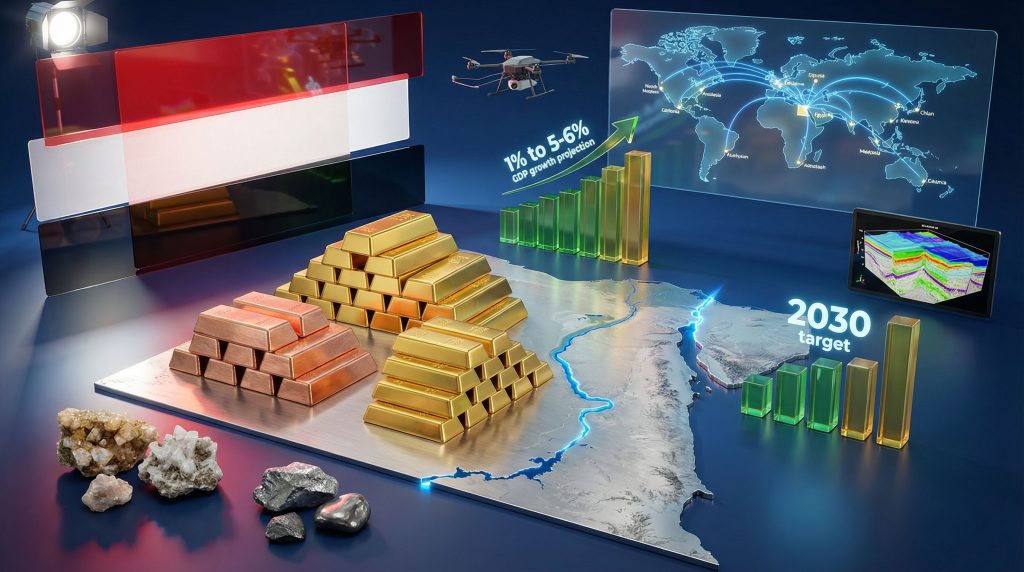
| Gold | 7.3 million tons | 800,000 oz annual target by 2030 | Critical foreign exchange generator |
| Iron Ore | 1.8 billion tons | Active production at multiple sites | Industrial development support |
| Phosphates | 2.8 billion tons | Established operations | Agricultural sector foundation |
| Copper | Emerging discoveries | Exploration phase | Energy transition essential |
| Potash | Significant potential | Development stage | Food security applications |
Gold Resources and Exploration Potential:
Egypt's gold deposits span multiple geological provinces, with the Eastern Desert containing the majority of proven reserves. Recent exploration activities have identified high-grade mineralisation in previously unexplored areas, suggesting substantial potential for resource expansion through systematic exploration programmes. International partnerships have focused on applying advanced gold deposits analysis techniques including airborne surveys, geological modelling, and deep drilling programmes to define resources more precisely.
The government's target of 800,000 ounces annual gold production by 2030 represents a significant increase from current levels, requiring substantial international investment and technological expertise. Cooperation agreements typically include provisions for environmental compliance, community engagement, and revenue sharing that align international commercial interests with Egyptian development objectives.
Critical Minerals for Energy Transition:
Copper exploration has gained particular strategic importance as global demand accelerates driven by renewable energy infrastructure development. Egypt's copper potential remains largely underexplored, with systematic surveys identifying promising geological formations across multiple regions. International cooperation in mineral exploration has focused on applying modern geochemical analysis and geophysical techniques to identify economically viable deposits.
Recent discoveries suggest substantial copper mineralisation potential, particularly in areas with favourable geological characteristics similar to world-class deposits in other regions. These findings have attracted significant international attention, with multiple companies initiating exploration programmes through partnership agreements with Egyptian entities.
Advanced Exploration Technologies
Cooperation in mineral exploration in Egypt increasingly incorporates cutting-edge technologies that enhance discovery potential whilst reducing environmental impacts. International partnerships have introduced sophisticated survey methods and analytical techniques that significantly improve exploration efficiency.
Airborne Survey Technologies:
- High-resolution magnetic surveys capable of detecting subtle geological anomalies
- Gravitational measurement systems for subsurface density mapping
- Radiometric mapping for identifying mineral alteration zones
- LiDAR topographical analysis for geological structure interpretation
- Hyperspectral imaging for surface mineral identification
Advanced Analytical Methods:
- 3D geological modelling applications for structural geology analysis
- Core drilling optimisation using real-time geological logging
- Automated geochemical analysis for rapid sample processing
- Satellite-based mineral detection for regional target identification
- Machine learning algorithms for geological pattern recognition
These technological innovations have transformed cooperation in mineral exploration by enabling more precise targeting of exploration activities and reducing the time required to assess mineral potential. International partnerships typically include technology transfer components that build Egyptian capabilities in these advanced methods whilst advancing commercial exploration objectives.
Regional Cooperation Frameworks
Egypt's mineral exploration partnerships extend beyond bilateral arrangements with individual companies to encompass broader regional cooperation initiatives that enhance collective geological knowledge and exploration capabilities.
Oman-Egypt Mining Cooperation:
The partnership with Oman focuses on expertise exchange and systematic airborne survey programmes across both countries. This cooperation framework leverages Oman's advanced geological survey capabilities whilst providing Egypt access to proven exploration methodologies. Joint programmes include shared geological databases, coordinated exploration techniques, and collaborative workforce development initiatives.
Technical cooperation includes systematic geophysical surveys covering previously unexplored areas, with shared costs and expertise enabling more comprehensive exploration coverage than individual national programmes could achieve. The partnership has identified several promising mineral prospects that warrant detailed follow-up investigation through Egypt and Oman's mining cooperation initiatives.
Saudi Arabia Strategic Partnerships:
Cooperation with Saudi Arabia through Al-Haitham Mining partnerships represents broader GCC integration in mineral exploration activities. These arrangements combine Saudi financial resources with Egyptian geological potential to advance regional mineral development capabilities. The collaboration builds upon successful Saudi exploration licenses frameworks that have demonstrated effective partnership models.
Joint exploration programmes focus on gold and base metals potential, with Saudi expertise in large-scale mining operations complementing Egyptian geological knowledge. The partnerships include infrastructure development components that enhance regional connectivity whilst supporting mineral exploration activities.
Chinese Belt and Road Initiative Integration:
China's involvement in Egyptian mineral exploration reflects broader Belt and Road Initiative objectives that integrate infrastructure development with resource exploration. These partnerships combine exploration activities with transportation and processing infrastructure investments that support long-term mineral development objectives.
Chinese cooperation includes advanced geological survey techniques, processing technology transfer, and infrastructure development that enhances the commercial viability of Egyptian mineral resources. The integrated approach addresses both exploration and downstream development requirements through comprehensive partnership agreements.
Investment and Financing Mechanisms
Cooperation in mineral exploration in Egypt relies on diverse financing structures that accommodate varying risk profiles and development timelines. International partnerships have developed sophisticated financial mechanisms that support exploration activities whilst managing geological and commercial uncertainties.
Development Finance Institution Support:
The World Bank provides technical assistance for regulatory framework development and investment promotion strategies, supporting Egypt's objective to increase mining's GDP contribution from current 1% levels to 5-6% by 2030. World Bank programmes focus on environmental standards implementation, community engagement protocols, and institutional capacity building through Egypt-World Bank mining cooperation.
African Development Bank financing supports infrastructure development projects that enhance mineral exploration capabilities, including transportation networks, power generation, and water resource management systems. These investments create enabling environments for international cooperation whilst addressing broader economic development objectives.
Private Equity and Venture Capital:
Specialised mining funds have increased investment in Egyptian exploration projects, providing risk capital for early-stage exploration activities. These investments typically include staged funding mechanisms that align capital deployment with exploration milestones and resource definition progress.
International mining private equity funds focus on projects with clear development pathways and favourable geological potential, providing both financial resources and technical expertise. Partnership agreements often include provisions for expanding successful exploration programmes into development phases.
Export Credit Agency Backing:
Export credit agencies from major mining equipment producing countries provide financing support for Egyptian exploration projects that utilise their national technologies and services. These arrangements reduce financing costs whilst encouraging technology transfer and capability building.
ECAs typically support comprehensive exploration programmes that include equipment procurement, technical services, and workforce development components. The financing structures align international commercial interests with Egyptian development objectives through integrated support packages.
Market Integration and Supply Chain Development
Egypt's mineral exploration strategy increasingly emphasises integration with global supply chains for critical minerals and energy transition materials. Cooperation frameworks address both resource development and value-added processing capabilities that enhance Egyptian participation in international markets.
Critical Minerals Supply Security:
International partnerships focus on minerals essential for renewable energy infrastructure, including copper for electrical systems, rare earth elements for wind turbines and electric vehicles, and battery materials for energy storage systems. Egypt's geological potential in these categories creates opportunities for strategic partnerships with companies seeking supply chain diversification.
Cooperation agreements typically include provisions for domestic processing capabilities that add value beyond raw material extraction. These arrangements create opportunities for Egyptian participation in higher value-added segments of international supply chains whilst meeting international companies' supply security objectives.
Regional Processing Hub Development:
Egypt's strategic location enables development as a regional processing centre for minerals extracted across North Africa and the broader MENA region. International partnerships increasingly incorporate processing infrastructure development alongside exploration activities, creating integrated value chains that enhance commercial viability.
Processing facility development includes technology transfer components that build Egyptian capabilities in metallurgy, chemical processing, and quality control systems. These investments support long-term cooperation objectives whilst creating domestic employment and industrial development opportunities.
Competitive Positioning Analysis
Egypt's competitive position in international mineral exploration reflects multiple factors including geological potential, infrastructure capabilities, regulatory frameworks, and market access advantages.
| Factor | Egypt | Morocco | Ghana | DRC |
|---|---|---|---|---|
| Geological Diversity | High potential across multiple minerals | Dominant in phosphates | Gold-focused production | Rich copper/cobalt reserves |
| Infrastructure | Established transportation networks | Mature mining infrastructure | Developing capabilities | Significant infrastructure challenges |
| Regulatory Framework | Improving transparency | Established mining code | Mature regulatory system | Political and regulatory risks |
| Market Access | Strategic location for multiple markets | Atlantic access | Regional African markets | Limited infrastructure connectivity |
| Investment Climate | Strengthening incentives | Stable investment environment | Established mining sector | High political risk premiums |
Egypt's competitive advantages centre on geological diversity potential, strategic geographic positioning, and improving regulatory frameworks. The combination creates opportunities for international partnerships that leverage multiple mineral categories whilst accessing diverse international markets through established trade corridors.
Economic Impact Projections and Development Cascades
Cooperation in mineral exploration in Egypt is projected to generate substantial economic impacts extending beyond direct mining activities into broader industrial development and employment creation.
GDP Contribution Targets:
Current mining sector contribution of approximately 1% of GDP represents significant underutilisation of geological potential. Government projections target 5-6% GDP contribution by 2030, requiring estimated investments of $8-12 billion across exploration, development, and processing infrastructure.
International partnerships are expected to contribute 60-70% of required investment capital whilst providing technological expertise and market access capabilities. The projected development timeline assumes systematic exploration programmes identifying economically viable deposits followed by staged development phases incorporating processing capabilities.
Employment Generation Forecasts:
Direct mining employment is projected to reach 200,000+ positions by 2030, with multiplier effects generating 600,000-800,000 indirect employment opportunities across supporting industries. International cooperation includes workforce development components that build Egyptian capabilities in specialised mining technologies and management systems.
Training programmes associated with international partnerships focus on advanced geological techniques, equipment operation and maintenance, environmental management, and safety protocols. These capabilities create long-term institutional capacity that supports sustained sector development beyond individual project lifecycles.
Foreign Exchange Earnings Potential:
Mineral export revenues are projected to reach $4-6 billion annually by 2030, representing substantial contributions to Egypt's foreign exchange earnings. Gold exports are expected to generate $2-3 billion annually, whilst base metals and industrial minerals contribute additional foreign exchange through both exports and import substitution.
Cooperation agreements increasingly emphasise value-added processing that enhances per-unit export revenues whilst creating domestic industrial capabilities. Processing development reduces dependence on commodity price volatility whilst building integrated industrial clusters that support broader economic development.
Infrastructure Development Requirements
Successful cooperation in mineral exploration in Egypt requires substantial infrastructure investments that support both exploration activities and potential commercial development phases.
Transportation Network Expansion:
- Railway connections to major mining areas and export facilities
- Road infrastructure capable of supporting heavy mining equipment transport
- Port facility upgrades for mineral exports and equipment imports
- Pipeline infrastructure for industrial mineral transport
Utilities and Services Infrastructure:
- Power generation capacity increases in mineral-rich regions
- Water resource management systems for exploration and processing
- Telecommunications networks supporting remote exploration activities
- Waste management facilities meeting environmental compliance requirements
International partnerships often include infrastructure development commitments that extend beyond immediate exploration requirements to support long-term commercial development potential. These investments create public goods that benefit broader economic development whilst advancing specific mining objectives.
The next major ASX story will hit our subscribers first
Regulatory Evolution and International Standards
Egypt's regulatory framework for cooperation in mineral exploration has evolved significantly to align with international best practices whilst addressing domestic development objectives.
Environmental Compliance Framework:
Modern exploration agreements require comprehensive environmental impact assessments and restoration bonding that ensure responsible exploration practices. International partnerships must demonstrate compliance with both Egyptian environmental regulations and international standards applicable in their home jurisdictions.
Progressive restoration requirements mandate concurrent remediation of exploration areas, reducing long-term environmental liabilities whilst maintaining social licence for continued operations. These standards align Egyptian practices with international expectations whilst protecting local environmental resources.
Community Engagement Protocols:
Cooperation agreements increasingly include systematic community engagement requirements that ensure local populations benefit from exploration and potential development activities. International partners must demonstrate meaningful consultation processes and local benefit-sharing arrangements.
Community development programmes associated with exploration activities include educational scholarships, healthcare facility support, and infrastructure improvements that create lasting benefits beyond exploration timelines. These commitments build social acceptance for mining activities whilst advancing local development objectives.
Transparency and Disclosure Requirements:
Modern cooperation frameworks require detailed public disclosure of exploration activities, environmental impacts, and community engagement programmes. These transparency mechanisms align Egyptian practices with international extractive industries transparency initiative standards whilst building public confidence in mineral development activities.
Regular public reporting includes exploration results, environmental monitoring data, and community development programme outcomes. This information enables informed public participation in mineral development policy discussions whilst demonstrating responsible exploration practices.
Disclaimer: This analysis contains forward-looking projections and estimates based on current geological assessments, government policy statements, and industry development trends. Actual outcomes may vary significantly due to geological uncertainties, commodity price volatility, regulatory changes, and international market conditions. Investment decisions should be based on comprehensive due diligence and professional advice. The mineral reserve estimates and production projections cited are preliminary and subject to detailed geological verification.
Are You Tracking Global Mining Partnerships for Investment Opportunities?
Egypt's expanding cooperation in mineral exploration demonstrates how strategic partnerships can unlock significant value in emerging mining jurisdictions worldwide. Discovery Alert's proprietary Discovery IQ model instantly identifies ASX mineral discoveries with similar partnership dynamics and resource potential, delivering real-time alerts when Australian companies announce breakthrough exploration results or strategic joint ventures. Begin your 30-day free trial today and position yourself to capitalise on the next major discovery announcement.