June 15, 2026
Understanding Mining Digital Transformation in 2025
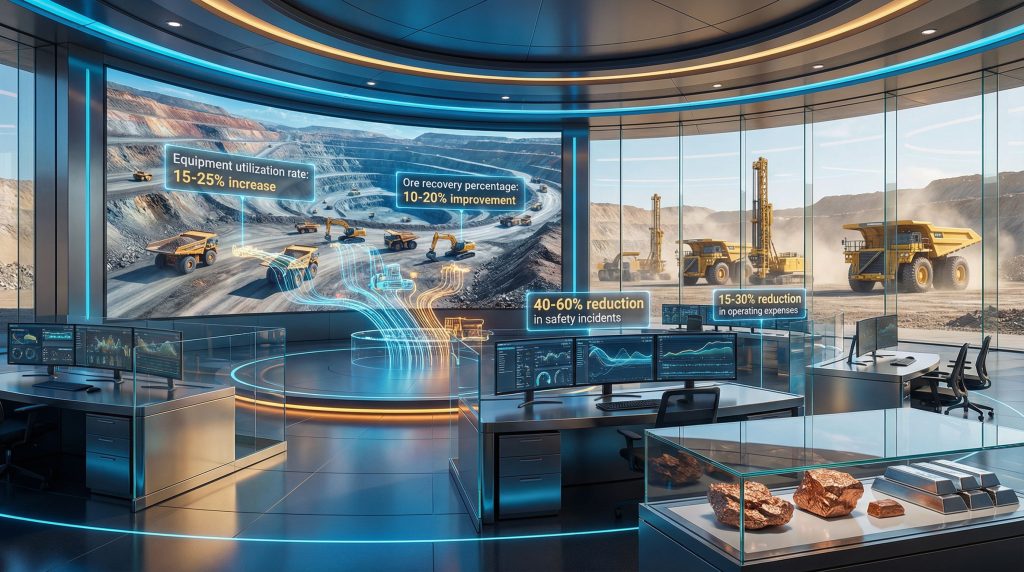
mining digital transformation AI represents far more than simple technology adoption. It encompasses the fundamental restructuring of operational decision-making processes, shifting from reactive maintenance protocols to predictive analytical frameworks that leverage interconnected data streams across the entire mining value chain.
Industrial automation systems across global mining operations face a fundamental paradox. While consumer technology evolves through rapid iterative updates and cloud connectivity, mining operational technology (OT) environments prioritise stability, consistency, and decades-long operational lifespans. This divergence creates unique challenges as mining companies navigate the integration of artificial intelligence and digital transformation initiatives within mission-critical production systems.
The mining sector's approach to technology adoption differs markedly from other industries. Equipment procurement practices specify multi-year operational requirements without frequent software updates, inadvertently constraining vendor innovation capacity and locking operations into slower development cycles. This creates a structural tension between the need for digital advancement and the operational reality of mining environments that value minimal external intervention above technological sophistication.
Core Technology Integration Framework
The digital mining ecosystem requires sophisticated integration across multiple technological domains. Machine learning algorithms process geological, operational, and environmental data in real-time, while industrial Internet of Things (IIoT) sensor networks capture continuous performance metrics from equipment, processing facilities, and environmental monitoring systems.
Edge computing capabilities enable immediate decision-making at the operational level, reducing latency between data collection and actionable insights. Cloud-based analytics platforms serve as centralised processing hubs, combining disparate data sources to generate comprehensive operational intelligence.
Digital twin technology creates virtual representations of physical mining operations, allowing operators to model scenarios, test optimisation strategies, and predict system responses without disrupting production activities. These virtual environments become increasingly sophisticated as they incorporate real-time data-driven mining operations feeds and machine learning algorithms that improve predictive accuracy over time.
The 70% Data Utilisation Challenge
According to industry analysis presented at the Resourcing Tomorrow 2025 conference, mining operations currently possess approximately 70% of the data required to solve their primary operational challenges. However, this data often exists in isolated systems, incompatible formats, or legacy databases that prevent effective integration and analysis.
The critical breakthrough lies not in collecting additional data, but in developing creative methodologies for combining existing datasets. Mining companies that successfully leverage their current data resources can address operational inefficiencies, safety concerns, and productivity challenges without substantial new infrastructure investments.
Data integration challenges include:
- Legacy system compatibility across different operational domains
- Standardisation of measurement protocols and data formats
- Real-time processing capabilities for time-sensitive decision making
- Quality assurance protocols for data accuracy and reliability
- Security frameworks that protect operational intelligence while enabling analysis
When big ASX news breaks, our subscribers know first
Operational Domains Most Suitable for AI Implementation
Mining operations benefit from AI implementation across specific functional areas where pattern recognition, predictive modelling, and automated decision-making deliver quantifiable operational improvements. Success depends on matching AI capabilities to appropriate operational challenges rather than pursuing technology for its own sake.
High-Impact Application Areas
Predictive Maintenance Systems leverage machine learning algorithms combined with IoT sensor networks to identify equipment failure patterns before critical breakdowns occur. These systems analyse vibration data, temperature fluctuations, lubrication quality, and operational stress indicators to predict maintenance requirements and optimise scheduling.
Ore Grade Optimisation employs computer vision technology and spectral analysis to classify ore quality in real-time during extraction and processing. This capability allows operators to adjust processing parameters immediately, improving recovery rates and reducing energy consumption through optimised separation processes.
Equipment Automation integrates autonomous systems with GPS technology and advanced navigation algorithms to optimise hauling routes, reduce fuel consumption, and improve operational safety. Furthermore, AI in drilling operations operates consistently across shifts, eliminating variability associated with human operator decisions.
Safety Monitoring Systems utilise real-time video analytics, environmental sensors, and behavioural pattern recognition to identify potential safety hazards before incidents occur. These systems monitor personnel location, equipment operation parameters, and environmental conditions to trigger immediate alerts and automated responses.
Production Stage Analysis
During the exploration phase, AI systems process geological data from multiple sources, including satellite imagery, ground-penetrating radar, and historical drilling records. Machine learning algorithms identify geological formations and mineral deposit patterns that inform drilling programmes and resource estimation models.
Extraction operations benefit from AI through autonomous hauling systems, blast pattern optimisation algorithms, and real-time ore classification. These applications reduce operational costs while improving safety and productivity metrics across mining sites.
Processing plants implement AI for flotation control systems, grinding optimisation protocols, and automated quality assurance processes. Real-time adjustments based on ore characteristics and processing conditions improve recovery rates and energy efficiency.
Logistics and transport operations leverage AI for route optimisation, inventory management systems, and supply chain coordination. Predictive algorithms anticipate equipment needs, optimise delivery schedules, and reduce transportation costs through efficient routing protocols.
Overcoming Legacy System Integration Challenges
Mining companies face unique obstacles when implementing mining digital transformation AI initiatives due to the fundamental design philosophy of operational technology environments. These systems prioritise operational stability over innovation velocity, creating friction when modern AI platforms require continuous connectivity and software updates.
The Operational Technology Constraint
Mining equipment is designed and built to operate robustly for decades without frequent modifications or software updates. This approach differs dramatically from consumer technology development cycles, where frequent updates and connectivity are standard expectations. Industry experts note that mining companies specify operational lifespans of 10-15 years or more for critical equipment, constraining technology vendors' ability to innovate rapidly.
Operational technology environments often operate on the principle that stability equals safety. Personnel value systems that remain consistent and resist external interference because operational disruption can result in significant production losses, safety hazards, and environmental risks. This creates resistance to frequent software updates and system modifications that are standard in modern AI implementations.
Strategic Implementation Methodology
Phase 1: Infrastructure Assessment requires comprehensive evaluation of existing network connectivity, legacy system compatibility, and cybersecurity vulnerabilities. This phase typically requires 3-6 months for large mining operations and includes data quality auditing protocols to establish baseline performance metrics.
Phase 2: Pilot Programme Development involves small-scale AI deployment in non-critical operational areas where system failures will not disrupt primary production activities. This phase allows operators to benchmark AI performance against traditional methods while developing staff training protocols and change management strategies. Industry experience suggests this phase requires 6-12 months for comprehensive evaluation.
According to BHP's insights on artificial intelligence, one major European mining company spent nearly a year conducting risk analysis before deploying cloud-native AI solutions to production sites. Operators emphasised the critical importance of thorough testing, stating that production disruption would result in immediate project termination regardless of potential long-term benefits.
Phase 3: Scaled Implementation gradually expands AI deployment across operational domains while maintaining isolation protocols for critical systems. This phase includes integration with existing enterprise resource planning systems and development of advanced analytics dashboards for operational management.
Risk Mitigation Protocols
Mining digital transformation AI requires comprehensive risk mitigation strategies that address both technological and operational concerns. These protocols include:
- Redundant system architectures that maintain operational capability during AI system maintenance
- Isolation protocols that prevent AI system failures from affecting critical safety systems
- Manual override capabilities that allow operators to resume traditional control methods immediately
- Performance monitoring systems that track AI system effectiveness against established baselines
- Incident response protocols that address both cybersecurity threats and operational disruptions
Cybersecurity Implications of Connected Mining Operations
Digital transformation in mining operations creates significant cybersecurity vulnerabilities that extend beyond traditional IT security concerns. Connected mining environments face unique threats targeting operational technology systems that control critical infrastructure, safety systems, and production processes.
Understanding the Threat Landscape
Mining operational technology environments present particularly concerning cybersecurity challenges. Industry security experts describe these environments as especially vulnerable due to their combination of critical infrastructure control systems and increasing network connectivity requirements for AI implementation.
The cybersecurity challenge in mining operations involves fundamental asymmetry: attackers need only achieve successful breach once, while mining companies must maintain perfect defensive posture continuously. This imbalance becomes more pronounced as AI implementation increases system connectivity and expands potential attack surfaces.
Mining companies have already experienced significant cybersecurity incidents that resulted in operational problems and production disruptions. These events highlight the real-world consequences of inadequate cybersecurity protocols in connected mining environments.
Defence Strategy Framework
| Security Layer | Implementation Approach | Monitoring Requirements | Response Protocols |
|---|---|---|---|
| Network Segmentation | Isolated OT/IT environments with controlled access points | Continuous traffic monitoring | Immediate isolation capabilities |
| Access Control | Multi-factor authentication and role-based permissions | Real-time access logging | Automatic credential suspension |
| Threat Detection | AI-powered anomaly detection across all connected systems | 24/7 automated monitoring | Instant alert generation |
| Incident Response | Rapid isolation and recovery protocols | Immediate activation procedures | Coordinated response teams |
Network Segmentation creates isolated environments for operational technology systems, preventing cybersecurity breaches in administrative systems from affecting production operations. These architectures require sophisticated access control protocols that allow necessary data flow while maintaining security barriers.
Advanced Threat Detection leverages AI-powered anomaly detection systems to identify unusual network activity, unauthorised access attempts, and potential system compromises. Moreover, these systems operate continuously across all connected devices and systems, generating immediate alerts for security personnel.
Incident Response Protocols emphasise rapid damage containment and system recovery rather than prevention-only approaches. Mining companies must accept that perfect cybersecurity defence is impractical while maximising response speed and minimising operational impact.
Data Ownership and Intellectual Property Challenges
AI implementation in mining operations creates complex legal and intellectual property questions regarding data ownership and analysis outputs. When mining companies utilise external cloud computing services for data analysis, ownership of the analytical results, algorithmic improvements, and derivative insights becomes legally ambiguous.
Mining operations generate valuable geological, operational, and market intelligence through their activities. This data represents significant competitive advantage and intellectual property value. Companies must establish clear legal frameworks governing data ownership, external processing agreements, and intellectual property protection before implementing cloud-based AI solutions.
AI-Driven Operational Efficiency Solutions
Artificial intelligence addresses mining operational efficiency challenges through sophisticated data integration, predictive analytics, and automated decision-making systems. However, industry leaders emphasise that AI functions as a specialised tool rather than a universal solution to operational problems.
Practical Problem-Solving Applications
Mining companies should evaluate AI implementations alongside traditional operations research methodologies to determine optimal solution approaches. Mathematical optimisation techniques often deliver faster implementation timelines, lower costs, and superior return on investment compared to machine learning solutions for certain operational challenges.
Equipment Optimisation represents a primary application area where AI demonstrates clear value. Machine learning algorithms analyse equipment performance data including vibration patterns, temperature variations, hydraulic pressure readings, and operational load factors to predict maintenance requirements and optimise operational parameters.
These systems process continuous data streams from industrial sensors, identifying patterns that indicate impending equipment failures or suboptimal performance conditions. Predictive maintenance protocols based on AI analysis can significantly reduce unplanned downtime while optimising maintenance scheduling and resource allocation.
Real-Time Ore Classification utilises computer vision systems and spectral analysis to assess ore quality during extraction and processing operations. This capability allows immediate adjustments to processing parameters, optimising recovery rates and reducing energy consumption through targeted processing approaches.
Digital twin models create virtual representations of processing facilities, enabling operators to test optimisation strategies and predict system responses without disrupting production. These models incorporate real-time operational data and continuously improve their predictive accuracy through machine learning algorithms.
Data Integration and Analysis Capabilities
Critical Insight: Mining operations already possess approximately 70% of the data required to solve their primary operational challenges. The breakthrough lies in developing creative methodologies for combining these existing datasets rather than collecting additional information.
Successful AI implementation focuses on innovative approaches to data combination and analysis rather than expanding data collection activities. Mining companies can achieve significant operational improvements by leveraging existing geological surveys, equipment performance logs, production records, and environmental monitoring data through sophisticated analytical frameworks.
Predictive Analytics processes historical operational data to identify patterns and trends that inform future decision-making. These systems analyse geological conditions, equipment performance, weather patterns, and market factors to optimise production scheduling, resource allocation, and operational planning.
Pattern Recognition algorithms identify subtle relationships between operational variables that may not be apparent through traditional analysis methods. These insights enable optimisation of complex operational parameters and identification of efficiency improvement opportunities.
Automated Decision Systems implement predetermined response protocols based on real-time data analysis. These systems can adjust processing parameters, modify equipment operating conditions, or trigger maintenance procedures without human intervention when specific operational conditions are detected.
Workforce Development for Digital Mining Operations
Digital transformation in mining requires comprehensive workforce development programmes that bridge traditional mining expertise with emerging technology capabilities. The industry faces a generational transition as AI-native professionals enter the workforce equipped with data-driven problem-solving methodologies.
Emerging Role Requirements
Mining companies require new professional competencies that combine domain expertise with technology skills. Data scientists specialising in industrial applications must understand mining operations, geological processes, and equipment functionality while possessing advanced analytical and machine learning capabilities.
AI/ML engineers with mining domain knowledge represent critical roles for successful digital transformation. These professionals translate operational challenges into technological solutions while understanding the practical constraints and safety requirements of mining environments.
Cybersecurity specialists for industrial environments address the unique security challenges associated with operational technology systems. These roles require understanding of both traditional IT security principles and specialised knowledge of industrial control systems and mining operational requirements.
Digital transformation project managers coordinate complex technology implementations across multiple operational domains while managing change management initiatives and stakeholder communication requirements.
Generational Technology Adoption
Industry leaders observe significant differences in technology adoption between established professionals and emerging workforce entrants. Younger professionals entering the mining industry demonstrate native familiarity with AI tools and data-driven decision-making approaches.
Research papers emerging from mining schools increasingly focus on machine learning applications, indicating that new graduates possess foundational knowledge of AI implementation in mining contexts. These professionals approach operational challenges with data-first methodologies, representing a fundamental shift in mining problem-solving approaches.
This generational transition suggests that mining companies will benefit from workforce development programmes that:
- Combine traditional mining expertise with modern analytical capabilities
- Provide cross-generational mentoring programmes that transfer operational knowledge
- Develop hybrid roles that bridge technical and operational responsibilities
- Emphasise continuous learning protocols for rapidly evolving technology landscapes
Training and Development Framework
Technical Competency Development programmes must address machine learning fundamentals adapted for mining applications, industrial IoT system management, data visualisation tools, and cybersecurity protocols specifically designed for operational technology environments.
Cultural Transformation Elements include development of data-driven decision-making methodologies, cross-functional collaboration protocols between technical and operational teams, continuous learning mindsets that adapt to technological change, and comprehensive risk management approaches for digital environments.
Training programmes should emphasise practical application of AI tools to real mining challenges rather than theoretical technology education. Furthermore, successful programmes integrate classroom learning with hands-on experience using actual operational data and mining-specific case studies.
The next major ASX story will hit our subscribers first
Measuring Digital Transformation Success in Mining
Mining companies require comprehensive measurement frameworks that quantify the operational impact of AI implementation across multiple performance domains. Success metrics must demonstrate clear return on investment while addressing safety, productivity, and cost management objectives.
Key Performance Indicators Framework
| Category | Primary Metric | Measurement Method | Baseline Establishment |
|---|---|---|---|
| Equipment Utilisation | Operational efficiency percentage | Automated monitoring systems | Historical performance analysis |
| Safety Performance | Incident frequency rate per operational hour | Real-time tracking and reporting | Regulatory compliance baselines |
| Production Quality | Recovery rate and processing efficiency | Process analytics and quality control | Laboratory verification protocols |
| Cost Management | Operating expense per unit of production | Financial system integration | Activity-based costing models |
Operational Efficiency Metrics track equipment utilisation rates, processing throughput, energy consumption per unit of production, and maintenance cost optimisation. These measurements require automated monitoring systems that capture real-time performance data across all operational domains.
Safety Performance Indicators monitor incident frequency rates, near-miss reporting, environmental compliance metrics, and regulatory adherence. Real-time tracking systems provide immediate visibility into safety conditions and enable rapid response to potential hazards.
Quality and Recovery Measurements assess ore recovery percentages, processing efficiency rates, and product quality consistency. These metrics require integration with laboratory analysis systems and process control monitoring equipment, including sensor technology advancement initiatives.
Return on Investment Calculation Methodology
ROI calculation for mining AI implementations requires comprehensive baseline establishment across all affected operational domains. Companies must document current performance levels, implementation costs, and expected improvement targets before deploying AI systems.
Technology Implementation Costs include hardware acquisition, software licensing, integration services, training programmes, and ongoing maintenance requirements. These costs must be tracked across multi-year implementation timelines to provide accurate ROI calculations.
Productivity Improvement Quantification measures actual performance gains against established baselines through automated monitoring systems. This includes reduced downtime, improved processing efficiency, optimised resource utilisation, and enhanced operational consistency.
Risk Reduction Value Calculation quantifies the economic impact of improved safety performance, environmental compliance, and operational reliability. These benefits often represent significant value that extends beyond direct productivity improvements.
What Are the Future Trends for AI-Driven Mining Operations?
The future of AI-driven mining operations extends beyond current AI implementation toward comprehensive autonomous operations, integrated supply chain optimisation, and real-time environmental monitoring systems. These developments will require fundamental changes in operational philosophy and workforce capabilities.
Emerging Technology Integration Trends
Autonomous Mining Operations represent the logical progression of current AI implementation efforts. Fully autonomous systems will coordinate extraction, processing, and logistics activities with minimal human intervention while maintaining safety and environmental compliance standards.
Integrated Supply Chain Optimisation will connect multiple mining sites, processing facilities, and distribution networks through centralised AI systems that optimise resource allocation, transportation logistics, and market response strategies across entire mining enterprises.
Advanced Environmental Monitoring will integrate AI systems with comprehensive sensor networks to provide real-time environmental impact assessment, regulatory compliance monitoring, and sustainability optimisation across all operational activities.
Materials Discovery Acceleration through AI-powered research will identify new mineral processing techniques, optimise extraction methods for complex ore bodies, and develop sustainable mining practices that minimise environmental impact while maximising resource recovery.
Strategic Planning Considerations
Mining companies must develop technology roadmaps that extend 5-10 years into the future while maintaining flexibility for emerging technological developments. These plans should address partnership strategies with technology providers, research institutions, and regulatory bodies to ensure coordinated advancement.
Regulatory Compliance Planning for automated operations requires proactive engagement with regulatory authorities to establish safety standards, environmental protection protocols, and operational oversight requirements for AI-driven mining systems.
According to CSG Talent's analysis, Sustainability Integration through AI optimisation will become increasingly important as environmental regulations tighten and stakeholder expectations for sustainable mining practices continue to evolve. AI systems can optimise resource consumption, minimise waste generation, and reduce environmental impact across all operational domains.
Building a Sustainable Digital Mining Strategy
Successful mining digital transformation AI requires pragmatic implementation strategies that focus on specific problem-solving rather than technology adoption as an end goal. Companies must maintain realistic expectations about AI capabilities while developing comprehensive risk management protocols and workforce development programmes.
Implementation Success Factors
Problem-Focused Implementation prioritises specific operational challenges over general technology deployment. Mining companies should identify discrete problems where AI provides clear advantages over traditional solutions before expanding to broader applications.
Comprehensive Risk Management addresses both cybersecurity concerns and operational risks associated with increased system connectivity and automation. This includes redundant system architectures, manual override capabilities, and rapid incident response protocols.
Internal Expertise Development through targeted hiring and training programmes ensures that mining companies maintain control over their digital transformation initiatives rather than relying entirely on external technology providers.
Performance Evaluation Protocols establish clear metrics for measuring AI system effectiveness against operational baselines and traditional solution approaches. Regular assessment enables continuous optimisation and identifies areas where AI provides genuine value versus situations where traditional methods remain superior.
In addition to these implementation factors, the sustainable mining transformation movement emphasises that companies approaching digital transformation with realistic expectations, comprehensive planning, and focus on practical problem-solving will achieve sustainable competitive advantages through AI implementation. The key lies in treating AI as a specialised tool for specific applications rather than a universal solution to operational challenges.
The industry's future success depends on balancing innovation with operational stability, developing workforce capabilities that bridge traditional expertise with technological advancement, and maintaining focus on practical value creation rather than technology adoption for its own sake.
Want to Stay Ahead of Mining Technology Breakthroughs?
Discovery Alert's proprietary Discovery IQ model delivers real-time alerts on significant ASX mineral discoveries, empowering investors to identify actionable opportunities in mining technology companies ahead of the broader market. Discover how historic mining discoveries have delivered substantial returns by exploring our dedicated discoveries page, and begin your 30-day free trial today to position yourself at the forefront of mining innovation.