
June 12, 2026
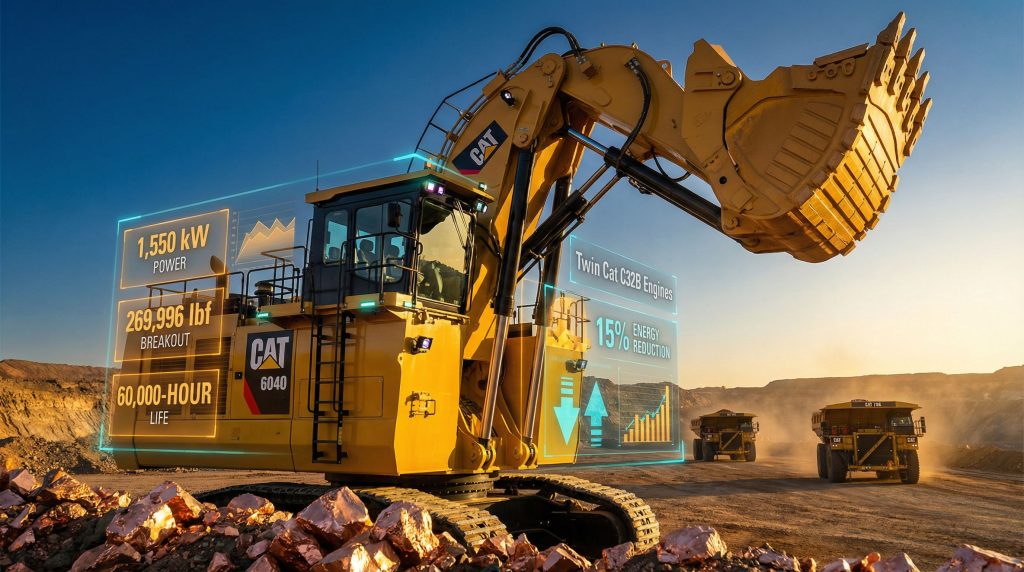
Mining equipment engineering continues to evolve through sophisticated hydraulic system optimisation, with modern surface mining operations demanding unprecedented material movement rates while maintaining operational efficiency. The intersection of power system engineering, hydraulic flow control, and operator safety technologies represents a critical advancement pathway for large-scale mining productivity, particularly as mining industry innovation transforms traditional approaches.
Heavy equipment design optimisation addresses fundamental challenges in cost-per-tonne material movement, with 400-tonne class hydraulic mining shovels serving as cornerstone assets for high-volume surface mining operations. These machines operate within complex systems requiring integration with haul truck fleets, mine planning software, and maintenance protocols that collectively determine operational profitability.
Understanding Heavy Equipment Classification Systems in Modern Mining Operations
Mining equipment classification systems reflect operational scale requirements and material handling capacity specifications that directly influence production economics. The 400-tonne class represents a critical threshold where hydraulic mining shovels achieve optimal balance between material movement capacity and operational flexibility across diverse geological conditions.
Mining Shovel Weight Classifications and Operational Applications
| Weight Class | Operational Scale | Primary Applications |
|---|---|---|
| 200-300 tonnes | Medium-scale operations | Secondary mining, selective material handling |
| 300-400 tonnes | Large-scale surface mining | Primary overburden removal, continuous production |
| 400+ tonnes | Ultra-large mining operations | High-volume material movement, pit optimisation |
Equipment sizing decisions within mining operations require comprehensive analysis of geological characteristics, mine planning requirements, and fleet integration considerations. The New Cat 6040 mining shovel, operating at 405-411 tonnes across different configurations, positions itself within the ultra-large operational category while maintaining versatility for varying material conditions.
Cost-per-tonne optimisation analysis demonstrates that 400-tonne class equipment achieves superior economics in operations moving more than 50,000 tonnes per day of material. Below this threshold, smaller equipment classes often provide better capital utilisation rates, while above this volume, larger shovels justify their capital investment through reduced cycle times and improved truck utilisation rates.
Competitive Landscape Analysis for Heavy Mining Equipment
The 400-tonne hydraulic shovel market includes established competitors such as Komatsu PC8000, Hitachi EX8000, and Liebherr R9400, each offering distinct engineering approaches to hydraulic system design, power management, and operational optimisation. Market positioning within this segment emphasises differentiation through fuel efficiency, maintenance intervals, and integration capabilities with existing fleet management systems.
Capital expenditure considerations for mining operations investing in 400-tonne equipment typically require 5-7 year payback period analysis incorporating productivity gains, fuel savings, and maintenance cost reductions. Furthermore, financing options include direct purchase, lease arrangements, and equipment-as-a-service models that align capital deployment with production revenue streams through capital raising methods.
Fleet integration strategies represent critical success factors for heavy equipment deployment, particularly regarding load-haul matching optimisation. The New Cat 6040 mining shovel achieves 4-pass loading capability for 147-tonne Cat 785 trucks and 8-pass loading for 327-tonne Cat 796 AC trucks, enabling predictable cycle time management and truck utilisation optimisation.
When big ASX news breaks, our subscribers know first
Advanced Power System Engineering and Hydraulic Architecture
Power system design in 400-tonne mining shovels requires balancing maximum output capacity with fuel efficiency and emissions compliance across diverse regulatory frameworks. The New Cat 6040 mining shovel integrates twin Cat C32B engines delivering 1,550 kW (2,079 hp) combined output, with critical redundancy enabling single-engine operation for emergency mobility and fault tolerance.
Dual-Engine Configuration Benefits and Operational Advantages
Twin-engine architecture provides operational advantages beyond simple power output multiplication. Single-engine operational capability ensures that equipment can be moved off active mining faces during maintenance intervals or emergency situations, preventing production bottlenecks and reducing safety risks associated with immobilised equipment in active work areas.
Emissions compliance represents a significant engineering challenge for global equipment deployment, with the New Cat 6040 offering configurations meeting:
• U.S. EPA Tier 4 Final / Stage V emissions regulations without DEF requirements
• China Nonroad Stage III emissions standards (equivalent to U.S. EPA Tier 2)
• European Stage V compliance for operations in EU jurisdictions
This regulatory flexibility enables mining companies to deploy standardised equipment across international operations without modification requirements or performance compromises.
Variable Flow Hydraulic System Engineering
Hydraulic system optimisation represents the most significant advancement in mining shovel efficiency over the past decade. Conventional hydraulic systems operate at constant maximum pressure across all circuits, creating substantial energy waste and thermal stress on components.
The New Cat 6040's variable flow system delivers up to 15% more efficiency than conventional hydraulic systems through dynamic pump assignment and real-time demand optimisation
Five-circuit hydraulic architecture enables simultaneous operations across:
- Two independent cylinder motions
- Two separate travel motions
- Swing system operation
This configuration eliminates the mechanical constraints inherent in sequential hydraulic operation, reducing cycle times and enabling more complex digging patterns that optimise material handling efficiency.
Hydraulic Performance Specifications and Breakout Force Analysis
| Configuration | Breakout Force | Applications |
|---|---|---|
| Face shovel | 1,201 kN (269,996 lbf) | Bench mining, overburden removal |
| Backhoe | 1,123 kN (252,460 lbf) | Loading operations, selective digging |
High breakout forces prevent bucket stall conditions when encountering consolidated materials, improving productivity and reducing operator fatigue. The force differential between configurations reflects engineering optimisation for specific mining applications and material characteristics.
Hydraulic Optimisation Technology and Energy Efficiency
Variable hydraulic flow control represents a paradigm shift from conventional constant-displacement pump systems toward intelligent demand-responsive hydraulic management. This technology addresses fundamental inefficiencies in traditional hydraulic systems that waste energy through unnecessary pressure maintenance and thermal generation, aligning with data-driven mining operations that demand enhanced efficiency.
Dynamic Pump Assignment Technology
Real-time demand analysis enables the hydraulic system to assign individual pumps or pump groups to deliver precise flow and pressure requirements for each operational function. This eliminates scenarios where pumps operate at maximum system pressure when individual circuits require only partial pressure or flow rates.
Energy conservation benefits include:
• Reduced thermal stress on hydraulic components
• Lower fuel consumption through eliminated excess pressure generation
• Extended component longevity via reduced average operating pressures
• Decreased maintenance requirements through thermal load reduction
The closed-loop swing system incorporates regenerative hydraulic principles that capture energy during deceleration phases and redirect this energy to assist subsequent acceleration cycles. This approach reduces overall power consumption while improving cycle time consistency.
Cycle Time Optimisation and Material Handling Efficiency
Bucket capacity configurations range from 15-38.4 m³ depending on material density and application requirements. This variability enables operators to optimise payload matching with truck capacities while maintaining consistent cycle times across varying geological conditions.
Loading Cycle Efficiency Metrics:
• 4-pass loading for 147-tonne trucks: Optimal for medium-capacity operations
• 8-pass loading for 327-tonne trucks: Maximum efficiency for large-scale operations
• Swing speed optimisation through closed-loop control reduces dead time between passes
Pass-match loading efficiency prevents both truck underloading (wasted hauling capacity) and overloading (transmission stress and regulatory violations), directly improving transportation economics and equipment longevity.
Operator Safety Systems and Ergonomic Design Integration
Modern mining shovel design prioritises operator safety through integrated technology systems, ergonomic cab design, and comprehensive visibility enhancements. The New Cat 6040 mining shovel incorporates multiple safety technologies that reduce accident risks while improving operational efficiency and operator comfort.
Visibility Enhancement Technology and Spatial Awareness
The cab design achieves 40% increased visibility of digging and loading areas through strategic window placement, floor window integration for track monitoring, and elimination of structural blind spots. This visibility improvement directly correlates with reduced positioning errors and improved spatial awareness during truck loading operations.
Vision 360 camera system integrates four camera views providing 360-degree surround monitoring of the shovel's operational environment. This technology reduces blind spots that historically contributed to equipment collisions and operator positioning errors, particularly valuable during truck approach and positioning sequences.
Floor window integration enables continuous track and ground condition monitoring, allowing operators to assess surface stability, track wear patterns, and debris accumulation without requiring external inspection procedures.
Acoustic Environment and Operator Comfort
Interior sound levels maintained at 68 dBA represent significant reduction compared to conventional heavy equipment, reducing operator fatigue and enabling extended operational shifts without hearing protection requirements. This acoustic environment supports improved communication and reduces stress-related performance degradation.
Three-seat configuration specifications:
• Fully adjustable operator seat with ergonomic control integration
• Elevated trainer seat with laptop workspace for supervision and instruction
• Fold-away auxiliary seat for maintenance personnel and visitor access
This configuration facilitates comprehensive training programmes while maintaining operational efficiency during skill development phases.
Emergency Safety Systems and Access Control
The 45-degree hydraulically operated access stairway features emergency lowering capability ensuring operator egress even during hydraulic system failure or engine shutdown conditions. This redundancy addresses critical safety scenarios where conventional access systems would prevent safe evacuation from elevated cab positions.
Enhanced Motion Control technology incorporates angle sensors on boom and stick linkages to calculate positioning and prevent hard stops or metal-to-metal contact. This system reduces pressure spikes, shock feedback, and component stress while improving operator comfort and equipment longevity.
Maintenance System Innovation and Uptime Optimisation
Modern mining operations require maintenance systems that minimise downtime while maximising component longevity and operational reliability. The New Cat 6040 mining shovel integrates several maintenance optimisation technologies designed to reduce service intervals and improve diagnostic capabilities.
Extended Maintenance Intervals and Component Durability
| Maintenance Category | Standard Interval | Extended Interval |
|---|---|---|
| Engine oil changes | 500 hours | 1,000 hours (with optional attachment) |
| Grease system maintenance | Fixed-axle design eliminates consumption | N/A |
| Hydraulic system service | 60,000-hour target design life | Enhanced component durability |
Fixed-axle roller and idler design eliminates grease consumption requirements in these critical wear components, substantially reducing maintenance complexity and lubricant costs. Single-line grease injection systems paired with fixed pin architecture simplify distribution systems while reducing component count and potential failure points.
Rigorous hose routing optimisation provides improved field performance delivering thousands of operating hours without major hydraulic leaks. This engineering approach addresses one of the most common failure modes in hydraulic mining equipment while reducing environmental risks and maintenance downtime.
Remote Diagnostics and Predictive Maintenance
Remote Troubleshoot technology enables off-site problem diagnosis without impacting shovel performance, reducing response times and minimising diagnostic downtime. This capability allows technical specialists to analyse equipment performance data and identify potential issues before they result in operational failures.
Remote Flash software updating eliminates requirements for on-site technician presence during software upgrades, enabling convenient scheduling of updates during planned maintenance windows. This approach reduces service costs while ensuring equipment operates with current software optimisation and safety features.
ProductLink Elite connectivity enhances machine reporting data availability, providing operators and maintenance teams with comprehensive performance metrics for predictive maintenance planning and operational optimisation.
Accessibility and Service Efficiency Design
Service accessibility represents a critical factor in maintenance efficiency and technician safety. The New Cat 6040 mining shovel incorporates several design features that improve service access while reducing maintenance complexity:
• Anti-slip walkways providing safe access to all service areas
• Retractable service station for consolidated fluid access points
• Boom-mounted hydraulic block positioning for enhanced technician access
• Electronic infrastructure optimised for diagnostic equipment integration
These accessibility improvements reduce service time requirements while improving safety conditions for maintenance personnel working on elevated platforms and confined spaces.
Future-Proofing Technology and Retrofit Capabilities
Mining equipment investments require consideration of technological evolution and operational requirement changes over equipment lifecycles spanning multiple decades. The New Cat 6040 mining shovel incorporates design features that enable technology upgrades and adaptation to future operational requirements, particularly as AI in mining technology continues advancing.
Electronic Architecture and Technology Integration
Optimised electronic infrastructure supports technology retrofits including MineStar suite compatibility for Fleet, Terrain, Detect, and Health systems. This compatibility enables integration with comprehensive mine management platforms that optimise equipment utilisation, maintenance scheduling, and operational safety protocols.
Power-agnostic design enables future electric power module integration, addressing evolving regulatory requirements and operational preferences for electrified mining equipment. This capability ensures that equipment investments remain viable as mining operations transition toward reduced emissions and alternative power sources.
Connectivity and Data Analytics Integration
Enhanced machine reporting capabilities provide real-time sensor monitoring and fault warning systems that enable proactive maintenance management and operational optimisation. These data streams support machine learning applications and predictive analytics that improve equipment utilisation and reduce unplanned downtime.
Integration capabilities with mine-wide operational systems enable comprehensive data sharing between equipment, fleet management platforms, and production planning systems. This connectivity supports optimisation algorithms that improve overall mine productivity and equipment coordination.
The next major ASX story will hit our subscribers first
Competitive Analysis and Market Positioning
The 400-tonne hydraulic mining shovel market requires comprehensive analysis of performance characteristics, operational costs, and technology differentiation factors that influence equipment selection decisions by mining operations.
Performance Benchmarking and Competitive Comparison
| Performance Metric | Cat 6040 | Industry Average | Competitive Advantage |
|---|---|---|---|
| Breakout Force (Face Shovel) | 1,201 kN | 1,100-1,250 kN range | Competitive performance |
| Hydraulic Efficiency Gain | 15% improvement | Baseline comparison | Significant advantage |
| Engine Redundancy | Twin-engine operation | Single-engine standard | Operational advantage |
Fuel efficiency improvements through hydraulic optimisation provide measurable operational cost advantages over equipment lifecycles. The 15% efficiency improvement translates to substantial fuel cost savings in operations with high equipment utilisation rates and extended operational shifts.
Total Cost of Ownership Analysis
Initial capital expenditure analysis must incorporate operational efficiency gains, maintenance cost projections, and productivity improvements that translate to revenue enhancement over equipment lifecycles. Target design life of at least 60,000 operating hours provides framework for long-term cost analysis and investment justification.
Investment Consideration Factors:
• Capital expenditure versus operational efficiency gains
• Maintenance cost projections over 60,000-hour lifecycle
• Productivity improvements enabling revenue enhancement
• Fuel cost reductions through hydraulic optimisation
• Training and integration costs for operational implementation
Mining operations investing in 400-tonne class equipment typically require comprehensive analysis incorporating 5-7 year payback periods through productivity gains, fuel savings, and maintenance cost reductions
Implementation Planning and Operational Integration
Successful deployment of 400-tonne mining shovels requires comprehensive planning addressing site preparation, operator training, and integration with existing fleet management systems. These considerations directly influence implementation timelines and operational success.
Site Preparation and Infrastructure Requirements
Ground pressure specifications and surface preparation requirements for 400-tonne equipment differ substantially from lighter equipment classes. Mining operations must assess pit road design, working platform stability, and support infrastructure capacity to accommodate increased equipment weights and operational loads.
Transportation logistics for equipment delivery require specialised heavy-haul capabilities and route planning. Equipment components exceeding standard transportation limits necessitate coordination with transportation authorities and infrastructure assessment for bridge capacities and road surface conditions.
Training Programmes and Operational Transition
Operator training requirements for 400-tonne equipment include:
- Equipment familiarisation with hydraulic system operation
- Safety system integration and emergency procedures
- Maintenance protocols and diagnostic system utilisation
- Fleet coordination and communication procedures
Productivity ramp-up timelines during implementation typically require 3-6 months for operators to achieve optimal performance levels with new equipment systems. Training programmes must address both technical operation and integration with existing mine procedures.
Return on Investment Analysis and Financial Planning
ROI analysis for 400-tonne mining shovel investments requires quantification of productivity improvements, operational cost reductions, and revenue enhancement opportunities. Financial modelling must incorporate equipment financing options, depreciation schedules, and operational cash flow projections.
Production volume requirements justifying heavy equipment investment typically exceed 40,000 tonnes per day of material movement. Below this threshold, smaller equipment may provide superior capital efficiency, while above this volume, 400-tonne shovels demonstrate clear economic advantages.
Investment Analysis Framework:
• Baseline productivity metrics from existing equipment
• Projected efficiency gains through advanced hydraulic systems
• Maintenance cost comparisons with current equipment fleet
• Fuel consumption analysis and cost projections
• Integration costs with existing operational systems
Technical Specifications and Operational Capabilities
Understanding the detailed technical specifications of the New Cat 6040 mining shovel provides insight into operational capabilities and engineering optimisation approaches that differentiate this equipment within the competitive marketplace, as highlighted by recent innovation expo insights.
Structural Engineering and Durability Specifications
The equipment achieves 2.25% weight increase compared to previous generation models, indicating structural reinforcement and component durability improvements. Weight distribution across 405-411 tonnes depending on configuration reflects engineering optimisation for different operational applications and material handling requirements.
Enhanced structural reinforcement includes:
• 60,000-hour target design life specifications
• Robust structures designed for demanding mine conditions
• Heavy-duty fixed-axle components eliminating maintenance requirements
• Simplified grease distribution systems reducing complexity and failure points
These engineering improvements address common failure modes in heavy mining equipment while reducing operational complexity and maintenance requirements.
Hydraulic System Architecture and Flow Control
Five-circuit hydraulic configuration enables complex operational sequences that optimise material handling efficiency and reduce cycle times. This architecture supports simultaneous motion control across multiple equipment systems, eliminating sequential operation constraints that limit productivity in conventional hydraulic designs.
Variable flow control technology dynamically assigns hydraulic capacity based on real-time demand analysis, preventing energy waste through unnecessary pressure maintenance. This approach reduces thermal stress on hydraulic components while improving fuel efficiency and component longevity, according to advanced hydraulic mining shovel technology.
Disclaimer: Performance specifications and efficiency improvements are based on manufacturer specifications and may vary depending on operational conditions, material characteristics, and maintenance practices. Mining operations should conduct independent analysis and field trials to validate performance claims for specific applications.
This technical analysis of 400-tonne class mining shovel engineering demonstrates the complex integration of power systems, hydraulic optimisation, operator safety, and maintenance efficiency that defines modern mining equipment capability. The New Cat 6040 mining shovel represents significant advancement in hydraulic efficiency and operational integration that addresses evolving requirements for large-scale surface mining operations.
Ready to Capitalise on the Next Heavy Equipment Innovation?
Discovery Alert's proprietary Discovery IQ model delivers real-time alerts on significant ASX mining equipment and technology discoveries, instantly empowering subscribers to identify actionable opportunities ahead of the broader market. Begin your 14-day free trial today and secure your market-leading advantage in the evolving mining technology sector.