July 23, 2026
The Hidden Cost Crisis Driving Mining's Technology Revolution
Across open-pit mining operations worldwide, a quiet but consequential problem has persisted for decades: the gap between what a fleet could produce and what it actually delivers on any given shift. Operator variability, incomplete haul cycle data, and disconnected reporting systems have collectively eroded billions of dollars in potential productivity. The industry has long collected data, but the harder challenge has always been transforming that data into decisions that change behaviour at the operator level, in real time, every shift.
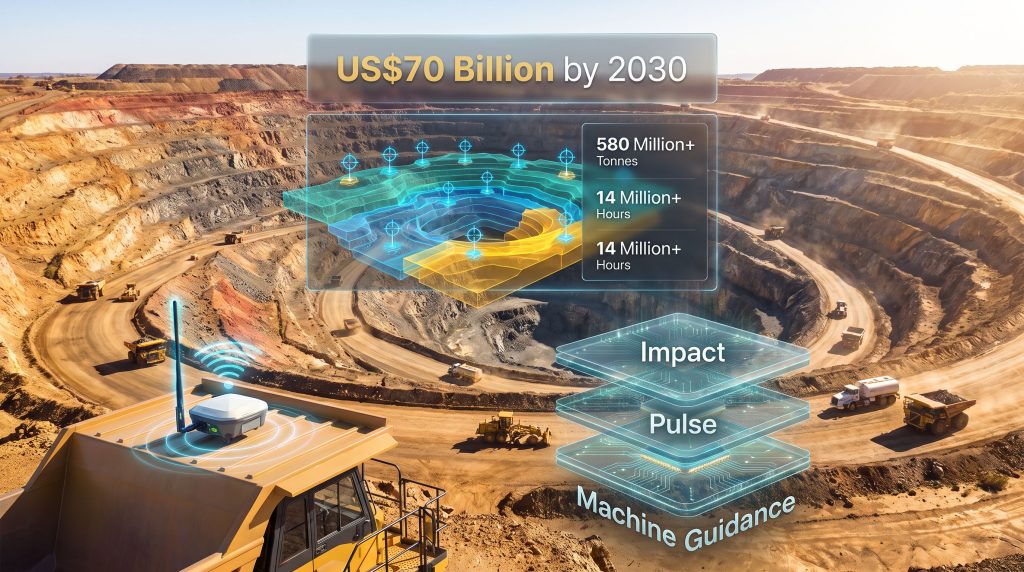
That structural problem is now being addressed by a new generation of integrated operational technology platforms. The global mining fleet management market is projected to surpass US$70 billion by 2030, a figure that reflects not just growing fleet sizes, but a fundamental reorientation of how mine operators think about visibility, performance, and cost control. Furthermore, data-driven mining operations have shifted the conversation from simply tracking machines to optimising every tonne they move.
When big ASX news breaks, our subscribers know first
Why OEM-Agnostic Architecture Is Becoming a Non-Negotiable Standard
The Vendor Lock-In Problem in Traditional Fleet Systems
For much of mining's modern history, fleet management systems were designed to work within the boundaries of a single equipment manufacturer's ecosystem. If a mine site ran a mixed fleet of trucks, dozers, and loaders sourced from multiple original equipment manufacturers, operators were frequently forced to manage several disconnected platforms simultaneously, each with its own data formats, reporting cadences, and interfaces.
The commercial consequence of this fragmentation is significant. Mine operators lose time reconciling incompatible datasets, and the resulting picture of site performance is always incomplete. As mine fleets have grown more diverse, the limitations of OEM-specific systems have become increasingly visible.
MaxMine fleet management expansion directly addresses this problem through an OEM-agnostic architecture that operates across equipment brands without vendor dependency. The platform is structured across three distinct but interconnected capability layers:
- Machine Guidance uses high-precision GNSS receivers, developed through a partnership with Sweden-based machine control specialist L5 Navigation, to pinpoint the exact position of individual machines. This enables accurate drilling, digging, and loading decisions rather than approximate positioning.
- Pulse functions as the core fleet management layer, consolidating real-time data on fleet location, payload volumes, production cycle counts, and operational status into a single, coherent view of site performance.
- Impact converts the raw intelligence gathered through Pulse into structured, targeted improvement programmes designed to drive measurable outcomes across production, safety, operator development, haul road condition monitoring, and equipment health.
The integration of Machine Guidance with L5 Navigation's GNSS technology adds a capability that goes well beyond standard GPS fleet tracking. Operators gain access to real-time, synchronised 3D visualisation of maps, surfaces, and mining blocks — a feature with practical implications for open-pit mine planning, bench execution, and material movement accuracy. In addition, 3D geological modelling capabilities within the platform are available now as a live integration, enhancing precision across active operations.
What a Decade of Operational Data Actually Reveals
The Compounding Advantage of Longitudinal Mining Datasets
One of the less-discussed dynamics in mining technology procurement is the structural advantage held by platforms with deep historical datasets. Machine learning models trained on years of high-resolution operational data produce meaningfully more accurate predictions and performance benchmarks than systems built on shorter data histories or sampled intervals.
MaxMine's platform has accumulated a substantial operational foundation over more than ten years of deployment across leading global and local natural resources companies. The scale of that foundation is difficult to replicate quickly:
| Performance Metric | Scale Achieved |
|---|---|
| Annual tonnage tracked and optimised | 580 million+ tonnes |
| Total operational hours analysed | 14 million+ hours |
| Incident investigations conducted | 230+ |
| Years of platform development | 10+ |
This data depth matters for a specific reason: AI models that underpin real-time decision support are only as reliable as the training data behind them. A platform that has analysed over 14 million hours of operational behaviour across diverse mine sites and equipment configurations has a significantly richer basis for identifying performance anomalies, predicting equipment stress points, and benchmarking operator behaviour against statistically valid baselines.
For mine site procurement teams evaluating fleet management systems, this distinction between a data-rich incumbent and a feature-rich newcomer is increasingly recognised as a critical differentiator — not just a marketing talking point. Consequently, AI-powered mining efficiency is becoming a decisive factor in platform selection decisions.
From Fleet Tracking to Fleet Optimisation: Understanding the Difference
Why Dashboards Alone Do Not Move the Needle
The mining technology market has produced many systems capable of collecting and displaying operational data. However, the harder and more commercially valuable problem is converting that data into structured actions that change outcomes at the operator and site-management level.
The distinction between a fleet tracking system and a fleet optimisation system lies in the feedback loop. Platforms designed purely for reporting place the burden of analysis and intervention on site personnel, who may lack the time, tools, or methodology to act consistently on what the data reveals.
MaxMine fleet management expansion's three-layer architecture is engineered specifically to close this loop. The Impact layer does not simply generate reports; it produces targeted improvement programmes that address the five operational domains most directly connected to cost per tonne and safety performance:
- Production throughput optimisation across haul cycles and loading sequences
- Operator performance coaching, using behavioural data to identify and address individual variability
- Safety outcomes, supported by real-time fleet visibility and historical incident analysis
- Haul road conditions, monitored to reduce tyre wear, fuel consumption, and vehicle stress
- Asset health monitoring, tracking equipment condition signals before they escalate into costly failures
This structured approach represents a methodological shift that many mine operators are now explicitly seeking. As operational technology investment has grown, so has the expectation that platforms deliver measurable performance improvement programmes, not just data aggregation services.
Comparing Traditional and Integrated Fleet Management Approaches
The competitive landscape for mining fleet management in 2026 reflects a market in transition. Standalone fleet management products are increasingly being displaced by integrated platforms that combine visibility, AI-driven analysis, and improvement methodology within a single operational framework.
| Capability Dimension | Traditional FMS | Integrated AI-Driven Platform |
|---|---|---|
| Equipment compatibility | OEM-specific | OEM-agnostic |
| Data output | Tracking and reporting | Real-time decision support |
| Improvement methodology | Manual analysis | AI-automated coaching |
| 3D visualisation | Limited | Synchronised real-time mapping |
| Operator development | Separate system | Embedded within platform |
| Cost per tonne focus | Indirect | Direct optimisation target |
The expansion of platform coverage to include ancillary equipment such as graders, water carts, dozers, and wheel loaders alongside primary haul trucks is another dimension where integrated systems are creating new value. Ancillary equipment has historically sat outside the scope of fleet management investment despite its direct influence on haul road quality, dust suppression effectiveness, and overall site productivity.
The Safety and Sustainability Case for Precision Fleet Management
Operational Technology as a Safety Infrastructure Investment
Real-time fleet visibility has a direct relationship with incident exposure in open-pit environments. When site managers can see exactly where every machine is operating, identify behavioural anomalies in haul cycle data, and access a historical record of how incidents have unfolded across similar operational conditions, the capacity for proactive safety management increases substantially.
MaxMine's record of conducting over 230 incident investigations is itself an indicator of the platform's embedded role in safety management processes at active mine sites. Each investigation generates structured learnings that feed back into the AI models underpinning operator coaching and safety monitoring.
From a sustainability perspective, the efficiency gains associated with precision fleet management carry measurable environmental benefits:
- Reduced variability in haul cycles directly lowers diesel consumption per tonne of material moved
- High-precision GNSS guidance through L5 Navigation's technology reduces over-drilling and unnecessary ground disturbance
- Optimised machine utilisation decreases total engine hours required to meet production targets, extending equipment life and reducing embodied emissions from replacement machinery
These outcomes are increasingly relevant to mining companies responding to institutional investor pressure around ESG performance reporting. Furthermore, predictive maintenance in mining contributes to these sustainability goals by reducing unnecessary interventions. Fleet management investment is no longer evaluated solely on productivity and cost metrics; its contribution to emissions reduction and safety culture is becoming part of the value assessment.
The next major ASX story will hit our subscribers first
A Practical Framework for Evaluating Fleet Management Systems
Step-by-Step Assessment for Site-Level Decision Makers
Mine operators approaching fleet management procurement benefit from a structured evaluation methodology that goes beyond feature comparison. The following sequence reflects best practice for site-level technology assessment:
- Establish the operational baseline by quantifying current cost per tonne, cycle time variability, and equipment utilisation rates. Without this baseline, ROI calculations remain speculative.
- Assess OEM compatibility requirements for your specific fleet configuration. If equipment sourced from multiple manufacturers is already in use or planned, OEM-agnostic architecture becomes a prerequisite rather than a preference.
- Evaluate data architecture quality by determining whether candidate systems capture continuous, high-resolution data or rely on periodic sampling. The difference in data fidelity has direct implications for AI model performance.
- Examine the improvement methodology to distinguish between platforms that produce reports and those that produce structured intervention programmes with accountable outcomes.
- Review machine guidance precision requirements for your mining method. Open-pit operations with complex bench configurations and multiple simultaneous dig faces benefit disproportionately from high-precision GNSS positioning.
- Map the ROI pathway by connecting specific platform capabilities to your site's highest-cost operational variables. Productivity uplift, fuel efficiency, tyre life, and safety incident reduction each carry quantifiable financial implications.
A common procurement error is evaluating fleet management systems primarily on feature lists. The more critical differentiator is the platform's methodology for converting operational data into measurable, sustained site improvements.
Frequently Asked Questions: MaxMine Fleet Management Expansion
What does MaxMine's Pulse layer actually do?
Pulse is MaxMine's core fleet management module. It provides consolidated, real-time visibility across fleet location, payload data, production cycles, and overall operational status, giving mine site teams a single, coherent performance picture rather than fragmented data from multiple sources.
How is machine guidance different from standard GPS tracking?
Standard GPS fleet tracking provides approximate location data sufficient for broad fleet visibility. Machine guidance, delivered through high-precision GNSS receivers developed in partnership with L5 Navigation, provides exact positional coordinates at the individual machine level, enabling accurate drilling, digging, and loading decisions that standard GPS cannot reliably support. For a broader view of how such technologies are reshaping the sector, MaxMine's full solutions suite illustrates the scope of integrated fleet optimisation available today.
What equipment types does the platform support?
The system is designed as a fully OEM-agnostic platform, covering primary haul equipment alongside ancillary machinery including graders, water carts, dozers, and wheel loaders across open-pit mining operations.
What role does the L5 Navigation partnership play?
L5 Navigation is a Sweden-based machine control specialist whose GNSS receiver technology forms the technical foundation of MaxMine's Machine Guidance capability. The partnership enables real-time 3D visualisation of maps, surfaces, and mining blocks synchronised across an active operation.
How does the Impact layer turn data into performance improvement?
Impact is the structured improvement programme layer within the platform. It takes the operational data aggregated by Pulse and converts it into targeted interventions across production throughput, operator behaviour, safety monitoring, haul road management, and equipment health, creating a systematic feedback loop rather than a static reporting output.
The Strategic Outlook Beyond 2026
Where Integrated Operational Technology Is Heading
The US$70 billion market projection for mining fleet management by 2030 reflects a structural reorientation of capital allocation within the industry — not a cyclical uptick in technology spending. Several convergent forces are reinforcing this trajectory:
- Autonomous haulage systems are increasingly being integrated alongside conventional fleets, creating demand for platforms capable of managing both human-operated and autonomous equipment within a unified operational framework
- Predictive maintenance models are maturing rapidly as longitudinal datasets grow, moving asset health monitoring from reactive to genuinely anticipatory
- Institutional pressure on mining companies around safety reporting, emissions accountability, and operational transparency is elevating the strategic importance of operational technology investments at the board level
For technology providers, the competitive dynamics of this market are becoming clearer. Platforms that have accumulated years of high-resolution operational data hold a compounding advantage over newer entrants, because the AI models trained on that data improve continuously as additional operational hours accumulate. Mining automation trends further reinforce why the gap between data-rich incumbents and newer platforms is not static — it widens over time.
Mine operators, investors, and technology stakeholders evaluating the direction of mining operational technology would benefit from tracking how integrated platforms evolve across machine guidance precision, autonomous system compatibility, and ESG performance analytics through the remainder of this decade. Furthermore, reviewing Wenco's approach to boosting mine payloads provides useful context for how the broader competitive landscape is developing. The foundational decisions being made now about platform architecture and data strategy will shape operational performance and competitive positioning well into the 2030s.
This article contains forward-looking statements and market projections that are subject to change. Readers should conduct independent research before making procurement or investment decisions based on market forecasts.
Want to Be First to Identify the Next Major ASX Mining Discovery?
Discovery Alert's proprietary Discovery IQ model delivers real-time alerts on significant ASX mineral discoveries, instantly converting complex data across 30+ commodities into clear, actionable insights for both short-term traders and long-term investors — explore historic discoveries that have generated extraordinary returns, then begin your 14-day free trial at Discovery Alert to position yourself ahead of the broader market.