June 5, 2026
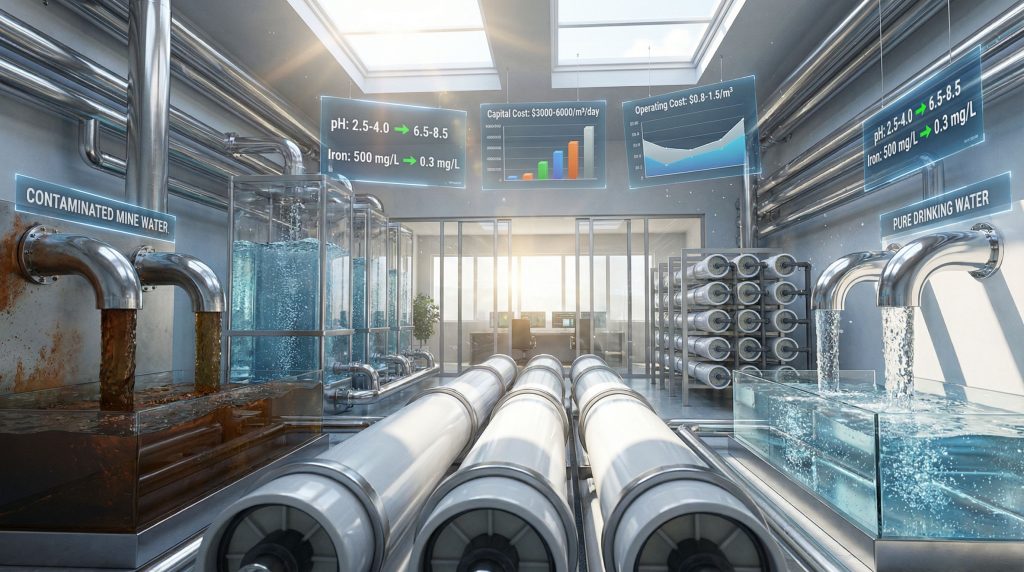
Mining operations worldwide face an unprecedented challenge as they seek to transform contaminated industrial wastewater into safe, potable resources. The challenge of turning mine water into drinking water represents one of the most technically complex and economically demanding undertakings in modern water treatment, requiring sophisticated engineering solutions that can address extreme contamination profiles while meeting stringent safety standards.
Geochemical Complexity: The Foundation of Mine Water Treatment Challenges
Mineralogical Interactions and Chemical Pathways
Mine water contamination originates from complex geochemical processes that vary dramatically across different geological formations and mining methodologies. Understanding mineralogy in mining economics becomes crucial when addressing these contamination challenges. Unlike municipal wastewater or surface water sources, mine water exhibits extreme variability in chemical composition, requiring site-specific treatment design approaches rather than standardised solutions.
The fundamental challenge stems from the interaction between disturbed geological materials and environmental conditions. When mining activities expose previously buried rock formations to oxygen and water, chemical weathering processes accelerate exponentially compared to natural rates. This acceleration creates contamination profiles that can persist for decades or centuries beyond active mining operations.
Sulphide mineral oxidation represents the most significant geochemical pathway affecting water quality in mining environments. When iron pyrite (FeS₂) and other sulphide minerals encounter oxygen-rich conditions, they undergo oxidation reactions that produce sulphuric acid and dissolved metal species. The stoichiometric equation for iron pyrite oxidation demonstrates the severity of this process:
FeS₂ + 7O₂ + 2H₂O → 2FeSO₄ + 2H₂SO₄
This reaction produces two moles of sulphuric acid for every mole of pyrite oxidised, creating acidic conditions that dramatically increase the solubility of heavy metals in surrounding rock formations.
Bacterial Catalysis and Accelerated Contamination
Microbiological factors significantly amplify geochemical contamination processes. Acid-tolerant bacteria, particularly Acidithiobacillus species, catalyse sulphide mineral oxidation at rates up to 10,000 times faster than abiotic chemical reactions alone. These microorganisms thrive in the acidic conditions they help create, establishing self-perpetuating contamination cycles.
The bacterial oxidation pathway involves enzymatic processes that transfer electrons from sulphide minerals to oxygen, using the energy released to support cellular metabolism. This biological amplification explains why acid mine drainage can persist for extended periods and why prevention strategies must address both chemical and microbiological components.
Research indicates that bacterial communities in mine environments exhibit remarkable adaptability, developing resistance to extreme pH conditions (as low as pH 0.5 in some documented cases) and high metal concentrations that would be lethal to most organisms. This adaptation creates persistent contamination sources that continue generating acidic, metal-laden water long after mining operations cease.
When big ASX news breaks, our subscribers know first
Contamination Characterisation: Beyond Standard Water Quality Parameters
Acid Mine Drainage: The Primary Treatment Challenge
Acid mine drainage represents the most widespread and persistent contamination challenge in mine water treatment. This phenomenon occurs when sulphide-bearing minerals undergo oxidation in the presence of water and oxygen, producing acidic conditions that can persist for centuries in some geological settings.
Critical AMD Parameters:
- pH Range: 2.5 to 4.0 in severe cases, compared to neutral drinking water standards of 6.5-8.5
- Metal Concentrations: Iron levels reaching 50-500 mg/L versus WHO drinking water standards of 0.3 mg/L maximum
- Sulphate Loading: Concentrations of 1,000-5,000 mg/L compared to WHO guidelines of 250 mg/L
- Treatment Requirements: 99%+ iron removal and 95%+ sulphate reduction necessary for potable standards
The formation mechanism involves multiple sequential reactions. Initial pyrite oxidation produces ferrous iron (Fe²⁺) and sulphate ions. Subsequently, oxidation converts ferrous iron to ferric iron (Fe³⁺), which acts as an additional oxidising agent for remaining sulphide minerals. This creates an autocatalytic process where contamination generation accelerates over time rather than diminishing.
Environmental factors significantly influence AMD severity. Temperature increases accelerate oxidation rates, while oxygen availability controls the extent of sulphide mineral decomposition. Furthermore, rainfall patterns affect dilution factors and transport mechanisms, creating seasonal variations in contamination loading that complicate treatment system design.
Heavy Metal Mobilisation and Speciation
Heavy metal contamination in mine water extends beyond simple concentration measurements to complex speciation chemistry that affects treatment efficiency and human health risks. Different metals exhibit varying solubility patterns under different pH and oxidation conditions, requiring sophisticated analytical approaches for accurate characterisation.
Primary Heavy Metal Concerns:
- Lead and Cadmium: Requiring reduction to parts-per-billion levels for potable use
- Zinc and Copper: High concentrations that interfere with downstream treatment processes
- Arsenic: Specialised removal technologies needed due to health compliance requirements
- Aluminium: Interference with coagulation and flocculation processes
Metal speciation analysis reveals that the same metal can exist in multiple chemical forms with dramatically different treatment requirements. For example, hexavalent chromium (Cr⁶⁺) requires reduction to trivalent chromium (Cr³⁺) before precipitation, while arsenate and arsenite species demand different removal mechanisms despite containing the same base element.
In addition, synergistic effects between multiple metals create additional treatment challenges. The presence of certain metals can inhibit the precipitation of others, requiring carefully sequenced treatment steps to achieve comprehensive removal. These interactions are particularly pronounced in complex ore deposits where multiple metal sulphides occur together.
Total Dissolved Solids and Osmotic Pressure Management
High total dissolved solids concentrations present unique challenges for mine water treatment systems, particularly when membrane technologies are employed. Salinity levels in mine water can reach extraordinary concentrations, as documented in Chinese mining operations where TDS levels of 3,826.4 mg/L have been measured – more than ten times higher than many municipal water sources.
The dissolved solids profile in mine water differs significantly from seawater desalination applications. While seawater contains primarily sodium chloride, mine water TDS comprises complex mixtures of sulphates, carbonates, and metal species that create higher osmotic pressures and more severe membrane fouling potential.
TDS Management Challenges:
- Osmotic Pressure: Higher applied pressures required for membrane separation
- Scaling Potential: Mineral precipitation within treatment systems
- Concentrate Disposal: Management of 20-30% waste brine streams
- Energy Requirements: 3-7 kWh per cubic metre for reverse osmosis treatment
Seasonal variations in TDS concentrations complicate treatment system design. During dry periods, evaporation and reduced dilution increase dissolved solids loading, while heavy precipitation events can create sudden concentration changes that stress treatment systems designed for steady-state operation.
Advanced Treatment Technologies: Engineering Solutions for Complex Chemistry
Membrane Separation Technologies and Selective Removal
Membrane-based treatment systems represent the most effective technology for achieving drinking water quality standards from highly contaminated mine water sources. These systems operate on physical separation principles, using semi-permeable barriers to remove dissolved contaminants through size exclusion, charge interactions, and chemical affinity mechanisms.
Reverse Osmosis Performance Characteristics:
- Contaminant Removal: 95-99% efficiency for dissolved salts and metals
- Membrane Specifications: 0.0001-0.001 micrometre effective pore size
- Operating Pressure: 400-1,000 psi depending on feed water quality
- Recovery Rates: 70-80% product water recovery in mining applications
Advanced reverse osmosis systems employ multiple membrane stages to optimise removal efficiency while managing concentrate streams. First-stage membranes remove bulk contaminants, while second and third stages polish water to drinking water standards. This staged approach reduces overall energy consumption compared to single-stage high-pressure systems.
Nanofiltration technology offers selective removal capabilities that can be particularly effective for mine water applications. These membranes preferentially remove divalent ions (such as sulphate and metal cations) while allowing monovalent ions to pass through, enabling targeted treatment that reduces overall energy requirements.
However, ultrafiltration serves as essential pre-treatment for membrane protection, removing particles and microorganisms that would otherwise cause fouling and reduced membrane life. With pore sizes ranging from 0.01-0.1 micrometres, ultrafiltration systems effectively remove suspended solids, bacteria, and colloidal materials that can blind downstream membranes.
Chemical Precipitation and Metal Recovery Systems
Chemical precipitation remains the most widely employed technology for initial mine water treatment, using pH adjustment and chemical addition to convert dissolved metals into solid precipitates that can be physically separated from treated water. This approach addresses the primary contamination challenge while potentially generating revenue through metal recovery.
Lime Neutralisation Process:
The addition of lime (calcium hydroxide) raises water pH and creates conditions favourable for metal hydroxide precipitation. The chemical reactions involved include:
- Ca(OH)₂ → Ca²⁺ + 2OH⁻ (lime dissolution)
- Fe³⁺ + 3OH⁻ → Fe(OH)₃ (iron precipitation)
- Zn²⁺ + 2OH⁻ → Zn(OH)₂ (zinc precipitation)
pH control represents a critical operational parameter, as different metals precipitate optimally at different pH ranges. Iron precipitation occurs efficiently above pH 3.5, while complete zinc removal requires pH levels above 8.5. Multi-stage neutralisation systems allow sequential metal removal while minimising chemical consumption.
Sludge Generation and Management:
Chemical precipitation generates significant quantities of metal hydroxide sludge, typically representing 5-15% of treated water volume. This sludge requires dewatering, stabilisation, and disposal or beneficial reuse. Advanced operations employ thickening and filter press systems to reduce sludge volume and may implement metal recovery processes to extract valuable materials from precipitated solids.
Coagulation and flocculation enhancement improves precipitation efficiency through polymer addition that promotes particle aggregation. This process reduces settling time and produces denser sludge with better dewatering characteristics, reducing overall treatment system footprint and operational complexity.
How Can Biological Treatment Systems Transform Mine Water?
Biological treatment systems offer sustainable, low-energy approaches for certain mine water treatment applications, particularly for long-term passive treatment of lower-concentration contamination. These systems harness natural biological processes to remove contaminants through microbial metabolism and plant uptake mechanisms.
Sulphate-Reducing Bacteria Systems:
Anaerobic biological systems employ sulphate-reducing bacteria to convert dissolved sulphates into hydrogen sulphide, which subsequently precipitates metals as metal sulphide minerals. The overall reaction pathway involves:
- SO₄²⁻ + 8H⁺ + 8e⁻ → S²⁻ + 4H₂O (sulphate reduction)
- Metal²⁺ + S²⁻ → MetalS (metal sulphide precipitation)
These systems require organic carbon sources (typically methanol, ethanol, or wood chips) to support bacterial metabolism. While operating costs are relatively low, treatment rates are slower than chemical precipitation systems, requiring larger footprints for equivalent treatment capacity.
Constructed Wetland Applications:
Constructed wetlands utilise plant uptake and root zone microbiological processes to remove contaminants from mine water. Wetland plants accumulate metals in root and shoot tissues, while microbial communities in the root zone facilitate chemical transformations that promote metal immobilisation.
Plant selection significantly affects treatment performance. Metal-tolerant species such as cattails (Typha latifolia) and sedges (Carex species) can accumulate substantial metal concentrations while maintaining plant health. Periodic harvesting and disposal of plant biomass removes metals permanently from the treatment system.
Moreover, constructed wetlands provide additional benefits including wildlife habitat creation, carbon sequestration, and aesthetic improvement of treatment facilities. However, seasonal variations in plant activity create corresponding variations in treatment performance, requiring supplemental treatment systems for consistent water quality achievement.
Economic Framework: Cost-Benefit Analysis and Financial Sustainability
Capital Investment Requirements and Technology Selection
The economics of mine water treatment for drinking water conversion involve substantial capital investments and ongoing operational commitments that extend far beyond typical industrial water treatment applications. Understanding these economic factors becomes critical when implementing comprehensive mining sustainability transformation programmes. Treatment system selection must balance initial capital costs against long-term operational expenses while meeting stringent water quality standards.
| Technology | Capital Cost ($/m³/day) | Operating Cost ($/m³) | Removal Efficiency |
|---|---|---|---|
| Reverse Osmosis | 3,000-6,000 | 0.8-1.5 | 95-99% |
| Chemical Precipitation | 1,000-3,000 | 0.3-0.8 | 80-95% |
| Biological Treatment | 500-2,000 | 0.2-0.6 | 70-90% |
| Hybrid Systems | 4,000-8,000 | 1.0-2.0 | 98-99.5% |
Capital cost analysis must account for site-specific factors that significantly affect total project investment. Remote mining locations require additional infrastructure for power supply, chemical delivery, and equipment maintenance access. Extreme environmental conditions necessitate enhanced materials specification and protection systems that increase initial capital requirements.
Technology Selection Criteria:
- Water Quality Targets: Drinking water versus industrial reuse standards
- Treatment Volume: Daily production requirements and peak demand management
- Contamination Profile: Specific contaminants requiring specialised removal
- Geographic Constraints: Site accessibility and infrastructure availability
- Regulatory Environment: Permit requirements and compliance monitoring
Economic optimisation typically favours hybrid treatment approaches that combine multiple technologies to achieve drinking water standards cost-effectively. Initial chemical precipitation removes bulk contaminants, followed by membrane polishing to achieve final water quality targets. This staged approach minimises membrane fouling and reduces overall operational costs.
Operational Cost Components and Long-term Sustainability
Operational expenses for mine water treatment systems encompass multiple cost categories that continue throughout the operational lifetime of treatment facilities. These ongoing costs often exceed initial capital investments over the typical 20-50 year operational commitment required for mining applications.
Primary Operational Cost Components:
- Energy Consumption: 3-7 kWh per cubic metre for reverse osmosis systems
- Chemical Reagents: Lime, polymers, and cleaning chemicals representing 20-30% of operating costs
- Membrane Replacement: 3-7 year replacement cycles for high-pressure membranes
- Sludge Disposal: Transportation and disposal fees for metal hydroxide sludge
- Labour and Maintenance: Skilled operator requirements for complex treatment systems
Energy costs represent the largest operational expense category for membrane-based systems. Power requirements for high-pressure pumps, chemical dosing systems, and auxiliary equipment can account for 40-60% of total operating expenses. Energy cost volatility creates financial risk that must be managed through long-term power purchase agreements or on-site renewable energy generation.
Membrane replacement schedules significantly affect operational planning and budgeting. Reverse osmosis membrane life depends on feed water quality, pre-treatment effectiveness, and operational practices. Aggressive mine water chemistry can reduce membrane life to 2-3 years compared to 5-7 years in municipal applications, substantially increasing replacement costs.
Revenue Generation and Resource Recovery Opportunities
Advanced mine water treatment systems increasingly incorporate resource recovery components that generate revenue streams to offset treatment costs. Metal recovery from treatment sludges, water sales to third parties, and byproduct utilisation create economic incentives for treatment system implementation.
Metal Recovery Applications:
Chemical precipitation sludges contain concentrated metal values that may justify recovery processing. Copper concentrations in sludge can reach 15-25%, while zinc levels may exceed 20% in specialised applications. Metal recovery processes including acid leaching, electrowinning, and solvent extraction can generate revenue while reducing sludge disposal requirements.
Market prices for recovered metals significantly affect recovery economics. Copper prices above $4.00 per pound and zinc prices above $1.20 per pound typically justify recovery processing for high-grade sludges. Price volatility creates financial risk that may require hedging strategies or long-term offtake agreements.
Water Sales and Supply Agreements:
Treated mine water that meets drinking water standards can generate revenue through sales to municipal water suppliers, industrial users, or agricultural applications. Water pricing varies significantly by region and end-use application, ranging from $0.50-3.00 per cubic metre depending on local scarcity and alternative supply costs.
Long-term water supply agreements provide revenue certainty that improves project economics and enables debt financing for treatment system construction. These agreements typically include quality guarantees, delivery commitments, and price escalation provisions that protect both buyers and sellers from market volatility.
What Are the Emerging Regulatory Requirements for Mine Water Treatment?
International Standards and National Implementation
Regulatory frameworks governing mine water treatment for potable use continue evolving as technology capabilities improve and water scarcity increases. International organisations, national governments, and local authorities implement overlapping jurisdiction requirements that create complex compliance landscapes for mining operations.
World Health Organization guidelines establish international benchmarks for drinking water quality that serve as baseline standards for mine water treatment systems. However, individual countries frequently impose more stringent requirements or additional monitoring parameters specific to mining-derived water sources.
Key Regulatory Parameters for Mine Water Conversion:
- pH Range: 6.5-8.5 for potable water applications
- Heavy Metals: Lead <10 μg/L, Cadmium <3 μg/L, Arsenic <10 μg/L
- Total Dissolved Solids: <500 mg/L for acceptable taste characteristics
- Microbiological Indicators: Zero tolerance for pathogenic organisms
- Chemical Oxygen Demand: <5 mg/L for organic contamination control
Regulatory compliance requires continuous monitoring systems that provide real-time water quality data and alarm systems for excursions beyond acceptable limits. Advanced treatment facilities employ online analysers for critical parameters including pH, turbidity, conductivity, and residual chlorine to ensure consistent compliance with drinking water standards.
Permitting Processes and Stakeholder Engagement
Regulatory approval processes for mine water treatment facilities involve multiple agencies and extensive documentation requirements that can extend project timelines by 2-4 years. Environmental impact assessments, public consultation processes, and technical review procedures create regulatory complexity that requires early engagement and comprehensive planning.
Primary Permit Requirements:
- Water Treatment Facility Licence: Operational authority for drinking water production
- Discharge Permits: Authorisation for concentrate and residual disposal
- Water Rights Allocation: Legal authority to utilise treated water
- Environmental Compliance: Impact mitigation and monitoring requirements
Stakeholder engagement processes require consultation with local communities, environmental groups, and other water users to address concerns about water quality, environmental impacts, and long-term sustainability. These consultation processes can significantly influence permit conditions and operational requirements.
Public acceptance of mine water conversion projects depends heavily on transparent communication about treatment processes, water quality monitoring, and emergency response procedures. Community education programmes and facility tours help build public confidence in treatment system reliability and safety.
Emerging Regulatory Trends and Future Requirements
Regulatory frameworks increasingly emphasise sustainability principles, circular economy concepts, and climate change adaptation that favour mine water treatment and reuse applications. Understanding mining decarbonisation benefits becomes essential as regulations incorporate carbon footprint considerations, renewable energy integration, and zero liquid discharge requirements.
Environmental justice considerations receive increasing attention in permitting processes, particularly for projects affecting minority or economically disadvantaged communities. Regulatory agencies require demonstration of community benefits, equitable access to treated water, and meaningful community participation in project planning and oversight.
Emerging contaminants including pharmaceutical compounds, personal care products, and industrial chemicals may require additional treatment and monitoring as analytical capabilities improve and health research advances. Treatment systems must incorporate flexibility for future regulatory requirements that cannot be fully anticipated during initial design phases.
Future Technology Development and Implementation Strategies
What Innovative Technologies Are Transforming Mine Water Treatment?
Emerging treatment technologies focus on improving energy efficiency, reducing waste generation, and enabling selective contaminant removal at lower operational costs. Forward osmosis, electrochemical treatment, and hybrid biological-chemical systems show promise for reducing the economic barriers to the challenge of turning mine water into drinking water.
Forward osmosis technology utilises natural osmotic pressure differences to drive water transport across semi-permeable membranes without applied hydraulic pressure. Draw solutions with high osmotic strength extract water from mine water feed streams, potentially reducing energy requirements by 50-70% compared to conventional reverse osmosis systems.
Electrochemical Treatment Advantages:
- Selective Metal Recovery: Individual metal species extraction for beneficial reuse
- pH Control: Electrochemical pH adjustment without chemical addition
- Energy Integration: Renewable energy compatibility for sustainable operations
- Modular Design: Scalable systems for varying treatment requirements
Electrochemical treatment systems employ controlled electrical currents to drive oxidation-reduction reactions that precipitate metals, adjust pH, and destroy organic contaminants. These systems offer precise process control and minimal chemical addition requirements, reducing operational complexity and environmental impact.
Furthermore, artificial intelligence and machine learning applications optimise treatment system performance through predictive maintenance, automated process control, and real-time optimisation algorithms. Smart control systems adjust operating parameters continuously based on feed water quality variations, minimising energy consumption while maintaining consistent product water quality.
Climate Change Adaptation and Resilience Planning
Climate change impacts create new challenges and opportunities for mine water treatment system design and operation. Increased precipitation variability, temperature extremes, and extended drought periods affect contamination loading, treatment system performance, and water demand patterns.
Treatment system design must incorporate climate resilience features including flood protection, temperature control systems, and emergency backup capabilities to maintain continuous operation under extreme weather conditions. Modular system architecture enables rapid capacity adjustments to accommodate seasonal variations in contamination loading.
Additionally, water storage and distribution infrastructure requires sizing for extended drought periods when treated mine water may represent the primary available water source for local communities. Storage reservoir design must prevent contamination while maintaining water quality during extended retention periods.
Climate Adaptation Strategies:
- Extreme Weather Protection: Flood-resistant facility design and emergency backup power
- Temperature Compensation: Process optimisation for varying ambient conditions
- Renewable Energy Integration: Solar and wind power for energy security
- Demand Management: Flexible production capacity for varying water demand
Economic Models and Financing Innovation
Innovative financing mechanisms enable mine water treatment project development despite high capital requirements and long payback periods. Public-private partnerships, environmental impact bonds, and water purchase agreements create new pathways for project finance and risk management.
Environmental impact bonds link financial returns to measurable environmental outcomes, creating incentives for treatment system optimisation and long-term performance. These financial instruments attract impact investors while providing mining companies with alternative financing sources that align financial and environmental objectives.
Water purchase agreements with municipal utilities or industrial users provide long-term revenue certainty that enables debt financing for treatment system construction. These agreements typically include quality guarantees, price escalation provisions, and force majeure protections that allocate risks appropriately between parties.
Risk management strategies including insurance products, performance guarantees, and operational reserves address the unique challenges of long-term mine water treatment commitments. Specialised insurance products cover treatment system performance, water quality excursions, and operational interruptions that could affect water supply reliability.
The next major ASX story will hit our subscribers first
Implementation Success Factors and Lessons Learned
Project Development and Stakeholder Management
Successful mine water treatment projects require comprehensive planning, stakeholder engagement, and technical expertise integration throughout project development and operational phases. Incorporating advanced mine reclamation innovations alongside water treatment systems creates synergistic benefits. Early community involvement, transparent communication, and demonstrated environmental benefits create foundations for long-term project success.
Technical feasibility studies must address site-specific contamination profiles, treatment technology selection, and integration with existing mining operations. Pilot testing programmes validate treatment approaches and provide operational data for full-scale system design, reducing technical risks and optimising performance.
Critical Success Factors:
- Community Support: Local acceptance and participation in project planning
- Technical Validation: Comprehensive pilot testing and performance verification
- Regulatory Alignment: Early engagement and permit coordination
- Financial Structure: Appropriate risk allocation and financing mechanisms
- Operational Excellence: Skilled workforce and maintenance programmes
Operational workforce development requires specialised training programmes for mine water treatment system operation, maintenance, and emergency response. Technical skills in membrane system operation, chemical handling, and water quality monitoring are essential for maintaining consistent treatment performance.
Performance Monitoring and Continuous Improvement
Long-term treatment system success depends on comprehensive monitoring programmes that track performance trends, identify optimisation opportunities, and demonstrate regulatory compliance. Advanced research on turning mine waste into clean water shows promising developments in monitoring technologies that provide real-time data on treatment efficiency, equipment performance, and water quality parameters.
Predictive maintenance programmes utilise equipment monitoring data to schedule maintenance activities before failures occur, minimising operational disruptions and extending equipment life. These programmes are particularly critical for membrane systems where unexpected failures can compromise water quality and require emergency response procedures.
Performance optimisation through operational adjustments, equipment upgrades, and process modifications enables continuous improvement in treatment efficiency and cost reduction. Regular performance reviews and benchmarking against industry standards identify opportunities for system enhancement and operational savings.
Data management systems archive operational data, water quality monitoring results, and maintenance records to support regulatory reporting, performance analysis, and system optimisation. Comprehensive data management enables identification of performance trends and supports evidence-based decision making for system improvements.
Implementing effective mining waste management strategies alongside water treatment systems creates integrated approaches that address multiple environmental challenges simultaneously. These comprehensive solutions often provide better economic returns while achieving superior environmental outcomes.
The transformation of mine water into drinking water represents a confluence of technical capability, economic viability, and regulatory compliance that continues evolving as technology advances and water scarcity increases. While significant challenges remain in terms of cost optimisation and universal implementation, the fundamental technical barriers to achieving drinking water quality from mine water sources have largely been overcome through advances in membrane technology, chemical precipitation, and integrated treatment approaches.
Success in mine water treatment applications requires comprehensive understanding of site-specific contamination profiles, appropriate technology selection, and long-term operational commitment to maintaining stringent water quality standards. As climate change and population growth intensify water scarcity pressures globally, mine water treatment will likely transition from a compliance-driven activity to a strategic resource development opportunity that provides sustainable water supplies while advancing environmental stewardship objectives in the mining sector.
Ready to Discover the Next Mining Water Innovation Breakthrough?
Discovery Alert's proprietary Discovery IQ model delivers real-time alerts on significant mining technology and water treatment discoveries, instantly empowering subscribers to identify actionable opportunities ahead of the broader market. Begin your 14-day free trial today at Discovery Alert and secure your market-leading advantage in mining innovation investments.