
May 16, 2026
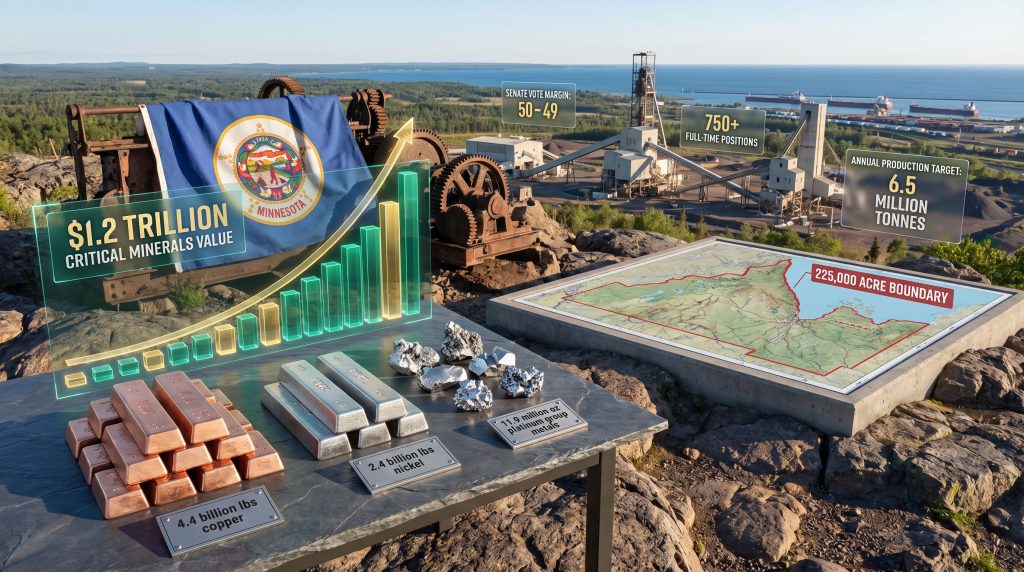
The recent Congressional decision to reverse Minnesota's mining restrictions demonstrates the dynamic nature of North American mining trends. Major mining companies with operations spanning multiple countries must now recalibrate their development strategies, capital allocation decisions, and long-term production planning based on shifting regulatory landscapes.
Legislative Framework Reshaping Resource Access
The United States Senate's narrow 50-49 approval to overturn Minnesota's mining moratorium represents a fundamental shift in American resource policy. This legislative action affects approximately 225,000 acres of previously restricted land near the Boundary Waters Canoe Area, where substantial mineral deposits have remained largely untapped due to environmental protections.
Congressional approval of the law lifting mining ban in Minnesota operates through the Congressional Review Act mechanism, which provides expedited legislative pathways for reversing regulatory actions. Furthermore, this development aligns with broader federal initiatives, including Trump mining permits that signal enhanced support for domestic resource development. The legislation awaited presidential signature as of April 2026, with President Trump's administration expressing favorable positions toward domestic mining development.
Policy Implementation Mechanics
The Congressional Review Act framework enables Congress to bypass standard administrative rulemaking processes, creating streamlined approaches to policy reversal. Key aspects include:
- Expedited Timeline: Reduced procedural requirements compared to standard legislation
- Future Restriction Limitations: Prevents similar administrative actions without Congressional approval
- Regulatory Certainty: Establishes clearer parameters for mining companies regarding federal policy stability
- Jurisdictional Clarity: Defines federal versus state authority over mineral extraction in sensitive areas
This legislative precedent signals broader federal commitment to domestic resource development, potentially influencing future policy decisions regarding critical minerals extraction in other protected or sensitive regions. For companies navigating this complex landscape, comprehensive mining permit guidance becomes essential for successful project development.
When big ASX news breaks, our subscribers know first
Minnesota's Strategic Mineral Endowment
The Duluth Complex geological formation contains diverse concentrations of materials essential for renewable energy infrastructure and national defense applications. Analysis of the region's mineral potential reveals substantial deposits across multiple commodity categories.
Primary Resource Concentrations
| Mineral | Strategic Applications | Market Significance |
|---|---|---|
| Copper | Electric vehicle batteries, grid infrastructure | Global demand projected to increase 70% by 2040 |
| Nickel | Battery cathodes, stainless steel production | Critical for energy storage systems |
| Platinum Group Metals | Catalytic converters, hydrogen fuel cells | Essential for clean transportation technology |
| Cobalt | Advanced battery technology, aerospace alloys | Supply chain vulnerability concerns |
Secondary Mineral Opportunities
Beyond primary commodities, the region contains economically viable concentrations of:
- Palladium: Automotive catalyst applications and emerging hydrogen economy infrastructure
- Silver: Industrial electronics and renewable energy component manufacturing
- Gold: Economic byproduct potential enhancing overall project economics
- Lead and Zinc: Traditional industrial applications with steady demand profiles
The geological diversity creates opportunities for integrated extraction operations, where multiple commodities can be recovered from single mining operations, improving overall project economics and resource utilisation efficiency.
Twin Metals Project: Regional Economic Catalyst
Antofagasta Minerals' 100% ownership of the Twin Metals project positions the initiative as the flagship development opportunity in the region. The subsidiary Twin Metals Minnesota LLC submitted comprehensive development plans to the U.S. Department of Interior in 2019, outlining substantial economic impact projections.
Operational Specifications
The project contemplates processing capacity of 18,000 tonnes per day for 25 years, representing significant long-term economic activity. Technical specifications include:
- Underground Operation Design: Minimises surface environmental impact compared to open-pit alternatives
- Modern Processing Technology: Advanced extraction and beneficiation methods
- Integrated Infrastructure: Transportation and logistics systems serving multiple commodities
- Scalable Production: Potential for expansion based on market conditions and resource delineation
Economic Impact Projections
| Economic Factor | Projected Impact |
|---|---|
| Direct Employment | 750+ full-time positions |
| Construction Phase | 1,500+ temporary jobs |
| Annual Payroll | $85 million to regional workforce |
| Tax Revenue | $145 million annually to local/state governments |
| Project Lifespan | 25+ years of continuous operation |
These projections represent substantial economic transformation for northern Minnesota, creating high-wage employment opportunities in a region historically dependent on traditional industries like forestry and tourism.
Continental Supply Chain Integration
Minnesota's entry into large-scale critical minerals production creates strategic advantages for North American supply chain resilience. Current U.S. import dependency reaches 75% for nickel, indicating substantial vulnerability to supply disruptions from overseas sources.
Supply Security Benefits
- Geographic Risk Mitigation: Reduced reliance on politically unstable or geographically distant suppliers
- Transportation Cost Reduction: Proximity to Great Lakes shipping networks and Midwest manufacturing centres
- Processing Infrastructure Development: Potential for value-added manufacturing within North America
- Strategic Reserve Enhancement: Domestic production supporting national security objectives
Regional Integration Framework
The law lifting mining ban in Minnesota enables enhanced cooperation across North American jurisdictions, particularly regarding the critical minerals energy transition requirements:
- Canadian Partnership: Cross-border mineral processing agreements leveraging complementary geological resources
- USMCA Integration: Trade agreement provisions supporting continental resource development
- Great Lakes Corridor: Efficient bulk transportation to industrial centres via existing shipping infrastructure
- Midwest Manufacturing: Direct supply relationships with automotive and technology sectors
Global Copper Market Dynamics
Minnesota's potential copper production occurs within a global market context characterised by growing demand and supply constraints. Industry analysis projects a 6.5 million tonne annual shortfall by 2030, driven primarily by renewable energy infrastructure requirements and electric vehicle adoption.
Market Positioning Advantages
| Factor | Minnesota Advantage | Global Comparison |
|---|---|---|
| Political Stability | High regulatory predictability | Variable in major producing regions |
| Environmental Standards | Stringent oversight frameworks | Inconsistent globally |
| Infrastructure Access | Established logistics networks | Often requires significant development |
| Skilled Workforce | Regional mining expertise available | Limited in emerging markets |
Demand Growth Drivers
Multiple factors support sustained copper demand growth:
- Renewable Energy Infrastructure: Wind and solar installations require substantial copper quantities
- Electric Vehicle Adoption: EVs contain approximately 4x more copper than conventional vehicles
- Grid Modernisation: Smart grid technologies and energy storage systems increase copper intensity
- Industrial Electrification: Manufacturing sector transition from fossil fuels to electric power
This demand context positions Minnesota production as strategically valuable for both domestic consumption and export opportunities. However, companies must also consider global trade dynamics and potential trade war strategies when developing long-term market approaches.
Environmental Oversight and Technology Integration
Despite legislative approval, comprehensive environmental safeguards remain integral to Minnesota mining operations. Multiple regulatory layers ensure responsible resource extraction while protecting sensitive ecological areas. According to The Guardian, the Senate vote represents a significant policy shift that has generated considerable debate among environmental groups and mining advocates.
Regulatory Compliance Framework
- National Environmental Policy Act (NEPA): Comprehensive environmental impact assessments
- Clean Water Act: Discharge permitting and continuous monitoring requirements
- Minnesota Environmental Quality Board: State-level oversight and permitting
- Tribal Consultation Protocols: Engagement with sovereign tribal nations regarding traditional territories
Advanced Mitigation Technologies
Modern mining operations incorporate sophisticated environmental protection systems:
- Closed-Loop Water Systems: Minimising freshwater consumption and eliminating discharge
- Real-Time Monitoring: Continuous air quality and water quality surveillance
- Tailings Management: Modern containment technologies preventing environmental contamination
- Biodiversity Protection: Wildlife corridor preservation and habitat restoration programmes
The next major ASX story will hit our subscribers first
Investment Climate Transformation
The law lifting mining ban in Minnesota signals broader shifts in North American mining policy, potentially affecting global capital allocation decisions within extractive industries. International mining companies now view the regulatory environment as more predictable and supportive of long-term development.
Capital Market Implications
- Regulatory Predictability: Clearer federal mining policy stance reduces investment uncertainty
- Domestic Resource Priority: Increased focus on North American resource development
- Technology Transfer: Advanced extraction methods deployment in established regulatory frameworks
- Risk Assessment: Reduced geopolitical exposure compared to overseas operations
Comparative Regional Analysis
| Jurisdiction | Advantages | Challenges |
|---|---|---|
| Canada | Established mining law, similar geology | Higher operational costs, seasonal constraints |
| Mexico | Lower labour costs, mineral diversity | Political uncertainty, security concerns |
| Chile/Peru | World-class copper deposits | Infrastructure limitations, community opposition |
| Australia | Advanced technology, skilled workforce | Distance from markets, high operational costs |
Strategic Development Scenarios
Multiple pathways exist for Minnesota mining development, depending on market conditions, technological advancement, and regulatory evolution over the next decade.
Accelerated Development Pathway
This scenario assumes favourable market conditions and streamlined permitting:
- Timeline: First production by 2030
- Capital Investment: $1.7 billion initial development
- Production Target: 43,000 tonnes copper annually
- Employment Peak: 850 direct positions
- Technology Approach: Proven extraction methods with incremental improvements
Phased Implementation Strategy
Risk-managed approach emphasising stakeholder engagement:
- Development Timeline: Staged implementation through 2035
- Investment Structure: Sequential capital deployment based on milestone achievements
- Community Integration: Extended consultation periods with local stakeholders
- Technology Validation: Pilot programmes testing advanced extraction methods
Innovation-Focused Development
Emphasis on technological leadership and environmental excellence:
- Research Partnerships: University and industry collaboration on advanced technologies
- Zero-Discharge Operations: Complete elimination of environmental discharges
- Automation Integration: Advanced robotics and artificial intelligence implementation
- Extended Timeline: Technology development extending development period
North American Critical Minerals Cooperation
The law lifting mining ban in Minnesota catalyses broader continental resource integration, particularly regarding U.S.-Canada critical minerals partnerships and trilateral cooperation including Mexico's emerging mineral sectors.
Trilateral Integration Opportunities
- USMCA Mineral Provisions: Trade agreement mechanisms supporting resource development
- Technology Sharing Agreements: Cross-border innovation partnerships and joint research initiatives
- Infrastructure Integration: Coordinated transportation networks and processing facilities
- Regulatory Harmonisation: Streamlined permitting processes reducing development timelines
Strategic Alliance Development
Enhanced continental cooperation creates multiple partnership opportunities:
- Processing Hub Development: Regional value-added manufacturing centres
- Workforce Development: Cross-border training programmes and expertise sharing
- Emergency Supply Protocols: Strategic reserve coordination for supply security
- Research Collaboration: Joint university and industry partnerships advancing extraction technology
According to industry expert Marcelo Henríquez from Ausenco, the current environment presents optimal conditions for resource development, with strong demand fundamentals supporting project economics. He emphasises that "companies are entering a new phase focused on leveraging resource availability and rehabilitating previously delayed projects."
The Minnesota development exemplifies how policy changes can unlock strategic resource potential while creating frameworks for international cooperation. As companies like Antofagasta Minerals strengthen global supply positions through geographic diversification, the integration of North American operations with existing South American assets creates opportunities for supply chain optimisation and risk mitigation.
Additionally, the Associated Press reported extensive coverage of the Senate vote, highlighting the narrow margin and the significant implications for both environmental protection and economic development in the region.
The legislative action represents more than regional economic development; it signals continental resource strategy evolution supporting energy transition objectives while enhancing strategic mineral security across North American markets.
Disclaimer: This analysis contains forward-looking statements regarding mining development timelines, production targets, and economic projections. Actual results may differ materially from these estimates due to regulatory changes, market conditions, technical challenges, and other factors. Investment decisions should be based on comprehensive due diligence and professional financial advice.
Are You Tracking Critical Minerals Investment Opportunities?
Discovery Alert's proprietary Discovery IQ model delivers real-time alerts on significant ASX mineral discoveries, empowering subscribers to identify actionable opportunities ahead of the broader market as critical minerals demand accelerates globally. Understand why historic discoveries can generate substantial returns by exploring Discovery Alert's dedicated discoveries page, showcasing exceptional market outcomes, and begin your 14-day free trial today to position yourself ahead of the market.