Miramar Resources Ltd
Miramar Resources Uncovers New High-Grade Cu-Pb-Ag Hits at Chain Pool and the Story May Be Much Bigger Than It Looks
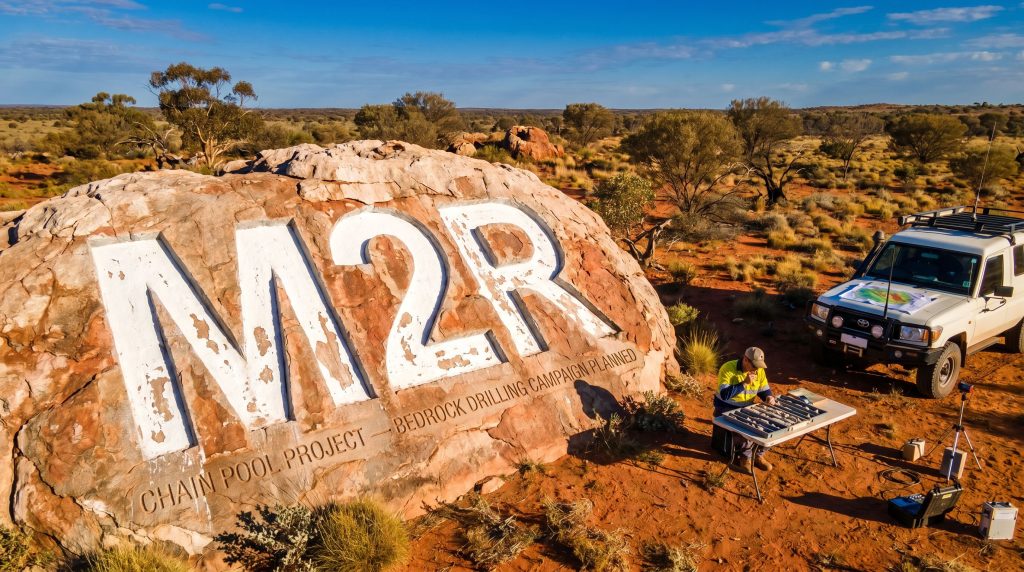
Miramar Resources Limited (ASX: M2R) has reported further high-grade copper-lead-silver rock chip results from the Joy Helen prospect within its 100%-owned Chain Pool Project in Western Australia's Gascoyne region. According to the ASX announcement dated 13 July 2026, the new assays include up to 6.72% copper, 47.8% lead and 47.7 ppm silver, while sampling about 200 metres east of the historic workings has also returned elevated barium (Ba) values that the company says may point to a broader SEDEX-style mineralised system.
The update matters because it combines three elements investors generally want to see in an early-stage base metals story: confirmed high-grade mineralisation at surface, new evidence that the mineralised footprint may extend beyond the known workings, and a defined pathway to follow-up geophysics and drilling.
Miramar is also waiting on assay results from its recent auger drilling programme, which the company has said are expected in mid-July.
When big ASX news breaks, our subscribers know first
What's New: Rock Chips Confirm High-Grade Hits and Extend the Footprint
In the announcement, Miramar said five rock chip samples were collected during the recent auger drilling campaign at Joy Helen. Three were taken around the historic workings, while two more were collected almost 200 metres east near an interpreted basin-margin fault identified by recent gravity modelling and close to a copper-in-soil anomaly.
The highest-grade results came from the historic workings area and confirmed the tenor of mineralisation previously identified at Joy Helen.
| Sample | Location | Cu (%) | Pb (%) | Ag (ppm) | Ba (ppm) | Zn (ppm) | Description |
|---|---|---|---|---|---|---|---|
| MR0009 | Historic workings area | 6.28 | 15.5 | 16.7 | 2,930 | 1,441 | Malachite ore |
| MR0010 | Historic workings area | 2.89 | 46.5 | 33.0 | 2,937 | 720 | Galena ore |
| MR0011 | Historic workings area | 6.72 | 47.8 | 47.7 | 842 | 945 | Galena-malachite ore |
| MR0012 | ~200m east, near fault | 0.03 | 0.29 | BDL | 598 | 14 | Silicified dolomite with sulphide pits |
| MR0013 | ~200m east, near fault | 0.03 | 0.19 | BDL | 5,790 | 13 | Weathered breccia |
BDL means below detection limit.
For investors, the first three samples are important because they show repeat high-grade copper-lead-silver mineralisation from surface rock chips at the known Joy Helen workings. Rock chips do not define size, width or continuity, but they can confirm the presence and style of mineralisation.
The more subtle result is MR0013. While copper and lead values were low, the sample returned 5,790 ppm barium, which Miramar described as strongly anomalous. In the company's interpretation, elevated Ba in this geological setting may represent a geochemical halo around additional SEDEX mineralisation away from the main workings.
What Did the Managing Director Say?
"The Chain Pool Project has all the key ingredients for the formation of a large base metal deposit, including the right age, geology and structural settings, along with evidence of high-grade Cu-Pb-Ag mineralisation at Joy Helen," said Marion Bush, Managing Director.
"These new rock chip results, along with the recent detailed gravity survey, indicate that the opportunity at Chain Pool could be significantly larger than indicated by the historic workings at Joy Helen."
Understanding SEDEX Deposits and Why the Geology Matters
Miramar framed Joy Helen as having similarities to a Sedimentary Exhalative (SEDEX) deposit model. For non-specialist investors, that geological term is central to the Chain Pool story.
A SEDEX deposit forms when metal-rich hot fluids move through faults into a sedimentary basin and deposit metals in layers or replacement zones within the surrounding rocks. These systems can host lead, zinc, silver and copper, and some of the world's largest base metal deposits fall into this broad category.
Examples referenced in the company announcement include:
- Mount Isa in Queensland
- Cannington in Queensland
- Sullivan in Canada
- Red Dog in Alaska
- Rammelsberg in Germany
Why does this matter? Because SEDEX systems can be large and long-lived if the geological architecture is right. That does not mean Chain Pool will develop into one, but it explains why a small surface occurrence can still attract investor attention if the surrounding geology supports a larger system.
How Does the Technical Picture Stack Up?
Miramar's Technical Director Allan Kelly noted in the announcement that Joy Helen is hosted in carbonate rocks adjacent to a major growth fault on the edge of the Edmund Basin, with a zoned carbonate alteration halo similar to a typical SEDEX model. In simple terms, that means the rocks and structures around Joy Helen show patterns often associated with mineral-bearing fluids moving through a basin-edge fault zone.
Furthermore, a few key terms are worth clarifying for context:
- Basin-margin fault: a large fault at the edge of a sedimentary basin that can channel mineral-bearing fluids
- Alteration halo: chemical changes in rocks around mineralisation that can help explorers track the system
- Silicified dolomite: a carbonate rock altered by silica-rich fluids, often used as an exploration clue
- Barium halo: elevated barium in surrounding rocks that can indicate proximity to some sediment-hosted base metal systems
- HVSR survey: a passive seismic method used to map changes in subsurface rock depth and structure
Miramar also noted that the presence of secondary copper and limited zinc identified so far at Joy Helen is consistent with zonation seen in other SEDEX deposits, where copper can occur closer to the fluid source while lead-zinc mineralisation may occur farther away or deeper in the system.
Geophysics Are Adding Structural Support to the Exploration Model
The 13 July 2026 announcement did not rely on rock chips alone. Miramar also highlighted recent detailed gravity survey work at Chain Pool, which the company says has identified multiple basin-margin faults and strengthened the structural case for a larger mineral system.
Gravity surveys measure subtle changes in rock density below the surface. In exploration terms, these datasets can help identify faults, altered rock zones and buried geological bodies that may not be visible at surface.
According to Miramar, further modelling of the gravity data has highlighted multiple faults with similarities to the structural setting at Mount Isa. The company cited published work indicating that, at Mount Isa, gravity lows are associated with oxidation along faults, while gravity highs can be linked to silica-dolomite alteration and zinc-lead-silver mineralisation.
At Joy Helen, Miramar said the strongest residual gravity anomalies are associated with silicified dolomite exposed at surface. That matters because MR0012 and MR0013 were collected close to one of these interpreted faults and near a copper-in-soils anomaly.
What Does the Combined Dataset Show?
The geological picture described in the announcement is becoming more layered. Taken together, the following data points provide several exploration vectors for drilling:
- Known high-grade Cu-Pb-Ag mineralisation at Joy Helen
- Altered carbonate host rocks at surface
- Elevated Ba in a sample east of the workings
- Interpreted basin-margin faults from gravity data
- Copper-in-soil anomalism near the eastern sampling site
However, these data points do not confirm the scale of the system. The broader project setting also adds context. Chain Pool sits on the boundary between a Durlacher Supersuite granite and the Edmund Basin, and is cut by north-south dolerite dykes of the Mundine Well Suite, which Miramar says may carry potential for Ni-Cu-Co-PGE sulphide mineralisation.
What Comes Next: Auger Assays, Passive Seismic and Bedrock Drilling
Miramar has outlined a clear next stage of work at Chain Pool. The immediate catalyst is the pending assay dataset from the recent auger drilling programme.
| Milestone | Timing Cited by Company | Why It Matters |
|---|---|---|
| Auger drilling assay results | Mid-July 2026 | First broader subsurface geochemical dataset across the project |
| Passive seismic HVSR survey | After results are received | Aims to map basement topography and faulting |
| First dedicated bedrock drilling campaign | To be finalised after results | Would be the first deeper test of the Joy Helen system |
In the announcement, Miramar confirmed the laboratory had advised that auger results were expected in mid-July. Those results are likely to help prioritise targets for the planned bedrock drilling campaign, which would represent the most direct test yet of the company's geological model.
The planned HVSR survey is also relevant. This passive seismic method is used to understand basement depth and structural geometry without active seismic sources. For a basin-hosted target such as Joy Helen, better mapping of topography and faulting at depth can improve drill targeting and reduce the chance of poorly located holes.
For investors, this sequencing is important. Surface samples and geophysics can build confidence in a target concept, but drilling is generally required to test continuity, thickness, depth extent and overall scale.
Gidji JV Gold Project Provides a Secondary Project Pipeline
Separate from Chain Pool, Miramar used the announcement to provide an update on its Gidji JV Gold Project, located 15 kilometres north of Kalgoorlie.
According to the company, all drilling data from Gidji is currently being reviewed by a resource geologist to assess the potential for one or more shallow gold resources that could be developed adjacent to the Goldfields Highway. Pending the outcome of that study, Miramar has said it plans to progress the project towards potential development, including by applying for a Mining Lease.
This is not the core focus of the 13 July update, but it does broaden the company's project base. Chain Pool is currently the main exploration driver, while Gidji may offer a separate gold-related development pathway if the review supports that view.
The next major ASX story will hit our subscribers first
The Investment Case: Why Chain Pool Is Drawing Attention
Based on the ASX announcement, Chain Pool stands out for several reasons.
First, the grades from Joy Helen are plainly high for surface rock chip results. Samples returning 6.28% and 6.72% copper, 46.5% and 47.8% lead, and up to 47.7 ppm silver indicate a strong mineralised source at or near surface.
Second, Miramar's geological interpretation is being supported by more than one dataset. The company is combining geochemistry, alteration observations, gravity modelling and structural interpretation rather than relying on a single anomaly.
Third, the footprint may be extending. The eastern samples did not return high copper or lead grades, but MR0013's 5,790 ppm Ba result and the associated breccia texture are being treated by Miramar as signs that the system could reach beyond the historic workings.
Fourth, the project remains early-stage and relatively under-explored at a project scale. The company noted that previous work by CRA, Herald Resources and Dominion Mining Limited comprised limited rock chip sampling. Miramar applied for the tenement in December 2023, and it was granted in August 2024.
Finally, the next catalysts are close. Pending auger assays and planned geophysics could feed directly into a first dedicated bedrock drilling campaign.
None of this establishes a mineral resource, and the company has not reported drilling results from bedrock at Joy Helen in this announcement. What it does show, however, is a growing body of evidence around a high-grade occurrence that may have a larger geological context than the historic workings alone suggest.
Key Takeaway
According to Miramar's 13 July 2026 ASX announcement, Chain Pool has returned further high-grade copper-lead-silver surface results at Joy Helen and new eastern sampling has added geochemical support for a broader target area. With auger assays pending and bedrock drilling in planning, the next phase of work is likely to be important in testing whether Joy Helen is an isolated occurrence or part of a larger sediment-hosted base metals system.
Want to Catch the Next Major Base Metals Discovery Before the Market Does?
Discovery Alert's proprietary Discovery IQ model scans ASX announcements in real time, instantly identifying high-potential mineral discoveries — including base metals stories like copper, lead and silver — and converting complex data into clear, actionable insights for investors at every experience level. Explore historic discoveries that have delivered extraordinary returns or start your 14-day free trial today to ensure you're positioned ahead of the market when the next significant announcement hits.