
July 12, 2026
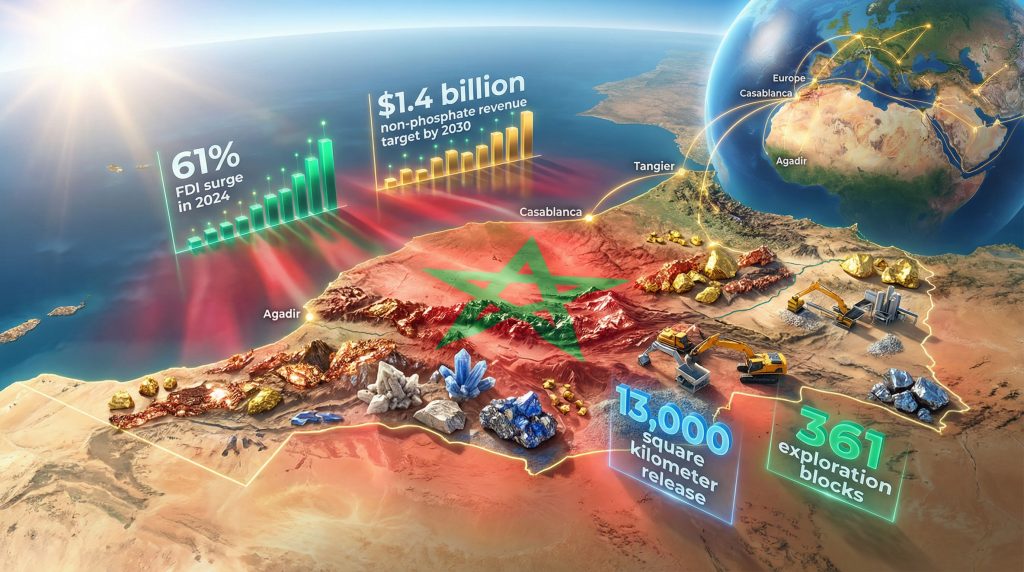
Morocco mining investment opportunities present compelling alternatives to traditional mining jurisdictions as global markets increasingly prioritise supply chain diversification and jurisdictional stability. The kingdom's strategic positioning across multiple geological terranes, combined with evolving regulatory frameworks and established infrastructure networks, creates unique opportunities for international capital deployment. Furthermore, Morocco's commitment to sustainable mining transformation aligns with contemporary ESG investment criteria while maintaining competitive operational economics.
Contemporary mining investment strategies emphasise jurisdictional risk management alongside resource potential. Morocco's political stability, modern infrastructure, and evolving regulatory framework position it as a compelling alternative to more established but increasingly complex mining destinations. The convergence of unexploited mineral wealth with improving investment conditions creates timing advantages for early-stage capital deployment.
Strategic Positioning Within Africa's Mining Investment Landscape
Morocco's emergence as a premier mining investment destination stems from fundamental geological and geographic advantages that differentiate it from regional competitors. The kingdom's position bridging European, African, and Middle Eastern markets creates natural cost efficiencies for mineral exports whilst providing access to diverse downstream processing opportunities.
The country's established port infrastructure at Casablanca, Tangier, and Agadir provides immediate export capabilities without the infrastructure development requirements common in other African jurisdictions. This existing logistics network reduces capital intensity for mining projects whilst shortening time-to-market for mineral concentrates and finished products.
Geological Diversity Beyond Phosphate Dependency
Whilst Morocco maintains global leadership in phosphate production, contributing approximately 10% to national GDP, the government actively pursues diversification strategies to reduce commodity concentration risk. The Ministry of Energy Transition and Sustainable Development has identified untapped potential across multiple geological zones, targeting non-phosphate mineral revenues of $1.4 billion by 2030.
Recent exploration initiatives have confirmed significant polymetallic potential within the Anti-Atlas and High Atlas mountain ranges. These formations contain copper porphyry systems, orogenic gold deposits, and base metal concentrations that remain largely unexplored due to historical focus on phosphate resources.
The geological complexity creates opportunities for discovery of world-class deposits comparable to those found in similar geological settings globally. Moreover, this aligns with broader industry evolution trends emphasising geological diversification and portfolio risk management.
Infrastructure and Connectivity Advantages
Morocco's strategic location provides unique logistical advantages for mining operations targeting European and Middle Eastern markets. Transportation distances to major consumption centres remain significantly shorter than competing African jurisdictions, reducing overall supply chain costs and improving project economics.
The development of integrated mining-industrial zones near port facilities creates opportunities for value-added processing before export. This downstream integration model enhances project returns whilst building local industrial capacity and employment opportunities.
When big ASX news breaks, our subscribers know first
Regulatory Modernisation and Investment Framework Evolution
Morocco's mining sector transformation reflects systematic regulatory modernisation aimed at attracting international investment whilst maintaining environmental and social standards. The comprehensive legislative overhaul introduced in 2016 established streamlined permitting processes and transparent evaluation criteria that align with international best practices.
The recent announcement of a major exploration tender covering 13,000 square kilometres demonstrates the scale of Morocco's commitment to sector development. This initiative encompasses 361 exploration blocks within the Tafilalet and Figuig Mining Regions, areas known for their polymetallic deposit potential including gold, silver, copper, lead, zinc, and barite.
Multi-Criteria Evaluation Methodology
Morocco's approach to project evaluation represents a significant departure from traditional financial-focused assessment models. The Ministry of Energy Transition and Sustainable Development has implemented a comprehensive evaluation framework that weighs technical capability alongside financial strength and environmental performance.
This evaluation methodology prioritises several key factors:
- Technical competency in modern mining and processing methods
- Financial capacity to sustain multi-year development programmes
- Environmental stewardship including water and energy efficiency measures
- Social responsibility frameworks addressing community engagement
- Sustainability integration emphasising circular economy principles
The emphasis on sustainable mining models creates competitive advantages for operators incorporating renewable energy systems, water recycling technologies, and waste minimisation strategies. Companies proposing integrated approaches combining mining, processing, and environmental restoration receive preferential evaluation treatment.
ESG Integration and Global Alignment
Morocco's mining tender process aligns with continental ESG frameworks established at regional mining conferences, reflecting broader industry trends toward responsible resource development. The integration of environmental and social criteria into project selection processes mirrors successful jurisdictional models implemented in Canada and Australia.
"The multi-criteria evaluation system represents a fundamental shift from lowest-cost bidding toward value-optimisation models that consider long-term operational sustainability and community impact."
Water and energy efficiency requirements have become mandatory evaluation criteria, with additional incentives favouring projects incorporating circular economy practices and renewable energy systems. This regulatory evolution positions Morocco at the forefront of sustainable mining governance frameworks.
Commodity-Specific Investment Opportunities and Market Dynamics
Morocco's mineral endowment spans multiple commodity categories, creating portfolio diversification opportunities within a single jurisdiction. The recent exploration tender specifically targets polymetallic deposits, reflecting geological formations favourable for multiple commodity recovery from individual projects.
Precious Metals and Base Metal Potential
| Commodity | Geological Setting | Development Stage | Market Drivers |
|---|---|---|---|
| Gold | Orogenic systems in Anti-Atlas | Early exploration | Safe-haven demand, monetary debasement |
| Copper | Porphyry systems, sediment-hosted | Discovery phase | Electrification, infrastructure growth |
| Silver | Epithermal and VMS systems | Resource definition | Industrial applications, solar demand |
| Lead/Zinc | Mississippi Valley-type deposits | Historical production | Battery storage, construction demand |
The Anti-Atlas region presents particularly compelling gold exploration opportunities, with geological similarities to productive gold camps in West Africa. Historical artisanal mining activity indicates widespread mineralisation, whilst modern exploration techniques have identified structural controls favourable for commercial-scale deposits.
Copper exploration targets within porphyry systems offer potential for large-scale, long-life operations. The global transition toward electrification and renewable energy infrastructure creates sustained demand growth for copper concentrates, supporting project economics across varying ore grades. Additionally, the current gold price forecast supports continued investment in precious metals exploration.
Strategic Materials and Technology Metals
Morocco's geological diversity extends to strategic materials critical for technology sector applications and energy transition infrastructure. Rare earth element occurrences in Saharan provinces remain largely unexplored, presenting early-mover advantages for companies developing these specialised supply chains.
Cobalt deposits in eastern regions align with battery manufacturing supply chain requirements, whilst lithium potential in pegmatite formations targets the rapidly expanding energy storage sector. These specialty commodities command premium pricing and long-term supply contracts, providing revenue stability for mining operations.
Consequently, antimony and fluorite reserves address industrial applications in metallurgy and chemical processing. These niche markets often experience supply constraints, creating opportunities for new production to capture above-average margins.
Investment Entry Mechanisms and Capital Deployment Strategies
The upcoming 2026 exploration tender represents the primary entry mechanism for international mining investment in Morocco. The tender structure, designated as APC No. 1/DGMH/2026, covers approximately 22-25% of the broader mining basin, indicating substantial scale and resource potential.
Tender Process Structure and Requirements
Applications for the 361 exploration blocks must be submitted by May 15, 2026 to regional directorates based on geographic location:
- Errachidia directorate for projects in the Drâa-Tafilalet region
- Oujda directorate for projects in the Oriental region
This decentralised application process reflects Morocco's commitment to regional economic development whilst ensuring local oversight of exploration activities. The geographic separation allows for specialised evaluation based on regional geological characteristics and infrastructure requirements.
International Capital Flows and Strategic Partnerships
Canadian mining companies maintain significant exploration exposure to Morocco, with annual investments approaching $96 million across multiple projects. This capital flow reflects confidence in Morocco's geological potential and regulatory stability among experienced international mining operators.
Australian Mining Equipment, Technology, and Services (METS) sector engagement demonstrates the technical infrastructure required for modern mining operations. These partnerships provide access to specialised equipment and expertise whilst building local technical capabilities.
Strategic partnerships with Japanese and South Korean entities focus on downstream processing facilities and technology transfer. These relationships create integrated value chains from mine to market whilst establishing long-term supply agreements for processed minerals.
European Development Bank financing totalling €5.4 billion supports infrastructure development and environmental compliance across Morocco's mining sector. This institutional funding provides project financing alternatives whilst ensuring alignment with international environmental standards.
Comparative Analysis: Morocco's Global Competitive Position
Morocco's investment attractiveness relative to competing African mining jurisdictions reflects multiple factors including political stability, infrastructure quality, regulatory transparency, and geological prospectivity. International mining companies increasingly prioritise jurisdictional risk management alongside resource potential when allocating exploration capital.
Fraser Institute Rankings and Peer Analysis
According to the Fraser Institute's Survey of Mining Companies, Morocco ranks as the second-most attractive mining destination in Africa for 2023, reflecting sustained improvement in investment conditions. This ranking considers policy potential, geological attractiveness, and overall investment environment factors.
| Jurisdiction | Political Stability | Infrastructure Quality | Regulatory Transparency | Geological Potential |
|---|---|---|---|---|
| Morocco | Very High | High | High | High |
| Ghana | High | Moderate | High | Very High |
| South Africa | Moderate | Very High | High | Very High |
| DRC | Low | Low | Low | Extremely High |
Morocco's balanced profile across evaluation criteria contrasts with jurisdictions offering exceptional geological potential but challenging operational environments. This stability premium increasingly attracts institutional investors seeking predictable returns over extended development timelines.
Infrastructure and Operating Cost Advantages
Morocco's established infrastructure network provides immediate operational advantages over greenfield mining jurisdictions requiring extensive infrastructure development. Existing road networks, power systems, and port facilities reduce capital intensity whilst accelerating project development timelines.
Operating cost advantages stem from proximity to European markets, established logistics networks, and competitive labour costs. These structural advantages improve project economics whilst reducing supply chain complexity compared to more remote mining destinations.
Risk Assessment and Investment Considerations
Morocco mining investment opportunities require evaluation of multiple risk factors alongside potential returns. Whilst the jurisdiction offers attractive characteristics, investors must consider operational challenges and market dynamics affecting project viability.
Operational Risk Factors
Water availability represents the primary operational constraint for large-scale mining operations, particularly in southeastern regions targeted by current exploration initiatives. Climate change impacts and competing agricultural demands require innovative water management strategies and substantial capital investment in water recycling systems.
Artisanal mining activity in certain commodity sectors creates land use conflicts and safety concerns for industrial operators. Successful project development requires comprehensive community engagement and collaborative approaches to integrating small-scale and large-scale mining activities.
Technical skills shortages in advanced mining technologies necessitate significant training investments and international recruitment programmes. However, early investment in human resource development creates competitive advantages for pioneering companies.
Market and Economic Risk Dynamics
Commodity price volatility affects all mining investments, but Morocco's diversified geological endowment provides natural hedging across multiple markets. Projects targeting battery metals benefit from structural demand growth, whilst precious metals offer portfolio stability during economic uncertainty.
Currency exposure represents a manageable risk factor given Morocco's economic stability and established international trade relationships. The dirham's relative stability reduces financial risk compared to more volatile African currencies.
Competition from Morocco's dominant phosphate sector for government attention and resources requires strategic positioning and clear value proposition development. Successful non-phosphate mining initiatives must demonstrate complementary economic benefits rather than competing priorities.
The next major ASX story will hit our subscribers first
Strategic Value Creation and Long-term Investment Themes
Successful Morocco mining investment strategies emphasise integrated value chain development rather than simple commodity extraction models. The combination of geological diversity, processing capabilities, and market access creates opportunities for downstream integration and margin enhancement.
Integrated Development Models
Processing facility development captures additional value whilst building local industrial capacity. Morocco's established chemical and manufacturing sectors provide foundation infrastructure for mineral processing operations targeting both domestic and export markets.
Renewable energy integration addresses operational cost reduction whilst meeting sustainability requirements. Morocco's leadership in solar and wind energy development creates opportunities for mining operations to achieve carbon neutrality whilst reducing power costs.
Community development programmes ensure social licence to operate whilst building local economic opportunities. Successful mining projects increasingly emphasise shared value creation through education, healthcare, and infrastructure development in surrounding communities.
Technology Integration and Innovation
Digital mining technologies offer operational efficiency improvements whilst addressing skilled labour constraints. Automation systems, remote monitoring, and predictive maintenance reduce operational complexity whilst improving safety performance.
Environmental monitoring systems exceeding regulatory requirements demonstrate corporate responsibility whilst providing operational data for continuous improvement. These investments build stakeholder confidence whilst reducing regulatory compliance risk.
Exploration data digitisation improves resource assessment accuracy whilst reducing discovery costs. Morocco's geological complexity benefits from advanced data analytics and modelling techniques that identify previously overlooked mineralisation patterns.
Future Outlook and Investment Timing Considerations
Morocco's mining investment landscape continues evolving through 2025-2030 as government policies emphasise diversification, sustainability, and value-added processing. The strategic plan implementation creates multiple entry points for international capital across the mineral value chain.
Government Strategic Priorities
Digitalisation across mining operations represents a key government priority, creating opportunities for technology companies and mining operators adopting advanced systems. This modernisation initiative aligns with broader economic transformation goals whilst improving operational efficiency.
Export market diversification reduces dependence on traditional trading relationships whilst opening new commercial opportunities. The African Continental Free Trade Area creates expanded regional markets for processed minerals and manufactured goods.
In addition, the government's critical minerals strategy development aligns Morocco's resource endowment with global supply chain security requirements. This strategic positioning creates long-term demand visibility for essential materials whilst supporting premium pricing.
Emerging Investment Frameworks
Green mining technology adoption positions Morocco at the forefront of sustainable resource development. Early investment in environmental technologies creates competitive advantages whilst meeting evolving stakeholder expectations.
Public-private partnerships accelerate infrastructure development whilst sharing financial risk between government and private sector participants. These collaboration models provide access to large-scale projects whilst ensuring alignment with national development objectives.
Regional integration opportunities through cross-border mineral belts extending into Algeria create exploration synergies and shared infrastructure development. These regional approaches reduce individual project risk whilst expanding resource bases.
Investment Decision Framework and Strategic Positioning
Morocco mining investment opportunities require systematic evaluation through multiple analytical frameworks considering resource potential, regulatory environment, and strategic market position. The convergence of favourable factors creates compelling investment timing for international mining companies seeking African exposure with manageable risk profiles.
Resource diversification across multiple commodities provides natural portfolio hedging whilst reducing dependence on single commodity cycles. Morocco's geological complexity supports multiple development scenarios from small-scale specialty operations to large-scale integrated mining complexes.
Regulatory modernisation continues advancing through transparent processes that balance investor protection with environmental stewardship and community benefit. This evolving framework provides predictable operating conditions whilst maintaining flexibility for innovative development approaches.
Strategic geographic positioning between major consumption markets creates sustainable competitive advantages that support long-term investment returns. Morocco's infrastructure quality and political stability provide operational certainty often lacking in higher-risk, higher-reward mining jurisdictions.
Furthermore, Morocco's mining modernisation efforts demonstrate the government's commitment to attracting international investment through systematic improvements to regulatory frameworks and infrastructure development.
International investors evaluating Morocco mining investment opportunities should consider the jurisdiction's balanced risk-return profile, diversified resource base, and improving regulatory environment as compelling factors supporting sustained capital deployment across multiple commodity sectors and development stages.
Disclaimer: This analysis is for informational purposes only and does not constitute investment advice. Mining investments involve substantial risks including commodity price volatility, operational challenges, and regulatory changes. Prospective investors should conduct thorough due diligence and consult with qualified professionals before making investment decisions.
Want to Stay Ahead of the Next Big Discovery?
Whilst Morocco presents compelling investment opportunities, savvy investors know that timing is everything in mineral discoveries. Discovery Alert's proprietary Discovery IQ model provides instant notifications on significant ASX mineral discoveries, transforming complex geological data into actionable insights that keep you ahead of the market. Begin your 14-day free trial today and discover why major mineral discoveries can generate exceptional returns by exploring our dedicated discoveries page.