
May 14, 2026
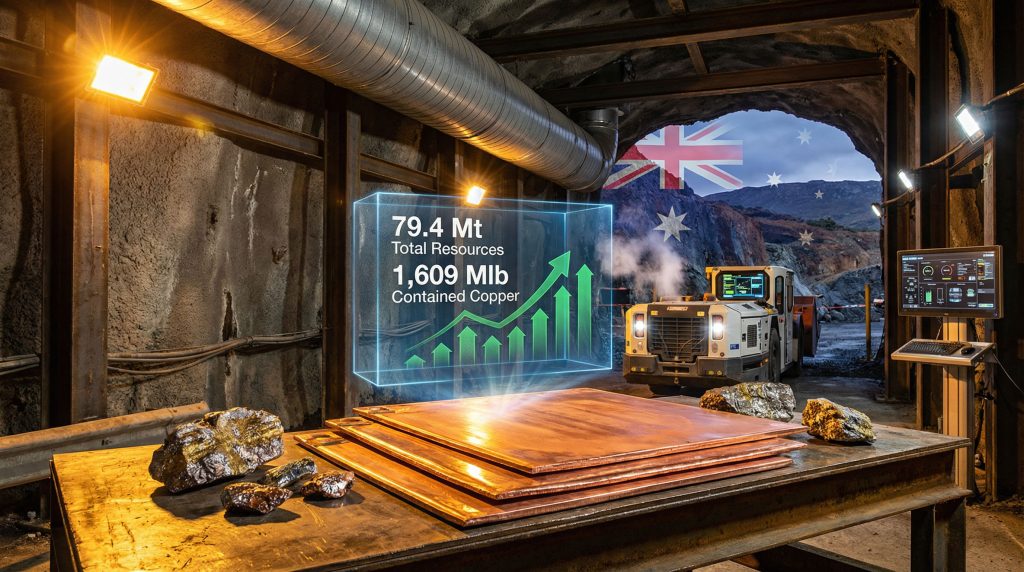
The global copper market stands at an inflection point where dormant mining assets are becoming increasingly valuable. With renewable energy infrastructure driving unprecedented metal demand and traditional supply sources facing capacity constraints, previously uneconomical projects are experiencing renewed commercial interest. This market transformation has created unique opportunities for operations that maintained their structural integrity during extended care and maintenance periods.
Tasmania's Mount Lyell copper mine restart represents a compelling case study in this evolving landscape. After ceasing operations in September 2014 following 123 years of continuous production, the mine has preserved its underground infrastructure while copper fundamentals have strengthened significantly. The operation's strategic positioning within Australia's critical minerals strategy, combined with technological advances in underground mining, has attracted renewed investor attention from Sibanye-Stillwater Limited.
Current Market Dynamics Supporting Underground Copper Operations
The economic viability of Mount Lyell's restart hinges on several converging market forces that have fundamentally altered the copper supply-demand equation since 2014. Global copper consumption has accelerated beyond traditional industrial applications, with renewable energy infrastructure now representing approximately 40% of new demand growth according to the International Copper Study Group.
Key demand drivers include:
- Electric vehicle manufacturing requiring 2.5-4 times more copper than conventional vehicles
- Wind turbine installations consuming 3-5 tonnes of copper per megawatt of capacity
- Solar photovoltaic systems utilising copper-intensive inverters and transmission components
- Grid modernisation projects demanding enhanced conductivity materials
Supply constraints have simultaneously tightened across major producing regions. Chilean copper production has declined 3.2% annually since 2018 due to declining ore grades and water availability challenges. Furthermore, Peruvian operations face increasing social licence pressures and permitting delays that have postponed several planned expansions.
Australia's Critical Minerals Strategy Classification
Mount Lyell benefits from Australia's designation of copper as a critical mineral under the federal government's strategic framework. This classification provides access to enhanced infrastructure development support and streamlined regulatory pathways, though project-specific government backing remains subject to individual merit assessments and commercial viability demonstrations.
Federal Resources Minister Madeleine King has publicly supported the potential reopening of the mine, recognising its importance to Tasmania's mining sector and Australia's broader resource security objectives. This endorsement reflects the strategic value of maintaining domestic copper production capacity amid global supply uncertainties.
Resource Quality and Geographic Advantages
Mount Lyell's resource base contains approximately 1,609 million pounds of contained copper across underground deposits, with an average grade of 1.08% copper accompanied by gold and silver credits. This grade profile positions the operation favourably within Australia's copper cost curve, particularly when combined with established infrastructure and port access through Burnie.
The mine's proximity to renewable energy manufacturing hubs in Asia provides logistical advantages for copper concentrate exports. Tasmania's stable geological environment and established mining workforce further enhance the project's operational risk profile compared to frontier jurisdictions.
When big ASX news breaks, our subscribers know first
Sibanye-Stillwater's Strategic Portfolio Expansion
Sibanye-Stillwater's acquisition of Mount Lyell in November 2023 represents a strategic pivot toward base metals diversification beyond the company's traditional precious metals focus. The Johannesburg-listed miner has demonstrated successful integration capabilities through its 2017 Stillwater Mining acquisition, which expanded operations into North American platinum group metals.
Corporate Restructuring Timeline:
| Phase | Target Completion | Key Milestones |
|---|---|---|
| Feasibility Study | Q3 2026 | Technical evaluation, cost estimates |
| Board Investment Decision | Q4 2026 | Capital allocation approval |
| Construction Commencement | Q1 2027 | Subject to positive economics |
| Production Restart | Q3 2028 | Estimated 18-month build period |
The company's board decision framework prioritises projects demonstrating sustainable cash flow generation above 15% internal rates of return. Mount Lyell's feasibility study must demonstrate competitive operating costs below the industry's third quartile to secure development approval.
Capital Allocation Strategy
Sibanye-Stillwater's historical approach to mine acquisitions emphasises operational optimisation through technology integration rather than resource expansion. The company typically invests 8-12% of annual revenue in sustaining capital expenditure, focusing on automation and energy efficiency improvements.
Mount Lyell's restart capital requirements are estimated between AUD $200-400 million, depending on infrastructure rehabilitation scope and production capacity targets. This investment level aligns with Sibanye-Stillwater's medium-term capital allocation capacity while providing exposure to copper's structural demand growth.
Infrastructure Rehabilitation and Technical Challenges
Restarting a mine after twelve years of care and maintenance presents complex engineering challenges that extend far beyond basic equipment replacement. Mount Lyell's underground workings extend to depths exceeding 2,750 metres, requiring comprehensive structural integrity assessments and safety system modernisation.
Critical Infrastructure Systems Assessment
Ventilation Network Restoration:
- Primary ventilation circuits require complete airflow modelling and fan system upgrades
- Modern variable frequency drive technology can reduce energy consumption by 25-30%
- Deep underground operations necessitate sophisticated air cooling systems for worker safety
- Integration of real-time atmospheric monitoring networks for gas detection and air quality management
Pumping and Dewatering Systems:
- Tasmania's annual rainfall of 2,400mm creates significant groundwater management requirements
- Twelve years of reduced pumping may have altered local water table conditions
- Modern pumping systems offer improved efficiency and remote monitoring capabilities
- Environmental baseline re-establishment required for discharge permit compliance
Electrical Infrastructure Modernisation:
- Underground power distribution networks require certification to current Australian Standards
- LED lighting retrofits can achieve 50-60% energy consumption reductions
- Integration of fibre optic communication networks for modern mining operations
- Variable speed drive installations across conveyor and processing systems
Workforce Development and Skills Acquisition
Tasmania's mining workforce has contracted significantly since Mount Lyell's closure, creating recruitment and training challenges for restart operations. The state's mining employment declined from approximately 4,500 workers in 2014 to an estimated 3,200 positions by 2024.
"The specialised skills required for deep underground copper mining, including ventilation technicians, geotechnical engineers, and metallurgical specialists, are particularly scarce in the regional labour market."
Training Program Requirements:
- 6-12 month apprenticeship programmes for electrical and mechanical trades
- Underground safety certification for all operational personnel
- Modern equipment operation training for automated systems
- Partnerships with regional training organisations and TAFE institutes
Successful workforce development will require collaboration between Sibanye-Stillwater, local educational institutions, and government employment agencies to establish sustainable skills pipelines for the mining sector.
Comparative Analysis of Australian Copper Operations
Mount Lyell's resource profile and production potential position it competitively within Australia's copper mining landscape. The operation's copper grade of 1.08% compares favourably to established producers while offering significant tonnage potential.
Australian Copper Operations Comparison:
| Operation | Annual Production (Cu) | Operator | Copper Grade | Mine Life |
|---|---|---|---|---|
| Prominent Hill | ~100,000 tpa | OZ Minerals | 1.3% Cu | 8 years |
| Northparkes | ~170,000 tpa | Rio Tinto/CMOC | 0.9% Cu | 15+ years |
| Olympic Dam | ~200,000 tpa | BHP | 0.7% Cu | 50+ years |
| Mount Lyell (projected) | ~150,000 tpa | Sibanye-Stillwater | 1.08% Cu | 15+ years |
Mount Lyell's historical production averaged 180,000 tonnes of copper annually during peak operations, suggesting restart production targets of 150,000-170,000 tonnes represent conservative estimates based on modern mining efficiency improvements.
Cost Curve Positioning
Australia's copper operations typically achieve all-in sustaining costs between USD $2.80-$4.20 per pound, depending on ore grade, mining method, and by-product credits. Mount Lyell's gold and silver content provides valuable revenue credits that could position the operation within the industry's second quartile cost performance.
The mine's established infrastructure and proximity to port facilities offer logistical advantages over greenfield developments, potentially reducing total delivered costs for concentrate buyers in Asian markets. In addition, current copper prices record highs support the economic viability of the project.
How Will Government Policy Support the Restart?
Australia's Critical Minerals Strategy provides a supportive policy environment for copper operations, though specific project benefits require individual assessment and commercial demonstration. The strategy emphasises supply chain resilience and strategic mineral security rather than direct financial support.
Federal Policy Alignment:
- Critical minerals classification enhances investment attraction capabilities
- Streamlined environmental assessment processes for strategic projects
- Infrastructure development support through northern Australia funds
- Export finance assistance for established operations
Regional Economic Impact Assessment
Mount Lyell's restart could generate substantial economic benefits for Tasmania's west coast region, which has experienced limited economic diversification since the mine's closure. Economic modelling suggests the operation could support:
- Direct Employment: 250-350 full-time positions during operational phase
- Indirect Employment: 400-600 positions in regional services and supply chains
- Economic Multiplier: Every mining job typically supports 2.4 additional regional positions
- Annual Payroll: Estimated AUD $45-60 million in direct wages and salaries
The Queenstown region's economic base has relied heavily on tourism since mining activities declined, creating vulnerability to external shocks demonstrated during COVID-19 travel restrictions. However, mining operations provide economic stability and higher-wage employment opportunities for regional communities.
Technology Integration and Operational Modernisation
Modern mining technology offers significant opportunities to improve Mount Lyell's operational efficiency and safety performance compared to its pre-2014 configuration. Furthermore, ai-driven mining technology can enhance productivity while reducing operational risks inherent in deep underground environments.
Digital Mining Systems:
- Real-time ore grade monitoring through portable X-ray fluorescence analysers
- Predictive maintenance algorithms for critical equipment optimisation
- Automated material handling systems reducing manual intervention requirements
- Integration of drone surveying for stope monitoring and geological mapping
Sustainability and ESG Integration
Environmental, social, and governance considerations have become increasingly important for mining operations since 2014. The Mount Lyell copper mine restart must demonstrate compliance with enhanced environmental standards and community engagement protocols.
Key ESG Components:
- Carbon footprint reduction through renewable energy integration
- Water management optimisation and discharge quality improvement
- Tailings storage facility modernisation with enhanced monitoring systems
- Community benefit-sharing agreements and local procurement preferences
Tasmania's abundant renewable energy resources provide opportunities for mine electrification and carbon footprint reduction. The state's hydroelectric capacity could support Mount Lyell's energy requirements while minimising greenhouse gas emissions.
The next major ASX story will hit our subscribers first
Risk Assessment and Investment Considerations
Mount Lyell's restart involves multiple risk categories that investors must carefully evaluate against potential returns. The project's risk profile differs from greenfield developments but presents unique challenges associated with dormant infrastructure reactivation.
What Are the Main Technical Risks?
Technical Risk Factors:
- Underground Condition Verification: Twelve years of care and maintenance may have altered structural conditions requiring extensive rehabilitation
- Ore Body Continuity Confirmation: Geological modelling updates needed to validate resource estimates and mine planning assumptions
- Metallurgical Process Optimisation: Processing circuit modifications required for current environmental standards and efficiency targets
- Infrastructure Integrity Assessment: Comprehensive engineering evaluations of electrical, mechanical, and structural systems
Market Risk Considerations
Market Risk Considerations:
- Copper Price Volatility: Project economics sensitive to sustained copper prices above USD $3.50 per pound
- Global Supply Chain Disruption: Equipment delivery and skilled contractor availability could impact construction timelines
- Regulatory Change Implications: Environmental permitting requirements continue evolving with climate change policies
- Competition from New Projects: Multiple copper developments globally may pressure regional concentrate pricing
Investment Risk Mitigation Strategies:
Successful restart execution requires robust risk management protocols including comprehensive insurance coverage, contractor performance guarantees, and phased development approaches that allow operational adjustment based on early performance indicators.
Strategic Importance for Australia's Mining Sector
Mount Lyell's potential restart represents broader trends within Australia's mining industry toward maximising value from existing infrastructure rather than pursuing exclusively greenfield development. The operation's success could influence similar restart decisions across dormant mining assets.
National Resource Security Benefits:
- Domestic copper supply chain strengthening reduces import dependence
- Critical mineral production supports renewable energy sector development
- Export revenue generation contributes to national trade balance objectives
- Regional development demonstrates mining's ongoing economic contribution
The project aligns with Australia's broader industrial strategy emphasising resource security and supply chain resilience. Successful restart operations demonstrate the value of maintaining mining infrastructure during commodity downturns rather than permanent closure decisions.
Industry Transformation Implications
Mount Lyell's restart economics will provide valuable benchmarking data for similar projects across Australia and internationally. Consequently, the operation's performance could influence investment decisions for other dormant copper mines in Tasmania, South Australia, and Queensland.
"Modern mining technology integration during restart operations often achieves superior productivity and safety outcomes compared to original configurations, creating competitive advantages for well-executed projects."
What Does the Future Hold for Mount Lyell?
Mount Lyell's long-term success depends on sustained copper demand growth and operational efficiency achievements that justify continued investment in underground expansion. The mine's extensive resource base offers potential for production life extension through targeted exploration and resource development programs.
Exploration Opportunities
Exploration Opportunities:
- Regional prospects within existing tenement holdings
- Deep extension potential below current resource definitions
- Advanced geophysical techniques for deposit delineation
- Integration with other Sibanye-Stillwater regional activities
Processing Facility Modernisation Benefits
Processing Facility Modernisation Benefits:
- Enhanced recovery rates through flotation circuit optimisation
- Concentrate grade improvements for premium market positioning
- Environmental performance upgrades supporting social licence maintenance
- Automation integration reducing operational labour requirements
The global copper supply forecast indicates continued supply constraints, which supports the long-term viability of projects like Mount Lyell. Additionally, copper-uranium investment in Australia continues to attract international attention, creating a favourable environment for the restart.
Furthermore, the Mt. Lyell development receives backing from various industry stakeholders, highlighting the project's strategic importance to Tasmania's mining sector.
The Mount Lyell copper mine restart represents a significant opportunity within Australia's evolving mining landscape, combining established infrastructure advantages with modern operational techniques. Success will depend on careful execution of technical rehabilitation, workforce development, and market positioning strategies that leverage Tasmania's competitive advantages while managing inherent restart risks effectively.
Disclaimer: This analysis contains forward-looking statements and projections based on available information. Mining investments involve significant risks including commodity price volatility, operational challenges, and regulatory changes. Investors should conduct independent due diligence and seek professional advice before making investment decisions.
Ready to Capitalise on Australia's Copper Revival?
Discovery Alert's proprietary Discovery IQ model delivers real-time alerts on significant copper discoveries across the ASX, empowering subscribers to identify actionable opportunities ahead of the broader market. Begin your 14-day free trial today and secure your market-leading advantage in Australia's critical minerals sector.