
July 12, 2026
When Analyst Conviction Meets Commodity Cycles: Reading the NALCO Upgrade Signal
Commodity equity markets have a peculiar relationship with analyst upgrades. In cyclical sectors like primary aluminium, the timing of a rating change often communicates as much as the underlying target price. Brokerages rarely shift conviction at the bottom of a cycle — they move when earnings visibility improves, when cost structures prove durable, and when medium-term pricing dynamics align with a credible growth narrative. Understanding what sits beneath an upgrade from Hold to Buy, therefore, requires more than reading a headline figure.
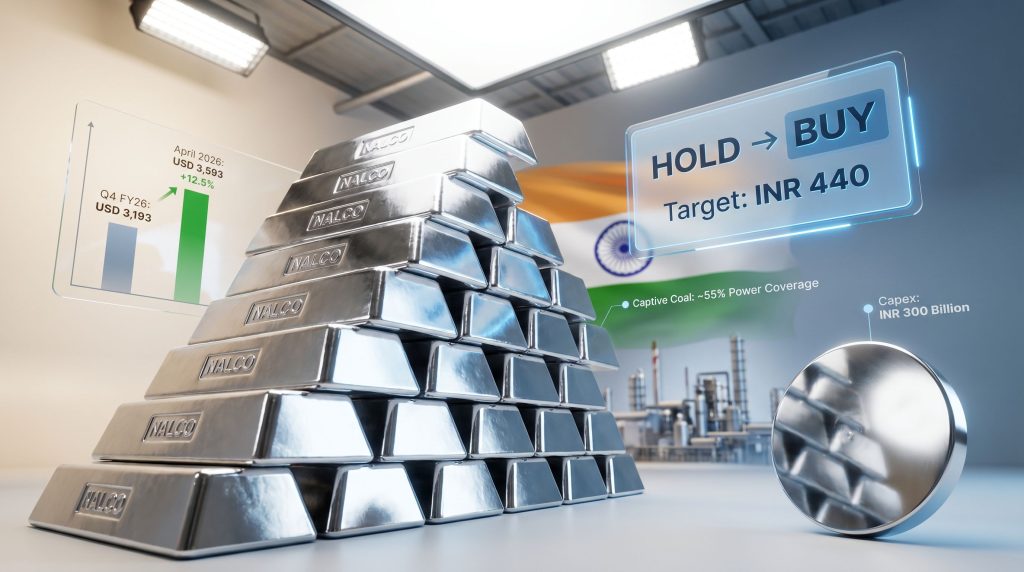
When Axis Securities upgrades NALCO to Buy — as it did on May 4, 2026, raising its target price from INR 390 to INR 440 per share — it is doing something analytically nuanced: acknowledging elevated valuations while simultaneously asserting that the earnings trajectory justifies accumulation. That combination — buy despite rich pricing — is a statement about structural conviction, not short-term momentum trading.
When big ASX news breaks, our subscribers know first
Understanding NALCO's Position in India's Aluminium Value Chain
To appreciate the weight of this upgrade, it helps to understand what NALCO actually represents within India's industrial metals landscape. As a state-owned, vertically integrated aluminium producer, the company operates across the entire production spectrum — from bauxite extraction and alumina refining through to primary aluminium smelting.
This vertical integration is not merely an operational convenience. It represents a fundamentally different business model from pure-play smelters who must purchase alumina at market prices, or downstream fabricators exposed to metal price volatility from both directions. NALCO controls its upstream cost inputs in ways that most aluminium mining companies simply cannot replicate.
How State-Owned Aluminium Producers Are Valued Differently
State-owned enterprises (SOEs) in the metals sector tend to trade at persistent valuation discounts to privately managed peers. This reflects investor concerns about capital allocation efficiency, management autonomy, dividend policy unpredictability, and exposure to social or political objectives that can override commercial decision-making.
However, SOE discounts also create asymmetric opportunity. When a state-owned aluminium producer demonstrates consistent earnings delivery, capital discipline, and shareholder returns, the market re-rating potential is amplified precisely because baseline expectations are lower. NALCO's 12-month outperformance of the Nifty Metal Index by approximately 102.86 percent as of April 30, 2026, suggests the market has been recalibrating exactly this discount.
What the Axis Securities Upgrade Actually Communicated
The mechanics of the upgrade are worth examining in structured form. Furthermore, understanding the valuation methodology provides important context for interpreting the target price revision.
| Parameter | Previous Position | Revised Position |
|---|---|---|
| Rating | Hold | Buy |
| Target Price | INR 390 (USD 4.12) | INR 440 (USD 4.65) |
| Implied Upside | — | ~10% |
| Valuation Basis | — | 7.0x EV/EBITDA on Mar'28E EBITDA |
| Upgrade Date | February 2, 2026 | May 4, 2026 |
The valuation methodology itself carries meaning. By anchoring to a 7.0x EV/EBITDA multiple on March 2028 estimated EBITDA, Axis Securities is explicitly not pricing NALCO on current-year earnings. This is a medium-term earnings normalisation call — the brokerage is projecting forward to a period when the fifth alumina refinery stream is fully contributing, the long-term capex programme has gained momentum, and aluminium pricing has had time to stabilise at structurally supportive levels.
Why a Buy Rating With a 10% Upside Is Not Contradictory
A 10 percent implied upside alongside an explicit "rich valuation" warning might appear self-defeating to retail investors accustomed to associating Buy ratings with high-upside speculative opportunities. The logic is, however, more sophisticated.
In commodities equity analysis, a Buy rating on a well-covered, large-cap SOE with acknowledged elevated multiples signals one of two things: either earnings are about to improve materially enough to justify current pricing, or the company is being elevated to a conviction allocation within a portfolio context where total return over a two-to-three-year horizon matters more than near-term price catalysts.
Axis Securities appears to be communicating both simultaneously. The designation of NALCO as a Top Conviction Pick in the metals sector for long-term investors reinforces that this is not a tactical trade recommendation. Consequently, commodity price impacts on earnings quality are central to how the upgrade thesis should be interpreted.
Investors approaching this upgrade should treat it as an institutional quality signal rather than a short-term price catalyst. The 10% headline upside understates the thesis if the March 2028 EBITDA estimate proves conservative.
Dissecting NALCO's Q4 FY26 Results: What Drove Analyst Conviction
The upgrade was not made in a vacuum. NALCO's Q4 FY26 financial results provided the fundamental catalyst that shifted analyst conviction.
Revenue and EBITDA Performance
- Consolidated Q4 FY26 revenue came in at INR 5,013 crore (approximately USD 597 million)
- Year-on-year, revenue declined 5 percent, reflecting lower alumina profitability and reduced metal sales volumes
- Quarter-on-quarter, revenue improved 6 percent, suggesting sequential recovery
- EBITDA margins outperformed consensus analyst estimates despite the top-line pressure — a critical signal in commodities equity analysis
The divergence between revenue underperformance and EBITDA outperformance is instructive. It indicates that NALCO's cost management — particularly through its captive energy base — absorbed revenue shortfalls rather than allowing them to flow through to profitability. This is precisely the type of earnings quality that justifies multiple expansion in commodity stocks.
The Aluminium Price Environment Entering FY27
Global aluminium pricing provided a meaningful tailwind that carried into the early weeks of FY27. In addition, shifting global supply dynamics significantly influenced the pricing trajectory during this period.
| Period | Average Aluminium Price (USD/tonne) |
|---|---|
| Q4 FY26 | USD 3,193 |
| April 2026 (partial) | USD 3,593 |
| Quarter-on-quarter change | +12.5% |
The April 2026 price strength was attributed to supply disruptions in the Middle East, a region that hosts significant primary smelting capacity. Supply-side shocks of this nature tend to create short-duration price spikes, and Axis Securities appropriately flagged that geopolitical de-escalation represents the primary downside risk to sustained price strength.
The Alumina Segment: Near-Term Pressure, Medium-Term Value
Alumina — the intermediate product between bauxite and primary aluminium — presents a more nuanced picture. NALCO's alumina profitability came under pressure in FY26, and additional Indonesian refinery capacity expected to enter global markets through FY27 is likely to sustain this headwind. Shifts in bauxite supply dynamics globally are, furthermore, a variable worth monitoring across this segment.
This is an important dynamic that investors in integrated aluminium companies must understand. Alumina and aluminium prices do not always move in lockstep. When alumina supply expands faster than aluminium demand, the refining margin compresses even if metal prices remain firm.
For NALCO, this creates a near-term earnings drag in the alumina segment that partially offsets aluminium price tailwinds. However, NALCO's own refinery expansion — adding 1 MTPA of capacity through the fifth stream — positions the company to capture volume-driven margin recovery as the installed base grows.
NALCO's Captive Coal Advantage: The Cost Moat Most Investors Underestimate
In a commodity business, sustainable above-average returns derive almost entirely from sitting at a favourable position on the global cost curve. NALCO's captive coal operations represent a structural cost advantage that warrants detailed examination.
The Numbers Behind the Moat
- Captive coal output in FY26 reached approximately 4 million tonnes
- This volume satisfied roughly 55 percent of NALCO's total power requirements
- The cost differential versus market-sourced coal (linkage and e-auction procurement) sits in the range of INR 300–600 per tonne (approximately USD 3.17–6.34 per tonne)
In a commodity business where margins are determined at the cost curve, a structural energy cost advantage of INR 300–600 per tonne operates as a durable competitive buffer — particularly when global energy prices remain elevated or volatile.
The significance of this advantage becomes clearer when considered in the context of aluminium's energy intensity. Primary aluminium smelting is one of the most electricity-intensive industrial processes in existence, consuming approximately 13–14 megawatt hours per tonne of metal produced. Companies that control their power cost inputs have a permanently lower floor on their cost of production, regardless of where spot energy markets trade.
Input Cost Pressures Emerging in FY27
Axis Securities identified three specific input cost categories where rising prices are expected to create margin headwinds in FY27:
- Caustic soda — a critical chemical reagent in the Bayer process used to refine alumina from bauxite ore. Caustic soda prices are linked to the broader chlor-alkali chemical market and tend to rise during periods of industrial demand growth.
- Calcined petroleum coke (CPC) — derived from oil refinery byproducts, CPC is the primary carbon material used to manufacture anodes in aluminium electrolysis cells. CPC availability and pricing are influenced by crude oil refinery utilisation rates globally.
- Coal tar pitch — a byproduct of coal coking operations used as a binder in anode manufacture. Pitch supply can tighten during periods of reduced metallurgical coke production.
Partial offsets are expected from lower power costs (reflecting captive coal efficiency improvements) and ongoing operational efficiency gains. However, the net cost impact of these input pressures remains a variable that investors should monitor through quarterly earnings reports.
Expansion Pipeline: The Earnings Architecture for FY27 and Beyond
NALCO's growth case rests on a clearly articulated capital programme with defined timelines, capacity targets, and financial metrics. In addition, the scale of the planned investment reflects genuine confidence in long-term domestic demand.
Fifth Alumina Refinery Stream: The Near-Term Catalyst
The commissioning of the fifth refinery stream — adding 1 MTPA of alumina production capacity — is expected in June 2026. Minor execution delays have led to modest downward revisions in FY27 alumina output estimates, though the directional growth trajectory remains intact.
For FY27, the total alumina production target sits at approximately 2.5 million tonnes, with the new stream contributing an estimated 5–6 lakh tonnes (500,000–600,000 tonnes) of commercial production once operational.
Aluminium Smelter Production: Approaching the Nameplate Ceiling
FY27 aluminium production is forecast at approximately 473,000 tonnes, representing near-peak utilisation of existing smelter capacity. This is an important constraint to understand: NALCO's aluminium volume growth story is largely exhausted at existing facilities. The next leg of metal production growth requires commissioning of entirely new smelting capacity.
The Long-Term Capital Programme
| Project Component | Scale |
|---|---|
| New Aluminium Smelter | 0.5 million tonnes per annum |
| Captive Power Plant | 1,080 MW |
| Total Capex Envelope | INR 300 billion (approx. USD 3.17 billion) |
| Execution Ramp | Accelerating from FY28 |
The sheer scale of this capital commitment — INR 300 billion across a new smelter and dedicated power generation — reflects NALCO's ambition to materially expand its primary aluminium production footprint. The FY28 acceleration timeline aligns with Axis Securities' decision to anchor its target price to March 2028 EBITDA estimates.
The next major ASX story will hit our subscribers first
Financial Health: Why the Balance Sheet Matters as Much as the P&L
Commodity companies pursuing large-scale capital programmes face a fundamental tension between growth investment and shareholder returns. NALCO's financial position appears to manage this tension more effectively than most.
- Low debt levels provide meaningful financial flexibility, reducing the risk of equity dilution to fund the INR 300 billion capex programme
- Strong operating cash flow generation supports simultaneous reinvestment and dividend payments
- The third interim dividend for FY26 of INR 2 per share (USD 0.02) signals management confidence in earnings sustainability
Consistent dividend payments from a state-owned enterprise carry a specific signal beyond the yield itself. They indicate that management is not capital-starved, that the earnings base is sufficiently robust to sustain distributions, and that shareholder returns are treated as a genuine capital allocation priority rather than a residual obligation.
Risk Framework: Three Scenarios That Could Undermine the Bull Case
Axis Securities was explicit about the conditions that could challenge the upgrade thesis. Investors should assess these risks with equal rigour to the growth catalysts.
- Expansion execution risk: Delays or cost overruns in the fifth refinery stream and long-term capex programme would defer the earnings uplift that justifies current valuations. The "minor delays" already observed in the fifth stream commissioning are a precedent worth monitoring.
- Aluminium price cyclicality: The April 2026 price strength is partially driven by supply disruptions rather than fundamental demand growth. A resolution of Middle East geopolitical tensions, or a slowdown in downstream aluminium demand, could reverse this tailwind rapidly.
- Power cost vulnerability: Any reduction in captive coal availability — whether from reserve depletion, regulatory changes, or operational disruptions — would directly erode NALCO's most durable competitive advantage and push production costs toward market-sourced energy rates.
Analyst Consensus and Market Positioning
The Axis Securities upgrade does not exist in isolation. A broader multi-brokerage picture provides important context for understanding how institutional sentiment has evolved around NALCO's equity story.
| Brokerage | Rating | Target Price | Implied Upside at Issue |
|---|---|---|---|
| Axis Securities (May 2026) | Buy | INR 440 | ~10% |
| Antique Capital (early 2025) | Buy | INR 262 | ~27% at time of issue |
The evolution of target prices across coverage periods reflects NALCO's significant re-rating over the preceding year. Antique Capital's earlier INR 262 target — which carried a 27 percent implied upside at the time of issue — has been substantially exceeded by actual price performance, with the stock trading at INR 399.30 as of April 30, 2026.
This price history underscores an important point about commodity equity analysis: consensus target prices tend to lag actual price performance during strong commodity cycles because analysts build in conservative assumptions about pricing sustainability. When those assumptions prove too cautious, upgrades accelerate in clusters.
Reading the Share Price Action Around the Upgrade
The April 30, 2026 trading session — when NALCO shares declined 7.85 percent — provides an interesting behavioural signal. The sharp single-session decline occurred days before the upgrade announcement, suggesting the market was pricing in near-term headwinds at precisely the moment institutional conviction was rebuilding. The prior one-month gain of +12.67 percent indicates underlying momentum remained intact despite the volatile session.
This type of price action, where short-term volatility precedes a conviction upgrade, reflects a pattern experienced investors recognise: market participants sell on near-term earnings uncertainty while longer-duration institutional analysis supports accumulation on medium-term fundamentals.
NALCO as a Proxy for India's Broader Aluminium Demand Story
Beyond the company-specific metrics, the Axis Securities upgrades NALCO to Buy decision carries a broader signal about India's industrial trajectory. The evolving aluminum and alumina markets globally are, furthermore, reshaping how domestic producers like NALCO are positioned within international supply chains.
Aluminium consumption in India is closely tied to infrastructure development, automotive production, packaging, and power transmission — all sectors experiencing sustained capacity addition. India's industrial metals outlook more broadly reflects this structural demand story, reinforcing why integrated domestic producers command increasing analyst attention.
A state-owned primary aluminium producer sitting at near-peak smelter utilisation, whilst simultaneously commissioning new refining capacity and planning a 0.5 MTPA smelter expansion, is, in effect, a direct expression of anticipated domestic demand growth over the next decade. For investors seeking exposure to India's industrial expansion through the metals sector, integrated producers with strong earnings and captive energy advantages represent a more defensible entry point than pure-play downstream processors exposed to both raw material and fabrication margin volatility.
This article is intended for informational purposes only and does not constitute financial advice. Equity markets and commodity prices involve material risk of loss. Target prices and analyst ratings referenced in this article represent the views of the named brokerage at the time of publication and are subject to revision. Investors should conduct independent research and consult a licensed financial adviser before making investment decisions. All currency conversions are approximate and based on prevailing exchange rates at the time of the referenced events.
Want to Stay Ahead of the Next Major Mineral Discovery on the ASX?
Discovery Alert's proprietary Discovery IQ model delivers real-time alerts on significant ASX mineral discoveries, turning complex commodity data into actionable investment insights for both short-term traders and long-term investors — explore historic examples of exceptional discovery returns to understand the potential at stake, then begin your 14-day free trial at Discovery Alert to position yourself ahead of the broader market.