August 11, 2026
Why ESG Disclosure Quality Is Becoming the New Competitive Frontier in Global Aluminium
The aluminium industry is undergoing a quiet but profound transformation. While smelter capacity, energy costs, and commodity pricing continue to dominate headlines, a parallel shift is reshaping how aluminium producers are evaluated by the capital markets, procurement officers, and regulators who ultimately determine their long-term viability. That shift is the growing weight placed on verifiable, standardised, independently assured sustainability data.
For emerging market producers, the stakes are particularly high. As European and North American buyers tighten their green procurement criteria and ESG-focused institutional investors apply more rigorous screening frameworks, the quality of a producer's sustainability disclosure infrastructure is becoming as strategically important as its cost curve position. In this context, the NALCO sustainability report for FY2025-26 represents more than a regulatory filing. It signals how India's largest vertically integrated state-owned aluminium producer is positioning itself within this rapidly evolving landscape.
When big ASX news breaks, our subscribers know first
NALCO's Operational Footprint and Why Its Disclosures Carry Systemic Weight
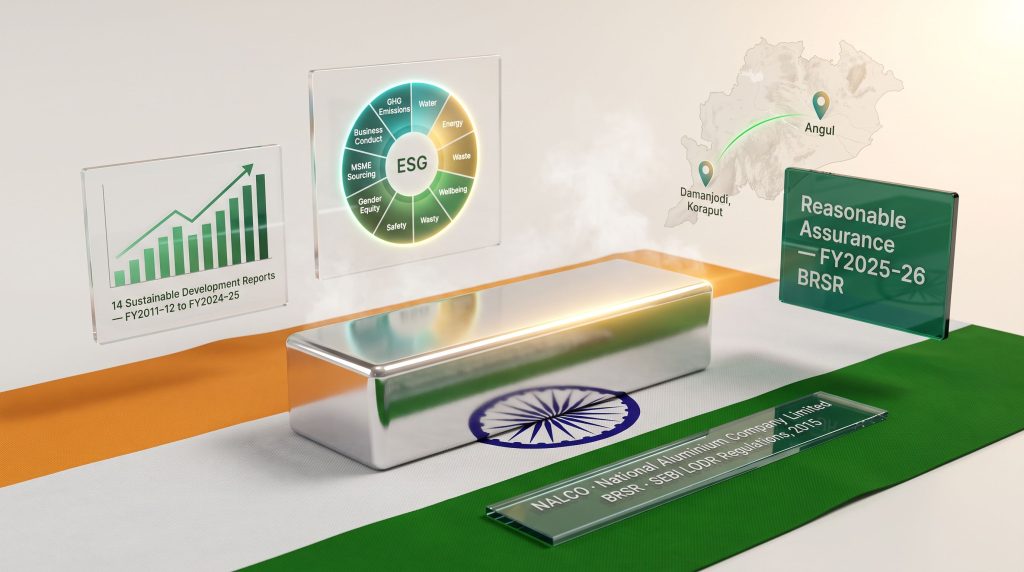
National Aluminium Company Limited operates across the full aluminium value chain under a single corporate structure, a configuration that makes its sustainability disclosures unusually comprehensive. The company's bauxite mining and alumina refining operations are concentrated at Damanjodi in Koraput district, Odisha, while aluminium smelting and captive coal-based power generation are located at Angul, also in Odisha.
This vertical integration from raw ore to finished metal creates a disclosure perimeter that spans some of the most emissions-intensive and water-intensive industrial processes on earth. The Bayer process used in alumina refining is notoriously water-hungry, while the Hall-Heroult electrolytic smelting process demands massive quantities of electricity. NALCO's captive power plant at Angul, which runs primarily on coal, is simultaneously the company's greatest cost advantage and its most significant environmental liability.
Because NALCO accounts for a substantial share of India's primary aluminium output, its sustainability performance carries implications that extend well beyond its own balance sheet. Its disclosure trajectory effectively sets a reference point for the broader Indian aluminium industry's ESG maturity. Furthermore, understanding how NALCO compares to other producers requires context on the top aluminium mining companies globally and how they approach disclosure.
The Regulatory Architecture: From BRR to BRSR and What Changed
India's corporate sustainability disclosure framework has evolved significantly over the past decade. The earlier Business Responsibility Report, mandatory for the top 1,000 listed companies, was built around nine qualitative principles with minimal standardisation. The current Business Responsibility and Sustainability Report, introduced by the Securities and Exchange Board of India under the Listing Obligations and Disclosure Requirements Regulations 2015, represents a structural overhaul.
The BRSR framework mandates quantitative key performance indicators, standardised metrics, and exchange submission requirements that enable meaningful cross-company and year-on-year comparisons. For investors and ESG rating agencies, this shift from qualitative narratives to auditable numbers is transformative.
| Framework | Mandatory in India? | Key Focus Areas | Assurance Requirement |
|---|---|---|---|
| BRR (pre-2022) | Yes (Top 1000 listed) | 9 principles, qualitative | Not required |
| BRSR (post-2022) | Yes (Top 1000 listed) | Quantitative KPIs, ESG metrics | Recommended (Core) |
| GRI Standards | Voluntary | Global ESG benchmarks | Optional |
The BRSR also introduces India-specific social metrics that have no direct equivalent in international frameworks, including sourcing volumes from micro, small, and medium enterprises, wages paid to workers in smaller towns, and inclusive development indicators. These localised disclosures are increasingly valued by ESG-focused emerging market investors who want evidence of industrial multiplier effects beyond the factory gate.
How Third-Party Assurance Transforms the Credibility of Sustainability Data
The Distinction Between Limited and Reasonable Assurance
Not all third-party sustainability assurance is created equal. In sustainability auditing, there are two recognised confidence levels: limited assurance, which involves a narrower set of procedures and produces a lower-confidence conclusion, and reasonable assurance, which requires extensive evidence gathering, site visits, data tracing, and document verification comparable in rigour to a financial audit opinion.
Key Insight: Reasonable assurance in sustainability auditing is the higher-confidence standard. It requires the verifier to actively seek evidence that could disprove the reported figures, not merely confirm that they appear plausible. This distinction matters enormously to institutional investors using ESG data to screen investment decisions.
NALCO's FY2025-26 BRSR achieved a reasonable level of assurance across all nine core attribute categories, verified by TÜV SÜD South Asia Pvt. Ltd. This is a materially stronger outcome than the limited assurance that remains common practice across global aluminium producers. For additional context, NALCO's sustainability disclosures provide a comprehensive historical record of the company's reporting evolution.
The Nine Core BRSR Attributes Subject to Independent Verification
The verification scope conducted between 30 June and 20 July 2026, with the assurance statement issued from Bhubaneswar on 20 July 2026, covered the following categories:
- Greenhouse gas emissions (Scope 1 and Scope 2)
- Water consumption, water intensity, and water discharge
- Total energy consumed, renewable energy share, and energy intensity
- Waste generation, recovery rates, and disposal methods
- Employee wellbeing expenditure per worker
- Workplace safety incident rates and fatality metrics
- Gender diversity and gross wages paid to women
- MSME sourcing volumes and wages paid in smaller towns
- Business conduct transparency, including customer data integrity, accounts payable, and related-party transactions
Physical verification was conducted across three operational clusters: NALCO Bhawan in Bhubaneswar (corporate headquarters), the Damanjodi bauxite mines and alumina refinery in Koraput, and the aluminium smelter and captive power plant at Angul.
Key Sustainability Metric Categories Disclosed in the FY2025-26 BRSR
Emissions: Scope 1, Scope 2, and the Intensity Benchmark That Actually Matters
In the context of an integrated aluminium producer, Scope 1 emissions capture direct combustion processes such as calcination in the alumina refinery, anode baking, smelting pot gases, and fuel combustion at the captive power plant. Scope 2 emissions cover indirect emissions from any purchased electricity, though for NALCO, captive generation means the bulk of power-related emissions falls under Scope 1.
A critical point often missed in general ESG analysis is that absolute emissions tonnage is a misleading metric for comparing aluminium producers of different scale. The operationally meaningful figure is emission intensity per tonne of aluminium produced, which normalises for production volume and enables genuine benchmarking against international peers. NALCO's BRSR discloses both total Scope 1 and Scope 2 figures and production-intensity ratios, giving analysts the tools for proper comparative assessment.
The global aluminium industry average for Scope 1 and 2 emissions combined sits at roughly 16 to 18 tonnes of CO2 equivalent per tonne of aluminium when coal-fired captive power is included, though cleaner hydro-powered producers can achieve figures well below five tonnes. NALCO's captive coal dependency places it structurally toward the higher end of this range, making its decarbonisation pathway one of the most material ESG questions it faces. In addition, the broader decarbonisation of mining sector offers relevant economic context for understanding these transition pressures.
Water Stewardship in Odisha's Industrial Corridor
The Bayer process, which converts bauxite into alumina, is among the most water-intensive refining operations in the metals industry. It requires large volumes of water for slurry transport, heat exchange, and washing of the alumina trihydrate precipitate. In Odisha's industrial corridor, where multiple heavy industries compete for river basin resources, water intensity is a genuine material ESG risk rather than a reporting formality.
NALCO's BRSR disclosures on water consumption intensity and discharge volumes provide the raw data needed to track efficiency trends over time. Notably, water discharge quality and destination are also disclosed, reflecting the downstream ecological responsibilities that regulators and community stakeholders increasingly scrutinise.
Red Mud: The Hidden Volume Challenge in Alumina Sustainability Reporting
One of the least publicly understood aspects of alumina refining sustainability is the management of red mud, also known as bauxite residue. For every tonne of alumina produced via the Bayer process, approximately 1.0 to 1.5 tonnes of red mud are generated, depending on the alumina-to-bauxite ratio of the ore. At NALCO's scale, this creates an enormous cumulative waste management obligation.
Red mud is alkaline, contains residual heavy metals, and poses a significant containment risk if storage pond integrity fails, as the 2010 Ajkai Timfoldgyar disaster in Hungary demonstrated with catastrophic consequences. NALCO's BRSR waste disclosures covering generation volumes, recovery rates, and disposal pathways provide important transparency into how this risk is being managed. Emerging circular economy research into red mud valorisation, including its use as an iron source in cement clinker production and as a soil amendment, may eventually reduce the net waste burden, but commercial-scale applications remain limited.
NALCO's 14-Year Sustainability Disclosure Trajectory
From Voluntary GRI Reports to Mandatory BRSR Filings
NALCO has published annual sustainability disclosures since FY2011-12, making its 14th Sustainable Development Report (2024-25) released on 31 March 2026 a marker of genuine institutional depth rather than a recent compliance response.
| Report Number | Financial Year | Framework Applied | Key Milestone |
|---|---|---|---|
| 1st | 2011-2012 | GRI (Voluntary) | Inaugural sustainability disclosure |
| 5th-8th | 2015-2019 | GRI Standards | Expanded quantitative metrics |
| 10th-12th | 2020-2023 | GRI + BRR | Dual-framework reporting begins |
| 13th | 2023-2024 | GRI + BRSR | Transition to SEBI-mandated BRSR |
| 14th | 2024-2025 | BRSR + GRI | Reasonable assurance introduced |
| FY2025-26 BRSR | 2025-2026 | BRSR (SEBI-mandated) | TÜV SÜD independent verification |
This progression reflects a broader pattern visible across India's listed industrial companies: voluntary GRI-aligned reporting built internal capacity that made the eventual mandatory BRSR transition substantially smoother. Companies with no prior sustainability disclosure infrastructure faced a steep learning curve when SEBI mandated the BRSR. NALCO's decade-plus reporting history positioned it to meet the higher quantitative and assurance standards without a disruptive transition.
The next major ASX story will hit our subscribers first
Benchmarking NALCO Against Global Aluminium ESG Frameworks
How the BRSR Compares to the Aluminium Stewardship Initiative Standard
The Aluminium Stewardship Initiative Performance Standard is widely regarded as the most rigorous independent certification framework for responsible aluminium production. ASI certification requires third-party audited compliance across governance, environment, and social dimensions, with mandatory disclosure of emissions, water, and waste metrics.
| ESG Parameter | NALCO (BRSR FY26) | ASI Standard | Global Industry Norm |
|---|---|---|---|
| GHG Scope 1 + 2 disclosure | Disclosed | Required | Standard practice |
| Water intensity reporting | Disclosed | Required | Standard practice |
| Renewable energy share | Disclosed | Encouraged | Variable |
| MSME and domestic sourcing | India-specific disclosure | Partial alignment | Not universal |
| Third-party assurance level | Reasonable assurance | Required for certification | Limited assurance common |
Achieving reasonable assurance rather than limited assurance is particularly significant in this comparison. Many global aluminium producers who hold ASI certification obtain only limited assurance on their sustainability data, meaning NALCO's FY2025-26 BRSR actually meets a higher evidentiary standard on assurance rigour than some ASI-certified peers. NALCO's triple recognition in 2025 for workplace excellence, environmental stewardship, and sustainable mining practices further underscores this trajectory.
Workforce Metrics and Social Accountability Disclosures
Gender Equity and Safety in Heavy Industry Context
India's aluminium smelting and mining sectors are among the most male-dominated industrial workforces in the country. The disclosure of gross wages paid to women within NALCO's BRSR is therefore not a routine data point but a meaningful indicator of whether gender equity commitments translate into actual compensation outcomes rather than headcount optics.
Workplace safety disclosures, including lost-time injury frequency rates and fatality data, are particularly important for integrated operations spanning underground bauxite mining, high-temperature refining, and electrolytic smelting. Each of these environments carries distinct occupational hazard profiles, and the BRSR's requirement to report these metrics at the entity level creates accountability that site-specific reporting alone cannot achieve.
MSME Sourcing as an Industrial Multiplier Signal
NALCO's disclosed sourcing volumes from MSMEs and domestic Indian suppliers function as a proxy for the company's contribution to India's broader industrial ecosystem. Large state-owned enterprises operating in concentrated industrial zones can either function as self-contained enclaves or as anchor institutions that catalyse surrounding SME ecosystems. The BRSR's MSME sourcing metric provides quantifiable evidence of which model predominates.
Wages paid to workers in smaller towns and rural areas, also captured within the BRSR framework, add a geographic equity dimension that international ESG frameworks rarely incorporate. For investors focused on the social component of ESG in emerging market contexts, this data point is genuinely differentiated. Furthermore, the broader role of critical raw materials in the green transition adds additional context to why these social metrics are gaining prominence.
Frequently Asked Questions: NALCO Sustainability Report
What is the difference between the NALCO BRSR and the Sustainable Development Report?
The BRSR is a mandatory regulatory submission filed with Indian stock exchanges under SEBI's LODR Regulations, structured around standardised quantitative KPIs with independent assurance. The Sustainable Development Report is a broader voluntary publication encompassing qualitative narratives, stakeholder engagement summaries, and GRI-aligned disclosures that extend beyond the mandatory BRSR scope. Both are published annually but serve different primary audiences: regulators and investors for the BRSR, and the broader stakeholder community for the Sustainable Development Report.
Which operational sites fall within NALCO's sustainability reporting boundary?
All three core clusters are included: the Damanjodi bauxite mines and alumina refinery in Koraput district, the aluminium smelter and captive power plant at Angul, and the corporate headquarters at NALCO Bhawan in Bhubaneswar.
Why does NALCO report Scope 1 and Scope 2 emissions separately?
Separating Scope 1 and Scope 2 allows investors and policymakers to distinguish between emissions that arise directly from NALCO's own combustion processes and those associated with energy procurement. For an integrated producer with significant captive power generation, this distinction is essential for developing targeted decarbonisation strategies and for accurately attributing responsibility across the value chain.
How many sustainability reports has NALCO published?
As of March 2026, NALCO has published 14 annual Sustainable Development Reports, with the inaugural report covering FY2011-12. The NALCO sustainability report series represents one of the most consistent disclosure histories among state-owned industrial enterprises in India.
The Decarbonisation Challenge and What Comes Next for NALCO's ESG Trajectory
The Structural Tension at the Core of NALCO's Emissions Profile
NALCO's captive coal-fired power plant at Angul creates a structural tension that defines the company's medium-term ESG trajectory. On one side, the captive plant provides energy security and cost predictability that is central to NALCO's competitive positioning in global aluminium markets. On the other, coal-based power generation is the primary driver of its carbon intensity relative to hydro-powered peers in Norway, Canada, or Brazil.
Potential transition pathways being explored across the Indian aluminium sector include renewable energy procurement agreements for grid-connected capacity, feasibility assessments for green hydrogen integration in alumina calcination, and longer-term carbon capture options for smelter tail gas. Renewable energy solutions in mining are transforming how producers like NALCO approach this structural challenge. India's National Green Hydrogen Mission creates a policy environment where hydrogen-based process heat could eventually become economically viable for industrial applications, though the timeline for cost-competitive deployment at aluminium refinery scale remains uncertain.
What ESG-Focused Capital Markets Expect Next
The current BRSR framework captures Scope 1 and Scope 2 emissions comprehensively. However, the next frontier for institutional investor expectations is Scope 3 disclosure, covering emissions embedded in NALCO's supply chain inputs and in the downstream use of its products. Bauxite transport, anode production using petroleum coke, and the energy consumed by customers fabricating NALCO's aluminium into end products all contribute to a Scope 3 footprint that can dwarf direct operational emissions.
Forward-Looking Perspective: As global aluminium buyers in automotive, aerospace, and packaging sectors increasingly require verified carbon footprint certificates from their suppliers, producers with independently assured, granular emissions data will hold a structural commercial advantage over those still relying on estimated or unverified figures. The FY2025-26 BRSR positions NALCO to meet this demand more credibly than many regional peers.
Climate scenario analysis aligned with the Task Force on Climate-related Financial Disclosures framework and Scope 3 boundary-setting are likely to become the defining sustainability disclosure challenges for NALCO and the broader Indian aluminium sector over the next reporting cycle. Consequently, the green steel pricing dynamics emerging in adjacent sectors offer a useful parallel for how carbon-aware pricing may reshape aluminium markets. The infrastructure built through 14 years of sustainability reporting and now independently assured at a reasonable confidence level provides a credible foundation from which to tackle these more demanding requirements.
Readers seeking additional context on global aluminium industry sustainability frameworks and regulatory developments may wish to explore coverage available at AL Circle, which tracks ESG filings and industry developments across the global aluminium value chain.
Want to Identify the Next Major ASX Mineral Discovery Before the Broader Market Does?
Discovery Alert's proprietary Discovery IQ model delivers real-time alerts on significant ASX mineral discoveries, transforming complex geological and commodity data into actionable investment insights for both short-term traders and long-term investors — explore the historic returns major discoveries have generated and begin your 14-day free trial today to secure a genuine market-leading edge.