July 28, 2026
The New Energy Paradigm: How Critical Chokepoints Drive Global Market Psychology
Energy markets operate through a complex web of psychological drivers that extend far beyond simple supply and demand fundamentals. When critical maritime passages face disruption, the resulting price volatility reveals deep-seated fears about supply security that can persist long after physical constraints disappear. The global energy system's dependence on narrow geographical bottlenecks creates recurring cycles of risk premium accumulation and rapid dissolution, fundamentally shaping how traders, policymakers, and consumers approach energy security planning.
Understanding these psychological and structural forces becomes essential as geopolitical tensions continue reshaping global energy flows. Furthermore, the interplay between diplomatic negotiations, military positioning, and commodity pricing demonstrates how modern energy markets have evolved into sophisticated early warning systems for international conflict resolution.
When big ASX news breaks, our subscribers know first
Geographic Vulnerabilities in Global Energy Infrastructure
The Strait of Hormuz represents the world's most strategically important energy transit route, handling approximately one-third of all seaborne petroleum liquids and substantial volumes of liquefied natural gas. This narrow waterway, measuring just 21 miles at its narrowest point, creates an unavoidable geographical constraint that amplifies any regional security concerns into global economic risks.
When the Hormuz Strait completely open status became compromised in late February 2026, energy markets immediately began pricing in worst-case scenarios. Historical analysis reveals that previous disruptions to Hormuz transit have consistently triggered price spikes ranging from 15% to 40%, depending on conflict duration and alternative supply availability.
The strategic importance extends beyond crude oil transport. Natural gas shipments through the strait supply critical Asian markets, particularly Japan and South Korea, where energy import dependence exceeds 95%. Consequently, any prolonged closure forces these economies to secure alternative supplies at premium pricing, creating cascading effects throughout regional manufacturing sectors.
Maritime Security and Commercial Navigation
During periods of heightened tension, commercial vessel operators face complex risk assessments that extend beyond basic transit safety. Insurance markets respond immediately to perceived threats, with war risk premiums potentially adding $1-3 per barrel to effective oil costs even before any physical disruption occurs.
The coordinated routing protocols established by Iranian authorities demonstrate how geopolitical tensions necessitate enhanced maritime coordination mechanisms. In addition, these arrangements typically involve predetermined shipping lanes, naval escort availability, and enhanced communication protocols between military and civilian maritime authorities.
Risk Premium Dynamics in Energy Markets
When tensions escalated in February 2026, Brent crude prices accumulated a cumulative 21% gain, representing one of the most significant geopolitical risk premiums observed in recent energy market history. This price increase occurred despite global oil production capacity remaining technically unchanged, illustrating how market volatility hedging drives immediate pricing adjustments based on perceived future supply risks.
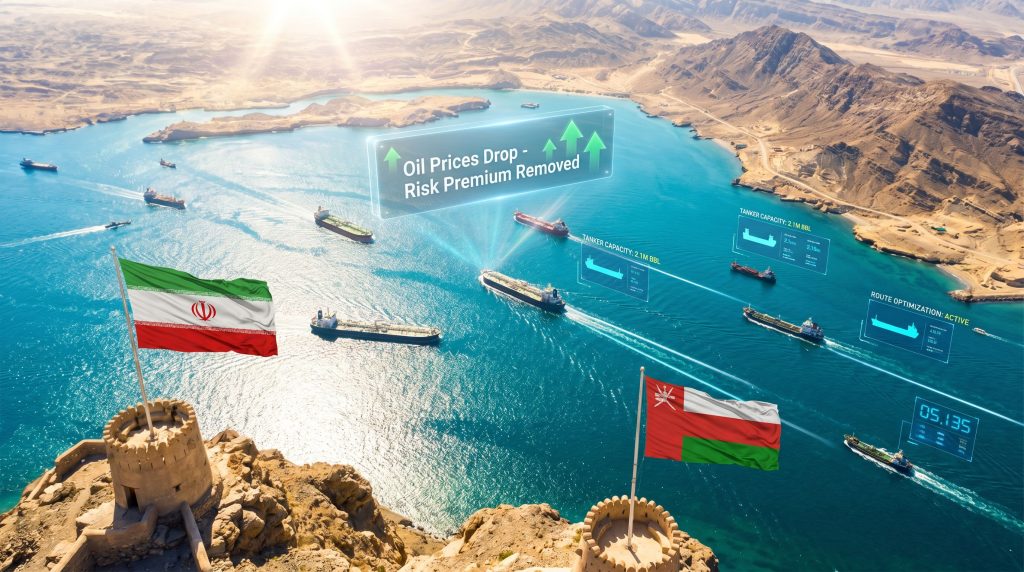
The April 17, 2026 Hormuz Strait completely open announcement triggered an immediate 11% price correction in Brent crude, settling around $88 per barrel. This single-day volatility demonstrates how rapidly markets can reprice geopolitical risk when concrete diplomatic progress materialises.
Energy economists typically calculate risk premiums by comparing current prices against baseline projections that exclude geopolitical factors. During the February-April 2026 period, this methodology suggested that approximately $15-20 per barrel of Brent crude pricing reflected pure geopolitical uncertainty rather than fundamental supply-demand imbalances.
Algorithmic Trading and News Response Patterns
Modern commodity trading systems process geopolitical announcements within milliseconds, creating amplified price movements that often exceed what fundamental analysis would support. The immediate price collapse following Foreign Minister Abbas Araghchi's reopening announcement illustrates how automated trading algorithms respond to keyword recognition in official statements.
These systems typically monitor multiple news feeds simultaneously, executing large-volume trades based on predetermined risk parameters. However, when positive geopolitical news emerges, algorithms programmed to reduce risk exposure can trigger substantial selling pressure within minutes of announcement publication.
Global Supply Chain Adaptation Strategies
During the six-week closure period from late February through April 2026, global energy supply chains demonstrated remarkable adaptability through route diversification and inventory management. Asian refineries increased crude oil imports through alternative suppliers, whilst European markets accelerated purchases from North Sea and African producers to compensate for reduced Middle Eastern availability.
The Hormuz Strait completely open status restoration immediately began reversing these adaptive measures, as shipping companies recalculated optimal routing strategies. Tanker charter rates for alternative routes had increased by an estimated 20-30% during the closure period, making Hormuz transit significantly more cost-effective once security guarantees returned.
Regional Economic Impact Analysis
Asian Manufacturing Competitiveness: The closure period particularly affected energy-intensive industries in China, South Korea, and Japan, where elevated input costs threatened export competitiveness. Manufacturing purchasing manager indices in these regions showed consistent weakness during March and early April 2026, reflecting increased production costs from higher energy prices.
European Energy Import Strategies: European Union member states accelerated strategic petroleum reserve utilisation and enhanced coordination with North American suppliers. These temporary adjustments demonstrated the region's improved energy security infrastructure compared to previous decades, though at substantially higher cost premiums.
Gulf State Revenue Implications: Persian Gulf oil exporters experienced mixed impacts during the closure. While higher global prices increased per-barrel revenues, reduced export volumes through traditional Hormuz routes created operational challenges and customer relationship strains.
Diplomatic Framework and Market Confidence
The temporary nature of the April 2026 ceasefire agreement fundamentally shaped market confidence in the Hormuz Strait completely open announcement. With the ceasefire scheduled to expire April 21, 2026, traders maintained elevated volatility expectations despite immediate supply restoration.
This temporal uncertainty reflects a broader challenge in energy security planning: distinguishing between temporary diplomatic solutions and permanent conflict resolution. Furthermore, markets typically require sustained periods of normalised operations before fully removing geopolitical risk premiums from commodity pricing.
Negotiation Mechanisms and Third-Party Mediation
The role of Pakistan as an intermediary in US-Iran negotiations highlighted how regional diplomatic networks influence energy market stability. Third-party mediation often provides necessary face-saving mechanisms for adversarial parties whilst maintaining communication channels that prevent complete breakdown in critical infrastructure access.
Historical precedent suggests that mediated agreements tend to produce more durable outcomes than direct bilateral negotiations, particularly when energy infrastructure access represents a core negotiating element. For instance, the involvement of neutral parties can help separate immediate humanitarian concerns from longer-term strategic disputes.
Investment Strategy Implications for Energy Volatility
The February-April 2026 Hormuz crisis demonstrated several key lessons for energy sector investment positioning. Traditional risk management approaches that rely on historical volatility measures proved inadequate for capturing tail risks associated with critical infrastructure disruption.
Portfolio Hedging Considerations:
- Energy sector equity allocations showed extreme sensitivity to geopolitical developments
- Crude oil futures curves exhibited substantial backwardation during peak tension periods
- Natural gas markets displayed regional price disconnections based on supply route accessibility
- Renewable energy equities experienced relative outperformance as energy security concerns intensified
Sector-Specific Opportunities:
- Tanker shipping companies captured significant charter rate premiums during alternative routing periods
- Strategic petroleum reserve management companies demonstrated enhanced value propositions
- Energy infrastructure resilience technologies attracted increased investment interest
- Regional refinery operations gained market share through supply chain flexibility
Consequently, understanding investment strategy components becomes essential for navigating these volatile periods.
The next major ASX story will hit our subscribers first
Long-Term Strategic Adaptations
The 2026 Hormuz crisis accelerated several structural trends in global energy system design. The demonstrated vulnerability of single-point-of-failure infrastructure prompted enhanced investment in alternative transport routes and regional supply diversification strategies.
Infrastructure Resilience Investments:
Energy companies accelerated pipeline development projects that bypass traditional chokepoints, whilst governments enhanced strategic reserve capacities. These adaptations represent permanent structural changes rather than temporary crisis responses.
Technology Integration Enhancements:
Advanced monitoring systems for maritime traffic, enhanced satellite surveillance capabilities, and improved early warning systems for geopolitical risk assessment received increased funding and development priority.
Early Warning Indicators for Future Disruptions
Market participants developed enhanced monitoring frameworks during the 2026 crisis that continue providing value for future risk assessment. These systems integrate diplomatic communication patterns, military positioning data, and commercial shipping volume trends to provide advance warning of potential disruptions.
Key Monitoring Metrics:
- Changes in naval vessel deployment patterns near critical chokepoints
- Variations in diplomatic communication frequency and tone
- Commercial insurance market pricing adjustments for specific routes
- Strategic petroleum reserve accumulation or release patterns
- Alternative supply route utilisation rates
In addition, the impact of Saudi exploration impact and oil price movements continues to influence these monitoring systems.
Regional Power Dynamics and Future Scenarios
The resolution of the 2026 Hormuz crisis established new precedents for how regional powers negotiate energy infrastructure access during periods of broader geopolitical tension. The explicit linkage between Lebanese-Israeli ceasefire arrangements and Iranian Strait policy created a diplomatic framework that future negotiations may reference.
This interconnected approach to regional conflict resolution suggests that energy infrastructure increasingly serves as both leverage mechanism and confidence-building measure in Middle Eastern diplomacy. Furthermore, the success of third-party mediation through Pakistan may encourage similar approaches in future crises involving critical energy chokepoints worldwide.
The interaction with broader economic policies, including US tariff policy, demonstrates how energy security concerns intersect with international trade dynamics. These complex relationships require sophisticated analytical frameworks for effective risk management.
Disclaimer: This analysis is based on publicly available information and should not be considered as investment advice. Energy market investments carry substantial risks, including potential total loss of capital. Geopolitical events can cause rapid and unpredictable price movements in energy commodities and related securities. Past performance does not guarantee future results, and the information presented here may not reflect current market conditions.
Ready to Capitalise on Geopolitical Energy Opportunities?
Discovery Alert's proprietary Discovery IQ model delivers real-time alerts on significant ASX mineral discoveries, empowering investors to identify actionable opportunities ahead of market-moving energy sector developments. Begin your 14-day free trial today and position yourself strategically as global energy dynamics continue reshaping commodity markets.