May 23, 2026
Nigeria's transformative approach to mineral resource development demonstrates how African nations can break free from traditional raw material export models. Nigeria signs $1.3 billion alumina refinery deal that represents a fundamental shift towards value-added processing, creating opportunities for sustainable economic growth while reducing dependency on volatile commodity markets. This strategic initiative exemplifies the potential for domestic processing capabilities to reshape continental economic development patterns.
The transformation from resource extraction to value-added manufacturing requires substantial capital investment, technological expertise, and long-term strategic planning. However, the economic benefits of this shift extend far beyond immediate revenue generation, creating multiplier effects throughout domestic economies while reducing exposure to volatile commodity price fluctuations.
Nigeria's $1.3 Billion Alumina Refinery Initiative
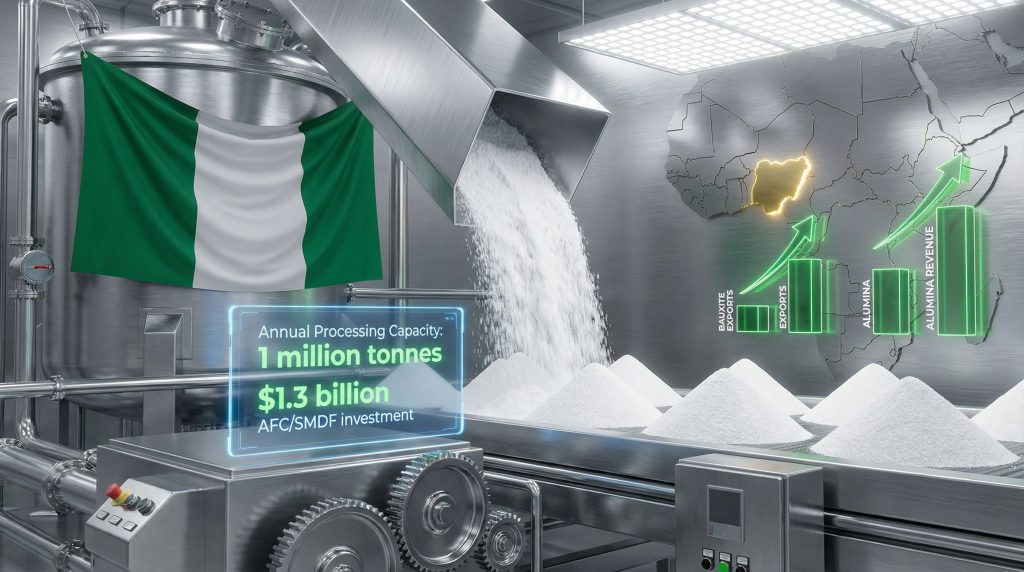
The Nigerian government has committed to establishing a major alumina processing facility with annual production capacity of one million tonnes, representing a fundamental shift in the country's approach to mineral resource management. Furthermore, this initiative, supported by $1.3 billion in financing from the Africa Finance Corporation and the Solid Minerals Development Fund, exemplifies how public-private partnerships can drive sustainable mining transformation across the continent.
Key Technical Specifications:
- Annual processing capacity: 1 million tonnes of alumina
- Projected operational timeline: 20 years
- Expected total output: 19 million tonnes over facility lifespan
- Technology approach: Bayer-process methodology with gas-fired cogeneration
- Estimated annual GDP contribution: $1.2 billion
The facility's design incorporates energy integration strategies that leverage Nigeria's substantial natural gas reserves, aligning with the government's Decade of Gas programme. Consequently, this approach addresses one of the primary cost factors in alumina refining operations while supporting broader energy sector development objectives.
Nigeria's Minister of Solid Minerals Development has emphasised the strategic importance of domestic processing capabilities, noting that the country seeks to establish manufacturing hubs rather than export corridors for raw materials. This policy direction reflects growing recognition that the bauxite project benefits of value addition within national borders creates sustainable employment opportunities while maximising resource rents.
West African Bauxite Processing Landscape
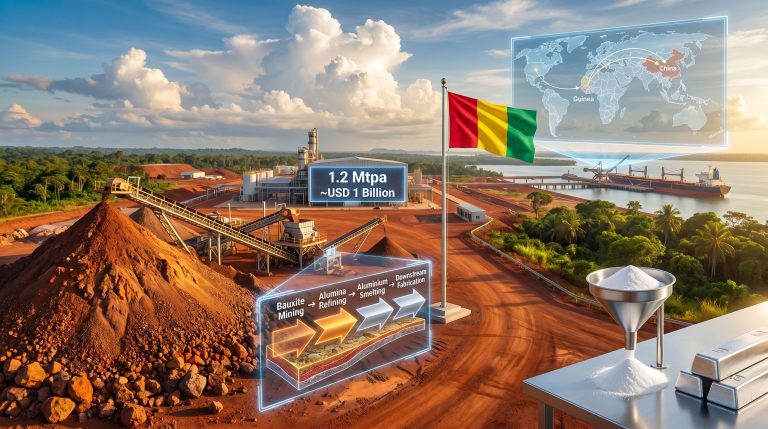
Guinea has emerged as the most aggressive player in West African alumina refining expansion, with plans for six refineries by 2030 featuring combined annual capacity of seven million tonnes. In addition, the country has secured partnerships with major international players including Chinalco, Alteo, and Alcoa, demonstrating how foreign direct investment can accelerate industrial development when properly structured.
The Winning Consortium Alumina Guinea project in the Boké region represents a $1.2 billion investment with 1.2 million tonnes of annual processing capacity. Construction is already underway on this facility, positioning Guinea as the regional leader in alumina production infrastructure development.
Regional Capacity Development Targets:
| Country | Planned Annual Capacity | Investment Timeline | Key Partners |
|---|---|---|---|
| Nigeria | 1 million tonnes | 2026-2046 | AFC, SMDF |
| Guinea | 7 million tonnes | 2025-2030 | Chinalco, Alteo, Alcoa |
| Ghana | 4-6 million tonnes | TBD | International partnerships |
Ghana has also articulated ambitions for substantial alumina refining capacity, targeting four to six million tonnes of annual production through international partnership arrangements. This regional competition for processing capability development reflects broader continental recognition of alumina's strategic value within the global mining landscape.
Global Market Dynamics Supporting African Processing
The global alumina market faces significant structural changes that favour regional processing capacity development. For instance, supply chain disruptions and geopolitical tensions have highlighted the risks of concentrated production, while growing demand from emerging economies creates opportunities for new market entrants.
Industry projections suggest the global alumina market could reach $67 billion by 2032, driven by expanding demand from electric vehicle manufacturing, renewable energy infrastructure, and construction sector recovery. This growth trajectory provides compelling economic justification for substantial capital investments in processing facilities.
Critical Market Fundamentals:
- Africa controls approximately 30% of global bauxite reserves
- Current African alumina production represents less than 1% of global output
- Transportation cost advantages for regional processing facilities
- Supply diversification imperatives for major importing nations
- Growing demand from aluminium-intensive industries
The disparity between resource endowment and processing capacity represents a significant market inefficiency that African nations are positioned to address through coordinated industrial development strategies.
Technical Excellence Requirements for Competitive Operations
Successful alumina refinery operations require adherence to stringent technical standards that ensure both economic viability and environmental sustainability. However, the Bayer process, which represents the industry standard for alumina extraction from bauxite, demands precise control over temperature, pressure, and chemical composition throughout the production cycle.
Operational Benchmarks for Competitive Performance:
Energy Efficiency Targets
- Energy consumption: 12-15 gigajoules per tonne of alumina
- Water usage: 2.5-3.5 cubic metres per tonne produced
- Alumina recovery rate: 95% or higher extraction efficiency
- Product quality: 99.6% purity minimum for smelter-grade specifications
Gas-fired cogeneration systems offer particular advantages in the West African context, where abundant natural gas resources can provide both process heat and electrical power generation. This integrated approach reduces operational costs while improving overall energy efficiency compared to facilities dependent on imported energy sources.
Environmental management represents an increasingly critical factor in facility design and operation. Modern alumina refineries must implement comprehensive waste management systems, including red mud disposal protocols and water recycling technologies that minimise environmental impact while maintaining production efficiency through mine reclamation innovation.
Investment Risk Assessment Framework
Alumina refinery investments require careful evaluation of multiple risk factors that can significantly impact project returns over extended operational timelines. Commodity price volatility represents the most immediate concern, as alumina pricing fluctuates based on global supply-demand dynamics and broader aluminium market conditions.
Key Investment Metrics for Project Evaluation:
| Performance Indicator | Target Range | Risk Threshold |
|---|---|---|
| Internal Rate of Return | 15-25% | Below 12% |
| Payback Period | 7-10 years | Above 12 years |
| Debt Service Coverage | 1.5-2.0x | Below 1.2x |
| Production Ramp-up | 18-24 months | Above 30 months |
Political risk considerations include regulatory stability, taxation policy, and infrastructure development support from host governments. Furthermore, the involvement of multilateral development finance institutions like the Africa Finance Corporation can help mitigate some political risks while providing technical expertise and operational support.
Currency exposure represents another significant concern, particularly for projects with substantial foreign exchange components in financing or operational costs. Natural hedging through export revenue generation can partially offset this risk, but comprehensive investment risk considerations remain essential.
Environmental and Social Governance Integration
Modern alumina refinery projects must incorporate comprehensive environmental, social, and governance frameworks from the earliest planning stages. Community engagement and benefit-sharing mechanisms are particularly important in African contexts, where mining projects often operate in areas with limited alternative economic opportunities.
ESG Implementation Priorities:
- Local employment and skills development programmes
- Environmental impact mitigation and monitoring systems
- Community benefit-sharing and development initiatives
- Supply chain transparency and ethical sourcing protocols
- Water resource management and conservation measures
The red mud waste generated during alumina production requires specialised handling and disposal systems that prevent environmental contamination while potentially creating opportunities for beneficial reuse applications. Research into red mud utilisation for construction materials and soil enhancement continues to advance, offering potential additional revenue streams.
Local content requirements and technology transfer provisions can maximise the developmental impact of alumina refinery investments while building domestic capacity for future projects. These elements are increasingly important considerations for development finance institutions and government approval processes.
Continental Industrialisation Implications
Nigeria signs $1.3 billion alumina refinery deal represents more than an isolated industrial project; it signals a broader transformation in African approaches to mineral resource development. The shift from extractive to manufacturing economic models requires sustained policy commitment and substantial infrastructure investment, but offers the potential for fundamental economic restructuring.
The mining sector's contribution to Nigeria's GDP currently stands at approximately 1%, with government objectives targeting expansion to 10% over the coming decade. Achieving this goal requires coordinated development across multiple mineral processing value chains, with alumina representing one of the most commercially viable options.
Strategic Development Outcomes:
- Enhanced bargaining power in global commodity markets
- Reduced dependency on traditional supplier relationships
- Technology transfer and local capacity building acceleration
- Infrastructure development catalysed by anchor industrial projects
- Regional value chain integration opportunities
The success of Nigeria's alumina initiative could establish a template for similar projects across the continent, creating competitive pressure for value-added processing while demonstrating the viability of public-private partnership models in complex industrial development.
Future Market Evolution and Investment Opportunities
The establishment of alumina processing capacity in West Africa is likely to catalyse further downstream development opportunities, including aluminium smelting facilities and fabricated product manufacturing. These secondary processing stages offer additional value capture potential while creating more sophisticated industrial ecosystems.
Regional alumina trading hub development represents another strategic opportunity, as increased processing capacity creates the foundation for commodity trading and logistics operations. Such hubs could serve broader African markets while providing price discovery mechanisms and financial services support for the developing aluminium value chain.
Next-Phase Development Opportunities:
- Downstream aluminium smelting capacity expansion
- Fabricated aluminium products manufacturing
- Regional commodity trading and logistics hubs
- Technology innovation centres for mining excellence
- Skills development institutions supporting industrial growth
The Nigerian government's strategic focus on value-added mineral processing, demonstrated through Nigeria signs $1.3 billion alumina refinery deal, is expected to catalyse significant discussion at future continental forums. This gathering will provide important insights into how continental industrialisation strategies continue to evolve.
This article discusses investment opportunities and market projections that involve inherent risks and uncertainties. Potential investors should conduct thorough due diligence and consider their risk tolerance before making investment decisions. Past performance and projections are not indicative of future results.
Ready to Discover the Next Major Resource Development Opportunity?
Discovery Alert's proprietary Discovery IQ model delivers instant notifications on significant ASX mineral discoveries, empowering subscribers to identify actionable trading opportunities ahead of broader market recognition. Explore how major resource developments can generate substantial returns by visiting Discovery Alert's discoveries page and begin your 14-day free trial today.