August 3, 2026
Nigeria's Strategic Response to Middle East Energy Crisis
Middle East conflict disruptions have fundamentally altered global energy supply chains, creating unprecedented market realignments that extend far beyond traditional geopolitical boundaries. The Middle East war impact on Nigeria's LNG exports represents a significant opportunity for West African producers to capture increased market share during regional supply disruptions. The escalating tensions between major energy-producing regions have triggered a comprehensive reassessment of supply diversification strategies, compelling buyers to evaluate alternative sourcing options previously considered secondary or marginal.
Contemporary supply chain stress testing reveals the fragility of concentrated energy dependencies, particularly when production assets cluster within geographically constrained zones subject to conflict escalation. The economic implications cascade through pricing mechanisms, transportation logistics, and long-term contract negotiations, fundamentally altering the risk-reward calculations that drive international energy trade. These disruptions create market access opportunities for suppliers positioned outside primary conflict zones, particularly those offering geographic diversification benefits and operational flexibility during periods of supply uncertainty.
When big ASX news breaks, our subscribers know first
Geographic Positioning Advantages During Global Supply Disruptions
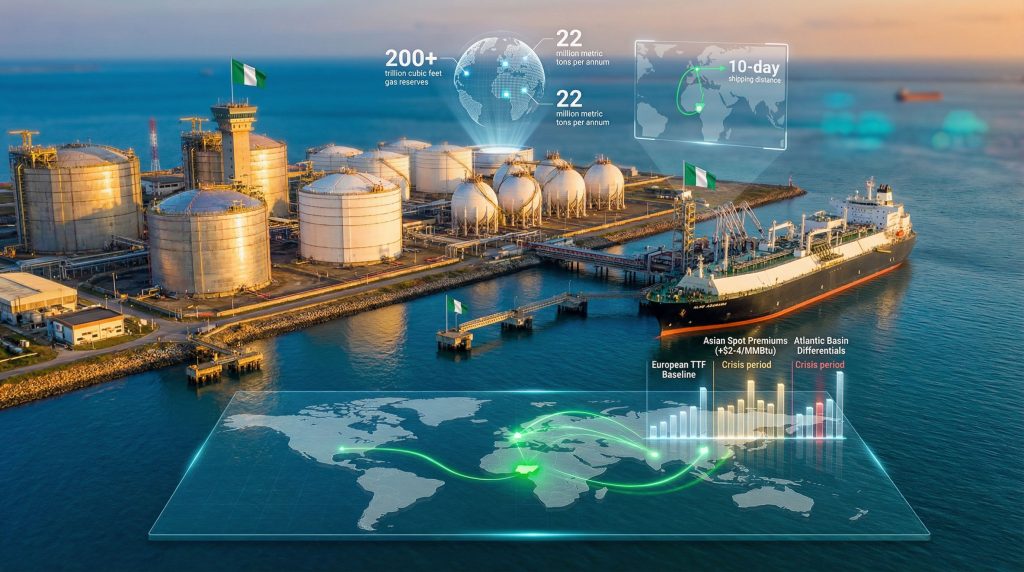
Nigeria's natural gas export infrastructure benefits from strategic positioning that becomes particularly valuable during periods of Middle East supply uncertainty. The West African producer maintains critical distance advantages to major consuming markets, with shipping routes that avoid high-risk transit zones currently affected by ongoing conflicts.
Furthermore, Nigeria's location provides advantages that align with current natural gas trends showing buyer preference for alternative suppliers. The Middle East war impact on Nigeria's LNG exports becomes evident through increased buyer interest and enhanced commercial opportunities across multiple market segments.
Shipping Distance Analysis:
- European Markets: 10-day sailing distance provides rapid market access
- Atlantic Basin Coverage: Direct routing to Americas without Middle East transit
- Asian Market Access: Alternative supply corridor avoiding conflict zones
- Multi-directional Flexibility: Cargo rerouting capabilities based on demand optimisation
Reserve Foundation and Production Infrastructure
Nigeria's gas reserves exceed 200 trillion cubic feet, representing substantial monetisation potential that underpins long-term supply security. This reserve base supports current export capacity while providing expansion runway for future market opportunities. The scale of these reserves positions Nigeria among Africa's most significant gas resource holders, creating strategic value during periods when buyers prioritise supply source diversification.
Current export infrastructure operates through Nigeria LNG (NLNG) facilities with capacity reaching 22 million metric tons per annum (mtpa). This operational baseline represents proven delivery capability that buyers can rely upon when evaluating alternative supply sources. The seventh production train under construction targets completion by 2027, demonstrating infrastructure expansion aligned with anticipated market demand growth.
Production Capacity Evolution:
| Infrastructure Component | Current Status | Expansion Timeline | Capacity Impact |
|---|---|---|---|
| Operational Trains | 6 trains active | Ongoing operations | 22 mtpa baseline |
| Seventh Train | Under construction | 2027 completion | Additional capacity |
| Future Trains | Discussion phase | Post-2027 timeline | 12 mtpa potential |
The Bonny Island terminal complex serves as the central processing hub, providing integrated liquefaction and export capabilities. This infrastructure concentration enables operational efficiency while maintaining flexibility for cargo allocation across multiple destination markets.
Infrastructure Resilience and Market Access
Nigeria's export infrastructure demonstrates operational continuity that becomes critical during global supply disruptions. The integrated nature of the Bonny Island facilities provides processing redundancy, while the geographic location offers shipping route alternatives that avoid conflict-affected transit corridors.
Moreover, the recent oil price rally analysis demonstrates how geopolitical tensions create energy market volatility that benefits alternative suppliers. Nigeria's technical specifications enable flexible output management, allowing operators to optimise production schedules based on market demand signals. This operational flexibility becomes particularly valuable when buyers require rapid supply adjustments in response to disrupted primary sources.
"Strategic Advantage: Nigeria's position eliminates dependency on high-risk maritime chokepoints that affect Middle Eastern suppliers, providing buyers with routing security during geopolitical tensions."
Supply Chain Vulnerability Analysis Across Global Markets
Global LNG supply chains exhibit concentrated vulnerabilities that create systemic risks during geopolitical disruptions. The Middle East war impact on Nigeria's LNG exports reflects broader market dynamics where supply concentration in specific geographic regions creates cascading effects throughout international energy markets. Major producing regions face infrastructure exposure to conflict zones, transportation route dependencies, and political stability considerations that affect long-term supply reliability.
Critical Chokepoint Assessment
Maritime transit routes for Middle Eastern LNG exports traverse several strategic chokepoints where disruptions can affect multiple suppliers simultaneously. The Strait of Hormuz represents the most significant vulnerability, with substantial volumes of global LNG transiting this narrow waterway daily. Alternative routing options involve longer distances, increased shipping costs, and potential capacity constraints that limit supply flexibility during crisis periods.
Key Vulnerability Factors:
- Geographic Concentration: Multiple suppliers sharing common infrastructure
- Transit Route Dependencies: Limited alternative shipping corridors
- Political Risk Correlation: Regional conflicts affecting multiple producers
- Infrastructure Targeting: Strategic assets vulnerable during warfare
Qatar and the United Arab Emirates represent substantial global LNG capacity, but both face similar geographic and political risk exposures. Their production facilities, while technically sophisticated, operate within the same regional conflict zone, creating correlated supply risks that buyers must factor into procurement strategies.
Buyer Response Mechanisms
International buyers have implemented diversification strategies that redistribute demand toward suppliers offering geographic separation from primary conflict zones. Italy's initiative to increase imports from Algeria exemplifies this strategic realignment, with European buyers actively seeking North African alternatives to Middle Eastern sources.
Spain similarly pursues enhanced pipeline connections with Algeria, demonstrating how supply disruptions trigger infrastructure investment decisions that reshape long-term trade relationships. These buyer adaptations create market opportunities for suppliers positioned outside traditional conflict zones, particularly those offering reliable delivery capabilities and flexible contract terms.
Additionally, contemporary trade war market effects compound these supply chain vulnerabilities by creating additional layers of uncertainty in international energy markets. According to Reuters, Nigeria has experienced a significant spike in buyer interest for its LNG cargoes as market participants seek alternative suppliers.
Demand Redistribution Patterns:
- Immediate Response: Spot market premium payments for alternative suppliers
- Medium-term Adjustment: Contract renegotiation and supply diversification
- Long-term Restructuring: Infrastructure investment in alternative supply corridors
- Strategic Reserve Management: Enhanced storage capabilities for supply security
Economic Decision Frameworks for Cargo Routing
LNG cargo routing decisions during supply disruptions operate through complex economic optimisation models that balance transportation costs, delivery timeframes, and price differentials across regional markets. These calculations become particularly critical when geopolitical events create sudden supply gaps and corresponding price premiums in affected regions.
Price Discovery and Market Premiums
During supply disruptions, regional price differentials expand significantly as buyers compete for available cargoes from alternative suppliers. Asian spot markets typically command the highest premiums during crisis periods, reflecting the region's import dependency and limited pipeline alternatives. European markets experience substantial price volatility, particularly when Russian pipeline supplies face restrictions and Middle Eastern LNG availability decreases simultaneously.
Regional Price Dynamics:
- Asian Premium Structure: Spot prices often exceed baseline by 40-60% during crises
- European Volatility: TTF pricing responds rapidly to supply disruption news
- Atlantic Basin Stability: More moderate price impacts due to supply diversity
- Arbitrage Windows: Time-sensitive opportunities for cargo diversion
Shipping Economics and Route Optimisation
LNG vessel operators face complex decisions regarding charter arrangements and route selection when supply disruptions create new market opportunities. Time charter contracts provide revenue security but may limit flexibility to capture spot market premiums. Spot charters offer higher potential returns but require accurate market timing and route optimisation capabilities.
Charter Decision Matrix:
| Charter Type | Revenue Stability | Market Upside | Route Flexibility | Risk Profile |
|---|---|---|---|---|
| Time Charter | High | Limited | Contracted | Low |
| Spot Charter | Variable | Significant | Maximum | High |
| Hybrid Models | Moderate | Balanced | Negotiable | Medium |
Fuel cost implications become critical for extended voyage routes when cargoes are diverted from original destinations to capture higher prices in alternative markets. Modern LNG carriers consume substantial fuel quantities, and longer routes can significantly impact voyage economics, particularly when fuel prices are elevated due to broader energy market disruptions.
Nigeria's Strategic Expansion Framework
Nigerian National Petroleum Corporation (NNPC) has initiated comprehensive expansion discussions targeting enhanced LNG export capacity aligned with growing international demand for alternative suppliers. These expansion plans encompass both incremental capacity additions and large-scale new developments designed to capitalise on Nigeria's substantial gas reserves and favourable market positioning.
Capacity Development Timeline
Current expansion initiatives include two additional production trains under discussion, representing significant capacity increments beyond the seventh train currently under construction. NNPC leadership emphasises the strategic nature of these discussions, positioning expansion as a mechanism to unlock substantial portions of Nigeria's gas reserves while meeting growing international demand for supply diversification.
The 12 million metric tons per annum (mtpa) project represents the most substantial expansion proposal, designed to leverage Nigeria's position as Africa's largest gas reserves holder. This project scale would effectively double current export capacity, positioning Nigeria among the world's major LNG suppliers and providing buyers with substantial alternative supply volumes.
Development Sequence:
- Seventh Train Completion (2027): Incremental capacity addition
- Two Additional Trains: Discussion phase for medium-term development
- 12 mtpa Project: Large-scale expansion targeting substantial capacity increase
- Industrial Hub Integration: Gas-based manufacturing development alongside LNG exports
Strategic Market Positioning
Nigeria's expansion strategy specifically targets market opportunities created by supply disruptions and buyer diversification requirements. The timing of these expansion discussions aligns with contemporary geopolitical developments that have intensified buyer interest in alternative suppliers offering geographic separation from conflict zones.
However, the expansion must consider tariff market impacts that could affect international trade flows and investment decisions. Furthermore, understanding oil price stagnation insights helps contextualise the broader energy market environment within which Nigeria's expansion plans must operate.
Competitive Advantages:
- Reserve Scale: 200+ trillion cubic feet provides long-term supply security
- Geographic Position: Multi-market access without chokepoint dependencies
- Infrastructure Base: Existing facilities enable incremental expansion
- Market Timing: Expansion aligned with buyer diversification requirements
Reserve Monetisation Strategy
The expansion framework encompasses comprehensive reserve development beyond traditional LNG exports, including gas-based industrial hubs that create value-added manufacturing capabilities. This integrated approach maximises resource utilisation while developing downstream industries that benefit from access to competitively priced feedstock gas.
Associated gas capture from existing oil operations provides additional resource input for LNG production, improving overall resource efficiency and reducing environmental impact through gas flaring elimination. This operational integration demonstrates technical capability while addressing environmental considerations increasingly important to international buyers.
Continental Energy Security and Export Diversification
African LNG development extends beyond individual country projects to encompass regional energy security enhancement and export diversification across the continent. Algeria's position as Africa's largest gas exporter creates complementary rather than competitive dynamics with Nigeria's expansion, as both countries serve different market segments and transportation corridors.
Regional Infrastructure Development
West African gas infrastructure development potential includes interconnection opportunities that could enhance regional energy security while supporting export optimisation. These infrastructure connections would enable resource sharing during maintenance periods while providing operational flexibility for export scheduling optimisation.
Regional Integration Benefits:
- Supply Security: Backup capacity during facility maintenance
- Export Optimisation: Flexible cargo scheduling across facilities
- Cost Efficiency: Shared infrastructure reduces development costs
- Market Access: Coordinated approach to international buyer relationships
Algeria's pipeline expansion to European markets complements Nigeria's LNG shipping capabilities, providing buyers with multiple supply corridors from the same geographic region. This diversification within Africa reduces buyer dependency on Middle Eastern supplies while maintaining competitive pricing and reliable delivery capabilities.
Investment Climate and Development Framework
Contemporary investment climate factors support African LNG development through improved regulatory frameworks and enhanced international project financing availability. Political stability considerations favour projects located outside current conflict zones, while environmental compliance requirements drive technology adoption that improves operational efficiency.
Joint venture partnership models enable technology transfer and operational expertise development while sharing capital investment requirements among multiple stakeholders. These partnerships provide access to international marketing capabilities and customer relationships that accelerate market penetration for new supply sources.
Investment Structure Elements:
- Risk Sharing: Multiple stakeholders reduce individual exposure
- Technology Access: International partners provide operational expertise
- Market Connections: Established buyer relationships facilitate sales
- Capital Efficiency: Shared investment reduces per-unit development costs
The next major ASX story will hit our subscribers first
How Does Regional Conflict Impact Long-term Energy Security?
Nigeria's LNG export expansion faces operational challenges that could limit capacity utilisation during periods of peak demand. Infrastructure constraints, maintenance scheduling requirements, and power supply reliability represent potential bottlenecks that require careful management to maintain operational excellence and delivery reliability.
Operational Capacity Management
Current production train utilisation rates during peak demand periods require optimisation to maximise export potential when market opportunities are most favourable. Maintenance scheduling flexibility becomes critical when buyers require enhanced supply volumes during primary source disruptions.
Operational Optimisation Factors:
- Utilisation Rates: Current capacity efficiency during peak demand
- Maintenance Timing: Scheduled downtime coordination with market conditions
- Power Supply: Reliable electricity for continuous processing operations
- Feedstock Availability: Consistent gas supply for processing facilities
Terminal expansion bottlenecks could limit throughput growth even with additional production capacity, requiring infrastructure investment coordination between production and export capabilities. Debottlenecking opportunities exist within current facilities that could enhance capacity without major new construction requirements.
Competitive Market Dynamics
Global LNG market competition intensifies as alternative suppliers recover from previous disruptions and expand their own capacity. United States shale gas production recovery timeline affects global supply availability, while Australian projects demonstrate restart capabilities that could impact market dynamics.
Research from Wood Mackenzie indicates that Middle East conflicts are set to drive oil and LNG prices significantly higher, creating sustained opportunities for alternative suppliers like Nigeria.
Competition Scenarios:
- US Production Recovery: Shale gas expansion affecting global supply
- Australian Restart Capability: Project resumption after disruptions
- Alternative Route Development: Russian pipeline alternatives to European markets
- Renewable Energy Adoption: Long-term demand implications for natural gas
Market competition requires continuous operational improvement and cost management to maintain competitiveness across different price environments. Pricing pressure scenarios could emerge if multiple alternative suppliers simultaneously increase capacity, requiring efficiency improvements to maintain market share.
Long-term Market Sustainability
Energy transition considerations affect long-term natural gas demand projections, requiring careful assessment of investment payback periods against evolving energy consumption patterns. Renewable energy adoption rates vary significantly across regions, creating different demand evolution trajectories that affect market sustainability assessments.
"Market Reality: Current geopolitical disruptions demonstrate the continued importance of natural gas supply security, even as renewable energy development proceeds, creating sustained demand for reliable suppliers."
Long-term contract negotiation trends reflect buyer preferences for supply security balanced against price competitiveness, creating opportunities for suppliers offering operational reliability and geographic diversification benefits. Contract flexibility mechanisms enable both buyers and suppliers to adapt to changing market conditions while maintaining commercial relationships.
The Middle East war impact on Nigeria's LNG exports demonstrates how geopolitical events can create sustained competitive advantages for alternative suppliers positioned outside conflict zones. These market dynamics support investment decisions for capacity expansion and infrastructure development that capture emerging opportunities in the global energy trade.
Sustainability Considerations:
- Contract Duration: Long-term agreements provide investment certainty
- Price Indexation: Flexible pricing maintains competitiveness
- Volume Flexibility: Delivery adjustments accommodate demand variation
- Environmental Standards: Compliance requirements affect operational costs
Investment decisions in the LNG sector involve substantial capital commitments and long-term market assessments. Readers should conduct comprehensive due diligence and consult qualified energy market professionals when evaluating investment opportunities in natural gas infrastructure and related sectors. Market conditions, regulatory environments, and geopolitical factors can change rapidly, affecting project economics and operational viability.
Ready to Capitalise on Energy Market Disruptions?
Discovery Alert's proprietary Discovery IQ model delivers real-time alerts on significant energy and commodity discoveries across the ASX, enabling subscribers to identify actionable opportunities as geopolitical events reshape global markets. Begin your 14-day free trial today and gain the market-leading advantage needed to navigate energy sector volatility and emerging investment opportunities.