North Stawell Minerals Ltd
- ASX Code: NSM
- Market Cap: $11,207,804
North Stawell Minerals Kicks Off Major Air Core Drilling Campaign at High-Grade Gold Targets
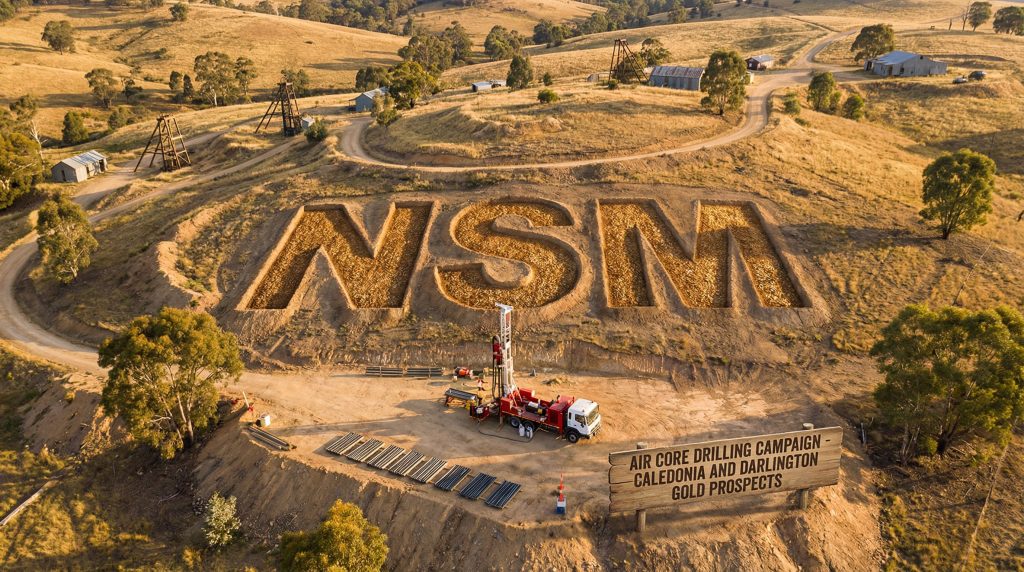
North Stawell Minerals (ASX:NSM) has commenced a 2,000-2,500 metre air core drilling programme at its promising Caledonia and Darlington gold prospects in Victoria. The drilling campaign, being conducted by experienced Victorian contractor AMWD, represents a significant follow-up to previous high-grade intercepts that have established both prospects as priority targets along NSM's 3.6-kilometre Darlington-Caledonia mineralised trend.
The timing is strategic for this North Stawell Minerals gold drilling program, building directly on February 2025 and November 2025 diamond drilling campaigns that identified a new shallow high-grade gold zone at Darlington. Furthermore, this discovery was highlighted by an exceptional intercept of 2.3 metres at 29.3 g/t gold, including 0.8 metres at 82.0 g/t gold.
At Caledonia, the drilling follows up on February 2026 surface geochemical surveys that outlined anomalous gold results consistent with the broader mineralised trend. However, the prospect remains largely untested beneath its sedimentary cover.
Executive Director Bill Reid commented: "We are excited to return to Darlington and Caledonia and test for additional shallow mineralisation. The Darlington mineralisation includes multiple occurrences of visible gold in a geological and structural position that appears very similar to the historic mines at Mariners above the Stawell Mine, 6km to the south."
When big ASX news breaks, our subscribers know first
Darlington: Following Up on Exceptional High-Grade Results
The Darlington prospect has emerged as NSM's standout target following recent drilling success. Moreover, the programme will focus on following up the outstanding results from drill hole NSD057, which intersected visible gold in brecciated quartz veining at shallow depths of just 85 metres vertical.
Key Recent Intercepts at Darlington
| Drill Hole | Intercept | Depth | Grade |
|---|---|---|---|
| NSD057 | 2.3m | 108.2m | 29.3 g/t Au |
| NSD057 (high-grade zone) | 0.8m | 108.2m | 82.0 g/t Au |
| NSD058 | 0.5m | 283.35m | 6.10 g/t Au |
| NSD060 | 0.3m | 231m | 5.18 g/t Au |
What makes these results particularly compelling is their geological and structural similarities to the historic Mariners Lodes at nearby Stawell. These historic workings produced 780,000-950,000 ounces at exceptional grades of 28-30 g/t gold. This "Mariners-type" mineralisation occurs as high-grade splays above deeper basalt-related deposits, exactly the setting NSM appears to have identified at Darlington.
Historic production records from the original Darlington Mine, located just 400 metres north of the current drilling, show 2,347 ounces were extracted at 18.2 g/t gold. In addition, this provides additional validation of the area's gold endowment.
Caledonia: Expanding the Mineralised Footprint
Located 2 kilometres north of Darlington along the same structural corridor, Caledonia represents a largely untested extension of the mineralised system. The prospect lies beneath a thin blanket of unmineralised sediments, which has preserved the underlying gold potential whilst keeping it largely hidden from previous exploration efforts.
Recent surface geochemical surveys have outlined anomalous gold signatures consistent with the Darlington trend. Furthermore, historic drilling has returned encouraging shallow intercepts:
• 1.00m at 12.15 g/t Au from 36m (NSR0077)
• 6.00m at 1.40 g/t Au from 63m (NSAC0451)
• 3.00m at 2.34 g/t Au from 45m (NSR0077)
The current North Stawell Minerals gold drilling program includes step-out drilling at both prospects to expand the known mineralised footprint and test for additional shallow high-grade zones.
Understanding "Mariners-Type" Gold Mineralisation
For investors new to Victorian goldfields geology, understanding the "Mariners-type" mineralisation that NSM is targeting provides important context for the potential scale and grade of discovery. However, this mineralisation style presents unique opportunities compared to deeper deposits.
Mariners-type deposits are characterised by high-grade gold mineralisation that occurs in structural splays above deeper basalt-hosted ore bodies. Unlike the deeper "Stawell-type" mineralisation that requires shaft mining, Mariners-type deposits can often be accessed through open pit methods due to their shallow occurrence.
The historic Mariners Lodes at Stawell demonstrate the exceptional potential of this mineralisation style, producing nearly 1 million ounces at world-class grades of 28-30 g/t gold. NSM's discovery of visible gold in similar geological settings at shallow depths suggests the company may have identified analogous high-grade zones along its 3.6-kilometre trend.
Key Investment Implications:
• Shallow mineralisation = lower mining costs
• High grades = enhanced economics
• Open pit potential = faster development timeline
• Proven mineralisation style = reduced geological risk
Strategic Location Within the Stawell Gold Corridor
NSM's 445 square kilometre North Stawell Project sits in a highly strategic position immediately north of Stawell Gold Mines' operation. The location provides several key advantages that enhance the project's overall value proposition.
Proximity to Infrastructure: The project benefits from established mining infrastructure, experienced workforce, and processing facilities in the region. This proximity could significantly reduce future development costs and timelines.
Proven Gold System: The Stawell Mine has produced over 4 million ounces of gold, demonstrating the world-class nature of the mineralising system that NSM is exploring along strike. Furthermore, this production history validates the geological potential of the broader district.
Exploration Upside: A thin blanket of unmineralised sediment has preserved the potential for large, near-surface gold deposits that may have been eroded elsewhere in the district. This preservation effect is particularly advantageous for exploration targeting.
The Darlington-Caledonia trend represents NSM's primary exploration focus, with the current drilling programme designed to expand the known mineralisation and identify additional high-grade zones along this 3.6-kilometre corridor.
Programme Timeline and Expected Results
The air core drilling programme is already underway, with AMWD's rig on site and drilling commenced as of 5 March 2026. The contractor brings valuable experience, having previously worked in the Stawell Zone geological terrain.
Key Programme Metrics:
• Total metres: 2,000-2,500m of air core drilling
• Targets: Follow-up at Darlington high-grade zone, step-out drilling at both prospects
• Expected results: Early to mid-April 2026
• Objective: Expand known mineralised footprint and identify additional shallow high-grade zones
Subject to weather conditions and operational factors, investors can expect the first batch of assay results within 4-6 weeks of programme commencement. However, the company will provide updates on drilling progress throughout the campaign.
Investment Thesis: Why NSM Deserves Attention
North Stawell Minerals has assembled a compelling investment proposition centred on high-grade, shallow gold discovery in one of Australia's premier gold districts. The company's systematic exploration approach has identified Mariners-type mineralisation with grades comparable to historic world-class mines in the region.
Key Investment Highlights
Exceptional Recent Results: The 82.0 g/t gold intercept at Darlington ranks among the highest-grade shallow intersections reported in the Victorian goldfields in recent years. Moreover, this result demonstrates the exceptional grade potential of the mineralised system.
Proven Mineralisation Style: Mariners-type deposits have a track record of producing million-ounce, high-grade deposits in the Stawell district. This proven style reduces geological risk whilst maintaining exceptional upside potential.
Exploration Scale: The 3.6-kilometre Darlington-Caledonia trend provides significant scope for discovery along a largely untested structural corridor. Furthermore, this trend length suggests potential for multiple high-grade zones.
Infrastructure Advantage: Location within the established Stawell gold district provides access to processing facilities, skilled workforce, and mining infrastructure. This advantage could significantly enhance project economics.
Shallow Mineralisation: Gold intercepts from surface to 85 metres vertical depth suggest potential for low-cost open pit development. In addition, this shallow depth reduces technical risk and development complexity.
| Prospect | Best Intercept | Depth | Mineralisation Style |
|---|---|---|---|
| Darlington | 82.0 g/t Au | 85m vertical | Mariners-type |
| Caledonia | 12.15 g/t Au | 36m | Mariners-type |
| Historic Mariners | 28-30 g/t Au | Surface | 1Moz production |
The next major ASX story will hit our subscribers first
Why Should Investors Follow This North Stawell Minerals Gold Drilling Program?
The current North Stawell Minerals gold drilling program represents a pivotal moment for NSM as the company tests the continuity and scale of its high-grade gold discovery. With exceptional grades, shallow depths, and proven mineralisation analogues in the district, NSM has positioned itself as a serious gold discovery story in one of Australia's most productive goldfields.
The company's systematic exploration approach from geochemical surveys through diamond drilling to the current air core programme demonstrates methodical advancement of high-quality targets. Furthermore, the 3.6-kilometre trend length provides substantial scope for resource growth.
The Mariners-type mineralisation offers the potential for world-class grades and shallow, economic extraction. However, investors should note that exploration success is never guaranteed, and results may vary from expectations.
With results expected in April 2026, investors have a clear timeline for upcoming catalysts. The programme's focus on step-out drilling at both prospects could significantly expand the known mineralised footprint and establish NSM as a major new gold discovery in the Victorian goldfields.
Key Takeaway: North Stawell Minerals has identified high-grade, shallow gold mineralisation comparable to historic million-ounce deposits in the Stawell district. With a major drilling programme underway and results due in April, NSM represents a compelling gold discovery story with significant upside potential in one of Australia's premier gold regions.
Ready to Invest in the Next Major Gold Discovery?
Discovery Alert instantly alerts investors to significant ASX gold discoveries like NSM's exceptional 82.0 g/t intercepts using its proprietary Discovery IQ model, turning complex mineral data into actionable insights. Understand why major mineral discoveries can lead to substantial returns and begin your 14-day free trial today to position yourself ahead of the market.