August 24, 2026
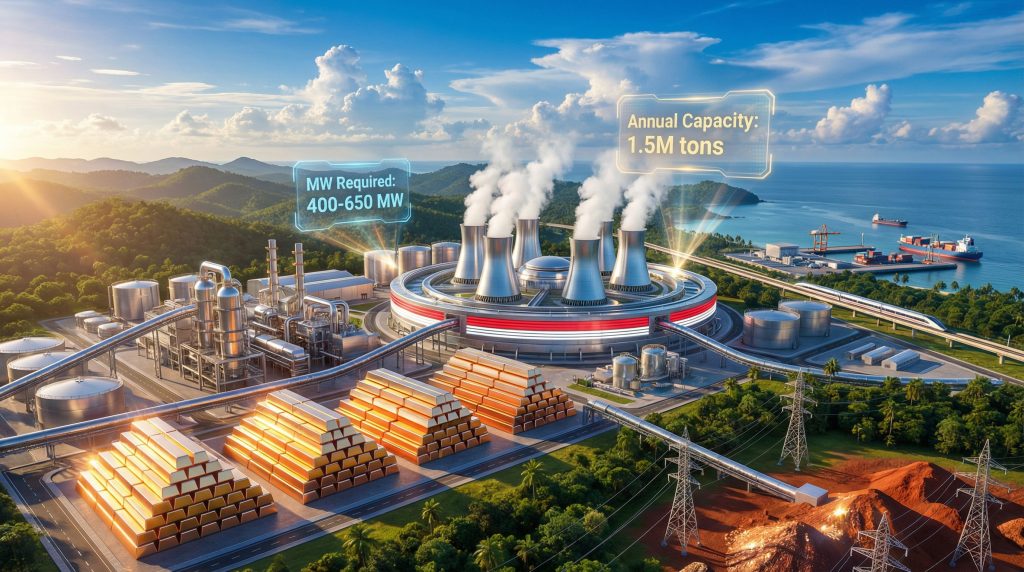
The global shift toward industrial decarbonisation has created unprecedented opportunities for nations possessing both critical mineral reserves and strategic positioning for clean energy infrastructure. Indonesia, with its vast archipelago containing significant bauxite deposits, finds itself at the centre of an emerging paradigm where nuclear power and aluminium investment in West Kalimantan could fundamentally reshape aluminium production economics across Southeast Asia.
This transformation potential becomes particularly acute when examining how energy-intensive industries like aluminium processing require consistent, high-capacity baseload power that traditional renewable sources struggle to provide continuously. The technical requirements for modern aluminium smelting operations, which can consume 300-500 MW of continuous power, align precisely with the output characteristics of nuclear facilities designed for industrial applications.
What Makes West Kalimantan Indonesia's Next Strategic Energy-Metals Hub?
Geographic Advantages for Integrated Industrial Development
West Kalimantan's positioning within the Indonesian archipelago provides several strategic advantages for large-scale industrial development. The province's coastal access enables efficient transportation of both raw materials and finished products, while its proximity to major Southeast Asian markets reduces logistics costs for aluminium exports.
The region's existing port infrastructure at Pontianak and surrounding facilities provides a foundation for expansion, though significant upgrades would be required to handle the specialised equipment necessary for nuclear facility construction. Current port capacity analysis indicates that additional deep-water facilities would need development to accommodate the large-scale industrial equipment required for integrated nuclear-aluminium operations.
Transportation networks within West Kalimantan include road connections to major bauxite mining areas, though rail infrastructure remains limited. This presents both challenges and opportunities for supply chain optimisation in future integrated development scenarios. Furthermore, the bauxite project benefits demonstrate how strategic resource development can drive regional economic transformation.
Resource Convergence: Bauxite Reserves Meet Nuclear Fuel Potential
West Kalimantan's bauxite deposits represent a significant portion of Indonesia's total reserves, with geological surveys indicating substantial untapped potential in several districts. The province's bauxite quality characteristics show favourable aluminium oxide content levels suitable for modern alumina refining processes.
The convergence of these mineral resources with potential nuclear power development creates unique synergies. Bauxite-to-aluminium processing requires consistent, high-temperature thermal input that nuclear reactors can provide more reliably than intermittent renewable sources or coal-fired generation with their associated supply chain vulnerabilities.
Recent discussions between Russian nuclear industry representatives and West Kalimantan provincial officials have identified Semesak Island in Bengkayang District as a potential development site. This location offers geographical isolation for nuclear safety requirements while maintaining reasonable access to existing transportation infrastructure.
Infrastructure Readiness Assessment for Large-Scale Projects
Current electrical grid capacity in West Kalimantan operates primarily on coal-fired generation with limited renewable integration. The regional grid would require substantial upgrades to accommodate nuclear baseload generation, including new transmission lines and grid stability equipment.
Water resources necessary for nuclear reactor cooling systems appear adequate given the province's coastal location and rainfall patterns. However, detailed environmental impact assessments would need to evaluate potential effects on local marine ecosystems and fishing communities.
Workforce development represents another critical infrastructure element. West Kalimantan currently lacks the specialised technical workforce required for nuclear operations, though Indonesia's existing educational partnerships with nuclear-capable nations provide pathways for training development.
When big ASX news breaks, our subscribers know first
How Nuclear Power Technology Could Transform Indonesia's Aluminium Supply Chain
Small Modular Reactor (SMR) Applications for Energy-Intensive Industries
SMR technology offers particular advantages for industrial applications in developing regions like West Kalimantan. These reactor designs, typically ranging from 100 to 1,200 megawatts per unit, can be scaled to match industrial demand while providing the consistent power output essential for aluminium processing.
Russian nuclear industry representatives have presented reactor technologies specifically designed with built-in safety guarantees, emphasising passive safety systems that operate without external power or human intervention. These safety features address concerns about nuclear operations in regions with developing emergency response infrastructure.
The modular construction approach allows for phased development, enabling industrial capacity to grow incrementally as market conditions and financing permit. This flexibility contrasts with traditional large-scale nuclear projects that require massive upfront capital commitments. Additionally, advancements in mining industry innovation are creating new opportunities for integrated resource development.
Baseload Power Requirements for Modern Alumina Refineries
Aluminium production represents one of the world's most energy-intensive industrial processes, with specific electricity consumption patterns that align well with nuclear generation characteristics. Unlike renewable sources that provide intermittent output, nuclear reactors deliver consistent power essential for continuous aluminium smelting operations.
Modern alumina refineries require sustained thermal input for the Bayer process, which extracts aluminium oxide from bauxite ore through high-temperature chemical treatment. This process demands consistent heat delivery that nuclear reactors can provide more efficiently than coal or natural gas alternatives.
The integration of nuclear power with aluminium processing also enables waste heat recovery opportunities. Thermal output from nuclear facilities can be utilised for aluminium processing applications, improving overall energy efficiency and reducing operational costs.
Cost-Benefit Analysis: Nuclear vs Traditional Power Sources
Power Requirements Comparison for Aluminium Processing
| Facility Type | MW Required | Annual Capacity (tons) | Power Cost Impact |
|---|---|---|---|
| Alumina Refinery | 75-150 MW | 1M tons | 15-20% of OPEX |
| Aluminium Smelter | 300-500 MW | 500K tons | 30-35% of OPEX |
| Integrated Complex | 400-650 MW | 1.5M tons | 25-30% of OPEX |
Nuclear power's cost competitiveness becomes apparent when evaluating long-term operational expenses. While initial capital requirements exceed conventional alternatives, nuclear facilities provide decades of stable electricity pricing, insulating aluminium producers from fossil fuel price volatility.
The economic analysis must also consider carbon pricing mechanisms increasingly implemented across global markets. Nuclear-powered aluminium production would qualify for carbon-neutral classifications, providing market advantages as environmental regulations tighten worldwide. Furthermore, effective nuclear waste disposal strategies ensure long-term operational sustainability.
Why International Partnerships Drive Indonesia's Nuclear-Aluminium Strategy
Russian Nuclear Technology Transfer Models in Southeast Asia
Russia's approach to nuclear technology export emphasises comprehensive partnerships extending beyond equipment supply to include workforce training, operational support, and long-term maintenance agreements. This model addresses Indonesia's need for technology transfer while ensuring operational sustainability.
The Russian delegation's visit to West Kalimantan included investors from bauxite mining, aluminium processing, and nuclear energy sectors, indicating integrated project development capabilities. This multi-sector approach aligns with Indonesia's preference for comprehensive industrial development rather than isolated technology transfers.
Historical precedent exists for Russian nuclear partnerships in developing nations, though each project requires customisation for local regulatory frameworks and technical requirements. Indonesia's specific geological and regulatory environment would necessitate adapted reactor designs and operational protocols.
Technology Localisation Requirements Under Indonesian Investment Law
Indonesian investment regulations mandate significant local content requirements for major infrastructure projects, including technology transfer provisions and domestic workforce development commitments. These requirements shape international partnership structures and influence project economics.
Nuclear technology partnerships must balance international safety standards with Indonesian localisation requirements. This includes training Indonesian engineers in nuclear operations, establishing domestic supply chains for non-critical components, and developing local maintenance capabilities.
The regulatory framework also requires environmental compliance with Indonesian standards while meeting international nuclear safety protocols. This dual compliance requirement influences project design and operational procedures. Moreover, uranium market trends affect long-term fuel supply planning and cost projections.
Educational Cooperation Framework for Technical Workforce Development
Russia's provision of educational scholarships to Indonesian students in technological fields represents a foundation for long-term nuclear cooperation. These educational partnerships create the human resource base necessary for sustainable nuclear programme development.
Technical workforce development extends beyond nuclear operations to include specialised skills in aluminium processing, metallurgy, and industrial engineering. Integrated projects require multidisciplinary expertise spanning both nuclear and aluminium sectors.
Universities in both countries would need to develop collaborative programmes addressing the specific technical requirements of nuclear-powered aluminium production. This educational infrastructure takes years to establish but provides essential foundations for successful project implementation.
What Are the Economic Implications of Integrated Nuclear-Aluminium Projects?
Capital Investment Requirements and Financing Structures
Investment Scale Analysis
Integrated nuclear-aluminium developments typically require $3-5 billion in combined infrastructure investment, creating 5,000-8,000 direct jobs during construction and 1,500-2,500 permanent operational positions.
The capital requirements for integrated nuclear-aluminium projects exceed most single-sector industrial investments, necessitating innovative financing structures combining international development banks, sovereign wealth funds, and private investment capital.
Financing challenges include the extended payback periods typical of nuclear projects, currency risk exposure for international investors, and the need for political risk insurance covering both Indonesia and international partner nations. These factors influence project structuring and ownership arrangements.
Export credit agencies from nuclear technology supplier countries often provide financing support for reactor exports, though these arrangements require government-to-government agreements and compliance with international nuclear non-proliferation protocols.
Employment Generation Across Construction and Operations Phases
Construction phases for integrated nuclear-aluminium facilities create substantial temporary employment opportunities, ranging from skilled construction workers to specialised nuclear technicians. The extended construction timeline, typically 5-7 years, provides sustained employment during project development.
Permanent operational employment includes highly skilled positions in nuclear operations, aluminium processing, maintenance, and support services. These positions typically offer above-average wages for the region, contributing to local economic development and skills enhancement.
Indirect employment effects include supply chain businesses, service providers, and supporting infrastructure development. The multiplier effect of major industrial projects often generates 2-3 additional jobs for each direct position created.
Export Revenue Potential from Value-Added Aluminium Products
Nuclear-powered aluminium production enables Indonesia to move beyond raw bauxite exports toward higher-value aluminium products. This value addition significantly increases export revenues while creating additional domestic employment opportunities.
Premium aluminium products for aerospace, automotive, and electronics markets command higher prices than commodity aluminium. Nuclear power's reliable supply enables the consistent quality standards required for these specialised applications.
Regional demand for aluminium products continues growing as Southeast Asian economies industrialise. Nuclear-powered production facilities could serve both domestic Indonesian markets and export opportunities throughout the region.
How Does West Kalimantan's Project Compare to Global Nuclear-Industrial Complexes?
Case Study Analysis: UAE's Barakah Nuclear Plant Industrial Integration
The United Arab Emirates' Barakah Nuclear Energy Plant represents a successful model of nuclear power integration with industrial development. The facility's four reactors provide substantial baseload capacity supporting both residential demand and energy-intensive industrial applications.
Barakah's operational experience demonstrates the feasibility of nuclear power in hot climates similar to Indonesia's tropical conditions. The plant's safety record and operational performance provide reference data for similar projects in developing nations.
However, the UAE model relied on substantial government backing and established industrial infrastructure that may not directly translate to West Kalimantan's development context. Adaptation would be required for Indonesia's different regulatory environment and economic structure.
South Korea's Nuclear-Heavy Industry Cluster Development Model
South Korea's integration of nuclear power with heavy industry provides another reference model, particularly regarding the coordination between nuclear facilities and aluminium production. Korean industrial policy emphasised technology transfer and domestic capability development.
The Korean approach included substantial government support for workforce development and research infrastructure. Universities and technical institutes developed specialised programmes supporting nuclear-industrial integration, creating sustainable human resource foundations.
South Korea's experience also highlights the importance of regulatory coordination between nuclear authorities and industrial development agencies. Clear protocols and responsibility allocation proved essential for project success.
Competitive Positioning Against Other Southeast Asian Industrial Hubs
West Kalimantan's potential nuclear-aluminium development would compete with established industrial centres in Malaysia, Thailand, and Vietnam. Each competitor offers different advantages in terms of infrastructure, workforce availability, and government support.
Indonesia's competitive advantages include substantial bauxite reserves, large domestic market potential, and strategic location for regional exports. However, infrastructure development needs and regulatory complexity represent challenges compared to more established industrial centres.
The integration of nuclear power could provide West Kalimantan with unique competitive positioning, offering carbon-neutral aluminium production appealing to environmentally conscious global markets increasingly implementing carbon border adjustments. This aligns with broader energy transition strategies being implemented globally.
What Regulatory and Environmental Frameworks Enable This Development?
Indonesia's Nuclear Energy Regulatory Pathway (2025-2035)
Indonesia's nuclear regulatory framework, overseen by the Nuclear Energy Regulatory Agency (BAPETEN), requires comprehensive safety assessments, environmental impact evaluations, and public consultation processes for new nuclear facilities.
The regulatory pathway typically spans multiple years, including site characterisation, safety analysis, construction licensing, and operational approval phases. Each phase requires extensive documentation and independent safety reviews.
Recent nuclear legislation emphasises safety standards alignment with International Atomic Energy Agency protocols while accommodating Indonesia's specific geological and regulatory requirements. This dual compliance framework ensures international credibility while addressing domestic concerns.
Environmental Impact Assessment Requirements for Dual-Use Projects
Dual-use nuclear-industrial projects face enhanced environmental review requirements covering both nuclear safety and industrial emissions concerns. These assessments must address marine ecosystem impacts, air quality effects, and waste management protocols.
Marine environment protection receives particular attention given West Kalimantan's coastal location and existing fishing industry dependencies. Thermal discharge from nuclear cooling systems and aluminium processing wastewater require comprehensive environmental mitigation measures.
Community consultation processes form integral components of environmental assessments, particularly for nuclear facilities requiring public acceptance and long-term community support. These consultations must address safety concerns, economic benefits, and cultural considerations.
International Atomic Energy Agency (IAEA) Compliance Standards
IAEA compliance requirements encompass safety standards, security protocols, and safeguards implementation for nuclear facilities and materials. Indonesia's membership in international nuclear agreements mandates adherence to these comprehensive standards.
Safety standards cover reactor design, operational procedures, emergency planning, and waste management protocols. These requirements often exceed domestic regulatory standards but ensure international credibility and technical support access.
Safeguards implementation involves IAEA monitoring of nuclear materials and activities to ensure peaceful use compliance. These protocols require transparent reporting and international inspection access, influencing facility design and operational procedures.
The next major ASX story will hit our subscribers first
Which Technical Challenges Must Be Overcome for Project Success?
Grid Integration Requirements for Nuclear Baseload Power
Nuclear reactors generate consistent baseload power that requires careful integration with existing electrical grids designed for variable demand patterns. West Kalimantan's current grid infrastructure would need substantial upgrades to accommodate nuclear generation.
Grid stability requirements include frequency control, voltage regulation, and load balancing capabilities. Nuclear facilities typically require sophisticated grid connection equipment ensuring stable power delivery while maintaining safety systems during grid disturbances.
The integration challenge intensifies with aluminium smelter demand patterns, which can consume large amounts of power continuously but may need operational flexibility for grid management purposes. Coordination between nuclear generation and aluminium production requires advanced control systems.
Waste Heat Utilisation Opportunities in Aluminium Processing
Nuclear reactors produce substantial thermal energy that can be captured and utilised for industrial heating applications. Aluminium processing requires significant thermal input for ore processing and metal refinement, creating potential synergies with nuclear waste heat.
Heat recovery systems require careful engineering to maintain nuclear safety while maximising thermal efficiency. The temperature and pressure characteristics of nuclear waste heat must match aluminium processing requirements to achieve effective integration.
Co-location of nuclear facilities and aluminium processing plants enables direct thermal integration, improving overall energy efficiency and reducing environmental impacts. However, this proximity requires enhanced safety planning and emergency response coordination.
Supply Chain Logistics for Remote Industrial Development
West Kalimantan's relative remoteness presents logistical challenges for transporting large nuclear components and specialised industrial equipment. Port facilities require upgrades to handle heavy reactor components and aluminium processing machinery.
Transportation infrastructure including roads, bridges, and power lines must accommodate oversized loads and construction traffic during project development. The extended construction timeline compounds logistical complexity and cost considerations.
Supply chain development for operational phases includes establishing reliable sources for nuclear fuel, maintenance materials, and aluminium processing consumables. International supply chain dependencies require careful risk management and contingency planning.
Frequently Asked Questions:
What reactor sizes are being considered for West Kalimantan?
Russian nuclear industry representatives have presented reactor technologies ranging from 100 to 1,200 megawatts per unit, allowing scalable development matching industrial demand growth.
How would nuclear power affect aluminium production costs?
Nuclear power typically represents 25-35% of aluminium production operational expenses, with nuclear generation providing long-term price stability compared to fossil fuel alternatives subject to market volatility.
What timeline is realistic for project implementation?
Integrated nuclear-aluminium projects typically require 7-10 years from initial planning through operational startup, including regulatory approval, construction, and commissioning phases.
Which other Indonesian provinces could replicate this model?
Provinces with substantial mineral resources and coastal access, such as South Sumatra or Central Kalimantan, could potentially adapt similar integrated development models.
What Investment Opportunities Emerge from Nuclear-Aluminium Integration?
Upstream Mining and Processing Equipment Suppliers
Nuclear-powered aluminium development creates demand for specialised mining equipment, ore processing machinery, and materials handling systems designed for large-scale operations. Indonesian companies could develop capabilities in equipment manufacturing and maintenance services.
The equipment market includes both nuclear-specific systems requiring international certification and aluminium processing equipment that could be manufactured domestically under technology transfer agreements.
Service opportunities encompass equipment installation, maintenance, and technical support throughout facility lifecycles. These services often provide higher margins than equipment sales while creating long-term business relationships.
Nuclear Technology Service Providers and Maintenance Contractors
Nuclear facilities require specialised maintenance services, safety inspections, and technical support throughout their operational lifespans. These service contracts typically extend 30-60 years, providing stable revenue streams for qualified providers.
Indonesian companies could develop nuclear service capabilities through partnerships with international nuclear firms, gradually building domestic expertise and reducing project dependence on foreign service providers.
Training and certification requirements for nuclear service providers create educational and institutional development opportunities, supporting broader nuclear industry development in Indonesia.
Downstream Aluminium Product Manufacturing Potential
Nuclear-powered aluminium production enables development of high-value aluminium products including aerospace components, automotive parts, and electronics applications requiring consistent quality and supply reliability.
Value-added manufacturing opportunities include aluminium alloy production, precision forming, and surface treatment services serving both domestic and export markets. These downstream activities typically generate higher margins than primary aluminium production.
Regional supply chain development could serve growing Southeast Asian demand for aluminium products as economies industrialise and infrastructure development continues expanding across the region.
How Will This Development Impact Regional Energy Security?
Nuclear power development in West Kalimantan could significantly alter Indonesia's energy mix, reducing dependence on coal-fired generation while providing reliable baseload capacity supporting both industrial and residential demand growth.
Regional Energy Mix Transformation Scenario
| Power Source | Current (%) | 2030 Target (%) | 2035 Vision (%) |
|---|---|---|---|
| Coal | 65 | 45 | 30 |
| Natural Gas | 20 | 25 | 25 |
| Nuclear | 0 | 15 | 25 |
| Renewables | 15 | 15 | 20 |
Reduced Dependence on Coal-Fired Power Generation
Nuclear baseload capacity could displace significant coal-fired generation, improving air quality while reducing carbon emissions. This transition aligns with Indonesia's climate commitments while maintaining industrial competitiveness.
Coal displacement also reduces fuel import dependencies for regions lacking domestic coal resources, improving energy security while stabilising long-term electricity costs for industrial users.
The environmental benefits extend beyond carbon emissions to include reduced particulate matter, sulfur dioxide, and other pollutants associated with coal combustion affecting regional air quality.
Grid Stability Benefits from Nuclear Baseload Capacity
Nuclear generation provides grid stability advantages through consistent power output, reducing reliance on backup generation and improving overall system reliability. This stability particularly benefits energy-intensive industries requiring uninterrupted power supply.
Grid reliability improvements support broader industrial development by reducing power outage risks and voltage fluctuations that can damage sensitive manufacturing equipment and disrupt production schedules.
Enhanced grid stability also enables greater renewable energy integration by providing stable baseload support for intermittent solar and wind generation, supporting Indonesia's renewable energy development goals.
Strategic Resource Diversification for Industrial Growth
Nuclear power development diversifies Indonesia's energy portfolio, reducing strategic vulnerabilities associated with fossil fuel dependence and price volatility. This diversification supports long-term industrial planning and investment attraction.
Energy diversification also strengthens Indonesia's position in international climate negotiations and trade agreements increasingly incorporating environmental standards and carbon content assessments.
Strategic resource control through domestic nuclear capabilities reduces energy security dependencies on international fuel markets and supply chain disruptions affecting fossil fuel imports.
What Long-Term Strategic Benefits Could Indonesia Realise?
Technology Transfer and Indigenous Capability Development
Nuclear cooperation enables Indonesia to develop indigenous nuclear capabilities through technology transfer, workforce training, and institutional development. These capabilities extend beyond power generation to include medical applications, research, and advanced materials development.
Educational partnerships create lasting institutional relationships supporting continued technology exchange and collaborative research opportunities. Indonesian universities could develop nuclear engineering programmes contributing to regional technical expertise.
Indigenous capability development reduces long-term dependence on foreign technical support while creating opportunities for Indonesia to export nuclear expertise to other developing nations pursuing nuclear programmes.
Export Market Positioning for High-Value Aluminium Products
Nuclear power and aluminium investment in West Kalimantan enables Indonesia to compete in premium markets demanding consistent quality and environmental credentials. Carbon-neutral production provides competitive advantages as global markets implement carbon border adjustments.
Brand positioning as a sustainable aluminium producer opens markets in developed economies prioritising environmental responsibility in supply chain decisions. This positioning typically commands price premiums over conventional production.
Export diversification into high-value products reduces dependence on commodity aluminium markets while creating opportunities for downstream manufacturing development and additional value creation.
Regional Leadership in Clean Industrial Development
Successful nuclear power and aluminium investment in West Kalimantan could position Indonesia as a regional leader in clean industrial development, attracting international investment and technology partnerships across multiple sectors.
Regional leadership creates opportunities for Indonesia to influence international standards and practices in nuclear-industrial integration, potentially creating export markets for Indonesian expertise and technology.
This leadership position could extend beyond nuclear applications to encompass broader industrial decarbonisation strategies, positioning Indonesia advantageously in global supply chains prioritising environmental sustainability. Indonesia's nuclear expansion demonstrates the country's commitment to clean energy transition.
This analysis is provided for informational purposes only and does not constitute investment advice. Readers should conduct their own research and consult with qualified financial advisors before making investment decisions. Nuclear power development involves significant technical, regulatory, and financial risks that may affect project feasibility and returns.
Ready to Capitalise on Indonesia's Nuclear-Aluminium Revolution?
Discovery Alert's proprietary Discovery IQ model delivers instant alerts when significant bauxite and uranium discoveries hit the ASX, helping you identify the next potential resource play before the broader market catches on. Don't miss out on the emerging opportunities in critical minerals driving global energy transformation—start your 14-day free trial today and position yourself ahead of the curve.