August 14, 2026
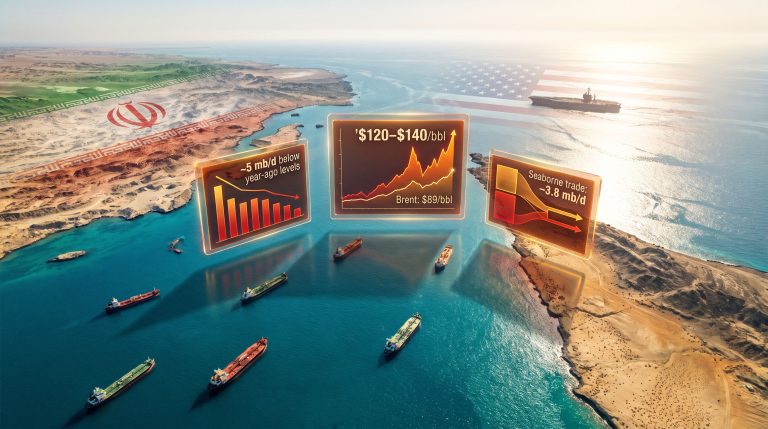
The recent maritime incidents in Iraqi waters have led to a significant escalation where oil clamps as tankers are attacked in Iraqi waters amid Middle East war, triggering immediate market responses as global energy systems confront concentrated supply route vulnerabilities. Current events demonstrate how quickly regional conflicts can escalate into worldwide supply concerns, particularly when explosive-laden vessels target commercial tankers in territorial waters.
Maritime Security Incidents and Energy Infrastructure Vulnerabilities
The architecture of global oil distribution creates inherent systemic risks through its reliance on narrow maritime passages. Furthermore, these concentrated vulnerabilities can transform overnight when critical infrastructure faces direct threats.
Recent incidents involving foreign tankers carrying Iraqi fuel oil in territorial waters illustrate the immediate market response mechanisms that activate during maritime security events. According to reports, Iranian strikes have intensified regional tensions whilst oil prices surged past $100 as markets reacted to the supply disruptions. Brent crude futures surged $5.69 (+6.19%) to $97.67 per barrel while West Texas Intermediate climbed $5.11 (+5.86%) to $92.36, demonstrating the rapid price discovery process during supply route disruptions.
Critical Shipping Lane Dependencies
The global petroleum distribution system relies heavily on several strategic chokepoints that process enormous daily volumes. However, these dependencies create single points of failure that amplify vulnerability exposure.
Key Maritime Vulnerability Factors:
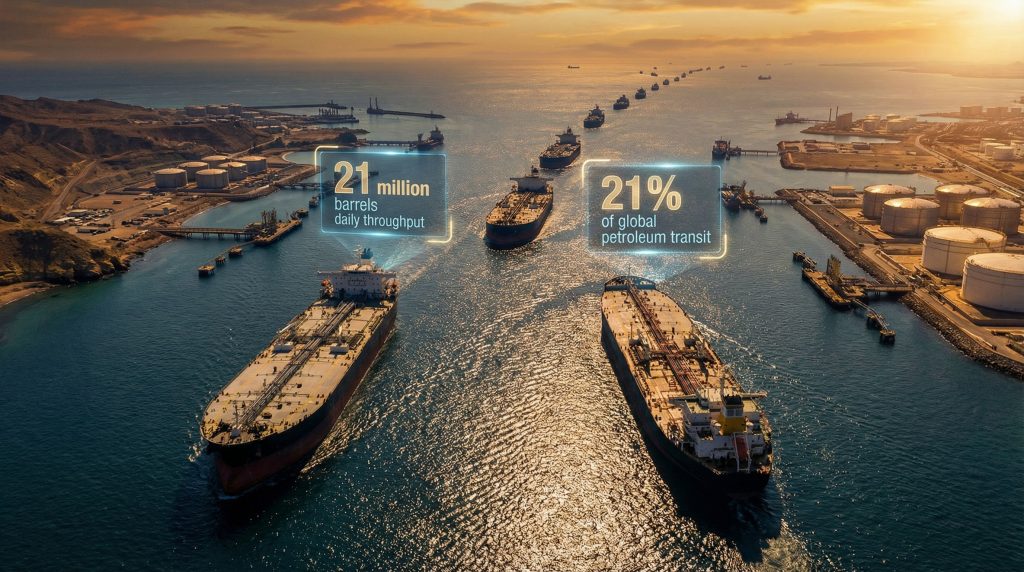
- Persian Gulf transit capacity: Processes approximately 21% of global petroleum liquids daily
- Alternative route limitations: Emergency capacity typically covers only 40-60% of normal throughput
- Insurance market responses: War risk premiums can increase 300-500% within 24-48 hours
- Strategic reserve deployment timeframes: 30-90 days required for meaningful market impact
Consequently, the concentration of shipping through specific geographical points creates situations where oil clamps as tankers are attacked in Iraqi waters amid Middle East war scenarios become systematic market disruption triggers. When security incidents occur in these areas, the immediate response involves rapid recalibration of risk premiums and supply route assessments.
When big ASX news breaks, our subscribers know first
Price Discovery Mechanisms During Regional Conflicts
Energy markets demonstrate sophisticated price discovery mechanisms that operate on anticipation rather than actual supply shortfalls. In addition, the current market environment reflects several compounding factors that create sustained volatility patterns, particularly when considering oil price movements and their underlying drivers.
Geopolitical Risk Premium Components
Oil price movements during security incidents reflect multiple risk assessment layers. For instance, immediate security premiums can range significantly based on threat assessment severity.
| Risk Component | Typical Price Impact | Duration |
|---|---|---|
| Immediate security premium | $15-25 per barrel | 1-7 days |
| Supply route diversification costs | $3-8 per barrel | 2-6 weeks |
| Strategic reserve replacement obligations | $5-15 per barrel | 3-12 months |
| Insurance and financing constraints | $2-10 per barrel | 1-6 months |
The International Energy Agency's announcement of a 400 million barrel strategic reserve release, with the U.S. contributing 172 million barrels from its Strategic Petroleum Reserve, demonstrates coordinated efforts to manage price volatility during supply disruptions.
Market Psychology and Trading Behavior
Energy commodity markets exhibit distinct behavioral patterns during geopolitical tensions. Furthermore, traders must price in worst-case scenarios when critical infrastructure becomes vulnerable, creating sustained premium effects even when physical supply remains adequate.
Market analysts recognise that reserve releases provide temporary relief rather than fundamental solutions to supply route vulnerabilities. However, the effectiveness of such interventions depends on coordination timing, volume relative to supply gaps, and implementing volatility hedging strategies simultaneously with demand management measures.
Supply Chain Disruption Cascade Analysis
When major shipping lanes experience security threats, the impact extends through multiple system levels with varying timeframes and intensities. Additionally, the cascading effects can create complex interdependencies that amplify initial disruptions.
First-Order Effects (0-7 days)
- Spot price volatility increases: 200-400% elevation in normal trading ranges
- Insurance premium spikes: Immediate war risk coverage adjustments
- Alternative route activation: Emergency shipping pattern implementation
- Strategic reserve deployment decisions: Coordinated international response protocols
Second-Order Effects (1-4 weeks)
- Refinery input optimization: Crude slate adjustments for available supplies
- Regional price differential expansion: Geographic arbitrage opportunities increase
- Storage capacity constraints: Global tank top situations develop rapidly
- Financial market correlation: Cross-sector energy volatility transmission
Third-Order Effects (1-6 months)
- Long-term contract renegotiation: Force majeure clause activation and pricing adjustments
- Infrastructure investment reallocation: Accelerated alternative route development
- Energy security policy evolution: Government strategic framework updates
- Alternative energy adoption acceleration: Reduced dependency strategy implementation
The cascading nature of supply disruptions means that initial market reactions often underestimate the duration and complexity of adjustment processes required to restore normal distribution patterns.
Risk Management Framework Development
Energy companies and governments deploy comprehensive risk mitigation strategies when facing supply route vulnerabilities. Consequently, these approaches incorporate both immediate response protocols and long-term structural adaptations, particularly as global tariff effects compound existing market pressures.
Corporate Risk Mitigation Strategies
Diversified Supply Portfolio Management:
- Multiple supplier relationships across different geographical regions
- Flexible contract terms allowing source substitution during emergencies
- Enhanced storage capacity for supply buffering during disruptions
- Alternative transportation route development and testing
Financial Risk Protection Mechanisms:
- Forward contract positioning for price volatility protection
- Currency hedging for international transaction stability
- Insurance coverage expansion for force majeure event protection
- Credit facility arrangements for emergency financing needs
Government Strategic Reserve Coordination
Strategic petroleum reserves serve as critical market stabilisation tools. However, their effectiveness depends on coordinated deployment and proper timing considerations, especially when examining US oil production decline factors.
Reserve Deployment Optimisation Factors:
- International coordination: Multilateral releases maximise market impact
- Volume calculations: Balancing immediate relief with long-term security requirements
- Market communication: Clear signalling to prevent speculation escalation
- Replenishment strategies: Cost-effective reserve rebuilding during market recovery
Recent intelligence assessments indicating that regional leadership structures remain largely intact suggest that supply disruption risks may persist longer than initially anticipated. Therefore, sustained reserve management approaches become increasingly critical.
Infrastructure Adaptation and Investment Implications
Maritime security incidents accelerate strategic infrastructure development projects and reshape long-term investment priorities across the energy sector. Furthermore, these disruptions highlight the need for diversified transportation networks.
Alternative Transportation Development
Pipeline Capacity Enhancement:
- Cross-border pipeline projects gain priority funding and regulatory support
- Bi-directional flow capabilities provide routing flexibility during crises
- Capacity expansion programs reduce dependency on maritime transport
- Strategic connection projects link isolated supply sources to global networks
Port Infrastructure Diversification:
- Loading facility distribution across multiple geographical locations
- Storage capacity expansion at alternative ports
- Specialised vessel accommodation for larger crude carriers
- Security enhancement programs for critical maritime facilities
Technology Integration Solutions
Modern energy infrastructure increasingly incorporates advanced monitoring and response systems. In addition, these technological adaptations provide enhanced resilience against security threats.
- Real-time shipping tracking systems for route optimisation
- Predictive analytics platforms for disruption forecasting
- Automated emergency response protocols for rapid deployment
- Enhanced cybersecurity frameworks for critical infrastructure protection
Investment Sector Analysis and Capital Flow Implications
Supply chain vulnerabilities create distinct investment opportunities and risks that reshape capital allocation patterns. Consequently, investment market impacts become more pronounced during periods when oil clamps as tankers are attacked in Iraqi waters amid Middle East war.
Beneficiary Investment Categories
Alternative Energy Infrastructure:
- Renewable energy projects benefit from accelerated adoption timelines
- Grid storage systems gain valuation premiums during supply uncertainty
- Energy efficiency technologies attract increased funding for demand reduction
- Distributed generation assets reduce import dependency risks
Strategic Storage and Transportation:
- Storage facility operators experience enhanced asset valuations
- Pipeline companies benefit from increased utilisation rates
- Rail transportation providers gain market share during maritime disruptions
- Port infrastructure developers attract premium investment interest
Risk Concentration Areas
Vulnerable Asset Categories:
- Single-route dependent operations face valuation discounts
- High-leverage energy companies experience credit risk premium increases
- Import-dependent economies face currency and sovereign debt pressures
- Energy-intensive manufacturing confronts margin compression risks
Political statements from leadership suggesting intensive monitoring of strategic straits indicate ongoing security prioritisation. However, this may influence long-term infrastructure investment decisions and regulatory frameworks.
The next major ASX story will hit our subscribers first
Market Recovery and Adaptation Patterns
Historical analysis reveals consistent patterns in how energy markets adapt to sustained supply route disruptions. Furthermore, these patterns provide valuable insights for current situation assessment.
Recovery Timeline Characteristics
Immediate Response Phase (0-30 days):
- Emergency protocol activation and reserve deployment
- Alternative route capacity utilisation optimisation
- Insurance market adjustment and coverage restructuring
- Spot market price discovery and volatility management
Structural Adaptation Phase (1-6 months):
- Long-term contract modification and renegotiation
- Infrastructure capacity expansion project acceleration
- Investment flow redirection toward resilient assets
- Regulatory framework updates for enhanced security
Strategic Repositioning Phase (6-24 months):
- Alternative energy adoption acceleration
- Supply chain diversification implementation
- Enhanced storage capacity deployment
- International cooperation framework development
Effectiveness Measurement Criteria
The success of market adaptation strategies can be evaluated through several key metrics. Additionally, these measurements provide benchmarks for assessing response effectiveness.
- Price volatility normalisation timelines and sustainability
- Alternative route utilisation efficiency and cost competitiveness
- Strategic reserve replenishment rates and market impact
- Investment flow redirection toward resilient infrastructure
Current analyst assessments suggest that temporary reserve solutions may prove insufficient for addressing persistent supply route vulnerabilities. Consequently, this highlights the importance of long-term structural adaptations.
Strategic Implications for Global Energy Security
The current situation demonstrates how concentrated supply route dependencies create systemic vulnerabilities that extend far beyond immediate price volatility. Furthermore, understanding these dynamics enables more effective preparation for similar future scenarios whilst highlighting critical infrastructure diversification needs.
Maritime security incidents reveal the interconnected nature of global energy systems and the cascading effects that can emerge from localised disruptions. However, effective response strategies require coordinated international action, strategic reserve utilisation, and sustained infrastructure adaptation to reduce future vulnerability concentrations.
The emphasis on examining strategic straits closely, as indicated by recent policy statements, suggests that energy security considerations will continue influencing geopolitical relationships. Consequently, infrastructure investment priorities will reflect these strategic imperatives.
Long-term energy security depends on developing resilient distribution networks that can maintain functionality during regional conflicts. Therefore, this requires sustained investment in alternative transportation infrastructure, enhanced storage capacity, and diversified supply relationships that reduce dependency on single chokepoint locations where oil clamps as tankers are attacked in Iraqi waters amid Middle East war scenarios.
Disclaimer: This analysis is based on publicly available information and market data as of the publication date. Energy market conditions and geopolitical situations can change rapidly, and readers should consult current sources and professional advisors before making investment decisions. Past market performance does not guarantee future results, and all investments carry inherent risks.
Looking to Capitalise on Energy Market Volatility?
Discovery Alert's proprietary Discovery IQ model delivers real-time alerts on significant energy and commodity discoveries across the ASX, helping subscribers identify actionable opportunities during market volatility like current oil price surges. Explore how historic mineral discoveries have generated exceptional returns and begin your 14-day free trial today to secure your market-leading advantage.