
May 21, 2026
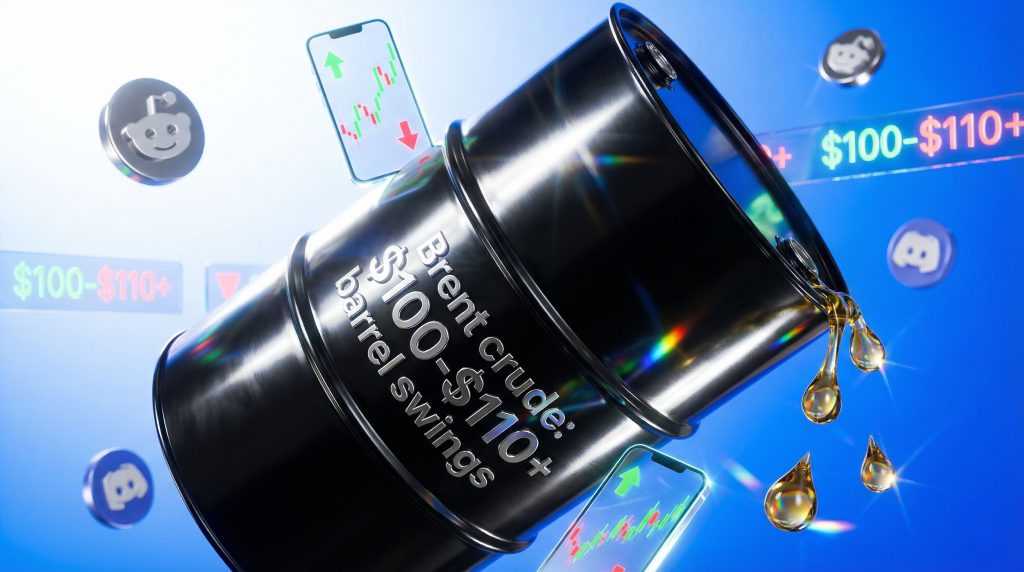
The oil meme trade phenomenon has emerged as one of 2026's most significant financial market developments, fundamentally altering how retail investors approach commodity speculation. Furthermore, this transformation demonstrates how democratised trading access and social media coordination can create meme-like behavior in traditionally institutional markets. The convergence of geopolitical tensions, accessible leverage products, and retail investor coordination has created unprecedented volatility patterns that challenge conventional commodity market analysis.
The modern investment landscape has witnessed a fundamental shift in how retail investors approach commodity markets. Traditional asset allocation strategies are being replaced by coordinated speculation driven by social media momentum and geopolitical fear narratives. This transformation has created conditions where essential industrial commodities like crude oil can exhibit behavioral patterns previously confined to speculative equities.
What Makes Oil a "Meme Trade" in 2026?
The oil meme trade represents more than simple price volatility. It demonstrates how democratised trading access, leveraged derivatives products, and information cascade effects can transform commodity price discovery mechanisms. Mobile trading platforms offering zero-commission crude oil derivatives have enabled unprecedented retail participation in energy markets.
Defining the Modern Meme Trade Phenomenon
Meme trades exhibit specific technical characteristics that distinguish them from fundamental price movements. These include compressed timeframes for extreme volatility, price movements exceeding reasonable responses to underlying news events, and heavy participation from retail investors using leveraged products.
The oil market during March 2026 displayed these exact characteristics. Brent crude demonstrated intraday price swings from approximately $100 per barrel to peaks exceeding $110 within single trading sessions, then retracting to $107 levels. However, these 10% daily fluctuations compressed into multi-day periods represent volatility patterns more typically associated with speculative assets than industrial commodities.
Key distinguishing factors of oil's meme trade status include:
- Volatility compression: Extreme price movements occurring within days rather than weeks
- Retail coordination: Social media platforms facilitating synchronised positioning
- Leverage amplification: CFD products magnifying small capital positions into significant market exposure
- Fundamental disconnection: Price movements exceeding explanatory power of supply-demand factors
Oil's Transformation from Industrial Commodity to Speculative Asset
The structural transformation enabling oil's meme trade status involves multiple technological and behavioural factors. Mobile trading platform proliferation has made commodity derivatives accessible to retail investors who previously lacked institutional-grade trading infrastructure.
Leveraged derivative products particularly enable this transformation. Contract for Difference (CFD) products offering 5-10x leverage allow retail traders with $1,000 capital to control $5,000-$10,000 notional crude oil exposure. This leverage availability creates both the attractiveness of outsized returns and the psychological urgency that characterises meme trade behaviour.
Consequently, the information environment has fundamentally changed as well. Retail investors now access real-time commodity prices, technical analysis tools, and coordinated discussion forums that were previously exclusive to institutional participants. Reddit communities, Discord channels, and specialised trading forums function as information aggregation nodes where individual traders share positioning strategies and coordinate entry/exit timing.
When big ASX news breaks, our subscribers know first
Why Are Retail Investors Flooding Into Oil Markets?
Geopolitical Risk Premium Psychology
The catalyst for oil's meme trade status derives from legitimate geopolitical supply disruption risks. Iran's military escalation against regional energy infrastructure created specific supply shock narratives that retail investors perceive as profit opportunities.
For instance, according to verifiable military engagement data, Iran launched coordinated missile and drone attacks against Saudi Arabia's Ras Tanura oil refinery on March 19-20, 2026, forcing facility closure and creating visible supply disruption evidence. This attack occurred immediately before Brent crude's explosive price movement to $110+ per barrel.
The psychological mechanism operates through rational fear-based positioning. Moreover, retail investors observe several key oil price movements indicators:
- Strait of Hormuz disruption threats: Iran's stated blockade of this chokepoint handling 20% of global oil supply
- Visible infrastructure damage: Satellite imagery showing refinery fires and production shutdowns
- Military hardware losses: Reports indicating 16+ American military aircraft lost since conflict escalation
- Consumer price impacts: US gasoline prices rising 29% since regional war commencement
These quantifiable factors provide psychological justification for positioning oil as an inflation hedge during geopolitical crisis periods.
Social Media and Information Cascades
Information cascade mechanisms in oil markets operate through three primary channels. Social media platforms like Reddit's trading communities aggregate individual retail trader positions and strategies. Specialised commodity forums provide technical analysis and fundamental research sharing. Discord channels enable real-time coordination of entry and exit timing.
FOMO amplification occurs through leverage availability. Unlike equity meme trades where maximum loss equals initial investment, oil derivatives with 5-10x leverage can generate losses exceeding initial capital. This leverage availability creates psychological urgency where delayed entry means missing "last chance" profit opportunities before momentum shifts.
The competitive dynamic between commodity classes adds another psychological layer. Gold and silver previously occupied retail investor attention during 2025-2026, but oil's geopolitical narrative has cannibalised attention from precious metals speculation. This suggests retail investor focus functions as a scarce resource cycling between asset classes on 1-3 month timeframes.
Retail vs Institutional Oil Trading Patterns (2026)
| Metric | Retail Investors | Institutional Players |
|---|---|---|
| Average Position Size | $500-$5,000 | $1M+ |
| Holding Period | 1-30 days | 3-12 months |
| Primary Motivation | Speculation/FOMO | Supply chain hedging |
| Information Sources | Social media, forums | Industry reports, analysts |
| Leverage Utilisation | 5-10x via CFDs | 1-3x via futures |
| Risk Management | Limited stop-losses | Sophisticated hedging |
How Volatile Has the Oil Meme Trade Become?
Price Swing Analysis and Market Behaviour
The specific volatility patterns documented during March 16-20, 2026 provide quantifiable evidence of meme trade characteristics. Brent crude maintained baseline levels near $100 per barrel through mid-week, escalated to $103-$104 ranges for consecutive sessions, then experienced explosive acceleration above $110 within single trading periods.
This 10% price range compressed within five trading days represents volatility magnitude exceeding 20-year historical norms for crude oil markets. During the 1990-1991 Gulf War crisis, comparable percentage price movements were distributed across multi-month periods rather than compressed into single weeks.
In addition, the divergence between fundamental supply disruption magnitude and price appreciation provides diagnostic evidence of behavioural-driven trading. Iran's Strait of Hormuz disruption threatens approximately 20% of global crude supply, yet price movements reached 10%+ within single trading sessions before actual supply interruption materialised.
Key volatility metrics include:
- Intraday ranges: 8-12% daily price swings during peak periods
- Timeframe compression: Movements typically requiring weeks compressed into days
- Volume spikes: Retail trading volume increasing 300%+ during momentum periods
- Options activity: Short-dated call options showing elevated implied volatility
Technical Indicators vs Fundamental Drivers
The disconnect between technical price action and underlying supply-demand fundamentals represents a hallmark of meme trade behaviour. Traditional commodity analysis relies on inventory data, production capacity, transportation logistics, and seasonal demand patterns. These fundamental factors suggested moderate price appreciation during the geopolitical crisis period.
However, the actual price movement magnitude substantially exceeded what fundamental analysis would predict. This divergence indicates that derivative positioning, algorithmic amplification, and retail coordination effects dominated traditional price discovery mechanisms during the meme trade period. Understanding these oil price rally insights becomes crucial for market participants.
Algorithmic trading amplification deserves specific attention. Modern exchanges employ sophisticated pattern-recognition systems that identify retail momentum clustering. When coordinated retail buying accelerates price movement, algorithmic systems automatically deploy momentum-following strategies, creating multiplicative effects where initial retail positioning triggers larger institutional follow-through.
What Impact Is This Having on Traditional Energy Markets?
Disruption to Established Trading Patterns
Traditional institutional oil market participants have been forced to adapt trading strategies to account for retail-driven volatility. Energy companies that typically rely on predictable hedging strategies now face extreme price swings that exceed normal risk management parameters.
The correlation between crude oil prices and energy sector equities has intensified during the meme trade period. ASX-listed energy companies experienced stock price movements directly tracking oil derivative speculation rather than company-specific fundamentals. This creates valuation distortions where share prices reflect commodity speculation rather than operational performance.
Furthermore, industrial consumers of crude oil products face increased hedging complexity. Airlines, shipping companies, and manufacturing businesses that rely on stable fuel cost forecasting now confront unpredictable price volatility driven by speculative positioning rather than supply-demand balance.
Spillover Effects on Energy Sector Investments
The oil meme trade has created spillover effects across related commodity sectors. Mining and exploration companies focused on energy materials have experienced increased retail investor attention, even when their operations have minimal direct correlation with crude oil markets. Understanding potential oil price crash analysis scenarios becomes essential for risk management.
Infrastructure and refining businesses face particular challenges. Companies operating pipelines, storage facilities, and processing plants experience stock price volatility correlated with oil speculation despite having stable operational cash flows independent of short-term crude price movements.
This spillover creates both opportunities and risks. Companies with genuine operational exposure to higher oil prices benefit from speculative premium valuations. However, businesses with limited actual correlation to crude oil prices face valuation volatility that complicates capital allocation and strategic planning.
Could Oil Replace Gold as the Primary Commodity Meme Trade?
Comparative Analysis: Oil vs Gold Investment Psychology
The psychological appeal of oil versus precious metals speculation involves several distinctive factors. Oil offers more accessible derivative products through mobile trading platforms, while physical gold requires storage, insurance, and authentication considerations that complicate retail participation.
Geopolitical sensitivity provides oil with narrative advantages over gold during crisis periods. Supply disruption stories are more immediate and understandable for retail investors compared to gold's more abstract monetary hedge function. Regional conflicts directly threaten oil production and transportation infrastructure, creating visible cause-and-effect relationships that support speculative positioning.
Liquidity and trading volume differences also favour oil for retail speculation. Crude oil derivatives markets offer 24-hour trading access and higher leverage availability compared to gold products. This accessibility enables the rapid position accumulation and exit timing that characterises successful meme trade participation.
Market Cycle Rotation Theory
Historical patterns suggest retail investor attention cycles through commodity classes on predictable timeframes. Gold experienced elevated retail interest during 2025, followed by silver's sharper participation wave in late 2025, with oil now capturing dominant attention during early 2026.
This sequential rotation pattern indicates retail focus functions as a scarce resource. Social media discussion volume, trading platform search activity, and derivative volume concentration demonstrate attention shifting between asset classes rather than expanding across multiple commodities simultaneously.
Consequently, the sustainability of oil's meme trade status depends on maintaining geopolitical narrative support and continued price volatility that rewards speculative positioning. Historical meme trade cycles typically sustain 1-3 months before retail attention migrates to new opportunities or volatility declines below profit-generating thresholds. The trade war impact on markets adds another layer of complexity to these dynamics.
What Are the Risks for Retail Investors in Oil Trading?
Volatility and Leverage Dangers
The primary risk facing retail oil traders involves leverage amplification of adverse price movements. CFD products offering 5-10x leverage mean that 5% adverse price moves generate 25-50% capital losses, often triggering margin call liquidations that force position closure at disadvantageous prices.
Unlike equity investments where maximum loss typically equals initial investment, leveraged commodity derivatives can generate losses exceeding original capital. Retail investors lacking sophisticated risk management experience may deploy position sizes inappropriate for their financial capacity to absorb losses.
The complexity of oil derivative products compounds these risks. Many retail investors lack understanding of contract settlement mechanisms, rollover procedures, and physical delivery obligations embedded in certain derivative structures. This knowledge gap can result in unexpected costs or forced position closures.
Market Manipulation and Information Asymmetry
Institutional participants possess significant information advantages over retail traders in oil markets. Professional trading desks access real-time inventory data, transportation logistics, refining capacity utilisation, and geopolitical intelligence that retail investors cannot obtain through public sources.
The potential for coordinated manipulation exists within retail trading communities. Large participants in social media forums could potentially orchestrate pump-and-dump schemes by promoting specific positioning strategies to generate artificial momentum, then exiting positions after retail coordination drives price movements.
Moreover, regulatory oversight of commodity derivative markets differs from equity market supervision. Retail investor protection measures applicable to stock trading may not extend to commodity derivatives, creating gaps in manipulation prevention and dispute resolution mechanisms. External analysis from Yahoo Finance provides additional insights into these market dynamics.
"Oil derivatives trading involves significant leverage and can result in losses exceeding initial investment. Retail investors should understand that commodity markets can be manipulated by large institutional players with superior information access."
The next major ASX story will hit our subscribers first
How Are Regulators Responding to Oil Market Speculation?
Current Regulatory Framework Gaps
Commodity trading oversight operates under different regulatory frameworks compared to equity market supervision. Securities commissions focus primarily on stock and bond markets, while commodity derivatives fall under separate regulatory authority with different investor protection standards.
International coordination challenges complicate oil market oversight. Crude oil trades across multiple exchanges in different jurisdictions, making coordinated regulatory response difficult when speculative activity crosses national boundaries. Retail investors can access oil derivatives through offshore platforms that may operate under less stringent regulatory requirements.
Position limit enforcement represents another regulatory gap. While institutional participants face position size restrictions, retail investors trading through various platforms may aggregate positions that circumvent intended limits without regulatory detection.
Potential Policy Responses
Regulatory authorities are considering several approaches to address retail commodity speculation risks. Position limits specifically targeting retail derivatives trading could restrict maximum leverage availability or require enhanced margin requirements during volatile periods.
Enhanced disclosure requirements for oil trading platforms represent another potential response. Mandatory risk warnings, leverage limitation notifications, and educational content requirements could help ensure retail investors understand derivative product complexity before trading.
Furthermore, consumer education initiatives focused on commodity investment risks could provide preventive protection. Regulatory agencies may develop specialised educational content explaining oil market fundamentals, derivative product risks, and appropriate position sizing for retail participants.
What's Next for the Oil Meme Trade Movement?
Sustainability of Retail Interest
The longevity of oil's meme trade status depends on several sustaining factors. Continued geopolitical tension supporting supply disruption narratives provides fundamental justification for retail positioning. However, if regional conflicts resolve or oil supply disruptions prove temporary, speculative interest may dissipate rapidly.
Historical meme trade duration analysis suggests 1-3 month cycles before retail attention migrates to alternative opportunities. The oil meme trade commenced with Middle East conflict escalation and may continue until either geopolitical tensions resolve or volatility declines below profit-generating thresholds. Analysts examining price stagnation factors suggest several scenarios for market evolution.
Factors that could extend oil speculation interest include:
- Escalating regional conflicts expanding beyond current participants
- Additional supply infrastructure attacks creating visible disruption evidence
- Rising consumer fuel costs maintaining inflation hedge narratives
- Successful retail trader profits encouraging continued participation
Long-term Market Structure Changes
The oil meme trade may create permanent structural changes in commodity market participation. Mobile trading platform proliferation has demonstrated retail demand for commodity derivative access, potentially leading to expanded product offerings and enhanced accessibility features.
Technology innovations could enable broader retail commodity market participation beyond oil. Simplified derivative products, automated risk management tools, and educational content integration may reduce barriers to sophisticated commodity trading strategies.
However, potential regulatory responses could limit retail commodity speculation. Enhanced oversight, position limits, and consumer protection measures may constrain the leverage availability and coordination mechanisms that enable meme trade behaviour.
The evolution of oil price discovery mechanisms represents another long-term consideration. If retail participation becomes a permanent feature rather than temporary speculation, traditional institutional hedging strategies and price forecasting models may require fundamental revision to account for behavioural-driven volatility patterns. Additional market commentary from MarketWatch supports these structural change observations.
Frequently Asked Questions
How can retail investors safely participate in oil markets?
Focus on diversified energy ETFs rather than leveraged derivatives, limit position sizes to affordable loss amounts, and prioritise education about commodity market fundamentals before trading.
Is the oil meme trade affecting fuel prices for consumers?
While oil price volatility can influence fuel costs, retail trading represents a small fraction of global oil markets, with consumer prices more directly affected by refining capacity and distribution costs.
What makes oil different from previous meme trades?
Oil is an essential industrial commodity with real supply/demand fundamentals, unlike purely speculative assets, making it potentially more sustainable but also more dangerous for uninformed retail investors.
Disclaimer: This analysis is for educational purposes only and should not be considered investment advice. Commodity derivatives trading involves significant risks including potential losses exceeding initial investment. Readers should conduct independent research and consult qualified financial professionals before making investment decisions.
Ready to Capitalise on the Next Major Mineral Discovery?
Discovery Alert instantly alerts investors to significant ASX mineral discoveries using its proprietary Discovery IQ model, turning complex mineral data into actionable insights. Begin your 14-day free trial today to position yourself ahead of the market and secure your trading advantage.