June 21, 2026
When a Shipping Lane Becomes the World's Most Volatile Pricing Mechanism
Most commodity markets move on inventory data, production forecasts, and macroeconomic indicators. Crude oil has always operated differently, but in the current geopolitical environment, the market has undergone a more fundamental transformation. Oil prices on prospects for US-Iran deal negotiations have effectively converted one of the world's narrowest maritime passages into the single most consequential variable in global energy pricing. Understanding how and why this happens requires examining the mechanics of risk premiums, the architecture of diplomatic negotiations, and the deeply asymmetric way markets absorb and release geopolitical uncertainty.
When big ASX news breaks, our subscribers know first
The Strait of Hormuz: Energy Infrastructure's Most Dangerous Bottleneck
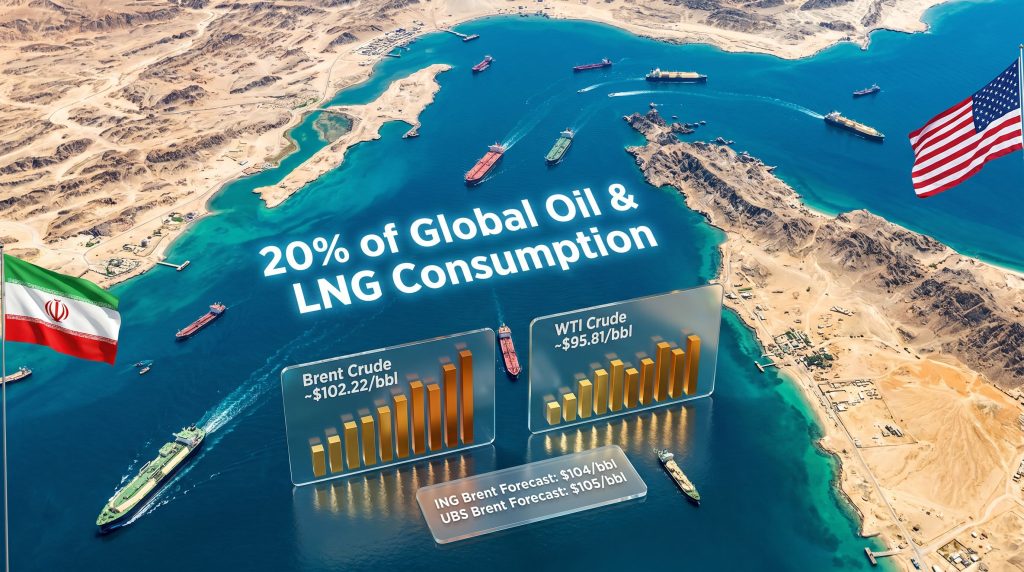
Before the current conflict, the Strait of Hormuz functioned as the circulatory system of global energy supply. This narrow waterway, approximately 33 kilometres wide at its most constrained point, was the transit corridor for crude oil and liquefied natural gas shipments representing roughly 20% of total global consumption. No other chokepoint in the world's energy infrastructure comes close to matching this concentration of throughput vulnerability.
The significance of this geography extends well beyond simple shipping logistics. Insurance underwriters, tanker operators, and cargo traders all build their pricing models around assumptions of navigational freedom through the strait. When that assumption becomes uncertain, the repricing cascade moves simultaneously through freight rates, insurance premiums, spot crude markets, and long-term supply contracts.
Furthermore, Iran's announcement of a new Persian Gulf Strait Authority, designed to oversee what it described as a controlled maritime zone in the Strait of Hormuz, represented a direct challenge to that foundational assumption. This was not merely a diplomatic signal. It was a structural escalation, redefining the legal and operational framework under which vessels could transit the passage.
"The oil market is no longer simply pricing barrels. It is pricing the probability of geopolitical outcomes, and in this environment, diplomatic communiqués carry as much market weight as OPEC production decisions."
How War Premiums Work and Why They Unwind So Rapidly
The concept of a geopolitical risk premium in crude pricing is well-established, but its mechanics are frequently misunderstood. A war premium is not a static addition to the fundamental price of oil. It is a probabilistic weight applied to scenarios involving supply disruption, calculated in real time by millions of market participants using incomplete and rapidly changing information.
Several factors make this premium particularly unstable in the current environment:
- Asymmetric information: Diplomatic negotiations occur in private, meaning markets periodically receive large information shocks from leaked directives or official statements.
- Algorithmic amplification: Sentiment-driven and algorithmic trading systems are designed to react instantaneously to headline triggers, magnifying price movements beyond what fundamental analysis would justify.
- Binary outcome structure: Unlike demand-side uncertainties, which play out gradually, conflict resolution tends toward binary outcomes. Either the strait opens or it does not. Either sanctions are lifted or they remain. This creates sharp, discontinuous repricing events.
- Accumulated scepticism: Repeated near-resolution cycles followed by collapse have conditioned sophisticated market participants toward caution, creating a structural dampener on sustained premium unwinding.
Analyst estimates vary, however, market behaviour suggests that between $8 and $15 per barrel of current crude pricing reflects geopolitical risk rather than supply-demand fundamentals, depending on the intensity of conflict signals at any given moment. The geopolitical oil price drivers at play here are more complex than in any recent comparable conflict period.
The Architecture of the US-Iran Negotiations
The negotiation framework involves multiple layers of complexity that make straightforward resolution unlikely in the near term.
At its core, the US is seeking verifiable commitments on Iranian nuclear activity, the removal of Iranian maritime authority over the Strait of Hormuz, and a broader de-escalation framework. Iran has conditionally engaged with parts of this framework while simultaneously taking actions that appear to entrench its strategic position rather than soften it.
Pakistan is serving as a third-party diplomatic intermediary, with officials confirmed to be travelling to Iran for direct talks. This mediation role carries significance because it provides a communication channel that avoids the complications of direct US-Iran engagement. However, the presence of a mediator also signals that direct dialogue has limits, and shuttle diplomacy introduces both delay and the risk of message distortion between parties.
The most immediately disruptive element of the current impasse involves the proposed tolling mechanism. Iran's suggestion that vessels transiting the Strait of Hormuz should pay a fee to the Persian Gulf Strait Authority amounts to a claim of sovereign economic control over an internationally recognised shipping corridor. US Secretary of State Marco Rubio stated clearly that this proposal makes any diplomatic resolution unfeasible, framing it as a fundamental red line rather than a negotiating starting position.
"ING analysts, in a published research note, cautioned that markets have encountered situations resembling near-resolution multiple times before, with outcomes repeatedly falling short of expectations. ING maintained a Brent forecast of $104 per barrel for the current quarter."
Thursday's Trading Session: A Case Study in Headline-Driven Volatility
The trading dynamics of May 22, 2026 offer a compressed illustration of how oil prices on prospects for US-Iran deal signals translate into market behaviour. Within a single session, WTI and Brent futures experienced swings of extraordinary magnitude driven entirely by diplomatic signals rather than any change in physical supply conditions.
Benchmark Performance Snapshot
| Benchmark | Peak Intraday Move | Session Close | Driver |
|---|---|---|---|
| Brent Crude Futures | +3.0% | $102.22/bbl (-2.7%) | Iran directive leak, then Pakistan mediation signal |
| WTI Crude Futures | +3.0% | $95.81/bbl (-2.5%) | Correlated with Brent |
| Brent (Deal Scenario) | Potential decline | -$8 to -$9/bbl from peak | Full sanctions relief + Hormuz reopening |
The session opened with an initial surge after Reuters reported, citing two senior Iranian sources, that Iran's supreme leadership had issued an internal directive complicating a key US demand. Rather than reading this as a peace signal, markets interpreted it as evidence of Tehran hardening its negotiating stance, pushing crude sharply higher on renewed conflict risk.
Prices subsequently reversed after Secretary of State Rubio's statements about Pakistan's mediating role suggested dialogue channels remained open. This reversal was itself then complicated by his simultaneous declaration that the tolling system proposal made a deal unfeasible, producing the characteristic whipsaw pattern that has defined this market throughout the conflict period. For further context on how these diplomatic shifts affect oil benchmarks in real time, the volatility seen on this single trading day is particularly instructive.
What Institutional Forecasters Are Saying
The divergence among major institutional price forecasts reveals something important about the current market environment. When analysts disagree significantly, the disagreement itself functions as a signal of elevated uncertainty and reduced forecast reliability.
| Institution | Brent Forecast | WTI Forecast | Horizon | Key Assumption |
|---|---|---|---|---|
| ING | $104/bbl | Not specified | Current quarter | Conflict persists without resolution |
| UBS | $105/bbl | $97/bbl | September | Revised upward by $10/bbl on supply disruption premium |
UBS's decision to raise its oil price forecast by $10 per barrel is instructive. This revision was not driven by deal optimism. It reflected a reassessment of how deeply supply disruption risk has become embedded in the market's structural pricing, rather than any expectation of near-term diplomatic progress.
This creates a counterintuitive dynamic: bullish institutional forecasts and bearish market reactions to peace signals can coexist simultaneously, because the forecasts are pricing continued conflict while any move toward resolution triggers war premium unwinding.
The next major ASX story will hit our subscribers first
OPEC+ and the Subordination of Supply to Geopolitics
In a normalised market environment, news that seven leading OPEC+ producers are expected to agree to a modest output increase for July at their June 7 meeting would generate significant price movement. During Thursday's session, however, this development had minimal market impact.
OPEC and global oil markets have historically been the dominant pricing force, but this subordination of traditional supply management signals to geopolitical disruption represents a meaningful structural shift in how crude markets function. When physical supply disruptions linked to the conflict are already affecting deliveries from multiple producers, incremental OPEC+ output decisions become secondary variables. In addition, OPEC demand forecast revisions have similarly struggled to cut through the noise of conflict-driven sentiment.
The practical implication for energy market participants is significant: conventional supply-demand analytical frameworks have reduced explanatory power in the current environment, and geopolitical probability assessment has become the primary pricing discipline.
Scenario Modelling: Three Diplomatic Pathways
| Scenario | Probability Assessment | Expected Brent Impact | Key Trigger |
|---|---|---|---|
| Full diplomatic resolution | Low to moderate | -$8 to -$12/bbl from current levels | Sanctions lifted, Hormuz fully reopened |
| Partial MOU or ceasefire | Moderate | -$4 to -$6/bbl | Reduced Hormuz risk, partial supply return |
| Talks collapse or re-escalation | Moderate to high | +$5 to +$10/bbl | War premium restoration |
Disclaimer: Scenario probability assessments and price impact estimates are based on analyst consensus ranges and market modelling and should not be treated as investment advice. Actual outcomes may differ materially from projections.
The Broader Economic Consequences of Sustained Disruption
The impact of Hormuz disruption extends well beyond crude oil benchmarks. Eurozone economic activity contracted at its sharpest pace in more than two and a half years during May, driven by war-induced cost-of-living pressures hammering services demand and accelerating business layoffs. This compression of European economic activity creates a feedback loop: higher energy costs suppress consumption, which reduces industrial output, which further dampens energy demand even as supply constraints push prices higher.
For LNG markets specifically, the disruption carries compounding effects. The global LNG supply outlook has deteriorated meaningfully as Asian and European buyers actively reprice long-term supply risk, with many accelerating contract negotiations to lock in alternative supply routes as a structural hedge against continued Persian Gulf instability. Consequently, market analysts tracking these shifts have noted that LNG contract dynamics are evolving faster than at any point in the past decade.
India faces a particularly acute version of this strategic calculation as a major importer of Gulf crude. The combination of elevated prices, supply route uncertainty, and currency pressures creates a multi-dimensional challenge for energy planners managing both near-term cost exposure and longer-term supply security.
The Structural Barriers to Durable Resolution
Several factors make a lasting agreement genuinely difficult to achieve, beyond the specific disputes currently in focus:
- Verification asymmetry: Iran's internal political directives and its public negotiating positions operate on different tracks. Any agreement must bridge this gap with credible verification mechanisms that both sides accept as legitimate.
- Sovereignty framing: Iran has framed the Persian Gulf Strait Authority as a matter of national sovereignty rather than a negotiating position, making retreat politically costly for its leadership regardless of what economic incentives are offered.
- Sanctions relief timing: Even if agreement is reached, the timeline between diplomatic resolution and actual physical Iranian oil volumes reaching global markets involves months of logistical, financial, and regulatory preparation. Markets may price in resolution while the supply response lags significantly.
- Precedent fatigue: The repeated pattern of near-agreement followed by collapse has created institutional scepticism among market participants and policymakers alike, which itself reduces the credibility of any new framework.
Frequently Asked Questions
Why do oil prices fall when a US-Iran deal appears closer?
Diplomatic progress reduces the probability of prolonged Strait of Hormuz disruption and signals potential Iranian export volumes returning to global markets. Both outcomes reduce supply risk and add potential supply volume, creating downward pressure on crude benchmarks through rapid unwinding of the war risk premium.
How much of the current oil price reflects the conflict rather than fundamentals?
Market behaviour suggests between $8 and $15 per barrel of current crude pricing reflects geopolitical risk rather than fundamental supply-demand dynamics, depending on the intensity and immediacy of conflict signals at any given time. Furthermore, oil prices on prospects for US-Iran deal progress remain among the most closely watched indicators for traders globally.
What would a tolling system in the Strait of Hormuz actually mean?
A tolling mechanism would effectively give Iran sovereign economic control over a waterway that international maritime law treats as a passage open to all nations. Beyond the direct financial cost to shipping operators, it would establish a legal and operational precedent with profound implications for global trade, insurance, and navigation rights extending well beyond the energy sector.
What role is Pakistan playing in the negotiations?
Pakistan is acting as a third-party diplomatic intermediary, with officials confirmed to be travelling to Iran for direct talks. This mediation function provides a communication channel between the US and Iran that bypasses the complications of direct engagement, though shuttle diplomacy also introduces delay and the potential for messaging inconsistencies.
For ongoing reporting on oil price movements, OPEC+ decisions, and Middle East energy developments, ET EnergyWorld at energy.economictimes.indiatimes.com provides comprehensive coverage of global energy market dynamics.
Want To Stay Ahead of the Market Moves That Matter Most?
When geopolitical events can swing crude benchmarks by $8–$15 per barrel in a single session, the speed of your information is everything — Discovery Alert's proprietary Discovery IQ model scans ASX announcements in real time, instantly alerting subscribers to the high-impact mineral discoveries that mirror these kinds of seismic market shifts. Explore how historic discoveries have delivered extraordinary returns on Discovery Alert's dedicated discoveries page, and begin your 14-day free trial today to position yourself ahead of the broader market.