
June 12, 2026
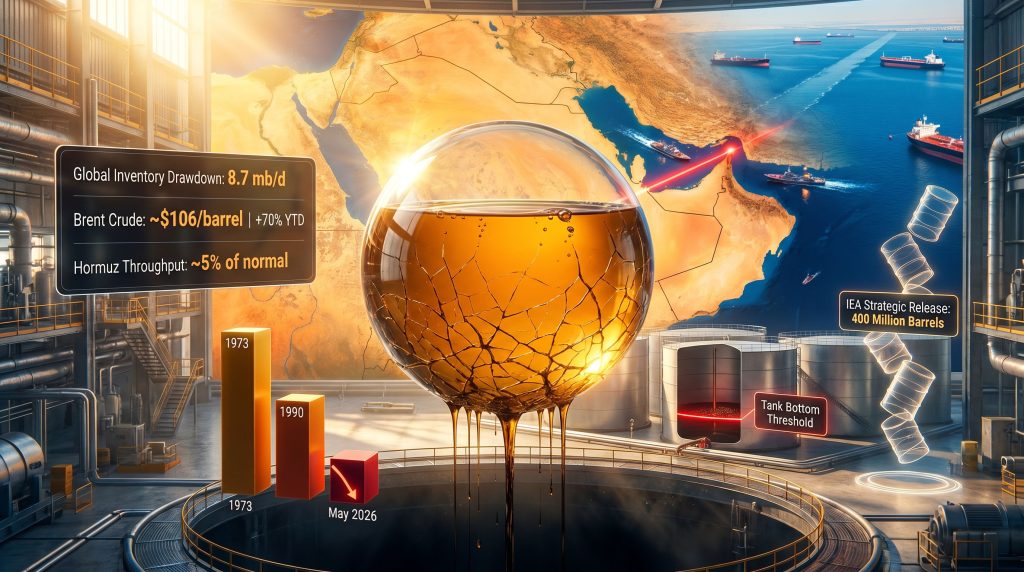
When the World's Oil Tap Runs Dry: Understanding the 2026 Supply Crisis
Energy market historians often point to the 1970s as the defining era of oil vulnerability. The 1973 Arab Oil Embargo reshaped geopolitical alliances, triggered long queues at petrol stations across the Western world, and forced governments to reckon with their dependence on a handful of Gulf producers. Yet what is unfolding in global energy markets in 2026 dwarfs that episode in both scale and complexity. The current Middle East war oil supply disruptions have created a structural supply emergency that is consuming the world's carefully accumulated emergency buffers at a pace that no strategic planning framework had fully anticipated.
Understanding why this crisis is qualitatively different from all prior oil shocks requires looking beyond headline price movements and examining the mechanics of how the global oil system actually functions under extreme stress.
When big ASX news breaks, our subscribers know first
Why This Oil Supply Shock Stands Apart From Every Previous Crisis
Comparing historical supply disruptions reveals a pattern: past crises were severe but ultimately bounded. The 2026 event breaks that pattern decisively.
Comparing Past Oil Shocks to the 2026 Crisis
| Disruption Event | Estimated Supply Loss (mb/d) | Duration | Price Spike |
|---|---|---|---|
| 1973 Arab Oil Embargo | ~4.3 mb/d | ~6 months | +70% |
| 1990 Gulf War | ~4.3 mb/d | ~7 months | +90% |
| 2011 Libya Crisis | ~1.6 mb/d | ~8 months | +25% |
| 2026 Middle East Conflict | ~8 mb/d (projected) | Ongoing | +70%+ YTD |
The International Energy Agency has characterised the 2026 disruption as the largest oil supply shock in recorded history. Projected losses of approximately 8 million barrels per day under sustained Strait of Hormuz constraint represent nearly double the volume removed from global markets during the 1973 embargo. That prior crisis, which lasted roughly six months and caused a 70% price spike, is now used as a lower-bound reference point rather than a worst-case scenario.
The Strait of Hormuz: A Chokepoint With No Real Alternative
To appreciate why this disruption is so difficult to mitigate, it is essential to understand the physical geography of global oil logistics. The Strait of Hormuz is a narrow maritime corridor connecting the Persian Gulf to the Gulf of Oman, and under normal operating conditions it carries approximately 20% of the world's total oil supply, or roughly 20 million barrels per day.
What makes this chokepoint uniquely dangerous is the near-total absence of scalable bypass infrastructure. Unlike overland pipeline networks that can theoretically be rerouted, or Atlantic basin producers who face no geographic constraints on export routes, Gulf producers are structurally dependent on Hormuz access. The partial exceptions, including Saudi Arabia's East-West pipeline to Yanbu, have a combined capacity that falls far short of compensating for full Hormuz closure at scale.
Goldman Sachs analysts have estimated that oil exports through the Strait are currently running at approximately 5% of normal levels, the result of what they describe as a double constraint involving positioning by both Iranian and US naval forces. At that throughput level, the world is effectively operating without one of its most critical energy arteries. Our crude oil volatility guide provides further context on how rapidly these conditions can shift market dynamics.
The Inventory Numbers That Should Alarm Every Energy Analyst
Featured Snapshot: Global visible crude and fuel inventories declined at a rate of 8.7 million barrels per day during May 2026, according to Goldman Sachs analysis cited by Bloomberg. This figure is nearly double the average drawdown rate recorded since the conflict began and represents the fastest pace of inventory depletion on record.
Key Inventory Metrics at a Glance
| Metric | Figure | Context |
|---|---|---|
| Global inventory drawdown rate (May 2026) | 8.7 mb/d | Nearly 2x the conflict-period average |
| US crude inventory decline (single week) | 17.8 million barrels | Largest single-week fall on record |
| Cushing, Oklahoma storage levels | Approaching tank bottom thresholds | Critical WTI pricing and logistics node |
| Jet fuel imports into Europe (vs. 2025 average) | ~60% below baseline | Supply shock spreading beyond Asia |
| Brent crude price (May 2026) | ~$106/barrel | +70% year-to-date; below conflict peak of $126+ |
What "Oil on Water" Data Reveals About Export Weakness
One of the lesser-understood dimensions of this crisis involves a metric known as "oil on water", which refers to crude and refined products actively in transit aboard tankers across global shipping lanes. Goldman Sachs analysis indicates that approximately two-thirds of May's total inventory decline originated not from storage drawdowns onshore but from a sharp reduction in this floating inventory.
This distinction matters enormously for how analysts interpret the crisis. When onshore storage falls, it typically reflects strong demand pulling supply from tanks. When floating supply contracts, it signals that export volumes are weakening faster than import demand is adjusting. The latter is a structural supply-side failure, not a demand-driven correction, and it is considerably harder to address through demand management policies or central bank intervention.
The geographic spread of this weakness adds further concern. Import weakness, which initially concentrated in Asian markets due to their proximity to Middle Eastern supply routes, has now migrated into European import channels. European jet fuel imports running approximately 60% below 2025 averages is a concrete indicator that the supply shock is no longer regionally contained.
The Cushing "Tank Bottom" Problem: A Technically Critical Threshold
The Cushing, Oklahoma storage complex serves as the designated delivery point for West Texas Intermediate crude futures contracts, making it a central pricing node for North American energy markets. When storage levels at Cushing approach what traders and operators call "tank bottoms", the physical mechanics of extraction begin to deteriorate. Suction efficiency falls, blending constraints emerge, and the logistical cost of moving each incremental barrel increases.
This is not merely a theoretical concern. As Cushing approaches operational minimum thresholds, the WTI futures market can experience amplified price volatility that becomes increasingly disconnected from broader global supply-demand fundamentals. It also constrains the ability of US refiners to draw on domestic crude stocks as a buffer against import shortfalls.
Demand-Side Dynamics: Why Reduced Chinese Appetite Isn't Enough to Rebalance Markets
China's domestic fuel sales declined approximately 22% in a single month during the crisis period, reflecting both weaker economic conditions and reduced refinery throughput, according to Goldman Sachs economists. Despite this significant demand contraction from the world's largest crude importer, the scale of supply destruction has been severe enough that even meaningful demand reduction cannot restore market balance.
China's behaviour during this crisis illustrates a counterintuitive dynamic in energy economics. When prices spike, large importers typically reduce their purchasing activity, which provides marginal relief to global prices. This mechanism has historically been one of the self-correcting features of oil markets.
However, the 2026 disruption is operating at a scale where demand destruction provides insufficient offsetting force against the supply shock. Goldman Sachs analysts note that Chinese refinery utilisation has softened alongside domestic consumption, creating a dual feedback loop where reduced import demand is simultaneously a response to price levels and a reflection of weakening domestic economic activity.
The compounding factor is the arrival of the US summer travel season. Historically, Memorial Day weekend marks the beginning of elevated gasoline, diesel, and jet fuel consumption across North America. With inventories at multi-year lows and strategic petroleum reserves under accelerating pressure, this seasonal demand uplift arrives at precisely the moment when the global supply system has the least capacity to absorb it.
The Strategic Reserve Paradox: Powerful but Finite
IEA member nations have collectively committed to releasing 400 million barrels from strategic stockpiles, representing the largest coordinated intervention in the organisation's history. Multiple rounds of reserve releases have already been executed in an attempt to moderate prices and prevent acute supply emergencies in individual markets.
The challenge is structural. Strategic petroleum reserves were architecturally designed as a 90-day emergency buffer, intended to bridge short-duration supply disruptions while alternative supply channels mobilise. They were never intended to substitute for sustained physical production at the scale of 8 million barrels per day over an open-ended timeframe.
The US Strategic Petroleum Reserve entered this crisis in a partially depleted condition following drawdowns in prior years, which limits the depth of intervention available to the world's largest economy. As Cushing levels decline and SPR drawdown rates accelerate, the effective ceiling on US emergency buffer capacity becomes visible on a shorter and shorter timeline.
Who Can Actually Fill the Supply Gap?
| Alternative Supply Source | Potential Volume | Lead Time | Key Constraint |
|---|---|---|---|
| OPEC+ spare capacity | Limited | Immediate | Several members near capacity ceilings |
| US shale production | Moderate | 6-18 months | Labour, equipment, capital availability |
| West African producers | Incremental | 3-6 months | Insufficient volume at Gulf-loss scale |
| North Sea producers | Marginal | 3-9 months | Mature field decline rates |
| Canadian oil sands | Moderate | 12-24 months | Pipeline export capacity constraints |
The structural reality is that no single alternative supply source, and no realistic combination of them, can offset an 8 mb/d shortfall within the timeframe relevant to the current crisis. Furthermore, OPEC's market influence over production decisions means that coordinated responses from outside the Gulf remain difficult to orchestrate at the speed the situation demands. Supply mobilisation is a slow-moving variable in energy markets, as permitting, drilling, completion, and pipeline access all operate on timelines measured in months to years, not weeks.
Scenario Analysis: Three Trajectories for the Second Half of 2026
The International Energy Agency has projected that global oil markets could remain severely undersupplied through at least October 2026, even under an optimistic scenario involving near-term conflict resolution. Three distinct forward scenarios capture the range of plausible outcomes.
Scenario 1: Rapid Conflict Resolution
- Strait of Hormuz reopens to normal commercial traffic within 60 to 90 days
- Strategic reserve releases continue to bridge remaining supply gaps
- Brent crude retreats toward the $80 to $85 per barrel range by Q4 2026
- Global inventory rebuild commences but requires 6 to 12 months to restore pre-conflict buffer levels
- Probability assessment: low, given the depth of current military and diplomatic positioning
Scenario 2: Prolonged Partial Blockade (Base Case)
- Hormuz throughput recovers partially to 30 to 50% of normal levels through the second half of 2026
- IEA reserve releases continue but face diminishing available capacity
- Brent crude oscillates in the $95 to $115 per barrel range
- Structural undersupply sustains elevated inflation across oil-importing economies
- European and Asian importers accelerate pursuit of alternative supply relationships
Scenario 3: Escalation and Extended Closure (Tail Risk)
- Full Hormuz closure or conflict expansion draws additional regional actors into the crisis
- Supply losses exceed 8 mb/d; global recession probability rises materially
- Oil prices spike beyond the $126 war-era peak toward the $140 to $160 per barrel range
- Emergency rationing protocols activated across multiple economies
- Energy transition investment receives permanent structural acceleration as a strategic imperative
The next major ASX story will hit our subscribers first
The Pre-War Buffer: Why the System Hasn't Broken Yet
One of the most analytically important, and widely underappreciated, features of the current situation is the role played by a deliberate pre-conflict inventory build. In the nine months preceding the conflict's escalation, global oil producers and importers accumulated what Goldman Sachs analysts describe as a substantial buffer of strategic and commercial inventory during a period of relative market stability.
This pre-war accumulation explains why, despite recording the fastest inventory drawdown rates in history, global aggregate stockpiles remain broadly comparable to year-earlier levels on a gross basis. The buffer absorbed the initial shock and has prevented the immediate market breakdown that would otherwise have occurred when Hormuz throughput collapsed to 5% of normal levels.
Critical Insight: The pre-war inventory buffer has functioned as the global oil system's primary shock absorber during this crisis. But at a drawdown rate of 8.7 mb/d in May alone, the arithmetic of depletion is unambiguous. If this pace persists without supply restoration, the buffer will be exhausted within weeks to months, potentially triggering a more severe second-phase price shock that dwarfs current price levels.
Downstream Economic Consequences Spreading Across Every Sector
The transmission of an oil supply shock through the broader economy operates through multiple reinforcing channels, each amplifying the effect of the initial disruption.
Sector-by-Sector Impact Assessment
| Sector | Primary Exposure | Near-Term Impact |
|---|---|---|
| Aviation | Jet fuel (~60% below 2025 import norms in Europe) | Route cancellations, fare inflation, margin compression |
| Shipping and Logistics | Rerouting costs and fuel surcharges | Supply chain delays, elevated freight rates |
| Petrochemicals | Feedstock cost escalation | Margin pressure across plastics, fertilizers, adhesives |
| Automotive Manufacturing | Energy and logistics cost inflation | Production cost increases, accelerated EV transition |
| Consumer Goods and Retail | Transport and packaging cost pass-through | Broad-based inflationary pressure |
| Agriculture | Fertilizer and diesel cost escalation | Food price inflation, particularly in import-dependent nations |
Inflation Transmission Mechanisms
The inflationary consequences of sustained Middle East war oil supply disruptions operate through four interconnected pathways:
-
Direct channel: Higher crude prices translate immediately into elevated pump prices for consumers and businesses across all oil-importing economies.
-
Indirect channel: Elevated transport and logistics costs flow through the supply chains of virtually all traded goods, from agricultural commodities to manufactured products.
-
Expectations channel: Prolonged price uncertainty anchors higher inflation expectations among households and businesses, complicating central bank policy responses and potentially requiring tighter monetary conditions at an economically damaging moment.
-
Currency channel: Oil-importing nations face current account deterioration and currency depreciation pressure, which amplifies domestic inflation independent of the underlying commodity price move.
Consequently, global oil demand forecasts are being revised sharply downward as economists assess the full breadth of these transmission effects across both developed and emerging markets.
Investors and analysts should note that all scenario projections and price forecasts referenced in this article represent analytical estimates from financial institutions and international energy bodies. They are subject to significant uncertainty and should not be interpreted as investment advice. The geopolitical situation remains fluid and outcomes may deviate materially from any projected range.
Frequently Asked Questions
What Is the Strait of Hormuz and Why Does It Matter for Global Oil Supply?
The Strait of Hormuz is a narrow maritime passage between the Persian Gulf and the Gulf of Oman. Under normal conditions, it serves as the transit route for approximately 20% of the world's total oil supply, roughly 20 million barrels per day. Because no fully scalable alternative export route exists for the majority of Gulf producers, any sustained disruption to Strait access creates an immediate and severe global supply shock that cannot be readily offset through routing alternatives.
How Much Have Oil Prices Risen Due to the Middle East Conflict?
Brent crude oil prices have risen by more than 70% year-to-date as of May 2026, trading near $106 per barrel. At the peak of conflict-driven price volatility, prices briefly exceeded $126 per barrel, a level not reached outside of major war periods in modern energy market history.
What Is the US Strategic Petroleum Reserve and Can It Resolve the Shortage?
The US Strategic Petroleum Reserve is a government-managed emergency crude oil stockpile stored in underground salt caverns along the Gulf Coast. It was designed to provide a 90-day supply buffer during emergencies. While coordinated SPR releases can temporarily moderate price spikes, the reserve cannot substitute for the physical production volumes lost due to Hormuz disruption at the scale of 8 million barrels per day over an extended period.
Why Are European Jet Fuel Imports Falling?
European jet fuel imports have declined to approximately 60% below 2025 baseline levels as Middle Eastern supply routes remain constrained and global tanker movements contract. This reflects both reduced cargo availability globally and the geographic broadening of supply disruption impacts from Asian markets into European import channels.
What Happens When Cushing, Oklahoma Approaches Tank Bottoms?
When storage levels at the Cushing hub approach minimum operational thresholds, the physical efficiency of crude extraction deteriorates, creating logistical constraints that can amplify price volatility in WTI futures markets. It also limits the ability of US refiners to draw on domestic crude stocks as a buffer against import disruptions, tightening the effective supply available to North American refining systems.
Want to Stay Ahead of the Next Major Resource Discovery Amid Global Energy Disruption?
While oil markets navigate their most severe supply crisis in recorded history, significant opportunities continue to emerge across ASX-listed resource and energy companies — and Discovery Alert's proprietary Discovery IQ model delivers real-time notifications on significant mineral discoveries the moment they hit the ASX, turning complex market data into actionable insights for investors at every level. Explore Discovery Alert's dedicated discoveries page to understand how historic mineral discoveries have generated substantial returns, and begin your 14-day free trial today to position yourself ahead of the broader market.