May 16, 2026
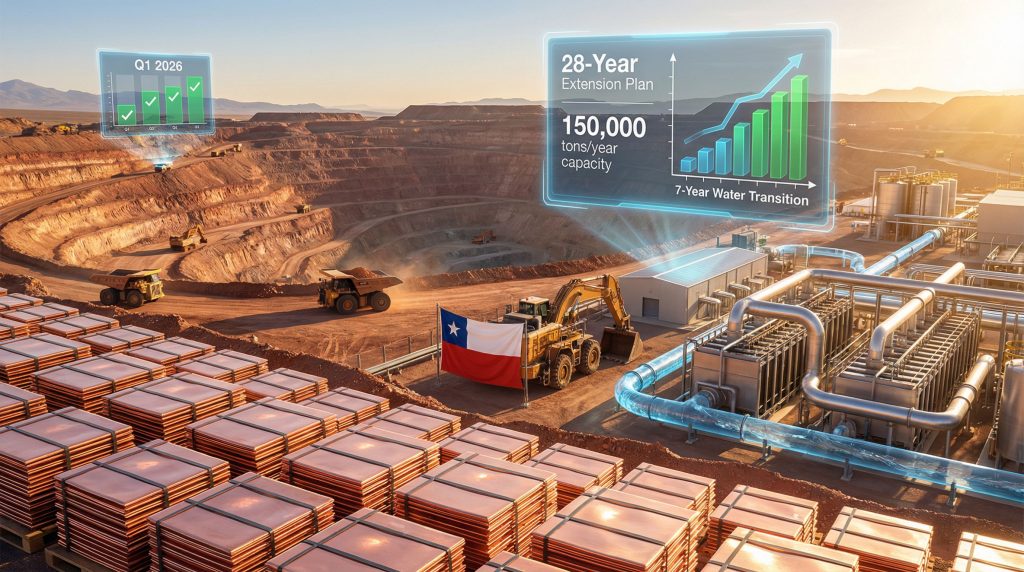
The operational continuity and water transition Gabriela Mistral mining division project stands as a testament to innovative planning in Chile's copper mining sector. Furthermore, this comprehensive initiative demonstrates how industry evolution trends are reshaping traditional extraction models. In addition, the project's approach to balancing production targets with environmental stewardship reflects broader green transition strategies emerging across the mining industry.
How Does Extended Mine Life Planning Transform Chile's Copper Production Landscape?
The transformation of Chile's copper production landscape through extended mine life planning represents a paradigm shift from traditional extraction models. Mining operations historically operated within 15-20 year cycles, but new strategic frameworks now contemplate operational extensions spanning multiple decades. This evolution reflects advances in geological assessment techniques, processing technologies, and resource optimization methodologies that enable economically viable extraction over extended timeframes.
Understanding the Strategic Framework Behind 28-Year Operational Extensions
Extended operational planning requires sophisticated geological modeling that accounts for ore grade variability across 28-year timelines. The strategic framework encompasses multiple interconnected systems: resource evaluation protocols, infrastructure scalability assessments, and economic viability calculations that consider long-term commodity price cycles. However, copper price growth drivers continue to influence these calculations significantly.
Key Strategic Elements:
- Geological continuity assessment across extended time horizons
- Infrastructure adaptation planning for changing operational requirements
- Resource optimization strategies accommodating ore grade variations
- Economic modeling incorporating long-term market projections
The operational continuity and water transition Gabriela Mistral mining division project exemplifies this strategic approach with its 28-year operational extension targeting 91.1 million tons per year processing capacity. This ambitious timeline requires careful coordination of extraction sequences, processing optimization, and infrastructure development to maintain operational continuity throughout the extended lifecycle.
Modern mining operations must also account for 21.4 kton variations in production volumes as ore grades decline over time. These fluctuations necessitate flexible processing systems capable of maintaining efficiency across varying ore quality parameters. Engineering teams develop adaptive extraction strategies that optimize recovery rates while managing operational costs throughout extended production cycles.
When big ASX news breaks, our subscribers know first
What Are the Critical Components of Modern Mining Water Transition Strategies?
Water management represents one of the most critical challenges facing extended mining operations, particularly in Chile's water-scarce northern regions. Modern water transition strategies require systematic approaches that balance operational continuity with environmental sustainability whilst ensuring regulatory compliance throughout extended operational periods.
Phased Water Source Migration in Resource-Intensive Operations
Phased water source migration strategies recognise that abrupt transitions create operational disruption and financial risk. The seven-year transition timeline employed in modern mining operations allows for gradual adaptation of systems, supply chain arrangements, and operational procedures. This approach minimises production interruptions whilst enabling thorough evaluation of alternative water sources.
Critical Transition Components:
- Well-based extraction systems continuing through initial operational years
- Third-party supply integration beginning in year 9 of operation
- Quality assurance protocols ensuring consistency across water sources
- Environmental compliance frameworks governing source transitions
The transition from well-based water extraction to third-party suppliers involves complex technical considerations. Mining operations must evaluate water quality parameters, treatment requirements, and delivery logistics whilst maintaining production targets. Engineering teams develop integration protocols that ensure seamless transitions without compromising processing efficiency or environmental compliance.
Modern mining operations in the Antofagasta Region face unique challenges due to extreme water scarcity. The transition to environmentally assessed third-party suppliers by 2036 represents recognition that diversified water sourcing strategies enhance operational resilience. This approach reduces dependence on single water sources whilst providing flexibility to adapt to changing environmental conditions.
Third-Party Water Supply Integration for Large-Scale Mining
Integration of third-party water suppliers into mining operations requires sophisticated technical coordination and contractual frameworks. Mining operations must establish quality control protocols, supply chain reliability metrics, and backup systems to ensure uninterrupted production throughout extended operational cycles.
Integration Requirements:
- Supply chain coordination for reliable water delivery
- Quality standardisation protocols across multiple suppliers
- Backup system specifications for supply interruption scenarios
- Cost optimisation strategies balancing reliability with economic efficiency
The requirement for authorised and environmentally assessed third-party suppliers indicates Chile's regulatory framework demands comprehensive environmental due diligence for water sourcing decisions. This regulatory approach prevents mining operations from transferring environmental impacts to unvetted suppliers whilst ensuring sustainable water management practices.
Technical integration challenges include water treatment system modifications, delivery infrastructure development, and quality control testing protocols. Mining operations must establish monitoring systems capable of detecting quality variations and implementing corrective measures to maintain processing efficiency.
How Do Sodium Chloride Processing Innovations Enhance Copper Recovery Rates?
Sodium chloride processing represents a significant technological advancement in copper extraction, offering enhanced recovery rates for previously uneconomical ore bodies. This innovation enables mining operations to extract value from lower-grade materials whilst extending the economic life of existing deposits.
Advanced Leaching Technologies in Modern Copper Extraction
Sodium chloride-enhanced leaching technologies revolutionise copper extraction by improving dissolution rates and recovery efficiency. The implementation timeline beginning in 2035 reflects strategic planning that coordinates technology deployment with operational readiness and infrastructure development.
Key Technology Components:
- Chemical process optimisation for leachable mineral extraction
- Enhanced dissolution rates improving copper recovery efficiency
- Integrated system design coordinating leaching with electrowinning processes
- Environmental management protocols for byproduct handling
The deliberate delay of sodium chloride implementation until year 7 of operation suggests economic analysis determined that accumulated capital from extended operations justifies infrastructure investment in advanced processing technologies. This timing indicates that processing technology innovation becomes economically viable later in extended operational periods.
Technical implementation requires modifications to existing processing systems, including electrowinning facility upgrades and integration protocols. Mining operations must coordinate construction activities with ongoing production to minimise operational disruptions whilst implementing advanced processing technologies.
Brine Plant Construction and Integration Requirements
Brine plant construction represents a critical component of sodium chloride processing implementation. The 150,000 tons per year production capacity must integrate seamlessly with existing processing infrastructure whilst providing operational flexibility for extended production cycles.
Construction Specifications:
- Production capacity planning for 150,000 tons annually
- Integration protocols with existing electrowinning systems
- Construction timeline coordination with ongoing operations
- Operational safety measures for concurrent construction and production
| Brine Plant Specifications | Target Metrics |
|---|---|
| Annual Production Capacity | 150,000 tons |
| Implementation Year | 2035 (Year 7) |
| Integration Requirement | Electrowinning facility |
| Construction Period | Years 1-6 |
The construction timeline requires sophisticated project management to coordinate equipment installation, system integration, and operational testing whilst maintaining production targets. Engineering teams must develop construction protocols that minimise interference with ongoing mining operations.
Technical integration challenges include process flow optimisation, equipment compatibility assessment, and quality control system development. The brine plant must operate in coordination with existing processing facilities to maintain overall production efficiency throughout the extended operational cycle.
What Environmental Assessment Protocols Govern Large-Scale Mining Extensions?
Environmental assessment protocols for large-scale mining extensions require comprehensive evaluation frameworks that address long-term environmental impacts, stakeholder engagement processes, and regulatory compliance throughout extended operational periods.
Regulatory Framework Analysis for Mining Project Expansions
Chile's regulatory framework governing mining project expansions emphasises environmental due diligence and stakeholder participation. The requirement for environmental assessment of third-party water suppliers demonstrates the comprehensive scope of regulatory oversight extending beyond direct operational activities. Moreover, this framework aligns with sustainable mining transformation practices being implemented across the region.
Regulatory Components:
- Environmental impact assessment requirements for project modifications
- Stakeholder engagement protocols ensuring community participation
- Regulatory authority oversight from regional environmental agencies
- Compliance monitoring throughout extended operational periods
The environmental review process for major mining projects in Chile demonstrates the comprehensive nature of regulatory oversight. Environmental assessment protocols in Chile's mining sector have evolved to address long-term sustainability concerns whilst balancing economic development objectives with environmental protection requirements.
The regulatory framework requires mining operations to demonstrate environmental stewardship throughout extended operational cycles. This includes impact mitigation strategies, compensation frameworks, and long-term monitoring protocols that ensure environmental protection throughout 28-year operational extensions.
Mitigation Strategy Development for Mining Operations
Mitigation strategy development requires systematic identification of potential environmental impacts and development of comprehensive response protocols. Mining operations must establish monitoring systems, impact assessment methodologies, and corrective action procedures to ensure environmental compliance throughout extended operational periods.
Mitigation Framework Elements:
- Impact identification methodologies for long-term operations
- Mitigation strategy development addressing identified risks
- Compensation framework design for unavoidable environmental impacts
- Long-term monitoring protocols ensuring ongoing compliance
Environmental mitigation strategies must account for cumulative impacts over extended timeframes. Mining operations develop adaptive management approaches that enable response to changing environmental conditions whilst maintaining operational continuity throughout 28-year operational cycles.
How Does Production Optimisation Address Grade Decline Challenges?
Production optimisation strategies become increasingly critical as mining operations face grade decline challenges throughout extended operational periods. Technical solutions must address ore grade variability whilst maintaining production targets and operational efficiency.
Technical Solutions for Managing Ore Grade Variability
Managing ore grade variability requires sophisticated processing adjustments and recovery enhancement techniques. Mining operations must develop adaptive processing protocols capable of maintaining efficiency across varying ore quality parameters throughout extended production cycles.
Optimisation Strategies:
- Processing efficiency improvements accommodating grade variations
- Recovery rate optimisation maximising extraction from lower-grade ores
- Equipment adaptation for varying ore characteristics
- Quality control enhancement ensuring consistent output standards
The 21.4 kton variations in production volumes reflect the challenges of managing declining ore grades throughout extended operational periods. Mining operations develop flexible processing systems capable of maintaining efficiency whilst adapting to changing ore characteristics.
Technical solutions include processing parameter optimisation, equipment modification protocols, and quality assurance systems that ensure consistent output despite varying input materials. Engineering teams continuously refine processing methodologies to maximise recovery rates from increasingly challenging ore bodies.
Operational Continuity During Transition Periods
Maintaining operational continuity during major transitions requires careful coordination of equipment modifications, process optimisation, and quality control systems. Mining operations must balance innovation implementation with production target maintenance throughout extended operational cycles.
Continuity Maintenance Elements:
- Production target preservation during system modifications
- Equipment integration protocols minimising operational disruptions
- Process optimisation coordination across multiple system components
- Quality control maintenance ensuring output consistency
The maintenance of 91.1 million tons per year processing capacity throughout transition periods requires sophisticated project management and technical coordination. Mining operations develop implementation protocols that enable technology upgrades whilst preserving operational efficiency.
What Investment Implications Emerge from Extended Mining Operations?
Extended mining operations create complex investment implications that require comprehensive financial analysis and strategic capital allocation. Investment frameworks must account for long-term return optimisation, infrastructure development requirements, and technology upgrade capital needs throughout extended operational cycles. Additionally, investment strategy components become increasingly important when planning such extended operational timelines.
Capital Allocation Strategies for Long-Term Mining Projects
Capital allocation strategies for 28-year operational extensions require sophisticated financial modelling that accounts for commodity price cycles, operational cost projections, and infrastructure development requirements. Investment frameworks must balance immediate capital needs with long-term return optimisation throughout extended operational periods.
Investment Considerations:
- Infrastructure development capital requirements
- Technology upgrade investment planning
- Operational cost projections over extended timelines
- Return optimisation strategies for long-term investments
| Investment Categories | Timeline Considerations |
|---|---|
| Infrastructure Upgrades | Years 1-6 |
| Technology Implementation | Year 7 (2035) |
| Water Transition Systems | Years 1-9 |
| Production Optimisation | Ongoing |
Financial modelling for extended mining operations must account for technological evolution, regulatory changes, and market dynamics that affect long-term profitability. Investment strategies require flexibility to adapt to changing conditions whilst maintaining operational efficiency throughout extended cycles.
Regional Economic Impact of Extended Mining Operations
Extended mining operations generate significant regional economic impacts through employment creation, infrastructure development, and supply chain economic effects. The 28-year operational extension in the Antofagasta Region creates long-term economic stability whilst supporting regional development initiatives.
Economic Impact Areas:
- Employment generation throughout extended operational periods
- Infrastructure development supporting regional growth
- Supply chain effects benefiting local businesses
- Community development contributions and investment
Long-term mining operations provide economic stability that enables regional planning and infrastructure investment. Extended operational commitments support workforce development, educational initiatives, and community infrastructure projects that benefit regional development throughout extended operational cycles.
The next major ASX story will hit our subscribers first
How Do Water Management Innovations Support Mining Sustainability?
Water management innovations represent critical components of sustainable mining operations, particularly in water-scarce environments. Comprehensive water management strategies encompass conservation technologies, recycling systems, and alternative sourcing approaches that ensure long-term operational sustainability.
Integrated Water Management Systems in Arid Mining Regions
Integrated water management systems address the unique challenges of mining operations in arid environments through conservation technology implementation, recycling system optimisation, and alternative water source development. These systems must operate efficiently throughout 28-year operational extensions whilst maintaining environmental compliance.
Management System Components:
- Water conservation technology implementation and optimisation
- Recycling system development maximising water reuse efficiency
- Alternative sourcing strategies reducing dependence on primary sources
- Sustainability metrics tracking long-term water use efficiency
The transition from well-based extraction to third-party supply by 2036 exemplifies integrated water management approaches that enhance operational resilience. This strategy reduces dependence on single water sources whilst providing operational flexibility throughout extended production cycles. The Chilean government's commitment to participatory environmental assessment processes ensures these transitions meet regulatory requirements.
Technical integration of water management systems requires coordination of conservation technologies, treatment facilities, and distribution networks. Mining operations develop comprehensive water balance protocols that optimise usage efficiency whilst maintaining production targets throughout extended operational periods.
Future-Proofing Water Supply for Mining Operations
Future-proofing water supply strategies address climate adaptation, supply diversification, and technology innovation integration. Mining operations must develop resilient water management frameworks capable of adapting to changing environmental conditions throughout extended operational timelines.
Future-Proofing Elements:
- Climate adaptation strategies addressing long-term environmental changes
- Supply diversification approaches reducing operational risk
- Technology innovation integration improving water use efficiency
- Risk mitigation frameworks ensuring supply security
The seven-year water transition timeline provides operational flexibility to adapt to changing water availability conditions. This approach enables mining operations to evaluate alternative water sources whilst maintaining production continuity throughout transition periods.
What Lessons Can Other Mining Operations Learn from This Approach?
The comprehensive approach to extended mine life planning, water transition strategies, and production optimisation provides valuable lessons for mining operations worldwide. Transferable methodologies and best practices can be adapted to diverse operational contexts whilst maintaining environmental sustainability and economic viability.
Scalable Frameworks for Mining Operation Extensions
Scalable frameworks derived from extended mining operation approaches include replicable planning methodologies, technology transfer opportunities, and regulatory compliance strategies. These frameworks can be adapted to diverse geological, environmental, and regulatory contexts whilst maintaining operational effectiveness.
Transferable Methodologies:
- Systematic planning approaches for extended operational cycles
- Technology integration protocols coordinating multiple system components
- Regulatory compliance frameworks ensuring environmental stewardship
- Stakeholder engagement strategies supporting community acceptance
The integration of operational continuity and water transition Gabriela Mistral mining division project strategies demonstrates comprehensive approaches to long-term mining sustainability. These methodologies provide blueprints for other mining operations seeking to extend operational lifecycles whilst maintaining environmental compliance and community support.
Best practice frameworks emphasise gradual transition implementation, comprehensive environmental assessment, and stakeholder engagement throughout extended operational periods. These approaches balance operational requirements with environmental sustainability and community development objectives.
Disclaimer: This analysis is based on publicly available project information and industry best practices. Actual project outcomes may vary based on geological conditions, regulatory changes, and market dynamics. Readers should conduct independent research and consult qualified professionals before making investment or operational decisions.
Looking to Stay Ahead of Mining Investment Opportunities?
Discovery Alert provides instant notifications on significant ASX mineral discoveries, powered by its proprietary Discovery IQ model, helping investors identify actionable opportunities in mining companies before they hit mainstream attention. Explore historic examples of major mineral discoveries that have generated substantial returns, or begin your 14-day free trial today to position yourself ahead of the market.