
June 6, 2026
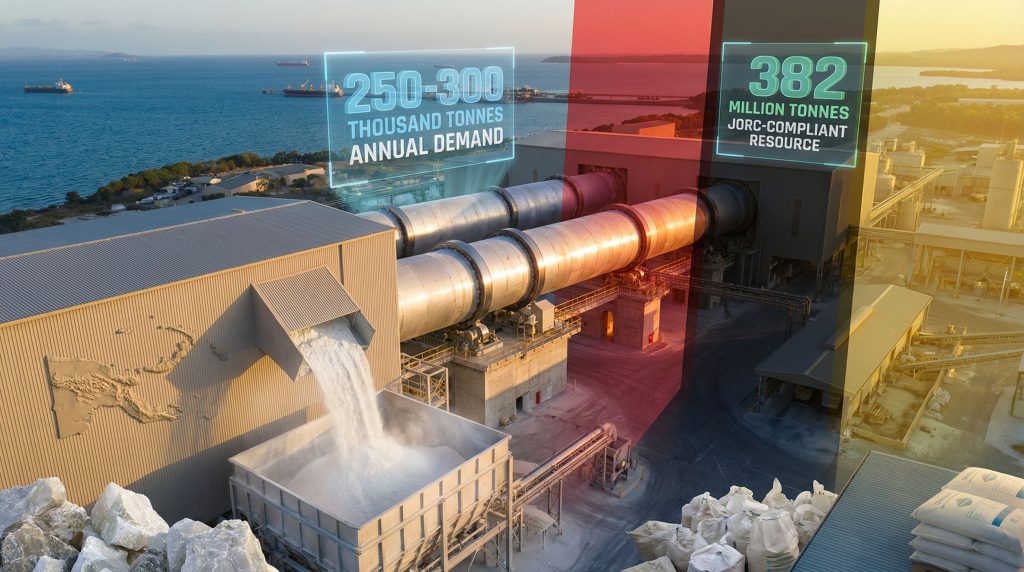
Pacific Lime quicklime offtake Newmont Papua New Guinea represents a transformative shift in the nation's industrial landscape as domestic manufacturing capabilities emerge to challenge decades of import dependency. The nation's mining sector, which generates billions in export revenue annually, has historically relied on international suppliers for critical processing chemicals, creating vulnerabilities that extend far beyond simple cost considerations. This dependency creates complex logistics chains spanning thousands of nautical miles, exposing operations to shipping disruptions, currency fluctuations, and inventory management challenges that can significantly impact production schedules.
The strategic importance of establishing local industrial capacity becomes particularly evident when examining the specialized chemical requirements of gold and copper processing operations. These facilities require consistent, high-grade industrial inputs that meet stringent metallurgical specifications, making supply chain reliability a critical operational parameter rather than merely a procurement optimization opportunity.
Understanding Papua New Guinea's Critical Quicklime Supply Dynamics
Essential Role in Metallurgical Processing Operations
Papua New Guinea's mining industry operates some of the world's most significant gold and copper extraction facilities, each requiring substantial volumes of quicklime for optimal processing efficiency. The chemical serves multiple critical functions in metallurgical operations, including pH adjustment during ore processing, flotation enhancement for mineral separation, and neutralization processes for environmental compliance.
Current market analysis indicates that PNG's mining operations consume an estimated 250,000 to 300,000 tonnes of quicklime annually across all active sites. This substantial demand has historically been met entirely through imports, creating a complete dependency on international suppliers located primarily in Australia and Southeast Asia.
The technical specifications required for mining-grade quicklime are particularly stringent, demanding:
- Chemical purity levels exceeding 90% calcium oxide content
- Specific particle size distributions optimized for processing equipment
- Reactivity parameters meeting metallurgical performance standards
- Consistent moisture content to prevent handling complications
Import Replacement Economics and Supply Chain Vulnerabilities
PNG's complete reliance on imported quicklime creates significant economic and operational challenges that extend well beyond simple procurement costs. International shipping routes from traditional suppliers involve complex logistics networks spanning 2,000 to 4,000 nautical miles, creating multiple vulnerability points that can disrupt mining operations.
The current import-based supply model presents several critical challenges:
| Challenge Category | Impact | Risk Level |
|---|---|---|
| Shipping Disruptions | Production delays, inventory shortages | High |
| Currency Fluctuation | Unpredictable cost variations | Medium |
| Quality Consistency | Variable product specifications | Medium |
| Emergency Supply | Limited rapid response capability | High |
Industry analysis suggests that domestic production could potentially achieve cost reductions of up to 75% compared to imported alternatives when factoring in freight, insurance, handling, and inventory carrying costs. These savings stem primarily from eliminating international shipping expenses, which can account for 40-60% of the delivered cost of bulk industrial chemicals in Pacific island markets.
Furthermore, understanding these export challenges insights provides valuable context for regional supply chain development strategies.
Market Demand Patterns and Growth Projections
Papua New Guinea's quicklime consumption patterns correlate directly with mining production cycles and expansion activities. Gold processing operations account for approximately 65% of total demand, with copper flotation processes representing 25%, and industrial applications comprising the remaining 10%.
Sector-Specific Consumption Analysis:
- Gold Operations: Lihir, Hidden Valley, Porgera (when operational)
- Copper Projects: Ok Tedi, Frieda River (under development)
- Industrial Uses: Water treatment, construction applications
- Emerging Demand: Wafi-Golpu joint venture development
The correlation between mining project development timelines and quicklime demand creates predictable growth patterns that support long-term domestic production planning. Major projects entering production phases typically require 6-12 months of inventory buildup, creating demand spikes that are difficult to manage through import-only supply chains.
When big ASX news breaks, our subscribers know first
Analyzing Pacific Lime's Central Lime Project Technical Framework
Production Infrastructure and Capacity Specifications
Brisbane-based Pacific Lime and Cement has developed a comprehensive industrial project designed to address PNG's quicklime supply gap through domestic manufacturing capabilities. The Central Lime project represents PNG's first large-scale quicklime production facility, strategically positioned to serve the nation's mining industry requirements.
The project's Stage 1 configuration incorporates dual rotary kilns, each rated at 600 tonnes per day (TPD) capacity, delivering a combined 1,200 TPD total nameplate capacity. This production level translates to approximately 438,000 tonnes annually at full operational capacity, significantly exceeding current domestic demand and creating potential for regional export opportunities.
Technical Infrastructure Components:
- Primary Crushing Systems: Processing raw limestone to kiln feed specifications
- Rotary Kiln Technology: High-temperature calcination at 900-1000°C
- Product Handling Systems: Automated storage and distribution facilities
- Quality Control Laboratory: Continuous product specification monitoring
- Environmental Controls: Dust suppression and emissions management
Strategic Location and Logistics Advantages
The project's location approximately 35 kilometers northwest of Port Moresby within a designated Special Economic Zone provides significant operational and economic advantages. This positioning optimizes access to both raw material resources and distribution networks while benefiting from special economic zone incentives and infrastructure support.
The coastal positioning delivers critical freight economics advantages compared to traditional Asian suppliers. Domestic distribution eliminates the need for:
- International shipping arrangements
- Complex customs clearance procedures
- Extended inventory holding periods
- Currency hedging requirements
- Multiple handling and transfer operations
Limestone Resource Base and Mining Operations
The project is underpinned by substantial limestone reserves that have been assessed according to JORC (Joint Ore Reserves Committee) standards, providing 382 million tonnes of JORC-compliant resources. This resource base supports a projected mine life exceeding 50 years at planned production rates, ensuring long-term supply security for PNG's mining industry.
The limestone deposits demonstrate favorable characteristics for quicklime production:
- High calcium carbonate content (>95% CaCO₃)
- Low impurity levels (silica, alumina, iron oxide)
- Consistent geological structure across the deposit
- Favorable strip ratios for cost-effective extraction
- Proximity to processing facilities minimizing transport costs
Examining the Strategic Value of Newmont's Cornerstone Offtake Commitment
Commercial Framework and Agreement Structure
Pacific Lime quicklime offtake Newmont Papua New Guinea represents a foundational partnership through a multi-year quicklime offtake agreement that establishes the mining major as a cornerstone customer for the Central Lime project. This agreement represents PNG's first large-scale commercial commitment to locally produced quicklime and validates the technical and commercial viability of domestic production.
Key Agreement Parameters:
| Component | Details |
|---|---|
| Contract Duration | Multi-year commitment (specific term confidential) |
| Volume Commitment | Approximately 33% of nameplate capacity (~146,000 tonnes annually) |
| Supply Commencement | Following construction completion and commissioning |
| Pricing Structure | Market-based with confidential commercial terms |
| Quality Standards | Tier-1 mining specifications |
The volume commitment of approximately one-third of nameplate capacity provides Pacific Lime with a solid foundation for project financing and development while ensuring Newmont secures priority access to domestic supply. At full production capacity of 1,200 TPD, this translates to approximately 400 TPD or 146,000 tonnes annually dedicated to Newmont operations.
Supply Chain Risk Mitigation and Operational Benefits
According to Newmont's strategic initiative, Newmont Lihir General Manager Dawid Pretorius emphasised that the offtake agreement represents a strategic approach to supply-chain resilience enhancement rather than simple cost optimisation. The domestic supply arrangement reduces Newmont's exposure to international logistics disruptions that have increasingly impacted global supply chains.
Risk Reduction Benefits:
- Elimination of shipping route vulnerabilities (Suez Canal, Malacca Strait)
- Reduced inventory holding requirements through flexible domestic delivery
- Enhanced supply security during regional disruptions
- Simplified procurement processes with direct supplier relationships
- Improved operational continuity through reliable local sourcing
The agreement also aligns with Newmont's environmental, social, and governance (ESG) objectives through reduced transport emissions and increased local value creation. International shipping of bulk chemicals generates significant carbon emissions, making domestic sourcing an important component of Scope 3 emissions reduction strategies.
Long-term Value Creation Philosophy
Newmont's approach to this partnership reflects a long-term value creation framework rather than opportunistic procurement optimisation. Dawid Pretorius emphasised that the agreement required significant time and effort to achieve an outcome delivering shared value for Newmont, partners, and the nation.
This strategic partnership approach demonstrates Newmont's commitment to supporting domestic industry development and recognising the broader social and economic benefits that flow from building local capability. The decade-long development timeline underscores the technical challenges involved in establishing mining-grade quicklime production capabilities in PNG market conditions.
Assessing Industrial Transformation Impact on Papua New Guinea's Economy
Local Value Creation and Employment Generation
The Central Lime project represents a significant step toward industrial import substitution in Papua New Guinea, with potential to replace tens of millions of dollars worth of annual quicklime imports. This shift from import dependency to domestic production creates multiple levels of economic benefit that extend beyond the immediate manufacturing operation.
However, this transformation aligns with broader industry evolution trends occurring throughout the Asia-Pacific region. Mining companies increasingly recognise the strategic value of developing robust local supply chains to mitigate global trade uncertainties.
Economic Impact Categories:
- Direct Employment: Construction and operational positions across skill levels
- Skills Development: Technical training programmes supporting capability building
- Business Opportunities: Local service provider engagement and procurement
- Government Revenue: Corporate taxation, payroll taxes, and royalty payments
- Foreign Exchange Savings: Reduced import expenditure and currency outflows
Pacific Lime and Cement Managing Director Paul Mulder highlighted that the project validates more than a decade of work to establish domestic quicklime production capabilities meeting Tier-1 mining standards while delivering strong economic, social and environmental outcomes for Papua New Guinea.
Precedent Setting for Industrial Development
As Papua New Guinea's first domestic quicklime manufacturing operation, the Central Lime project establishes important precedents for future industrial development initiatives. The successful implementation demonstrates the viability of large-scale industrial projects within PNG's regulatory and infrastructure environment.
Development Precedent Value:
- Investment Climate Validation: Proof of concept for foreign industrial investment
- Technical Capability Demonstration: Local workforce and infrastructure adequacy
- Regulatory Framework Testing: Government support for import substitution
- Supply Chain Development: Foundation for expanded industrial ecosystem
- Economic Diversification: Reduced dependency on raw material exports
The project's location within a Special Economic Zone provides a framework for future industrial development, potentially attracting complementary manufacturing operations that could benefit from similar incentive structures and infrastructure support.
Foundation for Expanded Industrial Capabilities
The establishment of quicklime production capability creates potential pathways for expanded mineral processing industries and value-added manufacturing. Quicklime serves as a foundational chemical input for numerous industrial processes, making domestic production a platform for downstream industrial development.
Potential Expansion Opportunities:
- Lime-based Chemical Manufacturing: Calcium hydroxide, calcium carbonate derivatives
- Water Treatment Solutions: Municipal and industrial water processing
- Construction Materials: Cement additives, soil stabilisation products
- Metallurgical Services: Specialised processing chemicals for mining operations
- Regional Export Hub: Pacific island market penetration strategies
Operational Advantages of Domestic Quicklime Production
Logistics Optimisation and Distribution Flexibility
Domestic quicklime production delivers significant operational advantages that extend beyond simple cost considerations. The elimination of complex international shipping arrangements allows mining operations to optimise inventory management and respond more effectively to production scheduling requirements.
Distribution Advantages:
- Flexible delivery scheduling aligned with operational requirements
- Reduced minimum order quantities compared to international suppliers
- Emergency supply capability for unplanned production increases
- Customised packaging options for specific handling equipment
- Direct technical support from production team to end users
The coastal positioning of the Central Lime project enables efficient distribution to PNG's major mining operations while maintaining export potential to regional Pacific markets. This dual-market capability provides operational flexibility and revenue diversification opportunities.
Quality Control and Product Customisation
Domestic production enables enhanced quality control compared to imported alternatives, with continuous monitoring and adjustment capabilities that ensure consistent product specifications. The proximity between production and consumption allows for real-time quality optimisation based on specific operational feedback from mining customers.
Quality Advantages:
- Consistent chemical composition through controlled production processes
- Optimised particle size distribution for specific processing equipment
- Customised reactivity levels meeting operational parameters
- Rapid quality issue resolution through direct producer relationships
- Continuous improvement based on customer operational experience
Pacific Lime's commitment to Tier-1 mining specifications ensures that domestic production meets the stringent requirements of international mining companies operating in PNG, eliminating concerns about product quality compared to established international suppliers.
Environmental and Social Benefits
The transition to domestic quicklime supply delivers measurable environmental benefits through reduced transportation emissions and social benefits through local employment and capability development. These advantages align with increasing corporate focus on Scope 3 emissions reduction and social licence to operate considerations.
Environmental Impact Reduction:
- Significant reduction in transport emissions from international shipping elimination
- Lower carbon footprint through shortened supply chains
- Reduced packaging waste from bulk domestic distribution
- Decreased marine pollution risk from cargo vessel operations
- Local environmental management under PNG regulatory framework
This aligns with broader decarbonisation benefits that mining companies are increasingly prioritising as part of their sustainability strategies.
Strategic Integration with Newmont's Papua New Guinea Operations
Alignment with Existing Asset Portfolio
Newmont Corporation operates significant gold mining assets in Papua New Guinea, with the Lihir gold operation representing one of the company's major Pacific production centres. The quicklime offtake agreement directly supports these operations while positioning Newmont for potential future project development in the region.
Newmont PNG Asset Portfolio:
- Lihir Gold Mine: Large-scale open-pit operation with significant quicklime requirements
- Wafi-Golpu Joint Venture: Potential future development requiring industrial chemical inputs
- Regional Exploration: Additional prospects that could benefit from domestic supply chains
- Technical Services: PNG-based operational support capabilities
The multi-year commitment structure provides Newmont with supply security while supporting long-term operational planning across its PNG asset base. This approach reflects the company's sustained commitment to PNG market participation rather than opportunistic investment.
Long-term Partnership Development Framework
Newmont Lihir General Manager Dawid Pretorius emphasised that the agreement represents more than short-term cost savings, requiring significant time and effort to achieve an outcome delivering shared value for Newmont, partners, and the nation. This philosophy suggests potential for expanded collaboration beyond the initial quicklime supply arrangement.
Partnership Evolution Potential:
- Additional chemical supply agreements for other processing inputs
- Joint venture opportunities in related industrial projects
- Technology transfer initiatives supporting local capability development
- Community development programmes aligned with shared value objectives
- Regional supply hub development for Pacific mining operations
The decade-long development timeline demonstrates both the complexity of establishing industrial capabilities in PNG and the sustained commitment required from all stakeholders to achieve successful outcomes.
The next major ASX story will hit our subscribers first
Market Dynamics Driving Quicklime Demand Growth
Mining Sector Consumption Patterns and Applications
Papua New Guinea's quicklime market is fundamentally driven by metallurgical processing requirements across the nation's mining operations. Gold processing activities account for the largest consumption segment, utilising quicklime for pH adjustment, flotation optimisation, and cyanide destruction processes essential for efficient ore processing.
Application-Specific Market Segmentation:
| Application | Primary Use | Market Share | Growth Trend |
|---|---|---|---|
| Gold Processing | pH control, flotation | 65% | Stable to growing |
| Copper Operations | Flotation, tailings treatment | 25% | Growing |
| Industrial Applications | Water treatment, construction | 10% | Steady growth |
The correlation between mining project development and quicklime demand creates predictable consumption patterns that support long-term supply planning. Major mining operations typically require 6-12 months of inventory buildup during commissioning phases, creating temporary demand spikes that challenge import-based supply models.
Regional Growth Projections and Market Expansion
Papua New Guinea's mining sector continues to attract international investment, with several major projects under development that will significantly increase quicklime consumption over the next decade. The Wafi-Golpu copper-gold project, developed by Newmont and Harmony Gold, represents a particularly significant future demand source.
Consequently, understanding tariff market impacts becomes increasingly important as these projects develop within evolving global trade frameworks.
Demand Growth Drivers:
- Wafi-Golpu Development: Potential 200,000+ tonnes annual gold equivalent production
- Frieda River Copper Project: Large-scale copper-gold operation under development
- Existing Operation Expansions: Capacity increases at current mining operations
- Infrastructure Development: Growing construction and industrial applications
- Regional Export Potential: Pacific island nations with emerging mining sectors
The regional export potential to neighbouring Pacific markets presents additional growth opportunities. Countries such as the Solomon Islands, Vanuatu, and Fiji currently import quicklime for mining and industrial applications, creating potential demand for PNG-based production.
Technical Challenges and Production Process Optimisation
Meeting Metallurgical Grade Specifications
Producing quicklime that meets Tier-1 mining specifications requires sophisticated process control and quality management systems. The technical requirements for mining-grade quicklime are significantly more stringent than industrial or agricultural applications, demanding consistent chemical composition, specific reactivity levels, and controlled particle size distributions.
Critical Production Parameters:
- Calcium oxide content: Minimum 90% CaO with low impurity levels
- Reactivity index: Optimised for specific flotation and pH adjustment applications
- Particle size distribution: Matched to customer processing equipment requirements
- Moisture content: Controlled to prevent handling and storage complications
- Chemical consistency: Minimal batch-to-batch variation
The limestone quality assessment and beneficiation processes are crucial for achieving these specifications. Pacific Lime's resource base demonstrates favourable characteristics including high calcium carbonate content and low impurity levels, providing a strong foundation for consistent product quality.
Environmental Compliance and Operational Integration
Modern quicklime production requires comprehensive environmental management systems addressing air emissions, dust control, and waste management. The Central Lime project's development within PNG's regulatory framework demonstrates technical feasibility of meeting international environmental standards while operating in Pacific island conditions.
Environmental Management Components:
- Emissions control systems for kiln operations
- Dust suppression technology throughout handling processes
- Water management systems for process and stormwater
- Waste rock management from limestone extraction
- Rehabilitation planning for quarry areas
The integration with Special Economic Zone infrastructure provides additional environmental and operational advantages through shared facilities and coordinated development approaches.
Regional Industrial Strategy Implications and Future Development
Manufacturing Capability Building and Technology Transfer
The Central Lime project represents a significant step in Papua New Guinea's industrial capability development, demonstrating the feasibility of large-scale manufacturing operations within the nation's economic and regulatory environment. The successful implementation provides a template for future industrial projects and validates PNG's capacity to support technology-intensive manufacturing.
Capability Development Benefits:
- Technical expertise development in industrial operations and maintenance
- Management systems implementation for quality control and safety
- Supply chain development for industrial equipment and services
- Regulatory framework validation for complex industrial projects
- Infrastructure utilisation of Special Economic Zone facilities
The technology transfer opportunities extend beyond the immediate project, creating potential for knowledge sharing frameworks that could benefit other industrial initiatives. The operational experience gained provides valuable insights for future project development across multiple industrial sectors.
Investment Climate Enhancement and Risk Mitigation
The successful development and operation of the Central Lime project serves as an important investment climate validation for Papua New Guinea, demonstrating the country's ability to support large-scale industrial investment while meeting international operational and environmental standards.
Investment Climate Indicators:
- Regulatory framework effectiveness for industrial development
- Infrastructure adequacy for complex manufacturing operations
- Workforce capability for technical and operational positions
- Government policy support for import substitution initiatives
- Commercial framework stability for long-term investment commitments
This precedent addresses risk perception issues that often challenge international investment in Pacific island manufacturing, providing concrete evidence of successful project implementation and sustainable operational capability.
Future Market Opportunities and Strategic Partnership Evolution
Production Capacity Expansion and Market Development
The Central Lime project's initial production capacity of 1,200 TPD provides substantial room for market growth while maintaining potential for capacity expansion as demand develops. The 50+ year mine life of the limestone resource base supports long-term expansion planning that could accommodate significant market development.
Expansion Opportunities:
- Additional kiln capacity for increased production volumes
- Product diversification into lime-based chemical manufacturing
- Regional export development to Pacific island markets
- Specialty product development for specific industrial applications
- Integrated processing facilities for value-added chemical production
The regional market penetration potential presents significant opportunities as Pacific island nations develop their mining and industrial sectors. Countries throughout Melanesia and Polynesia currently rely on distant suppliers for industrial chemicals, creating potential demand for PNG-based production.
Strategic Partnership Evolution and Collaboration Expansion
The foundation partnership between Pacific Lime and Newmont demonstrates potential for expanded collaboration frameworks that could encompass additional industrial inputs and joint venture opportunities in related processing technologies. The shared value approach emphasised by both companies suggests alignment for broader industrial development initiatives.
According to Pacific Lime's strategic outlook, the partnership model creates opportunities for expanding into complementary industrial sectors across the Pacific region.
Partnership Evolution Potential:
- Additional chemical supply agreements for other metallurgical inputs
- Joint technology development for specialised processing applications
- Community development partnerships supporting local capability building
- Regional supply hub collaboration for Pacific mining operations
- Research and development cooperation for process optimisation
The long-term value creation framework established through this partnership provides a model for sustainable industrial development that balances commercial objectives with social and environmental benefits, creating potential for replication across other sectors and projects.
These developments represent broader industrial transformation insights that are reshaping mining supply chains throughout the Asia-Pacific region.
Disclaimer: This analysis contains forward-looking projections and market assessments that involve inherent uncertainties. Production timelines, cost estimates, and market demand projections are subject to various risk factors including regulatory changes, market conditions, and operational challenges. Readers should conduct independent due diligence before making investment or business decisions based on this information.
The transformation of Papua New Guinea's industrial supply chains through domestic quicklime production represents more than a simple import substitution initiative. It demonstrates the potential for Pacific island nations to develop sophisticated manufacturing capabilities that serve both domestic and regional markets while creating sustainable economic value for all stakeholders involved in the development process.
Looking to Capitalise on Papua New Guinea's Industrial Transformation?
Discovery Alert's proprietary Discovery IQ model delivers instant notifications on significant ASX mineral discoveries, helping investors identify opportunities in companies developing critical industrial infrastructure like Pacific Lime's transformative quicklime project. Explore how historic discoveries generate substantial returns and begin your 14-day free trial today to position yourself ahead of the market in this rapidly evolving industrial landscape.