July 24, 2026
Understanding the Strategic Context Behind Pakistan's Mediation Proposal
Global energy security faces unprecedented challenges as geopolitical tensions escalate across critical maritime chokepoints. The interconnected nature of modern petroleum markets means that disruptions in strategic waterways can trigger cascading effects throughout the global economy. These vulnerabilities have become particularly evident as diplomatic initiatives emerge to address regional conflicts that threaten essential energy infrastructure. Furthermore, when Pakistan calls for 2-week halt to US-Iran war, it reflects the urgent need for immediate diplomatic intervention.
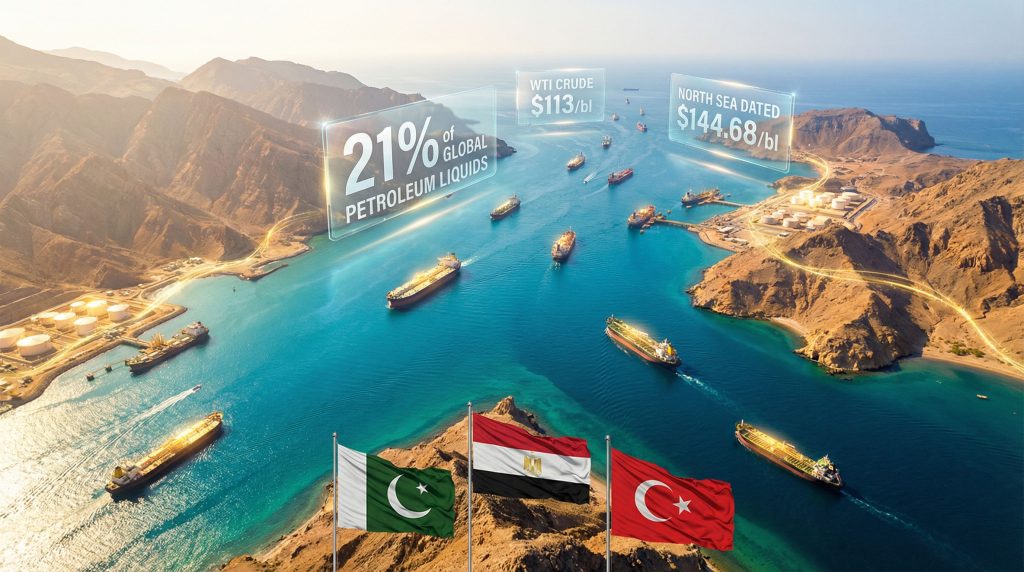
The Strait of Hormuz represents one of the world's most critical energy transit routes, with approximately 21% of global petroleum liquids passing through this narrow waterway daily. According to the U.S. Energy Information Administration, roughly 21 million barrels per day of crude oil and petroleum products traverse this strategic chokepoint, making it indispensable to global energy supply chains.
Regional powers have increasingly recognised that energy infrastructure protection requires multilateral diplomatic engagement. Pakistan's emergence as a potential mediator reflects broader trends in international relations, where middle powers leverage their non-aligned credentials to facilitate dialogue between major adversaries. This diplomatic positioning draws from Pakistan's historical experience in the Non-Aligned Movement and its maintenance of relationships across different geopolitical spheres.
Geographic and Economic Vulnerabilities
The Persian Gulf's strategic importance extends beyond simple transit volumes. The region contains approximately 48% of the world's proven crude oil reserves and produces roughly 28% of global crude oil output. This concentration creates what energy analysts describe as a "single point of failure" vulnerability in the global energy system.
The Strait of Hormuz itself measures only 54 kilometres at its widest point, with shipping lanes confined to approximately 2 kilometres in each direction. These narrow passages make the waterway particularly susceptible to disruption, whether through military action, maritime accidents, or deliberate closure.
Historical precedents demonstrate the fragility of Gulf energy systems. During the Iran-Iraq War's "Tanker War" phase (1987-1988), 540 merchant vessels were attacked, prompting international naval interventions including the U.S. Navy's "Operation Earnest Will" to escort Kuwaiti tankers.
When big ASX news breaks, our subscribers know first
What Are the Core Components of Diplomatic De-escalation Frameworks?
Contemporary conflict resolution mechanisms typically follow established international protocols developed through decades of peacekeeping experience. The United Nations Charter's Chapter VI outlines principles for pacific settlement of disputes that have influenced modern diplomatic frameworks.
Phased Implementation Structures:
• Immediate cessation periods (typically 14-30 days)
• Extended negotiation phases (30-60 days or longer)
• Verification and monitoring mechanisms
• Graduated confidence-building measures
The International Atomic Energy Agency (IAEA) has established comprehensive protocols for nuclear facility verification that could inform any diplomatic framework involving nuclear-capable nations. These standards include expanded inspection access, real-time monitoring capabilities, and graduated compliance measures.
Historical Diplomatic Models
The 2015 Joint Comprehensive Plan of Action (JCPOA) provides a recent example of complex multilateral negotiations involving nuclear verification. The agreement established phased sanctions relief matched with incremental compliance milestones, overseen by international monitoring bodies.
The Camp David Accords (1978) demonstrated how energy security considerations can be integrated into broader peace frameworks. Egypt and Israel agreed to navigate the Suez Canal and Strait of Tiran under international monitoring provisions, recognising energy infrastructure as a humanitarian priority.
Qatar's mediation efforts in regional conflicts, including hosting Afghan Taliban peace talks (2013-2020), illustrate how smaller nations with perceived neutrality can facilitate dialogue between major powers through sustained diplomatic engagement.
Why Are Energy Markets Responding So Dramatically to Diplomatic Developments?
Energy commodity markets exhibit extreme sensitivity to geopolitical developments due to the inelastic nature of petroleum demand and the concentration of production in politically volatile regions. Price discovery mechanisms in crude oil futures markets immediately reflect anticipated supply disruptions, often producing volatility that exceeds the actual physical impact of events. In addition, various oil price rally factors contribute to market instability during times of international tension.
Market Structure and Price Discovery
Primary Crude Oil Benchmarks:
| Benchmark | Geographic Coverage | Daily Volume | Price Sensitivity |
|---|---|---|---|
| West Texas Intermediate (WTI) | North American markets | ~1.2 million contracts | High volatility during Middle East crises |
| Brent Dated | Global standard | ~0.8 million contracts | Primary international benchmark |
| Dubai/Oman | Asian markets | ~200,000 contracts | Regional Middle East premium |
The futures market structure amplifies price movements through leveraged positions and algorithmic trading systems that respond instantaneously to geopolitical news. During the 2019 attack on Saudi Aramco's Abqaiq facility, Brent crude prices spiked 15% in a single trading session, despite the relatively brief duration of the production disruption.
Historical Price Response Patterns
Previous Middle East Conflicts and Oil Price Impacts:
• 1990-1991 Gulf War: Oil prices surged from approximately $15/barrel to $40/barrel
• 2011 Libyan Crisis: Disruption of 1.6 million bpd caused prices to reach $120/barrel
• 2022 Russia-Ukraine Conflict: Brent crude climbed from $94/barrel to $139/barrel within six months
These historical examples demonstrate that markets often overreact to initial crisis signals, then adjust as actual supply impacts become clearer. However, the strategic importance of the Strait of Hormuz means that any credible threat to this chokepoint generates sustained market premium. Consequently, concerns about US oil production decline add another layer of complexity to market dynamics.
Strategic Petroleum Reserve Dynamics
National strategic petroleum reserves play a crucial role in market stabilisation during crisis periods. The United States maintains approximately 714 million barrels in its Strategic Petroleum Reserve, while International Energy Agency members collectively hold 1.55 billion barrels in emergency stocks.
Reserve releases can moderate price spikes but cannot fully substitute for major supply disruptions. The 2022 coordinated release of 240 million barrels from global strategic reserves helped temper oil price increases but did not eliminate the geopolitical risk premium.
How Do Regional Powers Factor Into the Mediation Process?
Middle Eastern diplomatic networks reflect complex historical relationships and competing strategic interests. Effective mediation requires understanding these multilayered dynamics and identifying nations with sufficient credibility among all parties to facilitate meaningful dialogue. Moreover, when Pakistan calls for 2-week halt to US-Iran war, it demonstrates how emerging regional powers can provide alternative diplomatic pathways.
Regional Power Capabilities and Constraints
Pakistan's Diplomatic Position:
• Population: Approximately 230 million
• Nuclear Status: ~170 nuclear warheads (Stockholm International Peace Research Institute, 2024)
• Strategic Relationships: Maintains diplomatic ties with both Western allies and regional powers
• Geographic Position: Borders Iran and Afghanistan, providing regional influence
Egypt's Strategic Assets:
• Suez Canal Control: Approximately 12% of global trade passes through Egyptian-controlled waterways
• Regional Legitimacy: Arab League member with established diplomatic credentials
• Military Capability: Significant regional military presence and peacekeeping experience
Turkey's Bridging Role:
• NATO Membership: Western alliance participation combined with regional engagement
• Strategic Waterway Control: Bosporus Strait management experience
• Regional Military Presence: Active involvement in Syria, Iraq, and Eastern Mediterranean
Third-Party Mediation Effectiveness
Research by the RAND Corporation on international conflict mediation indicates that successful third-party intervention requires several key characteristics:
• Perceived Neutrality: Mediators must maintain credibility with all parties
• Resource Availability: Financial and logistical capacity for sustained engagement
• Regional Knowledge: Deep understanding of cultural and political dynamics
• International Support: Backing from major powers to ensure implementation
Historical analysis suggests that middle powers often prove more effective mediators than superpowers, as they are perceived as less likely to pursue narrow self-interest in negotiated outcomes. According to Pakistan's latest diplomatic initiative, this principle appears to be guiding current mediation efforts.
What Are the Technical Challenges in Implementing Maritime Security Protocols?
Restoring normal shipping operations through contested waterways involves complex logistical and security considerations that extend far beyond initial ceasefire agreements. Maritime security experts identify multiple technical challenges that must be addressed systematically.
Mine Clearance and Navigation Safety
Explosive Ordnance Disposal Requirements:
• Detection Systems: Side-scan sonar and magnetic anomaly detectors
• Clearance Vessels: Specialised mine countermeasures ships
• Diving Operations: Human divers for complex ordnance removal
• Timeline: Comprehensive clearance typically requires 2-6 weeks depending on area size
The shallow waters of the Strait of Hormuz present particular challenges for mine clearance operations. Water depths range from 25-100 metres, allowing for multiple mine deployment techniques that complicate detection and removal efforts.
Vessel Traffic Management Systems
Shipping Lane Coordination:
• Traffic Separation Schemes: Established by International Maritime Organisation
• Pilot Services: Local maritime expertise for safe navigation
• Communication Protocols: VHF radio and satellite tracking systems
• Emergency Response: Search and rescue capabilities
Normal Strait of Hormuz operations involve approximately 40-50 vessel transits daily, requiring sophisticated traffic management to prevent collisions and maintain efficient flow.
Insurance Market Restoration
War risk insurance premiums represent a critical factor in shipping economic viability. During periods of heightened tension, insurance costs can increase from typical levels of $25,000-$50,000 per transit to $500,000 or higher.
Lloyd's of London and other major maritime insurers require specific security conditions before reducing premiums to normal levels:
• Naval Escort Availability: Military vessels providing protection
• Communication Systems: Real-time tracking and emergency contact capabilities
• Port Security: Adequate protection at loading and discharge facilities
• Political Risk Assessment: Stable diplomatic environment
Which Energy Infrastructure Remains Most Vulnerable?
Regional energy infrastructure vulnerability analysis reveals multiple critical nodes that could significantly impact global supply chains. Understanding these vulnerabilities helps assess the potential scope and duration of supply disruptions. Furthermore, OPEC production impact remains a key concern for market stability during periods of regional instability.
Primary Production Facilities
Saudi Aramco Infrastructure:
• Production Capacity: 12.3 million barrels per day
• Key Facilities: Ghawar, Safaniya, and Shaybah oil fields
• Processing Centres: Abqaiq stabilisation plant, Ras Tanura refinery
• Strategic Significance: Largest global oil production system
The 2019 drone attacks on Abqaiq demonstrated the vulnerability of centralised processing facilities. This single facility processes approximately 5.7 million barrels per day, representing nearly 6% of global oil production.
UAE Port Infrastructure:
• Fujairah Port: Strategic storage hub for 45 million barrels of crude oil and products
• Jebel Ali Port: Major container and energy facility
• Pipeline Networks: Abu Dhabi Crude Oil Pipeline bypassing Strait of Hormuz
• Storage Capacity: Combined tankage exceeding 200 million barrels
Alternative Export Routes
Red Sea Maritime Corridor:
• Yanbu Terminal: Saudi Arabia's Red Sea oil loading facility
• SUMED Pipeline: Egypt's Suez-Mediterranean connection
• Capacity Limitations: Cannot fully substitute for Gulf exports
• Security Considerations: Bab-el-Mandeb strait vulnerability
The East-West Pipeline connecting Saudi oil fields to Yanbu provides alternative routing for approximately 5 million barrels per day, though this represents only partial redundancy for total Gulf production.
Regional Pipeline Networks
Trans-Arabian Pipeline System:
| Pipeline | Capacity (bpd) | Route | Strategic Significance |
|---|---|---|---|
| East-West | 5,000,000 | Eastern Province to Red Sea | Primary Strait bypass |
| Iraq-Turkey | 1,650,000 | Kirkuk to Ceyhan | Northern Iraq exports |
| Baku-Batumi | 240,000 | Azerbaijan to Georgia | Caspian Sea access |
These pipeline systems provide partial alternatives to maritime routing but cannot fully compensate for Strait of Hormuz closure due to limited capacity and geographic constraints.
The next major ASX story will hit our subscribers first
How Might Extended Negotiations Address Underlying Nuclear Concerns?
Nuclear verification protocols represent one of the most technically complex aspects of any comprehensive diplomatic settlement. The International Atomic Energy Agency has developed sophisticated monitoring systems that could be adapted for expanded oversight responsibilities. However, uranium market volatility continues to affect global nuclear fuel supply chains.
IAEA Verification Capabilities
Current Monitoring Technologies:
• Surveillance Systems: Remote monitoring cameras and sensors
• Environmental Sampling: Detection of nuclear material traces
• Containment/Surveillance Seals: Tamper-evident security measures
• Inspector Access: Regular and challenge inspection protocols
The IAEA's experience with the 2015 Iran nuclear agreement provides a framework for expanded verification. During peak implementation, the agency conducted approximately 100 inspection days annually across multiple Iranian nuclear facilities.
Uranium Enrichment Monitoring
Technical Constraints and Verification:
• Enrichment Levels: Distinction between civilian (3.67%) and weapons-grade (90%+) uranium
• Centrifuge Operations: Monitoring of enrichment equipment and capacity
• Stockpile Limits: Quantitative restrictions on enriched uranium storage
• Research Activities: Oversight of nuclear research and development programmes
Modern centrifuge technology allows rapid transitions between enrichment levels, requiring continuous rather than periodic monitoring to ensure compliance with any agreement limitations.
Sanctions Relief Mechanisms
Graduated Economic Incentives:
• Banking Sector Access: Restoration of SWIFT connectivity and correspondent banking
• Energy Sector Investment: International participation in oil and gas projects
• Technology Transfer: Access to civilian nuclear technology and equipment
• Asset Releases: Unfreezing of frozen government and central bank assets
The European Union's "blocking statute" mechanism, developed during previous Iran sanctions, provides a legal framework for protecting European companies from secondary sanctions while maintaining diplomatic engagement.
What Historical Precedents Exist for Energy-Focused Diplomatic Interventions?
Historical analysis of energy-related diplomatic interventions reveals common patterns and critical success factors. These precedents provide insights into potential frameworks for contemporary conflict resolution.
The Suez Canal Crisis (1956) and Resolution
International Intervention Mechanisms:
• UN Emergency Force: First large-scale UN peacekeeping deployment
• International Administration: Temporary oversight of critical infrastructure
• Economic Pressure: Coordinated international responses to unilateral action
• Long-term Settlement: Restoration of international navigation rights
The Suez crisis established important precedents for international intervention in energy infrastructure disputes, including the principle that critical waterways should remain open for international commerce regardless of bilateral political disputes.
The Tanker War (1987-1988) and "Reflagging"
Operation Earnest Will:
• Naval Escort Operations: US Navy protection for Kuwaiti tankers
• International Coordination: Multiple nations providing maritime security
• Insurance Market Support: Government backing for commercial shipping
• Diplomatic Parallel Track: Sustained negotiations alongside military protection
This operation demonstrated that military and diplomatic approaches could operate simultaneously, with naval escorts providing immediate security while broader diplomatic efforts addressed underlying conflicts.
The 1973 Oil Embargo and Strategic Reserve Creation
Policy Responses to Supply Disruption:
• Strategic Petroleum Reserves: National emergency stockpile systems
• International Energy Agency: Coordinated emergency response capabilities
• Supply Diversification: Reduced dependence on single regions or suppliers
• Energy Efficiency Programmes: Demand-side management during crises
The 1973-74 Arab oil embargo fundamentally changed international energy security thinking, leading to institutional innovations that continue to influence crisis response mechanisms today.
Why Are Market Participants Sceptical of Short-Term Solutions?
Energy market psychology reflects deep-seated concerns about the sustainability of temporary diplomatic arrangements. Traders and institutional investors apply risk premiums that account for the possibility of renewed conflict even during periods of apparent stability. When Pakistan calls for 2-week halt to US-Iran war, markets remain cautious about the long-term viability of such initiatives.
Structural vs. Cyclical Risk Assessment
Fundamental Market Concerns:
• Underlying Tensions: Root causes of conflicts often remain unaddressed in temporary agreements
• Infrastructure Vulnerability: Physical assets remain exposed to future disruption
• Enforcement Mechanisms: Limited international capacity for ensuring long-term compliance
• Alternative Scenarios: Market pricing must account for agreement breakdown possibilities
Financial markets typically maintain elevated risk premiums for 6-12 months following initial diplomatic agreements, gradually reducing premiums only as sustained compliance is demonstrated.
Investment Decision-Making Under Uncertainty
Capital Allocation Considerations:
• Long-term Infrastructure Projects: Energy investments often require 10-20 year payback periods
• Political Risk Insurance: Specialised insurance products for sovereign and conflict risks
• Supply Chain Resilience: Diversification strategies to reduce single-point-of-failure exposure
• Scenario Planning: Multiple potential outcomes incorporated into investment models
Major energy companies typically require political risk insurance coverage for investments in regions with recent conflict history, adding 2-5% to project costs depending on perceived stability.
Alternative Supply Development
Strategic Diversification Initiatives:
• Pipeline Route Alternatives: Development of bypass infrastructure requiring 5-10 years
• LNG Terminal Expansion: Increased liquefied natural gas shipping capacity
• Renewable Energy Acceleration: Reduced dependence on petroleum imports
• Strategic Reserve Expansion: Enhanced emergency stockpile capabilities
The European Union's experience following the 2022 Russia-Ukraine conflict demonstrates both the urgency and challenges of rapid energy supply diversification. Despite massive policy support, achieving meaningful supply chain changes required 18-24 months of sustained effort. Consequently, countries facing energy transition challenges must balance immediate security needs with long-term sustainability goals.
How Could This Diplomatic Model Influence Future Energy Conflicts?
Contemporary diplomatic innovations may establish important precedents for managing energy-related international disputes. The evolution of international law and diplomatic practice often occurs through specific case studies that later become generalised principles.
Emerging Diplomatic Frameworks
Third-Party Mediation Evolution:
• Middle Power Leadership: Non-aligned nations playing enhanced mediation roles
• Phased Implementation: Graduated confidence-building measures with measurable benchmarks
• Infrastructure Protection Principles: Energy facilities treated as civilian/humanitarian priorities
• Market Stability Integration: Economic considerations formally incorporated into diplomatic frameworks
The increasing complexity of global energy systems may require more sophisticated diplomatic tools that account for interconnected supply chains and financial market dynamics.
Multilateral Institution Adaptation
International Organisations and Energy Security:
• UN Security Council: Enhanced focus on energy infrastructure protection
• International Energy Agency: Expanded emergency response coordination capabilities
• World Trade Organisation: Trade law applications to energy transit disputes
• Regional Organisations: ASEAN, Arab League, African Union involvement in energy diplomacy
The Shanghai Cooperation Organisation's development of energy security cooperation mechanisms provides a model for regional approaches to energy infrastructure protection that complements global diplomatic efforts.
Technology Integration in Diplomacy
Digital Monitoring and Verification:
• Satellite Surveillance: Real-time monitoring of energy infrastructure and shipping
• Blockchain Verification: Tamper-proof records of compliance with agreements
• AI-Assisted Analysis: Pattern recognition for early warning of potential violations
• Automated Reporting: Reduced human bias in monitoring and verification processes
These technological capabilities may enable more sophisticated verification regimes that provide greater confidence in diplomatic agreement compliance.
What Are the Long-Term Implications for Global Energy Security?
The current geopolitical environment highlights fundamental vulnerabilities in global energy systems that require both immediate diplomatic attention and longer-term structural reforms. Understanding these implications is essential for developing resilient energy security frameworks.
Infrastructure Resilience Requirements
Critical Chokepoint Analysis:
| Waterway | Daily Transit Volume | Global Supply Share | Alternative Routes |
|---|---|---|---|
| Strait of Hormuz | 21 million bpd | 21% of petroleum liquids | Limited pipeline capacity |
| Suez Canal | 5.5 million bpd | 12% of global trade | Around Africa (3+ weeks) |
| Strait of Malacca | 15.2 million bpd | 25% of traded goods | Indonesian straits |
This analysis reveals that global energy security depends on a small number of geographic chokepoints, each representing potential single points of failure in the international system.
Energy Transition Implications
Renewable Energy and Geopolitical Risk:
• Import Dependence Reduction: Solar and wind power reducing petroleum vulnerability
• Critical Mineral Dependencies: Lithium, cobalt, rare earth elements creating new chokepoints
• Grid Interconnection: Regional electricity sharing reducing isolation risks
• Energy Storage Systems: Battery technology enabling greater energy independence
The International Energy Agency projects that renewable energy sources could provide 85% of global electricity generation by 2050, potentially reducing but not eliminating geopolitical energy risks.
Strategic Reserve Adequacy
Emergency Stockpile Evolution:
• Current Global Capacity: Approximately 1.55 billion barrels in IEA member strategic reserves
• Duration Coverage: 90-120 days of import replacement at current consumption levels
• Release Coordination: Enhanced multilateral mechanisms for synchronised responses
• Alternative Fuel Integration: Inclusion of biofuels and synthetic fuels in emergency planning
Future strategic reserve systems may need to account for more diverse energy sources and more sophisticated coordination mechanisms as global energy systems become increasingly interconnected. Furthermore, recent diplomatic efforts suggest that innovative approaches to conflict resolution may help prevent future supply disruptions.
This analysis is based on publicly available information and should not be considered as investment advice. Energy markets involve significant risks, and diplomatic outcomes remain inherently uncertain. Readers should consult qualified professionals for specific investment or policy decisions.
Need to Stay Ahead of Energy Market Volatility?
Discovery Alert's proprietary Discovery IQ model delivers real-time alerts on significant ASX mineral discoveries, empowering subscribers to identify actionable opportunities in energy and commodity sectors before broader markets react. Begin your 14-day free trial today at Discovery Alert and position yourself ahead of market-moving developments in the energy space.