July 13, 2026

The Illusion of Equivalence: Why the Price on Your Screen Is Not the Price of Gold
Most investors assume that when they search the gold spot price, they are seeing the true cost of acquiring the metal. This assumption is foundational to how millions of portfolios are constructed, yet it contains a structural error that becomes visible only when physical demand intensifies. The spot price is not the price of gold. It is the price of a financial contract referencing gold. Understanding the difference between paper gold versus physical gold premium is not a niche concern for precious metals enthusiasts; it is a foundational literacy issue for anyone serious about wealth preservation in an era of accelerating currency debasement.
When big ASX news breaks, our subscribers know first
The Two Markets Operating Simultaneously
Defining Paper Gold and Its Instruments
Paper gold encompasses any financial instrument that provides exposure to gold prices without conferring direct ownership of physical metal. The primary vehicles include:
- Futures contracts traded on exchanges such as COMEX, which are settled predominantly in cash rather than through physical delivery
- Exchange-traded funds (ETFs) that hold gold on behalf of shareholders, who own units in a fund rather than identifiable, allocated bars
- Unallocated accounts offered by bullion banks, where deposits are pooled and the depositor holds a general claim against the institution rather than a specific bar
- Structured products and derivatives that reference the gold price without any underlying metal changing hands
The defining characteristic shared by all these instruments is counterparty risk: the value of the investment depends on the ability and willingness of another party to honour an obligation. This is the precise structural point where paper and physical gold diverge in ways that matter enormously during financial stress. For a deeper look at how these markets operate, understanding LBMA vs COMEX reveals critical differences in how paper contracts are priced and settled.
What Physical Gold Actually Represents
Physical gold, whether in the form of coins, small bars, or large institutional Good Delivery bars, represents direct asset ownership. There is no issuer, no custodian liability, and no promise that can be broken. The metal exists independently of any financial system. This distinction is not philosophical; it has concrete legal and financial consequences, particularly during periods when institutions are under stress or when redemption mechanisms are constrained.
Understanding the Physical Gold Premium
The premium is the percentage above the spot price that buyers pay to acquire real, deliverable metal. It is not a dealer markup in the pejorative sense; it is a composite signal encoding genuine costs, genuine scarcity, and the market's real-time assessment of counterparty risk.
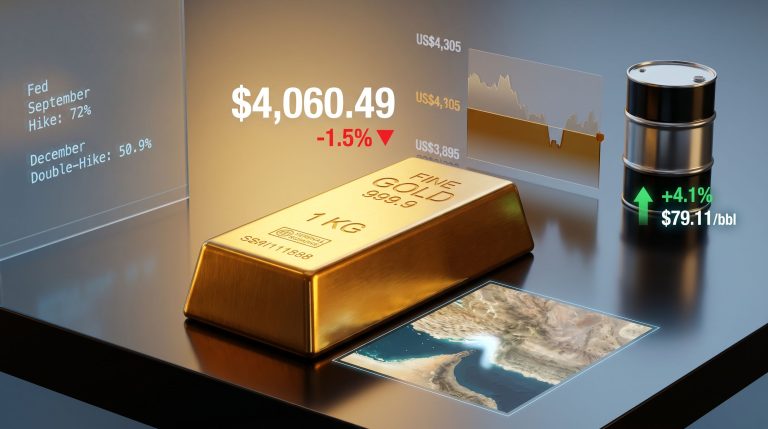
With spot gold trading near $4,075 per ounce in 2025, the following premium ranges reflect current market conditions:
| Product Type | Typical Premium Above Spot |
|---|---|
| 400 oz Good Delivery Bar | 2–3% |
| 1 kg Bar | 3–5% |
| 1 oz Coin (Maple Leaf, Eagle) | 5–10% |
| Fractional Coins (1/4 oz, 1/10 oz) | 10–20%+ |
| Numismatic / Collectible Coins | Variable / Significantly Higher |
Paper gold instruments, by contrast, trade at or near spot price with no premium. This zero-premium characteristic is frequently misread as a sign of lower risk. In reality, it reflects the absence of physical delivery obligations, which is a feature of the instrument that simultaneously removes storage costs and introduces a distinct class of structural risk. The debate around physical gold vs ETFs is therefore not simply about convenience; it is fundamentally about which risks an investor is willing to accept.
The Real Cost Stack Behind Physical Bullion
Why Premiums Exist at All
Physical gold carries costs that paper instruments do not. Every bar and coin embeds:
- Refining and assaying expenses to certify purity and weight
- Minting and fabrication costs, which increase sharply for smaller denominations
- Secure logistics, insurance, and last-mile delivery infrastructure
- Allocated vaulting and custody fees for institutional storage
These are not artificial costs imposed by dealers. They are the genuine operational expenses of moving and verifying a physical commodity through a supply chain. The smaller the denomination, the higher the cost-per-ounce, which is why fractional coins consistently carry the largest premiums relative to spot. For those weighing up the options, this comparison of physical and paper gold provides a clear breakdown of the structural differences between the two approaches.
The 100:1 Problem: Paper Claims vs. Physical Supply
Perhaps the most structurally significant fact in the paper gold versus physical gold premium debate is the estimated ratio of paper claims to physical ounces available for delivery. Industry analysts have placed this ratio at somewhere between 100:1 and 250:1, meaning that for every ounce of gold that could realistically be delivered, there are between one hundred and two hundred and fifty financial claims referencing that ounce.
The futures market was designed to absorb investment demand without requiring physical settlement. Under normal conditions, this works because most participants never intend to take delivery. But the system's vulnerability emerges precisely when a sufficient number of participants simultaneously demand physical metal rather than cash settlement.
This structural leverage is not a conspiracy; it is a deliberate design feature rooted in the history of how gold markets were constructed following the collapse of the Bretton Woods system. When the spot gold and silver markets were established in the 1970s, one explicit intent was to create a large paper market capable of channelling investment demand away from physical metal. The consequence, decades later, is a pricing mechanism that can diverge materially from the physical market during stress events.
What Widens the Gap: Drivers of Premium Expansion
Supply-Side Constraints
Physical gold supply chains are less elastic than paper markets. When demand surges:
- Refineries operate at capacity constraints and cannot instantly increase throughput
- Secure logistics networks experience bottlenecks as demand for armoured transport and bonded storage spikes
- Above-ground, readily deliverable stock is far smaller than the aggregate financial claims outstanding
Demand Surges and Historical Case Studies
The 2020 pandemic period provided the clearest recent demonstration of premium dynamics under stress. As mints in major producing countries suspended operations and retail demand surged simultaneously, physical premiums on coins doubled and tripled while paper gold continued trading near spot. The paper price and the physical price told entirely different stories about the same underlying metal.
In 2025, a combination of record institutional buying, central bank gold demand, and supply chain tightness has again widened the spread. Central bank purchases are particularly significant because they remove above-ground inventory from the market permanently, compressing the supply available to retail and institutional buyers.
Key Insight: When the quantity of financial claims on gold vastly exceeds the physical inventory available for settlement, even a modest shift in investor preference toward physical delivery can produce outsized premium spikes and potential market dislocations that paper prices will not immediately reflect.
The Hidden Risk in a Zero-Premium Instrument
What Paper Gold Offers
Paper gold instruments have genuine advantages that are appropriate for specific investment contexts:
- No storage, insurance, or delivery costs for ETF holders
- Fractional ownership structures enabling micro-exposure below one ounce
- Instant exchange liquidity without logistical friction
- Lower capital requirements relative to physical for retail participants
What Paper Gold Conceals
The zero premium on a paper instrument does not represent zero risk. It represents a different category of risk that is harder to see because it does not manifest until stress conditions arrive:
- ETF investors hold a beneficial interest in a fund's gold holdings, not a specific allocated bar they can claim
- Futures contracts default to cash settlement; physical delivery requires an active election and meeting contract specifications that most participants cannot satisfy
- During institutional stress, redemption for physical metal may be restricted, delayed, or practically unavailable at any price near spot
- Unallocated accounts expose the depositor to the full balance sheet risk of the custodian institution
Warning: A zero premium on paper gold does not mean zero risk. It means delivery risk has been transferred to the counterparty and embedded in the fine print of the instrument rather than priced visibly into the transaction cost.
The next major ASX story will hit our subscribers first
East vs. West: Geographic Premium Divergence
One of the most consequential structural developments in physical gold markets during 2025 is the accelerating divergence between Eastern and Western pricing dynamics. Asian markets have historically priced physical gold at a consistent premium to Western spot benchmarks, driven by:
- Cultural preference for direct physical ownership rather than financial claims in China, India, and Southeast Asia
- Domestic demand consistently exceeding local refinery supply in key consumption markets
- Import duties and regulatory frameworks adding structural cost layers that are non-negotiable
| Market | Typical Physical Premium | Key Driver |
|---|---|---|
| Shanghai Gold Exchange | Variable / Often above LBMA | Domestic demand, import controls |
| India (retail) | 5–15% above international spot | Import duty, fabrication costs |
| Hong Kong | 3–8% above spot | Regional demand concentration |
| US retail market | 5–10% (coins), 2–3% (bars) | Mint capacity, logistics |
| London (wholesale) | Near spot (2–3%) | Institutional, large-bar market |
Beyond simply buying metal, Eastern financial centres are actively constructing the infrastructure to price and settle physical gold outside Western benchmark frameworks. Hong Kong's development of independent gold clearing systems and Singapore's expansion of physical settlement capacity represent a structural shift in who controls physical price discovery. Furthermore, if these platforms mature, the LBMA spot price may gradually lose its status as the singular global gold benchmark, creating a scenario where physical pricing in Asia diverges persistently from the paper price quoted on Western screens.
The Currency Debasement Context
No analysis of the paper gold versus physical gold premium is complete without understanding the monetary environment driving physical demand. The Federal Reserve's own published data on the purchasing power of the consumer dollar provides a striking long-run context: according to FRED, the purchasing power of the US dollar has eroded to approximately $0.029 relative to its original baseline, meaning that nearly 97 cents of every original dollar's purchasing power has been transferred away through monetary inflation over time.
This is not a historical curiosity. It is the operating environment in which every investor is making decisions today. When the nominal gold price rises, it is frequently misread as gold becoming more valuable. The more precise interpretation is that the currency in which gold is being priced is becoming less valuable. A rising gold price accompanied by widening physical premiums is a compound signal: not only is currency debasement accelerating, but genuine physical scarcity is developing independently of paper price movements.
The distinction between nominal price rising and real value being preserved is the single most important conceptual framework for evaluating gold's safe-haven role as a wealth preservation instrument rather than a speculative vehicle.
Investor Framework: Matching the Instrument to the Objective
When Paper Gold Is the Appropriate Choice
- Short-term traders seeking price exposure without the overhead of physical storage
- Institutional investors requiring large-scale liquidity and position scalability
- Investors with limited capital seeking fractional price exposure in sub-ounce increments
When Physical Gold Is the Appropriate Choice
- Investors whose primary objective is the elimination of counterparty risk
- Long-term wealth preservation strategies focused on maintaining purchasing power across decades
- Portfolios requiring an asset that functions independently of the financial system during stress events
- Individuals in retirement or approaching retirement who require an asset that cannot be frozen, restricted, or subjected to platform risk
Building a Balanced Allocation
A structured approach to gold allocation might consider:
- Establishing physical metal as the foundational wealth-preservation layer, sized to cover essential obligations regardless of financial system function
- Matching product type to personal liquidity needs: large bars carry lower premiums but require larger capital commitments and specialist buyers; coins carry higher premiums but offer greater divisibility and broader retail liquidity
- Layering paper instruments for tactical price exposure if short-term trading is part of the broader portfolio strategy
- Evaluating fully allocated, redeemable digital gold platforms as a bridge between physical ownership and digital accessibility, with the critical distinction being redeemability: instruments that can be converted into physical metal on demand are fundamentally different from those that cannot
Strategic Note: The premium paid for physical gold is not a cost in the conventional sense. It is the price of eliminating counterparty risk and securing direct ownership of an asset that has preserved purchasing power across thousands of years and dozens of currency resets. Investors should evaluate this cost relative to the risk embedded in paper alternatives, particularly during periods of systemic financial stress.
Furthermore, understanding gold in the monetary system provides essential context for why physical ownership carries structural advantages that extend well beyond simple price performance. For investors comparing costs across both formats, Investopedia's analysis of physical gold versus ETFs offers a useful cost-breakdown framework worth reviewing alongside your allocation strategy.
Reading the Premium as a Market Intelligence Signal
Premium Widening as a Leading Indicator
Historically, significant widening of the physical gold premium has preceded or coincided with periods of acute financial system stress. The premium is not merely a cost metric; it is a real-time indicator of:
- The degree to which physical supply is becoming genuinely constrained relative to demand
- The market's collective assessment of counterparty risk embedded in paper instruments
- The potential for paper and physical price discovery to diverge materially
Scenario Analysis: What Accelerating Divergence Could Look Like
| Scenario | Likely Premium Outcome | Investor Implication |
|---|---|---|
| Moderate supply tightness | Premiums rise to 10–15% on coins | Physical becomes more expensive but remains accessible |
| Significant delivery demand surge | Premiums spike 20–50%+ | Paper price diverges materially from physical market reality |
| Full paper-physical decoupling | Spot price loses relevance as benchmark | Physical price discovery migrates to OTC and regional markets |
Disclaimer: The scenarios above are speculative frameworks for analytical purposes and do not constitute financial forecasts or investment advice. Actual market outcomes depend on a complex range of variables that cannot be predicted with certainty.
Frequently Asked Questions
Is the spot gold price the same as what I pay for physical gold?
No. The spot price is a benchmark derived from paper futures markets. Physical buyers always pay a premium above spot that reflects fabrication, logistics, insurance, and dealer operating costs. The final physical price equals: spot + dealer premium + shipping + insurance.
Why did physical premiums spike so dramatically during the 2020 pandemic?
Three forces coincided: major mints suspended production, global logistics networks were disrupted, and retail demand surged simultaneously. Paper gold continued trading near spot because no physical delivery was required. Physical metal became scarce and expensive independently of the paper price.
Can the paper and physical gold prices permanently diverge?
Temporary divergences have precedent throughout modern financial history. The structural conditions of 2025, including record institutional demand, central bank accumulation, and the development of competing Eastern pricing infrastructure, make a sustained divergence more plausible than at any prior point in the post-1971 paper gold era.
What is the most cost-effective way to buy physical gold?
- Larger bar sizes carry the lowest premiums per ounce
- Government-minted coins carry higher premiums but offer superior retail liquidity
- Buying from established dealers with transparent, published pricing reduces the risk of hidden markups
- Avoiding numismatic or collectible coins unless the buyer has specialist knowledge of that market segment
Key Takeaways
- The physical gold premium is a composite market signal encoding real costs, genuine scarcity, and the elimination of counterparty risk; it is not an arbitrary markup
- Paper gold's zero premium conceals structural risks including delivery restrictions, cash-settlement defaults, and counterparty exposure that become material during stress
- The estimated 100:1 to 250:1 ratio of paper claims to deliverable physical ounces represents a systemic vulnerability that amplifies premium spikes when physical demand intensifies
- Eastern markets are constructing independent physical settlement infrastructure that may progressively shift global price discovery away from Western paper benchmarks
- The Federal Reserve's own published data shows the US dollar retains approximately $0.029 of its original purchasing power, providing the fundamental monetary context for understanding why physical gold demand is structural rather than speculative
- Premium widening should be read as market intelligence, not merely as a cost inconvenience, because it signals that physical scarcity is developing independently of paper price movements
This article is intended for educational purposes only and does not constitute financial advice. Investors should conduct their own due diligence and consult qualified financial advisers before making investment decisions. All figures and premium ranges cited reflect publicly available estimates as of 2025 and are subject to change.
Want to Stay Ahead of the Next Major Mineral Discovery Before the Market Catches On?
While physical gold premiums signal deepening scarcity in established markets, the most explosive wealth-creation opportunities in the resources sector have historically emerged from significant new mineral discoveries — and Discovery Alert's proprietary Discovery IQ model delivers real-time ASX alerts the moment these discoveries are announced, turning complex geological data into actionable insights for investors at every level. Explore how historic discoveries have generated extraordinary returns on Discovery Alert's dedicated discoveries page, and begin your 14-day free trial today to position yourself ahead of the broader market.