
July 17, 2026
The global mining industry faces unprecedented challenges as demand for critical minerals accelerates beyond traditional supply frameworks. While renewable energy infrastructure and artificial intelligence applications drive exponential consumption patterns, established copper deposits worldwide approach depletion phases, creating supply constraints that threaten industrial continuity. This convergence of technological advancement and resource scarcity positions undeveloped mineral deposits as strategic assets rather than speculative ventures, with mineral exploration for gold and copper becoming increasingly vital for securing future supply chains.
Understanding the Geological Significance of Southwest Alaska's Mineral Endowment
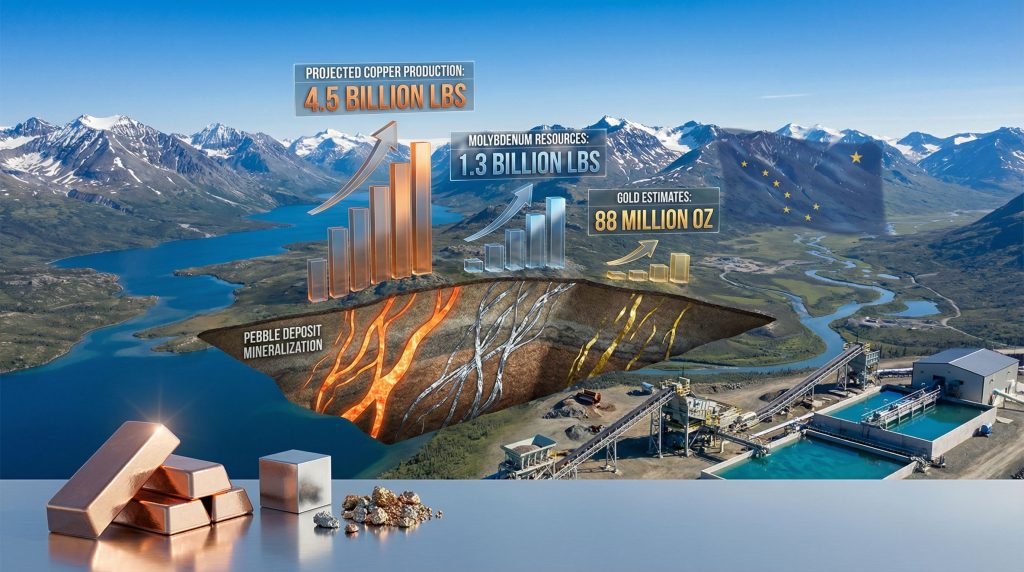
The pebble mine copper deposit represents one of the most significant polymetallic discoveries in modern mining history, containing an estimated 75 billion pounds of copper, 80 million ounces of gold, 370 million ounces of silver, 4.5 billion pounds of molybdenum, and 9 million pounds of rhenium. These resource estimates, derived from nearly four decades of systematic exploration and drilling programs, position the deposit among the largest undeveloped copper resources globally.
The geological formation underlying this mineral concentration follows classic porphyry copper deposit characteristics, where hydrothermal processes concentrated multiple metals within accessible proximity. Unlike single-commodity deposits that dominate contemporary mining operations, this multi-metal profile creates operational efficiencies through shared infrastructure and processing systems.
Critical Minerals Portfolio and Industrial Applications
Beyond copper's primary role in electrical infrastructure, the deposit's molybdenum concentrations support high-strength steel alloys essential for aerospace applications, while rhenium supplies specialised superalloys for jet engine components. The silver component enhances electronic manufacturing capabilities, and gold provides additional economic stability to the overall resource model.
Each mineral serves distinct industrial functions that traditional copper mines cannot address simultaneously:
- Molybdenum: Strengthens steel for construction and military applications
- Rhenium: Enables high-temperature aerospace engine performance
- Silver: Supports advanced electronics and solar panel manufacturing
- Gold: Provides economic buffer against commodity price volatility
This polymetallic profile differentiates the pebble mine copper deposit from single-commodity operations, creating multiple revenue streams that enhance project economics across varying market conditions. Furthermore, the critical minerals energy transition depends heavily on such diversified mineral resources to support renewable energy infrastructure development.
When big ASX news breaks, our subscribers know first
Production Capacity Analysis and Global Competitiveness
Engineering studies project annual copper output of 145,000 metric tons over a 20-year operational timeline, totaling approximately 2.9 million metric tons of copper production. This production scale positions the operation within the upper tier of North American copper mines, though below mega-operations like Chile's Escondida or Peru's Antamina facilities.
Contemporary global copper demand analysis indicates a projected supply gap of 10 million metric tons by 2040, driven primarily by electrification infrastructure requirements and artificial intelligence data centre construction. Current global mining capacity can produce approximately 22 million metric tons annually, while demand projections reach 42 million metric tons by the same timeframe. Consequently, the global copper supply forecast highlights the urgent need for new production capacity to meet growing demand.
Infrastructure Requirements and Logistical Considerations
The remote Southwest Alaska location necessitates comprehensive infrastructure development including:
- Transportation corridors connecting mining operations to port facilities
- Power generation systems capable of supporting large-scale processing operations
- Water management infrastructure including treatment and storage facilities
- Concentrate shipping terminals designed for multi-commodity handling
These infrastructure investments create long-term economic benefits extending beyond mining operations, establishing transportation and utility networks that support regional development across multiple sectors.
Technical Engineering Challenges in Sub-Arctic Operations
Sub-Arctic mining conditions present unique operational challenges requiring specialised equipment selection and engineering solutions. Permafrost stability, seasonal access limitations, and extreme temperature variations complicate traditional mining methodologies, demanding innovative approaches to maintain operational continuity.
Advanced Processing Technology Integration
The multi-metal recovery process utilises flotation circuit designs optimised for sequential mineral separation, where different flotation stages target specific mineral components. This approach maximises recovery rates across all commodities while minimising processing costs through shared infrastructure.
Modern tailings management systems incorporate lessons from previous industry failures, particularly the 2014 Mount Polley incident. The engineered approach eliminates standing water within tailings facilities, utilising flow-through designs that capture and treat all process water before environmental discharge.
Redundant water treatment capacity ensures operational continuity during equipment maintenance or extreme weather events, while climate-adaptive water storage facilities accommodate seasonal precipitation variations and potential climate change impacts.
Environmental Engineering and Regulatory Compliance
Contemporary mining operations must demonstrate environmental performance exceeding previous industry standards. The pebble mine copper deposit development incorporates multiple technological innovations addressing water quality, habitat protection, and long-term site stability.
Water Management System Architecture
The engineered water management approach utilises:
- Dual water treatment facilities providing operational redundancy
- Flow-through tailings design eliminating catastrophic failure mechanisms
- Real-time water quality monitoring throughout operational phases
- Adaptive storage capacity addressing climate variability concerns
Independent engineering reviews by the U.S. Army Corps of Engineers concluded that the tailings storage design eliminates identifiable failure mechanisms through structural redundancy and engineering controls.
Habitat Restoration and Biodiversity Protection
Long-term environmental stewardship extends beyond operational compliance, incorporating progressive rehabilitation strategies that restore disturbed areas concurrent with mining activities. These approaches minimise cumulative environmental impacts while demonstrating sustainable mining practices.
Strategic Role in North American Mineral Security
The pebble mine copper deposit could supply approximately 20% of domestic copper requirements at current consumption levels, significantly reducing import dependency from geopolitically unstable regions. This domestic supply contribution extends across all contained minerals, enhancing strategic mineral security. In addition, considerations around national security in mining have become increasingly important as governments recognise the strategic value of domestic mineral resources.
Economic Multiplier Effects
Large-scale mining operations generate economic benefits extending far beyond direct employment. The project could create approximately 1,000 direct jobs during operational phases, with additional indirect employment throughout Alaska and national supplier networks.
National economic impact analyses project:
- Billions in increased economic activity across supplier industries
- Thousands of indirect jobs in manufacturing and services sectors
- Substantial tax revenues for state and federal governments
- Infrastructure catalytic effects supporting broader regional development
Global Copper Market Dynamics and Investment Considerations
Accelerating electrification demands create unprecedented copper consumption patterns. Electric vehicle manufacturing requires 2-4 times more copper than conventional vehicles, while renewable energy installations consume 3-12 times more copper than fossil fuel equivalents per unit of energy generated.
Supply Chain Vulnerability Assessment
Current copper supply chains concentrate production within geopolitically sensitive regions, creating strategic vulnerabilities for consuming nations. Chile produces approximately 28% of global copper, while Peru contributes another 12%, leaving supply security dependent on political stability across multiple jurisdictions.
The pebble mine copper deposit development would diversify North American supply sources, reducing dependency on potentially unstable international suppliers while maintaining environmental and labour standards exceeding many international operations. Moreover, the copper investment outlook suggests strong fundamentals supporting long-term copper demand growth.
Investment Risk and Return Analysis
Large-scale mining investments require comprehensive risk assessment across geological, operational, regulatory, and market factors. The pebble mine copper deposit benefits from extensive geological characterisation reducing resource uncertainty, though regulatory complexity and infrastructure requirements create development challenges.
Capital requirements for full development extend into multiple billions of dollars, necessitating partnership structures between experienced mining companies and institutional investors. Commodity price sensitivity analyses indicate project viability across reasonable copper price scenarios, enhanced by polymetallic revenue diversification.
The next major ASX story will hit our subscribers first
Future Development Scenarios and Technology Integration
Multiple development pathways exist for large-scale mineral deposits, ranging from traditional full-scale operations to phased development approaches that optimise capital allocation and market timing. Technological advancement in automation and remote monitoring creates operational efficiency opportunities while addressing workforce challenges in remote locations.
Hydrometallurgical Processing Potential
Advanced processing technologies offer alternatives to traditional smelting operations, potentially enabling domestic mineral refining capacity rather than concentrate export models. Hydrometallurgical approaches could extract multiple metals through chemical processing, creating value-added manufacturing opportunities within Alaska.
This processing approach would capture additional economic value while reducing transportation costs for finished metal products, though technological validation and capital requirements remain substantial.
Integration with Alaska's Mining Industry Development
The pebble mine copper deposit development would leverage existing Alaska mining expertise while creating shared infrastructure benefiting multiple operations. Regional mining ecosystem development includes workforce training programs, equipment suppliers, and technical services supporting industry growth.
Alaska's existing mining operations, including the Red Dog zinc mine and Greens Creek silver-zinc-lead mine, demonstrate successful large-scale mining in challenging environments. Shared infrastructure utilisation and collaborative service networks could reduce operational costs across all regional mining operations.
Long-term Regional Economic Sustainability
Mining operations create economic foundations supporting rural communities through employment, tax revenues, and infrastructure development. Southwest Alaska communities currently face limited economic opportunities, with high costs for basic necessities and limited employment options.
The mining development would provide:
- Stable, high-paying employment for regional residents
- Infrastructure improvements including power and transportation systems
- Workforce development programs creating transferable skills
- Economic diversification reducing dependence on single industries
Addressing Modern Mining Standards and Community Integration
Contemporary mining operations must demonstrate community partnership and long-term environmental stewardship exceeding historical industry practices. Stakeholder engagement protocols include Indigenous consultation processes, community benefit-sharing agreements, and transparent environmental monitoring.
Technology-Enhanced Environmental Monitoring
Advanced monitoring systems provide real-time environmental data supporting adaptive management approaches. Predictive analytics and remote sensing technologies enable proactive environmental protection while maintaining operational efficiency.
These technological capabilities create operational transparency, addressing community concerns through verified performance data rather than projected commitments. However, detailed information about the project's technical specifications remains essential for comprehensive environmental assessment.
National Security Implications and Strategic Considerations
Critical mineral security represents a fundamental component of national defence strategy, as advanced weapons systems, aerospace applications, and electronic warfare capabilities depend on reliable mineral supplies. Domestic production of copper, molybdenum, and rhenium reduces strategic vulnerabilities while supporting defence industrial base requirements.
The pebble mine copper deposit development would contribute to national security objectives by:
- Reducing import dependency from potentially hostile nations
- Supporting defence contractor supply chains with domestic materials
- Creating strategic mineral reserves through domestic production capacity
- Demonstrating technological leadership in sustainable mining practices
Conclusion: Positioning for Future Mineral Demands
The pebble mine copper deposit represents a convergence of geological fortune, technological capability, and strategic necessity that occurs rarely in modern mining. Global copper demand projections, combined with supply constraint realities, create compelling development arguments extending beyond traditional economic considerations.
Environmental engineering advances and regulatory framework evolution enable large-scale mining operations meeting contemporary sustainability standards while delivering essential minerals for technological advancement. The project's success could establish precedents for responsible mining development, demonstrating compatibility between resource extraction and environmental protection.
Strategic mineral security concerns and domestic supply chain vulnerabilities add national importance to development decisions, positioning the pebble mine copper deposit as a critical component of North American mineral independence. Economic benefits extending across multiple sectors and regions create stakeholder alignment supporting project advancement.
The intersection of technological demand growth, supply constraint pressures, and strategic security requirements establishes compelling development justification for this exceptional mineral resource. Future generations of Americans will depend on decisions made today regarding domestic mineral resource development and strategic supply chain security.
Disclaimer: This analysis presents general information regarding mineral resources and market conditions. Investment decisions should be based on comprehensive due diligence, professional geological assessments, and current regulatory requirements. Market projections and commodity price forecasts represent estimates that may vary significantly from actual outcomes.
Looking to Capitalise on Major Mineral Discoveries?
Discovery Alert's proprietary Discovery IQ model delivers instant notifications on significant ASX mineral discoveries, transforming complex geological data into actionable investment opportunities for both short-term traders and long-term investors. Explore how historic discoveries have generated exceptional returns by visiting Discovery Alert's discoveries page, then begin your 14-day free trial to position yourself ahead of the market with real-time alerts powered by advanced AI technology.